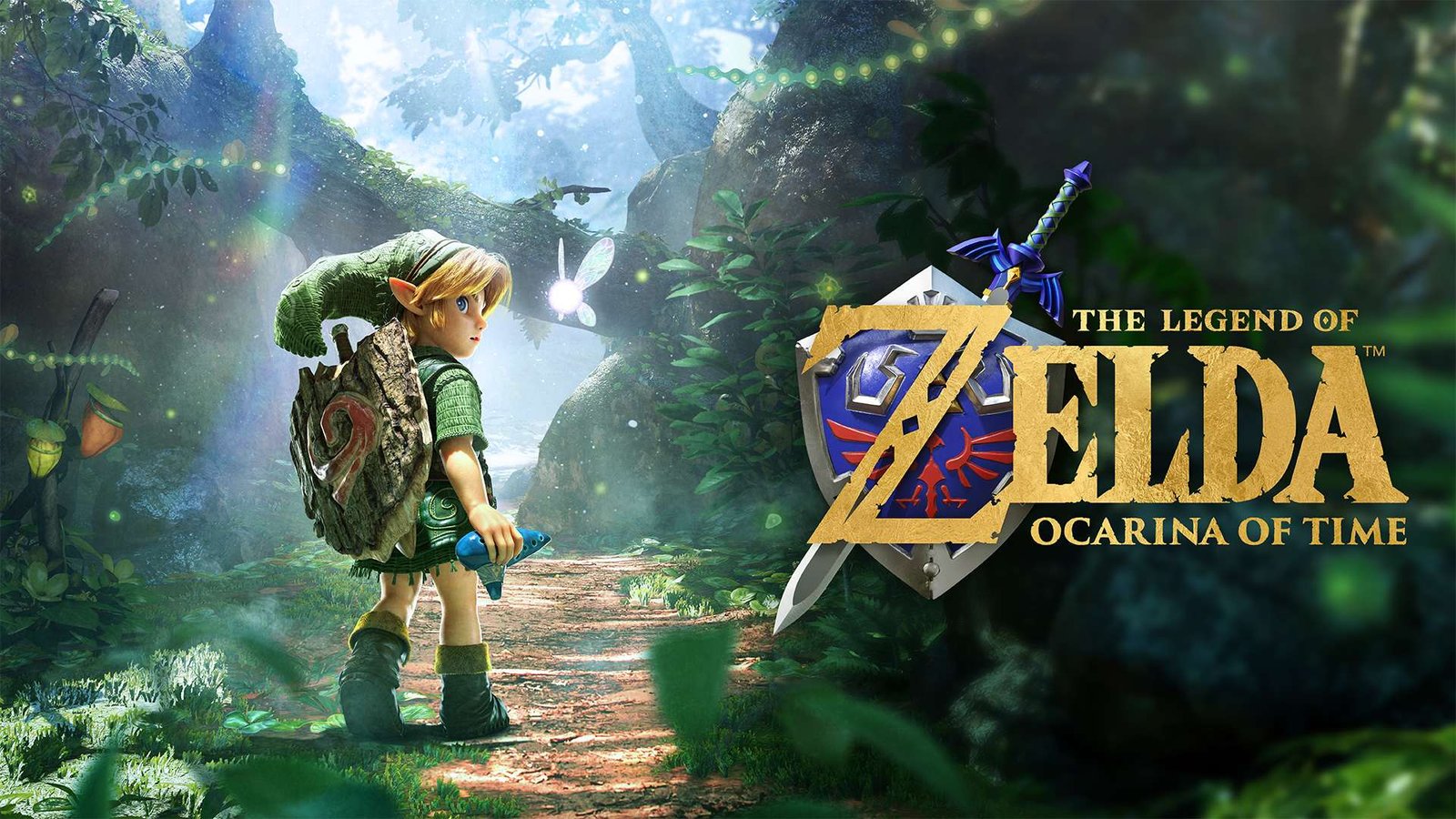
The Legend of Zelda: Ocarina of Time for Nintendo Switch 2. Promotional image: Nintendo.
The 1998 classic returns 28 years later with rebuilt graphics, modernized controls, and Brazilian Portuguese voice acting.
The Legend of Zelda: Ocarina of Time launches this Thursday, November 5, 2026, exclusively for Nintendo Switch 2. The new version of the classic originally released for Nintendo 64 in 1998 arrives with one of the highest professional review averages of the year.
On the eve of its release, the remake held a score of 96 out of 100 on Metacritic, with approximately 80 published reviews, according to Exame’s report from November 4. At that point, the result put the game at the top of the aggregator’s ranking of the best-reviewed games of 2026.
The reception underscores the historical importance of Ocarina of Time, which helped establish conventions for 3D adventure games. The remake also arrives in a special year for Nintendo, as The Legend of Zelda celebrates its 40th anniversary in 2026.
Did the remake surpass the original Ocarina of Time?
Despite the overwhelmingly positive reception, the new version did not surpass the Nintendo 64 game’s historic score.
| Version | Metacritic |
|---|---|
| Ocarina of Time (Nintendo 64, 1998) | 99 |
| Ocarina of Time (Nintendo Switch 2, 2026) | 96 |
| Ocarina of Time 3D (Nintendo 3DS, 2011) | 94 |
The original still holds a score of 99, the highest average ever recorded in Metacritic’s history.
The 2026 remake came in three points below that mark, but surpassed the Nintendo 3DS version, which scored 94 in 2011.
The comparison shows that the new edition was received as a high-quality update without necessarily replacing the original game’s historic impact.
These scores are averages of professional critics’ reviews, not reviews conducted by ZAUS.GG. The score of 96 and the approximate review count reflect the report published on November 4, 2026, and may change as the aggregator receives more reviews.
What changed in the remake?
Nintendo rebuilt the graphics of Ocarina of Time and modernized its controls, adding a freely controllable camera and a dedicated jump button.
The remake also features an orchestrated soundtrack, expanded dialogue, and voiced scenes while preserving Link’s adventure across Hyrule.
These changes allow players to move the camera more freely and perform actions that depended on context-sensitive controls in the original game. The aim is to modernize the experience without abandoning its central structure.
For Brazilian players, one of the biggest additions is Brazilian Portuguese voice acting, a first for the franchise according to Exame’s coverage.
VGC’s review highlights the remake’s faithfulness to the original experience, its visual upgrade, and its gameplay improvements. The outlet also notes that the modernizations do not fundamentally change how the adventure plays and that its key design elements remain close to the Nintendo 64 version.
This balance between preservation and modernization helps explain the reception: the remake aims to introduce the adventure to new players while giving returning fans an updated way to revisit it.
How much does Zelda: Ocarina of Time cost in Brazil?
The Legend of Zelda: Ocarina of Time launches on November 5, 2026, exclusively for Nintendo Switch 2.
The game is listed at R$ 329.90 on Nintendo’s Brazilian digital storefront, the same price stated in the official launch announcement (in Portuguese).
That figure applies to the digital edition announced by Nintendo. Prices for physical copies, promotions, and third-party retailer offers may vary and should not be reported without separate verification.
The Switch 2 edition is a rebuilt remake of the 1998 game, not merely the classic version available through subscription services.
For official details, supported languages, and the latest price in Brazil, see The Legend of Zelda: Ocarina of Time on the Brazilian Nintendo Store (in Portuguese). ZAUS.GG also covered the announcement in its earlier Ocarina of Time remake overview.
About the Author