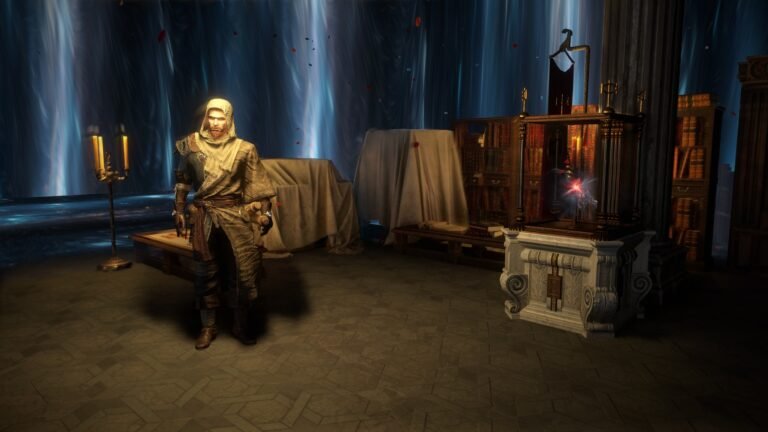
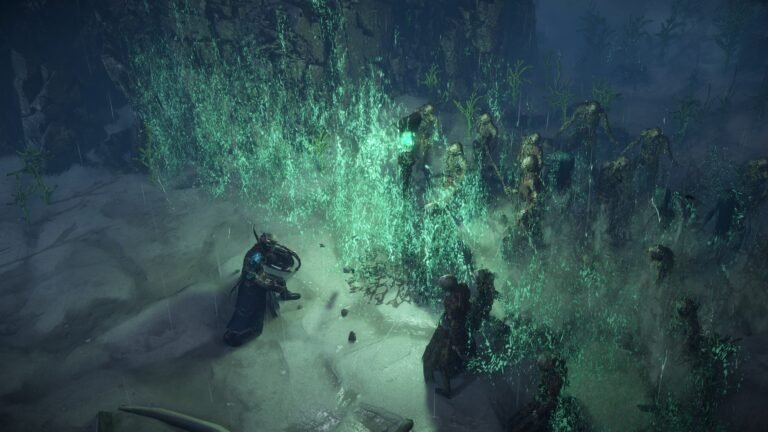
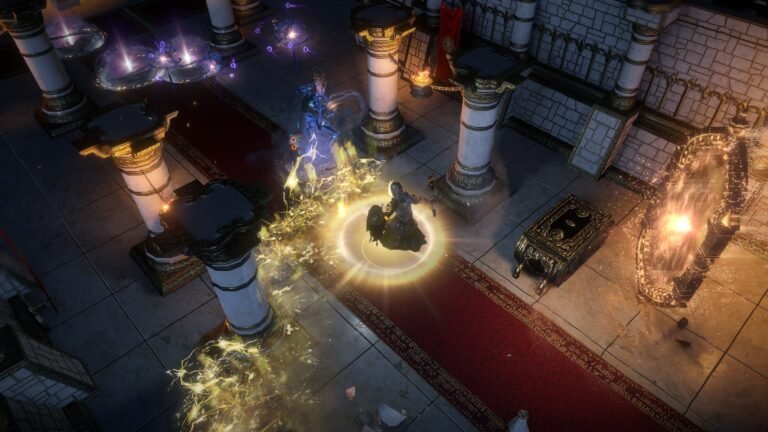
You finish the Path of Exile campaign, open the Atlas, and discover that the game offers dozens of ways to obtain gear, currency, and materials. One player spends hours exploring underground mines. Another fights bosses. Others prefer opening strongboxes, defeating legions, pulling off heists, or simply clearing maps packed with monsters.
They’re all farming in Path of Exile, but they’re after different results: resources for their own builds, tradable materials, or exclusive rewards.
Some mechanics are quick encounters found inside maps. Others have their own areas, characters, progression, and exclusive bosses. There are also methods that rely more on crafting and understanding the economy than on killing monsters. Results depend on the resources spent, rewards obtained, demand within the league, and your character’s capabilities. A popular activity isn’t automatically a good fit for your build or available playtime.
This catalog introduces the main farming methods in Path of Exile 1, how to access them, how they work, and what they reward. In an ARPG built around loot and character development, choosing an activity is part of your progression. Atlas setups and advanced strategies belong in dedicated guides; here, the goal is to help you identify the content you want to explore.
If you’re still learning the game, start with our guide to Path of Exile’s history, evolution, and core systems.
Nesta matéria
What Does Farming Mean in Path of Exile?
Farming means repeating an activity to obtain rewards. These can include Chaos Orbs, Divine Orbs, gear, crafting materials, maps, fragments, Scarabs, or specific items used by certain builds.
But farming isn’t synonymous with finding Divine Orbs directly on the ground. One player may collect dozens of smaller materials and sell them for other currencies. Another might obtain a rare, valuable item after many attempts. Some activities also help develop a character even when their rewards have little market value.
In trade leagues, many materials can be exchanged with other players. In Solo Self-Found, or SSF, the focus changes: you need to make use of the resources you find yourself. To learn how to sell materials, use Faustus, and follow the economy, see our complete Path of Exile trading, Faustus, and economy guide.
What Changed About Path of Exile Farming in 2026?
Revised October 20, 2026. This guide covers PoE 1 while the Curse of the Allflame league is active. Path of Exile 2 systems are not part of this catalog. 3.28 — Mirage, released in March 2026, substantially reworked the Atlas. Map Items are no longer tied to one specific area: the item determines the Tier, while players choose a compatible area directly on the Atlas.
That update also introduced Arcane Astrolabes, Shaped Regions, and Memory Vaults, and transformed the former Tier 17 maps into Nightmare Maps.
In July, 3.29 — Curse of the Allflame brought further changes. Abyss received a major overhaul, Mercenaries of Trarthus entered the core game, and new Anomalies appeared on the Atlas. Not all previous league content stays available: Harbinger, for example, was removed from the core structure in update 3.28.
This review includes adjustments to the 3.29 series through 3.29.3b. Permanent mechanics, reward targets, and economic strategies appear in different groups: not every subsection represents a separate activity. Charts and Voyages belong to the 3.29 league, with no permanent integration announced by this revision.
In its October 12, 2026 announcement, GGG scheduled Curse of the Allflame to end on November 9, 2026 at 1 p.m. PST, and update 3.30 to launch on November 13, 2026, using PST as the reference time zone, with further details during ExileCon 2026. These dates are still in the future relative to this article; they do not establish which mechanics will stay or be replaced.
Map and Atlas Farming
The Atlas is at the center of much of Path of Exile’s endgame. After the campaign, players explore maps containing different combinations of enemies, bosses, and mechanics. The Atlas passive tree lets players favor certain activities, and compatible Scarabs add or modify encounters. The current structure starts in the center and features four quadrants with Voidstones.
Special locations still require their own items or fragments: being able to choose a map area doesn’t remove access requirements.
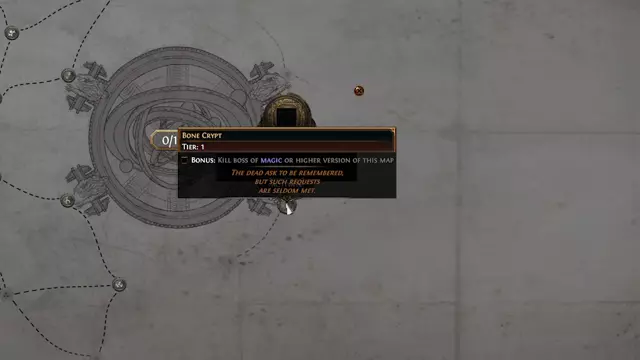
Traditional Map Farming
This is the most straightforward approach: open maps, kill monsters, defeat the boss, and collect the rewards. Higher Tiers bring more dangerous enemies and access to advanced content. Players can obtain currencies, gear, additional maps, Scarabs, and other items. The main advantage is being able to farm while encountering several other mechanics along the way.
Strongboxes (Ambush)
Strongboxes are chests found in maps that release rewards after players activate them and defeat the enemies guarding them. Different types have different potential drops: some provide currencies, others offer Divination Cards, equipment, or materials. The attraction is finding and opening multiple boxes while exploring, along with the extra encounters they create.
Essence
In Essence encounters, monsters are trapped in crystals displaying their associated materials. Releasing and killing these creatures awards Essences, which can modify gear more deliberately than certain conventional currencies. Because these materials are consumed during crafting, they are useful both for developing characters and trading with other players.
Breach and Unstable Breaches
In the permanent version introduced with 3.28, Ailith helps fight the Hiveborn starting in Act 6. Unstable Breaches involve stabilizing and closing breaches, while Breach Hives feature wave-based fights. Hiveblood and Wombgifts feed the Genesis Tree and its rewards, including Foulborn gear; Hivebrain Glands open Hive Colonies. This replaces the outdated idea that all Breach farming still revolves around the old Splinter and Breachstone loop. In 3.29, the concurrent limit became two Unstable Breaches.
It’s a good fit for builds that can handle densely packed groups of monsters.
Abyss
In 3.29, Abyssal Pits are already open: killing monsters under their influence feeds the pits and brings out creatures from below. Chasing moving fissures is no longer the mechanic’s main structure. Abyss is a targeted source of Abyssal Jewels and Stygian Vises; a rare exception is Jewels found in Abyss biomes within Delve. Abyssal Depths and the new pinnacle boss expand its progression and exclusive rewards.
It suits characters able to sustain concentrated fighting, without assuming every encounter will provide access to the boss.

Legion
Timeless Monoliths reveal frozen armies, allowing players to release targets before fighting them. Timeless Splinters combine into Emblems for the Domain of Timeless Conflict, associated with generals and Timeless Jewels. In 3.29, map generals can drop Enshrouding Crystals; in the Domain, Crystals of Permutation turn Enshrouded Uniques into another Unique of the same class with a Vestigial implicit.
Update 3.29.2 allowed these items to be charged up to three times to improve the chance of rarer outcomes. Incubators no longer drop; old copies in Standard are historical leftovers. This activity favors fast area coverage.
Expedition
Expedition features excavation sites where explosives uncover monsters, chests, and remnants of ancient Kalguuran expeditions. Rewards include merchant trading materials, Logbooks, and other items. Tujen, Rog, Gwennen, and Dannig offer different services, letting players turn collected resources into currencies, equipment, and further exploration opportunities.
Harvest
Harvest takes players to the Sacred Grove to fight groups of creatures and obtain Lifeforce. This resource is used for specific crafting recipes at the Horticrafting Station. The activity’s main value lies in materials used to modify gear. It’s useful for players who enjoy crafting, even if they would rather sell Lifeforce than use it themselves.
Blight
Blight combines traditional combat with tower defense. Players protect a device from monsters traveling along set paths by building towers to help stop them. Completing an encounter grants reward chests that may contain Oils, gear, and other materials. Blighted Maps provide larger versions of the mechanic with additional paths and challenges.
Delirium
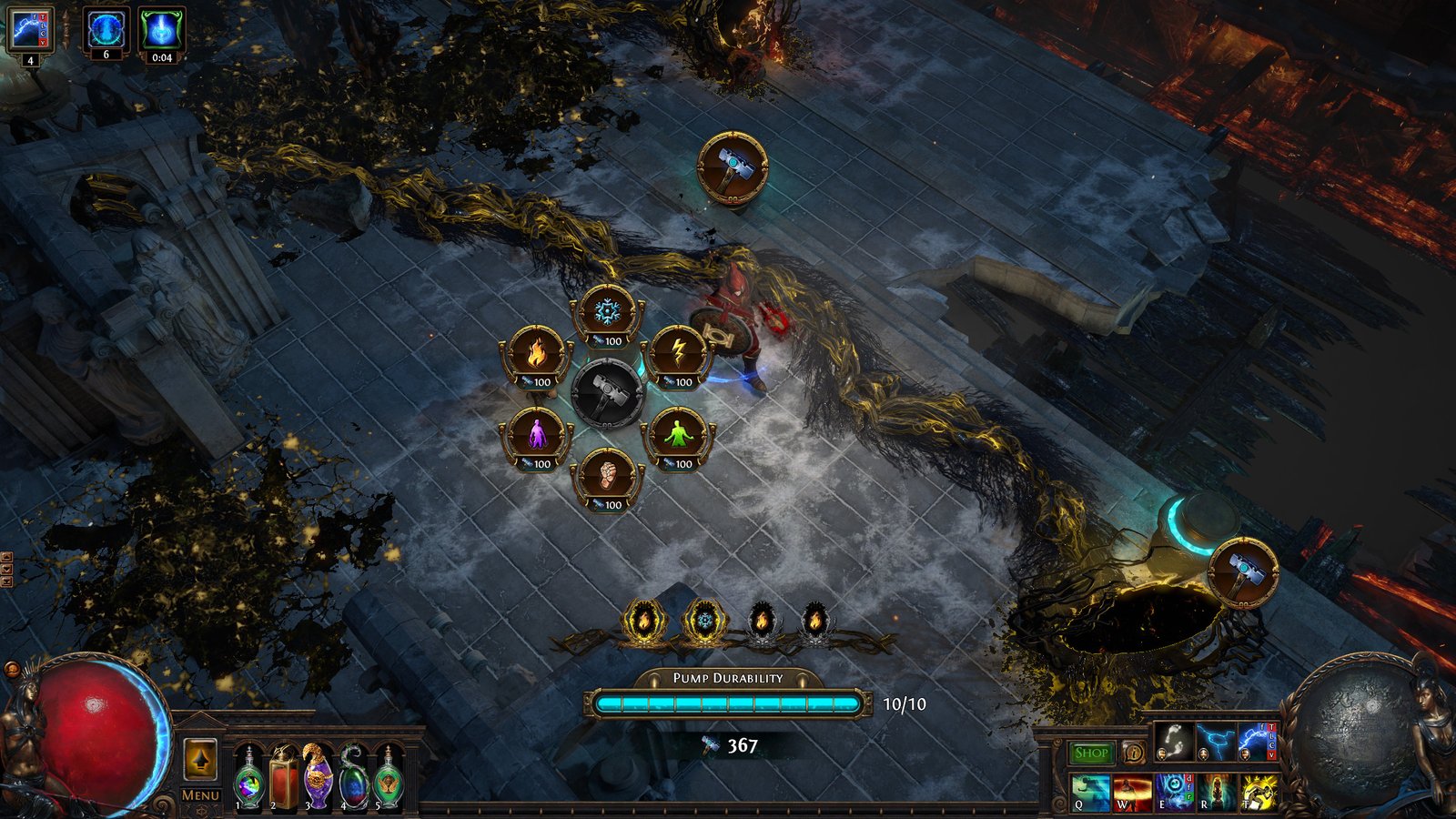
Delirium features combat in supernatural fog, putting players under increasing pressure as the activity progresses. Depending on the encounter, players may earn Cluster Jewels, Simulacrum Splinters, and other rewards. Delirium Mirrors start fog encounters, while Delirium Orbs apply Delirium to maps. Splinters also grant access to the standalone Simulacrum activity described later.
Ritual
Ritual pits players against groups of monsters summoned at altars. Finishing encounters awards Tribute, used to select rewards from an offered pool. Options may include currencies, equipment, and special items. Its appeal lies in evaluating the offers and deciding what to purchase with available points rather than relying exclusively on monster drops.
Ultimatum
Ultimatum presents a sequence of challenges in which players choose whether to take greater risks or stop and keep their rewards. Overseen by the Trialmaster, the activity can reward currencies, gear, and specific materials. In 3.29, Ultimatum became the exclusive source of Catalysts, making them an important reason to engage with this mechanic.
Betrayal (Immortal Syndicate)
Encounters with Jun advance the investigation into the Immortal Syndicate; decisions about members and divisions determine Safehouses and their rewards. Scarabs, Veiled items, and crafting are the main attractions. Since the 3.26 overhaul, Catarina has a separate access route via the Syndicate Medallion, and defeating her no longer resets the board. In 3.29, the average number of Scarabs in Safehouse chests was doubled.
Don’t follow the outdated process of rebuilding the entire organization after every Mastermind fight.
Bestiary
Bestiary is Einhar’s system for capturing special beasts. In certain areas, players find creatures that can be captured and later used at the Blood Altar in the Menagerie. Rewards involve Beastcrafting recipes and the resulting items. Some beasts also have specific economic uses depending on available recipes and league demand.
Incursion
Incursion revolves around Alva’s time-travel excursions into the past, allowing players to alter the layout of the Temple of Atzoatl. As encounters are completed, the temple develops rooms with different functions and rewards. The goal is to access these rooms and make use of their equipment, materials, and special item-modification opportunities.
Beyond
Beyond adds demonic enemies to certain encounters, particularly when large groups of monsters are killed in an area. Players face additional creatures and more powerful threats, earning resources such as Tainted Currency. This mechanic is integrated into map combat and appeals to players who enjoy increasing encounter density and intensity.
Rogue Exiles
Rogue Exiles are enemies modeled after player characters, with their own skills and equipment. Their encounters introduce human-style opponents into maps, with equipment and other rewards. They suit players who enjoy quick fights against individual enemies, without the dueling and recruitment system of Mercenaries.
Mercenaries of Trarthus
Mercenaries appear from Act 3 onward and offer duels for an item from their equipment. The wager costs Gold: losing consumes it and ends the encounter; winning grants the item and temporary assistance in several areas. Maps also allow players to find Warrants and face a mercenary again with new items. Trarthan Gems and exclusive Uniques give this farming method its identity. Only the Luminary Ascendancy can hire and re-equip mercenaries permanently.
They don’t count as additional players for party reward calculations, and they are not Rogue Exiles.
Eldritch Altars
Eldritch Altars appear in maps influenced by the Searing Exarch and the Eater of Worlds. They offer choices that can increase rewards while adding dangers to the rest of the area. Depending on those choices, players can obtain additional currencies, materials, and items related to Eldritch content. This farming method is integrated into normal map exploration.
Arcane Astrolabes and Memory Vaults
Applying an Arcane Astrolabe to a location creates a Shaped Region in that quadrant. Completing its content removes the influence from that map and adds another modifier to the remaining maps, progressively raising the challenge. After clearing the region, Eagon leads players to one of four Memory Vaults, with rewards associated with the chosen quadrant. This is a multi-map undertaking for players able to finish the region, not just a single isolated area.

Memory Threads and Originator Content
Alongside Eagon, players travel through sequences of influenced maps and choose modifiers affecting the remainder of a Thread as they move toward the Incarnations. Memories of Loneliness, Trauma, and Reverence allow players to target the Neglect, Fear, and Dread paths. Memory Strands are a property of equipment, not a stackable inventory material. After obtaining the Dread Voidstone, these items can also drop in ordinary maps, though Originator areas remain a targeted source.
In 3.28, Memory Skills were removed; Petals began improving the acquisition of items with Strands.
Nightmare Maps
Former Tier 17 maps became Nightmare Maps in 3.28: special Tier 16 areas with their own modifiers and fragments for Uber Bosses. They require the specific item, and Voidstones unlock their drops. Each of the five different maps grants one Atlas point when completed. These are not equivalent to choosing any area with a normal Tier 16 Map Item; their dangers and costs call for a build prepared for advanced endgame.
Atlas Anomalies
After completing maps affected by a Voidstone, an Anomaly has a chance to appear when the Atlas is reopened. Entering requires no Map Item; the area doesn’t benefit from the Atlas passive tree or accept Fragments. Reflecting Mists and the Nameless Seer now occupy their own locations in this system, with characteristic rewards and services. Untainted Paradise also became accessible through an Atlas event. These are occasional opportunities without the preparation requirements of a conventional map.
Special Activities
Not all content takes place in a regular map. This group covers independent areas and activities with their own progression. Wildwood remains connected to the map containing it, while Delve, Heist, and Sanctum offer separate routes.
Viridian Wildwood
The Viridian Wildwood is an exploration area connected to its map and guided by Wisp trails. Collecting Wisps empowers monsters in the associated area and improves rewards, while increasing danger. Update 3.29.2 increased the number of Wisps gained. Permanent availability doesn’t mean every system from the former Affliction league is active: its characters, progression, and services shouldn’t be assumed here. It combines short exploration with more intense maps.
Delve — Azurite Mine

With Niko, players use Sulphite collected through other activities to move the Crawler between nodes of the Azurite Mine. Azurite upgrades mine equipment and capabilities; Fossils, Resonators, biomes, and dedicated bosses provide specific reward targets. Darkness beyond the light is dangerous, and greater depth isn’t automatically more efficient. Delve progresses separately from the Atlas. Update 3.28 removed external sources of Fossils, strengthening its identity as a crafting-material activity.
Heist and Grand Heist
Access and preparation take place in the Rogue Harbour, involving specialists, Rogue’s Markers, Contracts, and Blueprints. Contracts are individual heists; Blueprints organize larger Grand Heists with wings and final rewards, including Replica Uniques and special item bases. Opening chests raises the alert level, and contraband loot must be carried out: dying during the escape can mean losing it.
This suits players who prefer choosing routes and loot over clearing maps. Don’t assume older Harbinger rewards or Trarthan Gems are still present in current reward chests.
The Forbidden Sanctum
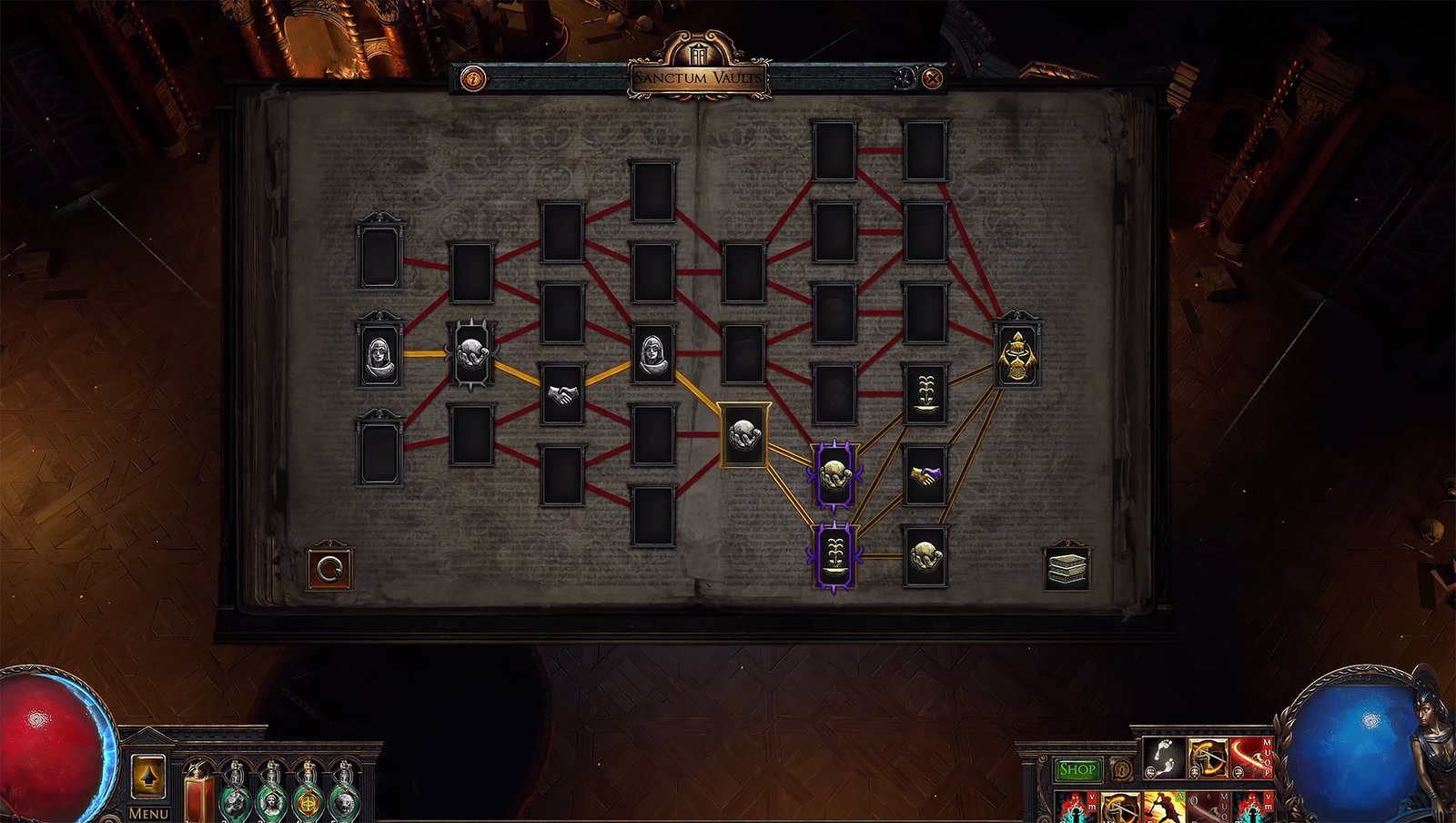
Forbidden Tomes grant access to sequences of rooms with route choices. Resolve limits an attempt independently of conventional life, while Relics modify the experience. Rewards include currencies, Relics, and exclusive items; delaying payouts until the end of a floor or the Sanctum increases exposure to failure. In 3.29, Volatile Vaal Orbs joined the rewards, and interacting with the map between rooms began restoring flask charges, with exceptions stated in the patch notes.
It’s better suited to builds that can avoid attacks, and it isn’t risk-free farming.
Simulacrum
The Simulacrum is Delirium’s standalone challenge, accessed with an item assembled from Simulacrum Splinters. Players face increasingly demanding waves of monsters, including Kosis and Omniphobia, gaining rewards as they progress. Rewards may include Cluster Jewels, currencies, and other items. This differs from simply walking through Delirium fog in a map and requires a build able to handle prolonged encounters.
Kingsmarch and Settlers
Settlers became part of the core game in 3.26, with Kingsmarch already built: players don’t need to repeat the old town-expansion process. In the endgame, Johan provides access to services; map ores, crops, smelting, workers, and Gold support production, shipping, and Atlas Runners. Wages and resources must be maintained, so the rewards aren’t free. Since 3.28, shipping ores or bars returns currencies, while crops return equipment. Ports are also linked to Tattoos and Runegrafts.
This administrative shipping system is separate from the Charts and Voyages of the Allflame league.
Curse of the Allflame — Charts and Voyages
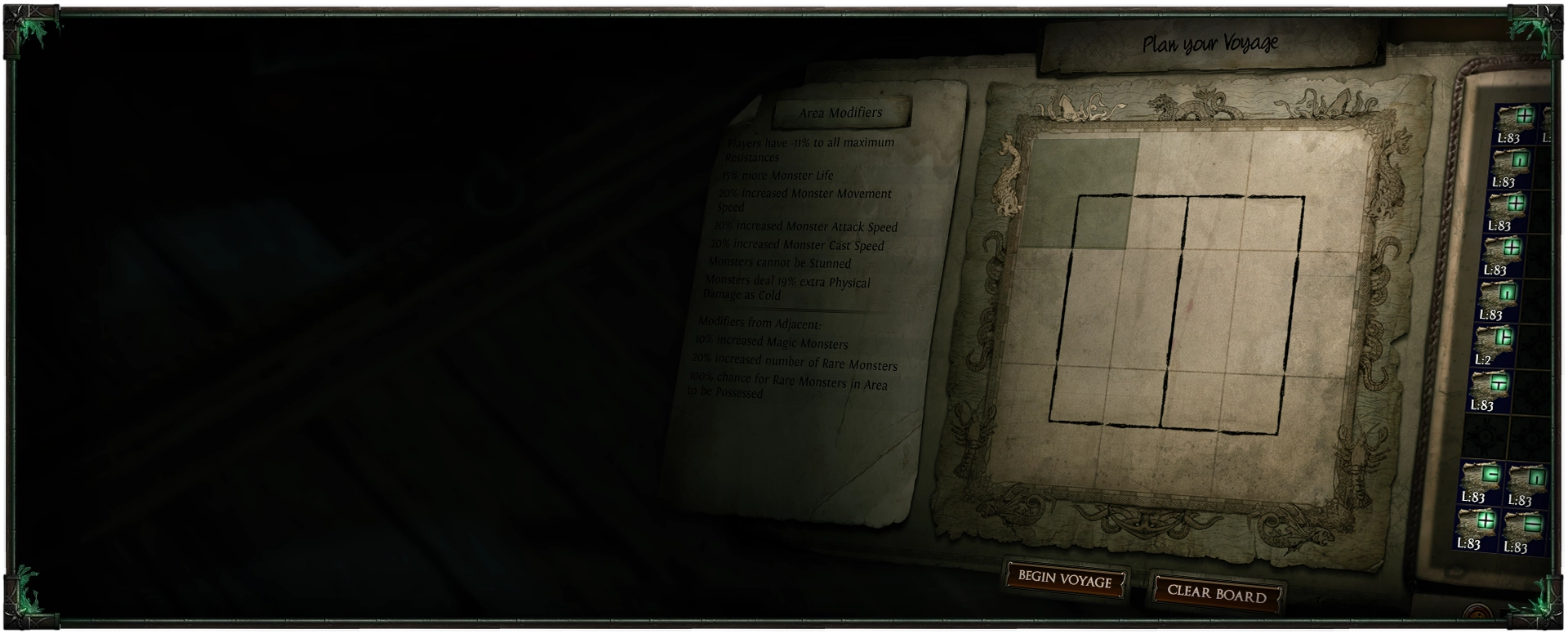
Temporary content from league 3.29. Captain Valerie takes players aboard The Sovereign: Charts found in Wraeclast open lantern-protected underwater exploration sites, while mapped areas can be connected into Voyages for revisits and improved rewards. Gold, treasures, and Ducats support the economy and Allflame Crafting. In 3.29.3, up to three Cursed Ducats could be placed in the Voyage Planner, increasing difficulty and rewards; the first comes from defeating Velka.
These items have a different purpose from crafting Ducats. Availability after the league ends depends on an announcement about core integration.
Labyrinth and Divine Font
Trials and progression requirements unlock different Labyrinths; the Eternal version uses Offering to the Goddess. The route combines rooms, traps, and fights against Izaro, ending at the Divine Font. Beyond Ascendancy points, its appeal lies in gem operations, especially transforming gems into Transfigured Gems when the offered options allow it. This is not the old helmet-enchantment farm. Safe movement and familiarity with traps matter as much as boss damage.
Boss Farming
Path of Exile bosses provide a different type of farming from activities focused on killing large groups of monsters.
Instead of prioritizing kill counts, players target specific encounters, generally seeking exclusive rewards or materials needed to advance in the endgame.
Some require extensive knowledge of combat mechanics and can consume resources used for access.

Map Bosses and Guardians
Conventional bosses appear in the area opened on the Atlas. Shaper and Elder Guardians, as well as the Conquerors, require special maps, now Tier 16, and provide fragments for their respective boss lines. Along with their own equipment, they offer a way to obtain access materials for use or sale. Difficulty and rewards depend on the target: a normal map boss shouldn’t be equated with a Guardian.
The Shaper, The Elder, and Uber Elder
Fragment sets from their respective Guardians grant access to Shaper and Elder; fragments associated with these fights then lead to Uber Elder, who combines both opponents. Uniques and Watcher’s Eyes are examples of specific rewards from these lines, with no guarantee of a valuable drop on every attempt. Since 3.28, defeating Shaper and Elder has been sufficient for the Decayed Voidstone; Uber Elder remains an alternative.
Don’t confuse Uber Elder with the even harder variant known as Uber Uber Elder.
The Maven
Witnessing bosses and completing Invitations advances the Maven storyline. Crescent Splinters combine into Maven’s Writ for her normal fight; since 3.28, Invitations have been accessed through Kirac. This route combines multiple encounters and their rewards, while the final fight offers Uniques and currencies associated with the Maven. Preparation must account for arena attack patterns and memory challenges; the Writ’s cost doesn’t guarantee a profitable return.
Searing Exarch and Eater of Worlds
After initial progression, maps with Eldritch influence advance Invitations for these two paths. Incandescent Invitations and Screaming Invitations open the normal Exarch and Eater encounters; Black Star and Infinite Hunger are separate intermediate fights. Influenced maps offer Altars and Eldritch currencies, while the final bosses have their own Unique and reward pools.
Since 3.28, both bosses must be defeated to obtain the shared Voidstone from this progression, rather than one Voidstone from each boss.
Sirus and Conquerors of the Atlas
Special maps with Baran, Veritania, Al-Hezmin, and Drox provide fragments used to access Sirus. These paths offer influenced equipment and specific rewards, including their own currencies. This is not the old campaign of occupying regions with Watchstones: Conquerors remain special encounters within the current Atlas. They appeal to boss-capable characters and players seeking influence-related bases and modifiers.
Incarnations and Other Originator Bosses
The Incarnations of Neglect, Fear, and Dread conclude routes related to Memory Threads, with opponents and modifiers accumulated along the way. Specific Memories allow players to target progression paths, while advanced versions use their own access items. Gear with Memory Strands, Uniques, and related currencies distinguish this system. Dread also plays a role in obtaining Voidstones on the redesigned Atlas.
Knowing the route matters: there isn’t just one boss called the Originator replacing all the Incarnations.
Uber Bosses
These are advanced versions of several encounters, with more demanding mechanics and their own possible rewards. Their specific fragments, associated with Nightmare Maps, cannot be replaced with access items for the normal boss versions. In 3.28, the fragment cost for the affected Uber encounters fell from five to four. A build capable of defeating a normal boss isn’t automatically ready for Uber difficulty; entry costs, failed attempts, and variable drops are part of choosing this farm.
Special Mechanic Bosses
Catarina is accessed through a Syndicate Medallion; Lycia concludes Sanctum progression; generals appear in Legion and the Domain. Delve has its own bosses in mine nodes, such as Aul, while Abyss has Depths and its new pinnacle boss. Breach has opponents and access routes within its modern Hive and Hive Colony structure, so players shouldn’t be directed only toward old Breachstones. Atziri uses fragment sets, and special Synthesis maps, including Cortex, retain their own fights and Uniques.
In 3.29, however, non-Unique Synthesised bases stopped dropping normally: they should not be presented as guaranteed current rewards from this farm.
Item and Material Farming
Beyond choosing a particular mechanic, some players first decide which resource they want to find.
In that case, farming may involve several activities. The goal is to obtain items for personal use or sale to others.
Currencies

Currency farming means looking for Chaos Orbs, Divine Orbs, and other currencies used in trading and crafting. They may drop directly or be obtained by selling other materials. No one activity supplies every currency type. Efficiency depends on the chosen content, league conditions, and how much of the available resources are actually put to use.
Scarabs
Scarabs are consumable map modifiers that add encounters or change their rules. They drop from various sources, including targeted Betrayal rewards, which were strengthened in 3.29. Planning how to obtain Scarabs is different from choosing how to spend them. Use variants compatible with the current mechanics: old Harbinger Scarabs are no longer in the active catalog, and Map Device crafting options removed in 3.28 should not be confused with Scarabs.
Divination Cards
Divination Cards are collected in sets to obtain predetermined rewards. Some have specific drop sources, while others appear across a variety of content. This farming method targets useful or desirable cards and complete sets. Their values vary with the reward and league demand.
Equipment, Uniques, and Special Bases
The target may be a boss-exclusive Unique, a high-level base, an influenced or Fractured item, or equipment with Memory Strands. The right source depends on that property, not simply the number of monsters defeated. In 3.29, non-Unique Synthesised bases stopped dropping normally, with one exception involving corrupting Synthesis Uniques into rare items. This separates historical Standard inventory from currently available sources.
When evaluating a base, consider what it can become and what modifications remain possible.
Gold
Gold is used across several systems in modern Path of Exile, including NPC services, Kingsmarch, and automated trading fees. It can be earned through suitable encounters and activities, but it isn’t an ordinary currency freely tradable between players. Farming it mainly keeps systems operating and pays for services; you can’t simply sell Gold directly on the market.
Alternative Economic Methods
Not every player needs to focus on killing monsters.
In trade leagues, some economic activities use materials obtained by other players. They may involve pricing, crafting, trading, and organizing resources.
These approaches have their own risks and do not guarantee profits.
Buying and Reselling Items
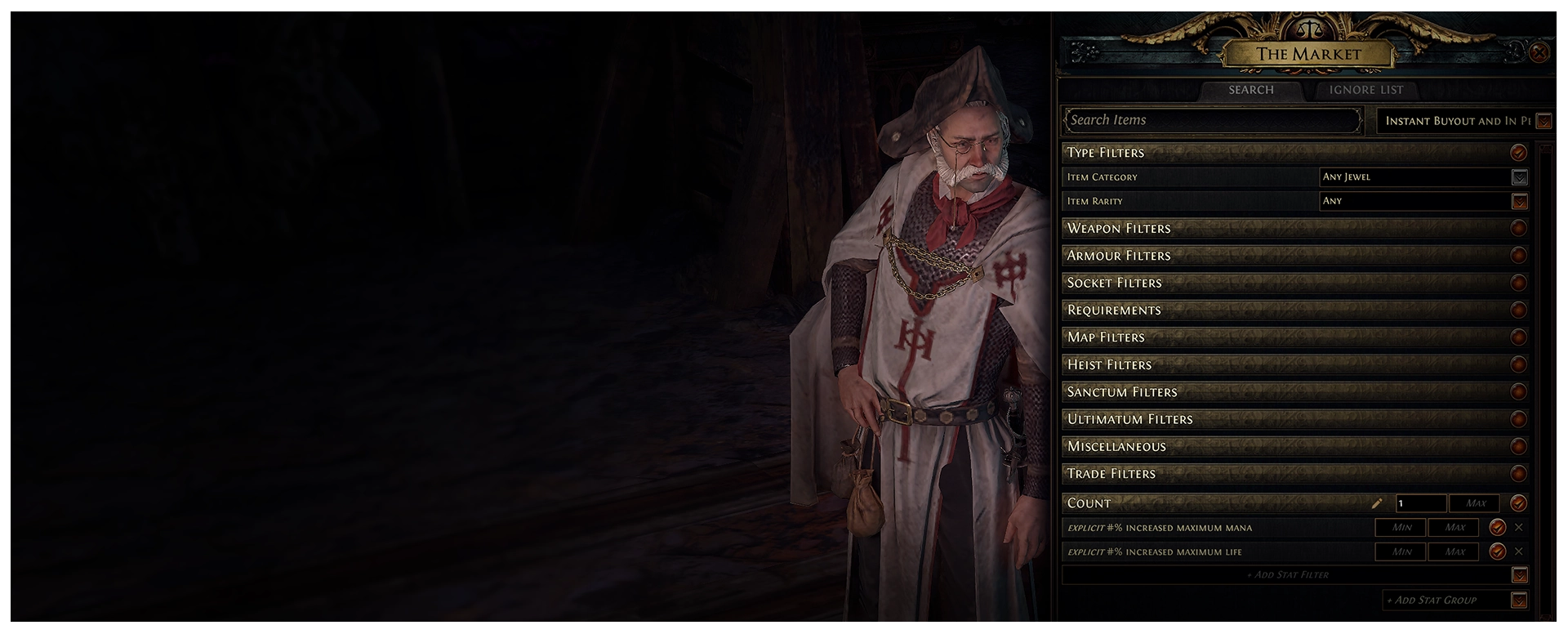
Reselling involves buying items at one price and trying to sell them for more. That requires understanding attributes, differences between versions, and equipment demand. A low purchase price doesn’t necessarily mean a quick sale. Fees, market fluctuations, and a lack of buyers can turn a seemingly attractive deal into a loss.
Crafting Items for Sale
This approach uses currencies and crafting systems to turn item bases into equipment sought after by other players. The final value depends on the modifiers obtained and demand for that combination. Some attempts produce appealing items; others use up resources without reaching the desired result. Material costs must be considered before treating crafting as a source of income.
Trading Materials in Bulk
Players who accumulate currencies, fragments, Scarabs, and other resources can organize them into large batches for trade. The Currency Exchange and official tools facilitate compatible transactions. The appeal is building inventory and finding buyers interested in purchasing many items at once. That doesn’t eliminate market fluctuations or guarantee a higher price.
Vendor Recipes and Conversions
Path of Exile has vendor recipes that exchange combinations of items for particular rewards. Some are useful during the campaign, while others help organize or convert resources. Their economic value depends on the items consumed and received. Many older recipes have become less relevant as the game has changed, so they shouldn’t automatically be considered efficient farms.
How to Choose Your Farming Method
Now that you know the main methods, the most important question isn’t which one another player claims produces the highest profit.
It’s which activity fits your build, progression, and preferred way to play.
Players who enjoy clearing large groups of enemies may prefer Legion, Breach, and other mechanics that increase monster density in maps. Those interested in crafting may find Harvest, Essence, Delve, and activities offering specific bases or materials more useful.
Players who like exploring separate areas may prefer Heist, Sanctum, and the depths of the Azurite Mine. Others who enjoy learning attack patterns and taking on demanding encounters may spend more time fighting bosses.
Consider your available time as well. Some activities can be completed during normal Atlas exploration. Others involve longer sequences or their own progression systems. A good starting point is to try different mechanics before investing all your resources in one.
Does Every Farm Need to Produce Divine Orbs?
Not necessarily. Finding maps, useful materials, your own equipment, or resources that advance progression can also be a positive result.
This is even clearer in Solo Self-Found: an item with little trade value can solve a major problem for your character.
Is There a Best Farming Method for Beginners?
There’s no universal answer, but a few characteristics help. Activities with easy-to-understand goals that happen inside normal maps tend to be simpler to try. Strongboxes and Essence are examples of mechanics with rules that can be understood quickly. That doesn’t mean every encounter is easy: difficulty rises with the content, map tier, and modifiers.
Ideally, start with activities your build can finish without excessive difficulty and branch out as your character improves.
How Can You Tell Whether the Items You Find Are Valuable?
Compare how useful an item is for your build and the listings for genuinely comparable items. The trading guide linked at the beginning explains pricing and sales; this catalog helps you find the activities that provide the resource you’re looking for.
Path of Exile Offers Many Ways to Progress
This catalog organizes Path of Exile 1’s main activities by how they work and what they reward. Use these categories to decide what to try, and return to the relevant method whenever you need a reminder of access requirements and rewards. ZAUS.GG’s dedicated guides will explore preparation, risks, and strategies in greater depth as they are published; this overview will continue to provide the big picture without replacing individual tutorials.
About the Author