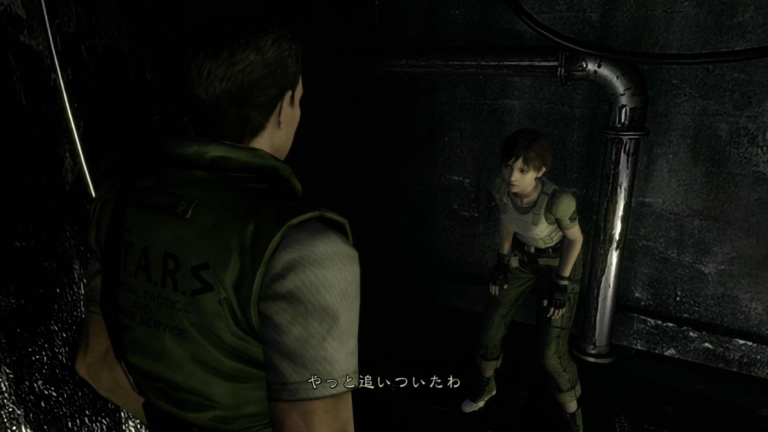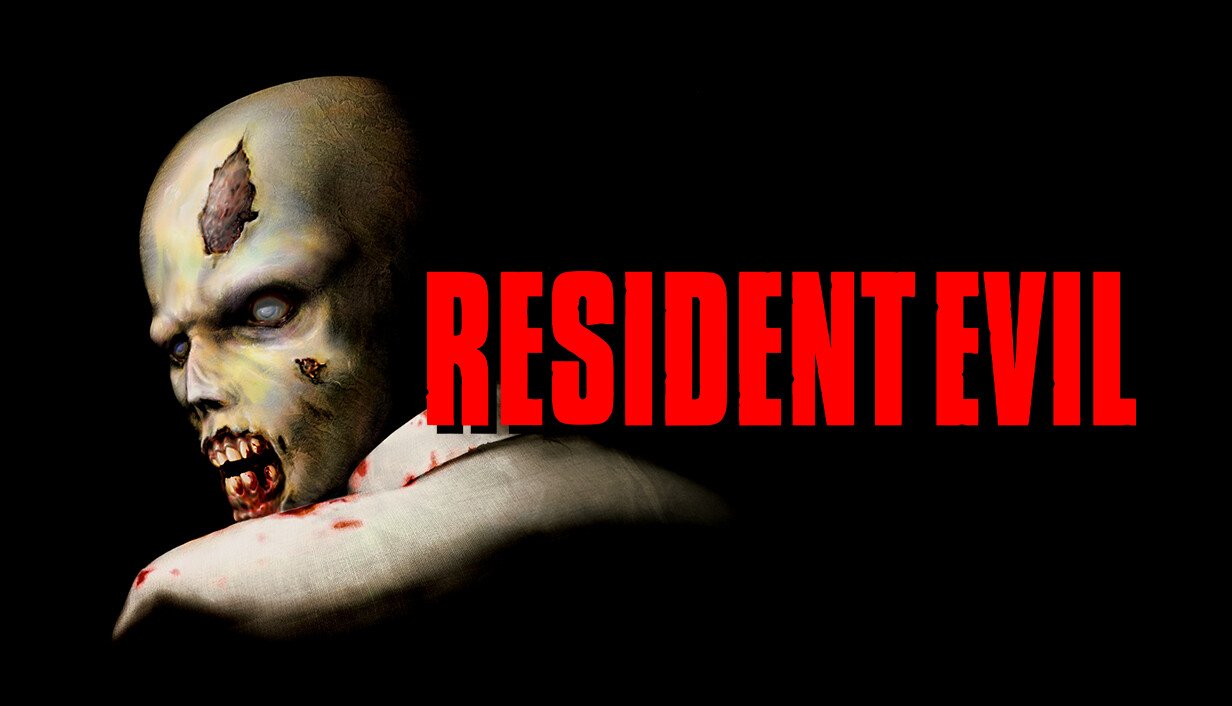
Resident Evil (1996): zombie and title from the classic PC edition artwork. Image: Capcom / Steam.
Before over-the-shoulder cameras and modern remakes, Resident Evil (1996) turned a mansion into a maze: every bullet mattered, a locked door could demand a lengthy investigation, and saving your progress consumed a limited resource. Released by Capcom for the original PlayStation and titled Biohazard in Japan, the game became one of the titles most closely associated with survival horror.
This retrospective explains how the first Resident Evil was made, how its systems work, and why it still matters, without telling the entire plot or revealing the major endings. To place it among sequels, remakes, and spin-offs, see ZAUS.GG’s overview of the Resident Evil franchise.
On this page
How did Resident Evil come about?
In the early 1990s, Capcom was looking for a new way to create interactive horror. Producer Tokuro Fujiwara, associated with Sweet Home (1989), encouraged a project that would draw on ideas from that Famicom game, including dangerous exploration and resource management. Shinji Mikami took the director’s role and helped shape the combination of restrained action, investigation, and suspense.
That does not mean Resident Evil simply remade Sweet Home. The 1989 title organized much of its experience around RPG systems, whereas the PlayStation project pursued polygonal characters, direct interaction with the environment, and a presentation akin to a horror film. Nor was it created in isolation: earlier horror games had already experimented with mansions, limited resources, and different perspectives.
Why were the backgrounds pre-rendered?
The project went through visual experiments before adopting its familiar form. In historical interviews, Mikami and programmer Yasuhiro Anpo explained that the ambition to build fully three-dimensional environments clashed with the original PlayStation’s capabilities. The team turned to pre-rendered backgrounds, fixed camera angles, and real-time 3D characters, a combination used in a different way in Alone in the Dark (1992).
This approach enabled more detailed settings than the console could have rendered entirely in 3D during gameplay. In return, camera freedom and some elements of control were restricted. The development story was discussed in GameSpot’s interview with Mikami and Anpo and in coverage of a presentation about the game’s creation.

Resident Evil’s 1996 release
Resident Evil debuted in Japan on March 22, 1996, for PlayStation, under the name Biohazard. Capcom adopted Resident Evil for Western markets. Its release brought together live-action filmed sequences, voice acting, suspenseful music, and environments intended to evoke an interactive horror movie.
The opening setting is an isolated mansion near Raccoon City, investigated by members of the special police unit S.T.A.R.S. That premise is all you need to grasp the appeal: enter an unfamiliar place, realize something is wrong, and search for an exit without knowing where all the threats are.
Polygonal characters against static backgrounds made an impression at the time, but the experience was not powered by graphics alone. Players investigated clues, chose which rooms to search, and dealt with the practical consequences of using up supplies too early. Capcom itself recognizes March 22, 1996 as the franchise’s beginning on its 30th-anniversary page.
Chris Redfield or Jill Valentine: what actually changes?
Resident Evil lets you choose Chris Redfield or Jill Valentine. This isn’t merely a different face on the same protagonist: their campaigns offer different conditions and interactions, even though much of the mansion’s overall structure is shared.
Jill has eight inventory slots and can use a lockpick to open certain small locks. Her greater carrying capacity usually makes the opening learning curve gentler, and Barry Burton assists her at moments specific to her route.
Chris has six inventory slots, making each trip tighter when carrying weapons, healing supplies, ammunition, and keys. His equipment and interactions differ: he begins with a lighter and receives help from Rebecca Chambers. In the classic game, he also withstands more damage than Jill. These differences change your planning but do not make the choice a simple matter of one good character versus one bad one.
Anyone interested in the original design can learn a great deal by playing both routes: the same architecture creates different needs and paths. You do not have to know either campaign’s full story in advance.

How does Resident Evil (1996) play?
Fixed cameras, 3D characters, and classic controls
The environments use pre-rendered backgrounds, while characters and some creatures are three-dimensional models. Cameras are positioned by the development team; crossing a boundary can change the angle even when you are still in the same corridor. This resembles cinematic editing but also limits what you can see.
Movement uses what are commonly called tank controls: directional inputs depend on the character’s facing rather than the current camera position. Up moves the character forward; left and right turn them. The system prevents a camera-angle change from automatically reversing your movement, but takes getting used to if you normally play games with modern analog controls.
Why does combat require decisions?
Shooting can stop an attack, but ammunition is scarce and not every enemy needs to die. Sometimes going around an enemy saves bullets; other times, leaving a dangerous corridor uncleared can make later trips worse. The game rewards learning the layout and judging risk, not merely reflexes.
Weapons also have limitations in aiming, range, and reaction. Even if you have enough firepower, you must decide whether opening a path is worth the cost. This relationship between vulnerability and resources is explored in ZAUS.GG’s guide to survival horror, a genre Resident Evil helped popularize but did not single-handedly invent.

Limited inventory and item boxes
Inventory management is a core system in the original. A weapon takes space, as do ammunition, herbs, tools, and objects needed to open new routes. With only six slots for Chris or eight for Jill, carrying everything is impossible. You must decide what to take, what to leave behind, and when to return for an item.
Item boxes let you store objects that don’t need to stay with you at all times. Because the boxes share their stored contents in the classic system, planning what to deposit cuts down on pointless trips. But the real cost is not just space: walking back through familiar territory can still mean crossing dangerous corridors.
Herbs, health condition, and recovery
Health appears as a display resembling an electrocardiogram. Herbs and first-aid sprays restore your condition, but you still need to carry and use them wisely. Combining certain herb types can make them more useful, adding another decision: keep ingredients separate or prepare a healing item.
Typewriters and Ink Ribbons
On the original PlayStation, saving requires finding a typewriter and spending an Ink Ribbon, the consumable used to record progress. The system lacks the freedom of modern autosaves: saving now spends a ribbon, while going on without saving increases the amount of progress you could lose.
Storage and save rooms provide breaks in the exploration’s rhythm without erasing the pressure. They are places to plan: rearrange the inventory, recover health, consider the next locked doors, and decide when a save is worth its cost.
Puzzles and reading the environment
Distinctive keys, objects that need examining, scattered clues, and environmental mechanisms turn the mansion into a navigation puzzle. Often the challenge is less about finding an immediate answer than remembering a door or device that seemed useless the first time you encountered it.
Exploration and puzzles keep the game from being only about fighting. At the same time, repeatedly crossing familiar rooms may feel slow to modern players. That is a real consequence of the design, not a difficulty that must be romanticized.

Spencer Mansion and the construction of fear
The mansion is not just decoration. Its entrance hall, corridors, specialized rooms, and initially blocked passages form a connected network you gradually learn. The map helps identify locations, but it cannot replace observing objects, sounds, and encounters.
Fixed cameras can leave areas outside the frame, so opening a door into another room does not always reveal what awaits. The soundtrack alternates between tension and silence; footsteps, doors, and creature sounds can reveal a threat before it appears. These effects rely on audio and framing, not only sudden scares.
The game’s recognizable door-opening animations also helped mask the loading of separate environments. They build anticipation, but interrupt the flow and may become tiring during long sessions. The same feature is both a technical solution and part of the atmosphere.
What technical limitations added—and what they cost
Pre-rendered backgrounds made it possible to show interiors with impressive detail for the generation, using composed lighting and framing to build tension. The lack of a free camera, however, makes spatial awareness harder and affects the sense of control. In 1996 this trade-off helped Capcom achieve its intended look; in 2026 it is also something players have to accept.

What set Resident Evil apart from other horror games?
Resident Evil was not the first game to feature a threatening house, 3D characters, fixed camera angles, or scarce supplies. Sweet Home and Alone in the Dark, among other predecessors, had explored some of those ideas. Its historical distinction lies in how Capcom assembled exploration, survival, puzzles, combat, and cinematic presentation into a highly visible release for the PlayStation generation.
Enemies are not simply targets for testing your aim. Zombies, infected dogs, and other creatures change the risk calculation for each location: an apparently simple hallway can become a costly route. The game alternates observation and danger, preventing exploration from becoming nonstop action.
Choosing a protagonist and encountering different outcomes also give players reasons to revisit the experience. Here, those features illustrate the game’s design; narrative consequences and endings are reserved for our future full-story article.

Which versions of the first Resident Evil exist?
The Resident Evil name appears on different products. To recognize the 1996 original, you need to distinguish the first game from later adaptations and reconstructions.
- Resident Evil / Biohazard (1996), PlayStation: the game that started the series. Western editions may differ in content and censorship from the Japanese release.
- Classic PC and Sega Saturn versions: period adaptations with presentation, content, and feature differences depending on platform and region. They are not the 2002 remake.
- Resident Evil: Director’s Cut (1997), PlayStation: adds Arrange mode, changing item and enemy placement, with camera and content differences from the standard campaign.
- Director’s Cut: Dual Shock Ver. (1998): a revision featuring DualShock support and a different soundtrack. The music should not be assumed identical across every edition.
- Resident Evil (2002 remake), GameCube: a substantial reconstruction with redesigned settings, systems, and presentation. It is a different design, not just the 1996 game at higher resolution.
- Resident Evil HD Remaster: a higher-definition release based on the 2002 remake. Its appearance and several mechanics do not represent the 1996 edition.
Later adaptations include Resident Evil: Deadly Silence for Nintendo DS, which builds on the classic game with platform-specific features. When comparing games and screenshots, the version’s year matters more than a simplified title in a headline.
Where can you legally play Resident Evil (1996) in November 2026?
The classic returned to sale for modern PCs through GOG in June 2024 and has also been available on Steam since April 1, 2026. Both are PC re-releases of the original game, not the reconstructed GameCube edition.
GOG’s preservation work includes compatibility with current Windows systems, display options, video-playback improvements, and modern controls, as outlined in its official classic-trilogy announcement. Steam’s listing likewise describes technical adjustments to the classic edition. Check each store for supported languages, requirements, and any software restrictions.
For a more modern presentation, look specifically for the 2002 remake and its HD Remaster instead of accidentally purchasing a classic edition. Prices and promotions change, so use the store links for current information.

How was Resident Evil received, and what is its legacy?
The original’s reception helped Resident Evil grow into a Capcom franchise. The series went on to tell new stories on more consoles and explore action-focused designs, while its model of interconnected spaces, resource management, and survival with incomplete information became a reference point for other horror games.
That historical impact does not mean every design choice has aged well. Rigid controls, constant camera-angle changes, slow transitions, and distinctly period voice performances can frustrate today’s players. Yet studying maps, deciding when to fight, and learning efficient routes still sustain a distinctive experience.
Capcom officially celebrated the franchise’s 30th anniversary in 2026, underscoring the longevity of a series that began in 1996. The original’s GOG and Steam releases also make it easier to study as a historical game without relying entirely on aging hardware.
Is Resident Evil (1996) still worth playing?
Yes—particularly if you enjoy exploration, carefully measured tension, and video-game history—with one condition: accepting that its limitations are part of the original design. It is not ideal if you want free movement, modern aiming, or a constantly combat-driven pace. But it is especially rewarding for seeing how one mansion, limited supplies, and carefully chosen camera angles could support hours of difficult decisions.
This assessment is based on the game’s documented systems and historical context; it is not a hands-on playtest conducted by ZAUS.GG. The next part of our project about the first Resident Evil will cover the full events and storyline, with spoilers clearly marked. Until then, this retrospective and our central franchise overview explain why it all began in 1996.
About the Author