Silent Hill f (2025): Shimizu Hinako explora Ebisugaoka. Captura oficial de divulgação: Konami / NeoBards Entertainment.
Imagine walking down the hallway of an unfamiliar house. A patch of light lets you see the door at the far end, but a noise from the next room makes you stop. The sound disappears. Perhaps an object fell; perhaps something is in there. Continuing or investigating presents different risks, and neither choice guarantees safety.
In a movie, you watch a character make that decision. In a video game, you must take part in it. This is one of the strengths of horror games: turning incomplete information, anticipation, and interaction into fear. A creature does not need to appear for the next step to become difficult.
Silent Hill relies on atmosphere and storytelling; Amnesia emphasizes vulnerability; Outlast develops chases; SOMA questions consciousness and identity; and Phasmophobia turns investigation into shared risk. These approaches do not follow a single formula. Their history begins before large three-dimensional environments and continues through commercial releases, independent experiences, and multiplayer games.
Updated October 22, 2026.
Nesta matéria
What defines a horror game?
Horror is a category in which fear, suspense, unease, or discomfort has a central place in the experience. These feelings may come from storytelling, gameplay systems, audiovisual presentation, or the relationship between player and environment. The classification describes an approach, not a mandatory checklist of objects or mechanics.
Monsters, blood, weapons, and jump scares are possibilities, but none is essential. A story can generate discomfort through isolation and responsibility; a house can become threatening when it stops following a familiar layout. Likewise, intense violence or dark visuals do not automatically make a game part of horror.
Nor is combat necessarily absent. Some games let players fight back with weapons; others use flight, hiding, observation, or narrative choices. What matters is how those actions help generate fear. Having only a few controls does not remove interactivity, just as having many tools does not prevent suspense.
Horror and survival horror: a category and a tradition
Survival horror is part of the broader horror category. Within this tradition, surviving threats and constraints shapes an important part of the challenges. Exploration, inventory, resources, and vulnerability often influence the player’s path, although the systems differ substantially from game to game.
Resident Evil makes this structure recognizable: using an item now might make a confrontation easier but reduce your options later. By contrast, SOMA also draws unease from the implications of its story, while Phasmophobia organizes its activities around identifying an entity. These distinctions clarify each experience’s emphasis without drawing completely rigid boundaries.
| Feature | Horror | Survival horror |
|---|---|---|
| Definition | Broad category centered on fear, tension, or discomfort | Horror tradition in which surviving threats is an important challenge |
| Mechanics | May involve exploration, storytelling, investigation, combat, or other activities | Often involves vulnerability, exploration, threats, and limitations |
| Combat | May or may not be present | May be important, restricted, or difficult to access |
| Resources | Do not have to be central | Often inform important decisions |
| Examples | P.T., SOMA, Phasmophobia, Layers of Fear | Resident Evil, Alone in the Dark, Signalis |
| Relationship | Broader category | One of the traditions within horror |
Silent Hill combines survival with psychological horror; Alien: Isolation combines survival and evasion; Amnesia is also described as survival horror in some contexts. Not every horror game primarily belongs to this tradition, but the categories can overlap. Our survival horror feature explores inventories, ammunition, and the format’s development in greater depth. Here, the focus is the broader history of interactive fear.
From text adventures to the first mazes
Horror did not emerge from a single invention. On early computers and consoles, descriptions, simple shapes, and limited visibility already supported dangerous settings. Players filled in mentally what the screen could not show, while commands and rules turned imagination into exploration.
Transylvania (1982) brought adventure, exploration, and Gothic traditions together. Infocom’s The Lurking Horror (1987) developed horror through written descriptions and text commands. Players needed to interpret descriptions to understand locations and act. These predecessors show why the genre’s history cannot begin solely with 3D graphics.
Malcolm Evans programmed 3D Monster Maze for the Sinclair ZX81, putting players in a first-person maze hunted by a Tyrannosaurus rex. There was no arsenal to destroy the danger: studying passages and finding the exit were central decisions. The inability to monitor the entire maze made pursuit tense even with extremely simple graphics.
Its date requires care. Surviving records associate the game with the 1981–1982 transition, differing on development, circulation, and commercial editions. The Centre for Computing History collection catalogs it as a 1981 title. Acknowledging the discrepancy is more accurate than imposing an agreed year or claiming absolute pioneering status without documentary support.
Haunted House and Sweet Home
In 1982, Atari’s Haunted House brought a dark mansion to the Atari 2600. The protagonist was represented mainly by eyes; matches helped reveal nearby objects as players searched for pieces of an urn and avoided dangers. Lighting shaped exploration rather than merely decorating it. Atari’s historical page identifies the original, distinct from the 2023 reimagining.
Capcom released Sweet Home for Famicom in 1989, adapting the Japanese movie of the same name and combining role-playing systems, characters with different abilities, resources, and mansion exploration. Choosing whom to send exploring and how to use objects affected progression. Developers involved with Resident Evil have acknowledged its influence, but that does not mean the two games have identical systems.
Alone in the Dark and Resident Evil: camera, space, and survival

Alone in the Dark, released by Infogrames in 1992, was developed by a team led by Frédérick Raynal. Polygonal characters moved through backgrounds framed from predetermined angles. Entering a different part of a room could reveal a new perspective, exposing information that had previously been out of sight.
This relationship between camera and space helped structure tension, exploration, and encounters. Finding an object also meant understanding how it related to Derceto mansion. The game became a milestone for this combination but did not single-handedly create survival horror. The 2024 Alone in the Dark from Pieces Interactive reinterprets its characters and environments and must be distinguished from the original.
In 1996, Capcom’s Resident Evil popularized survival horror on PlayStation and established its commercial identity. Spencer Mansion combined investigation, threats, cinematic camera angles, and resource decisions. Players had to understand the location while weighing the cost of confronting its dangers.
Resident Evil 4 (2005) placed greater emphasis on action and fighting, an approach often called action horror. The ability to fight back did not necessarily remove fear: pressure, positioning, and the presentation of threats remained important. Alone in the Dark highlighted spatial staging, Resident Evil consolidated a commercially successful survival structure, and its fourth entry struck a different balance between vulnerability and combat capability.
Silent Hill: atmosphere, storytelling, and perception
Released by Konami in 1999, Silent Hill developed a different identity from the investigation and survival of Resident Evil. Fog limited visibility in the streets; noises suggested unseen things; environments and events could be unsettling even without immediate combat. The town itself shaped the experience. Fighting and creatures coexist with the sound identity associated with Akira Yamaoka, whose textures and contrasts do not depend on continuously intense music.
Silent Hill 2 and its remake
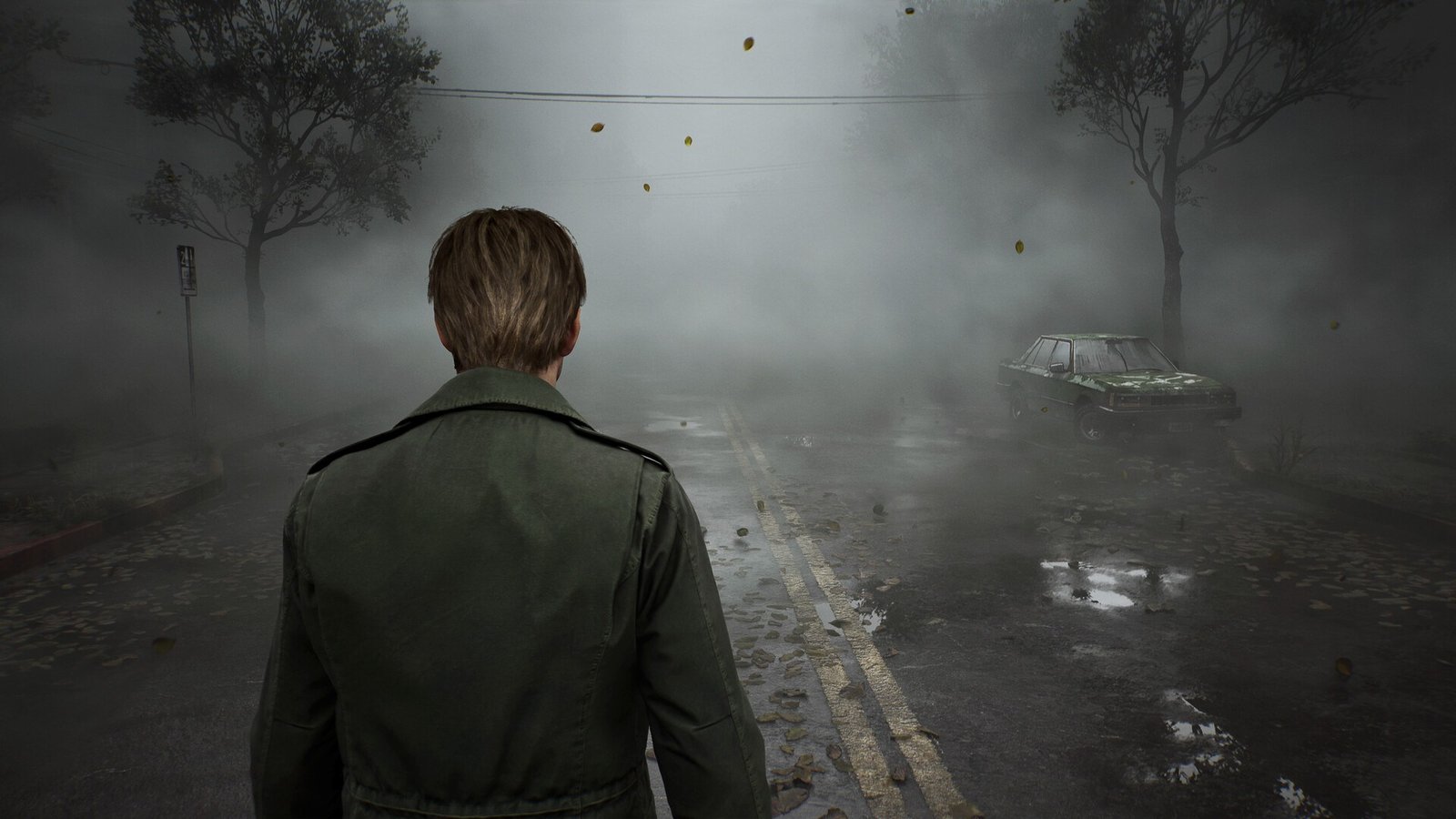
Silent Hill 2 (2001) follows James Sunderland on a journey whose impact also depends on understanding and interpreting events. Places, characters, and creatures contribute to psychological storytelling, without every image requiring one mandatory symbolic explanation.
Discomfort may come from what information implies about the story, not just from the threat directly in front of a character. Explaining the approach does not require spoiling its twists. It would also be inappropriate to automatically equate psychological suffering or psychiatric diagnoses with violence: psychological horror describes a narrative and perceptual approach, not a clinical condition.
Bloober Team’s remake, first released for PS5 and PC on October 8, 2024, rebuilt environments and modernized the presentation, camera, and controls. Konami’s announcement identifies that edition. It offers a technical reinterpretation, but remake images must not silently stand in for the 2001 original.
Silent Hill f and 1960s Japan
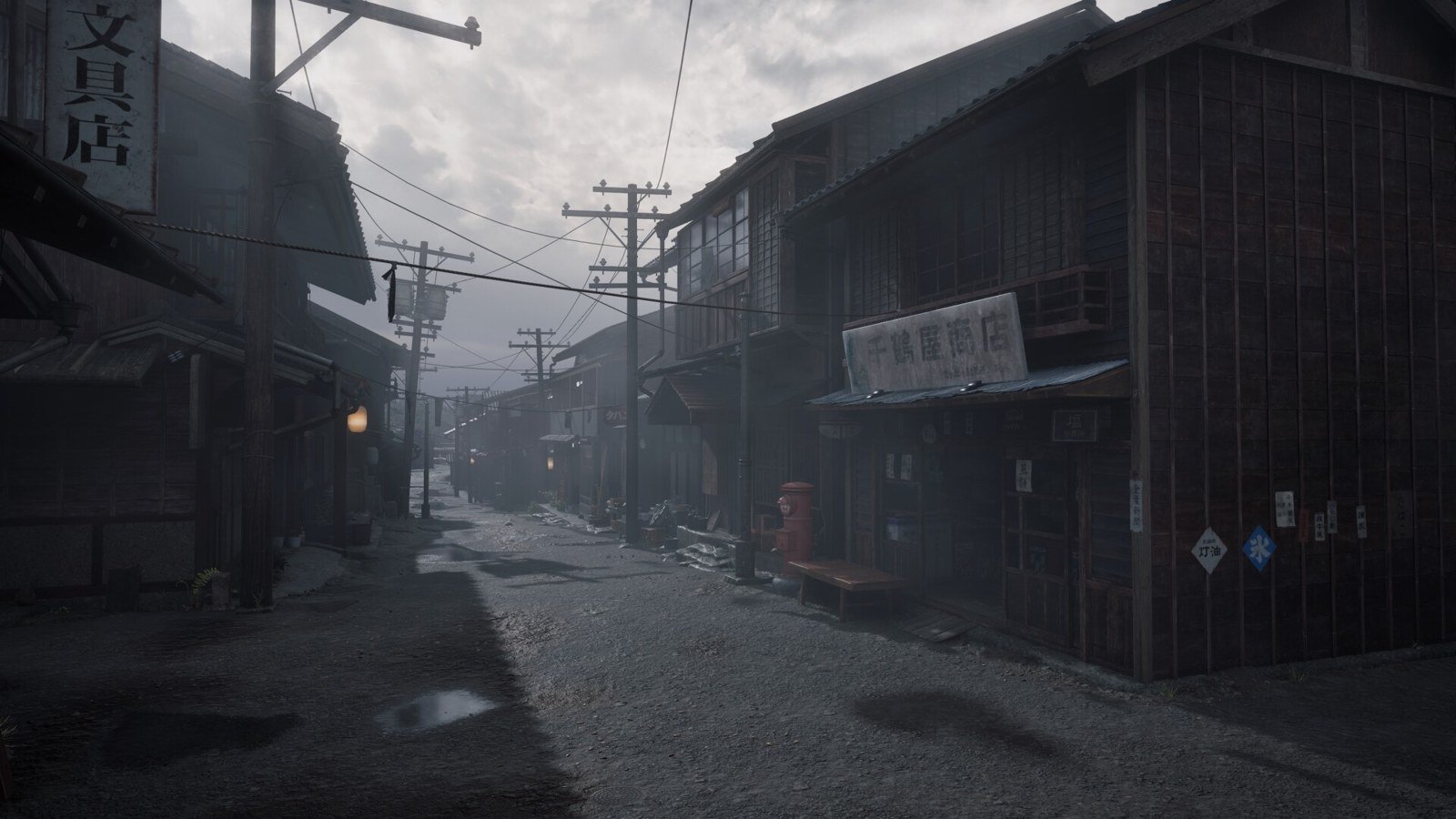
Developed by NeoBards Entertainment, Silent Hill f launched on September 25, 2025. Written by Ryukishi07, it follows Shimizu Hinako in Ebisugaoka, Japan, during the 1960s. Its setting changes the architectural and social context, while beauty and horror meet in the environment’s transformations.
Exploration, combat, and decisions all play a role in a game mixing psychological, supernatural, and body horror. There is no need to reduce its events to a single reading. Konami’s release confirmation also prevents a timeline error: by October 2026, Silent Hill f had been available for over a year.
The series’ diversity also includes Silent Hill: Townfall, released on September 24, 2026, for PS5, Steam, and Epic Games Store. Developed by Screen Burn Interactive and co-published by Konami and Annapurna Interactive, it follows Simon Ordell on the Scottish island of St. Amelia in a psychological horror experience combining evasion, encounters, and puzzles. The CRTV, a portable television that tunes into unstable signals, is one of its investigative tools.
Konami describes it as the series’ first full game entirely in first person. This does not erase earlier first-person experiences such as P.T., which had a different scope.
Fatal Frame and the diversity of Japanese horror
The first Fatal Frame, released in Japan by Tecmo in 2001 as Zero, introduced a distinctive relationship with ghosts. Known as Project Zero in certain markets, the franchise uses the Camera Obscura as a way to confront apparitions. Fighting back requires looking at the ghost and considering framing and timing.
This reverses a common reaction to danger: looking away can prevent the action needed to respond. Observation exposes the player but also offers a defense. Details vary by edition; the official Maiden of Black Water manual illustrates the tradition without automatically representing every game’s rules.
Supernatural horror includes ghosts, apparitions, and inexplicable events within fiction. It appears in different forms throughout Japanese development. FromSoftware’s Kuon (2004) takes inspiration from the Heian period; Corpse Party developed storytelling and exploration through independent origins and multiple editions. Chilla’s Art frequently turns ordinary places such as shops and apartments into unsettling situations.
No single cultural formula explains all of this. Silent Hill also draws on varied literary and audiovisual influences. Reducing Japanese horror to a particular ghostly appearance or curse erases differences in period, theme, and design that are essential to understanding its contributions.
On March 12, 2026, Fatal Frame II: Crimson Butterfly Remake, developed by Team NINJA and published by Koei Tecmo, revisited Mio and Mayu Amakura’s story in an abandoned village. It remakes the second game, originally released in 2003, rather than launching an entirely new franchise.
Available for PS5, Nintendo Switch 2, Xbox Series X|S, and PC, the remake retains the Camera Obscura and adds new visual presentation, spatial audio, and gameplay elements such as holding the sister’s hand. The sisters’ proximity becomes part of exploration and vulnerability.
Amnesia and Outlast: vulnerability, tools, and escape

Frictional Games’ Amnesia: The Dark Descent (2010) became a major example of vulnerable first-person exploration. The player lacks the conventional armed response of a shooter against threats. Finding a route, hiding, and dealing with darkness can matter more than confronting a creature directly.
Lighting, narrative, and sound combine with this restriction. Expecting danger already changes exploration before it appears. Yet having no gun does not explain the entire effect: readable environments, opportunities to respond, and understandable rules help make vulnerability tense rather than merely frustratingly helpless.
A Machine for Pigs (2013), developed by The Chinese Room, has its own approach; Rebirth (2020) introduces another story and systems; The Bunker (2023) emphasizes navigating a hostile location and its relationship to a threat, tools, and resources. The franchise does not use identical rules across every entry or simply repeat the first game’s organization.
Red Barrels’ Outlast (2013) follows a journalistic investigation filled with hiding, pursuit, and escape. A portable night-vision camera helps players see in poorly lit spaces but introduces constraints and focuses attention through a particular view. Using the camera does not neutralize the danger.
Amnesia and Outlast share vulnerability and perspective but are not interchangeable. The former has its own interplay of lighting, threats, and exploration, while the latter makes the camera and chase pacing especially important. Outlast 2 (2017) told a different story; The Outlast Trials progressed from 2023 Early Access to version 1.0 on March 5, 2024, confirmed by Red Barrels, expanding the tradition into cooperative challenges as well.
Psychological and existential horror: SOMA and Mouthwashing

Psychological horror explores perception, uncertainty, isolation, and emotional conflict. It can coexist with creatures and encounters, as in Silent Hill 2, or draw its strength mainly from relationships and storytelling. Existential horror instead emphasizes identity, consciousness, and the human condition. The approaches overlap but are not synonymous.
Frictional Games released SOMA on September 22, 2015. Its underwater facility, PATHOS-II, provides a science-fiction setting in which understanding the situation can be as disturbing as escaping a threat. Questions about consciousness are not a philosophical appendix detached from play: they affect how players interpret the world and their actions.
The game also contains creatures and danger. Its Safe Mode, as explained by Frictional, changes how threats operate so players can follow the experience without the same pressure of dying. The environment and narrative remain unsettling. Reducing mechanical punishment does not automatically eliminate horror arising from discoveries.
Mouthwashing, developed by Wrong Organ and published by Critical Reflex on September 26, 2024, uses isolation aboard a cargo spaceship and conflict between characters. Its stylized presentation and information structure support psychological horror without relying on constant pursuit.
In both games, describing every revelation would undermine the experience. Identifying broad themes and the role of narrative is more helpful while protecting major plot developments. A story is not deep merely because it is confusing; what matters is how information provides context, reshapes expectations, and involves the player.
P.T., Layers of Fear, and spaces that cannot be trusted
In 2014, P.T., short for Playable Teaser, was released for PS4 as a presentation associated with the Silent Hills project, involving Hideo Kojima, Guillermo del Toro’s collaboration, and Norman Reedus. Silent Hills was canceled in 2015; P.T. was not the complete game, and its original distribution was withdrawn.
Its repeating hallway turns familiarity into distrust. Ordinarily, moving through a space helps players master it. When small details and events change, they begin looking for differences. Even a seemingly ordinary passage becomes tense because something may have changed. P.T. did not invent every one of these techniques but became a reference point for how they work together.
Bloober Team’s Layers of Fear (2016) also relies on exploration, objects, and environmental transformations. A seemingly understood room can change its relationship to the exit; paintings and details communicate parts of the story. The direction of the player’s gaze and their movement contribute to narrative presentation rather than simply connecting scenes.
Layers of Fear 2 (2019) is a separate experience. The 2023 Layers of Fear combines and reinterprets content from the series with a different presentation; it is not merely the original release under a new date. These distinctions matter to the history and to identifying screenshots and versions accurately.
Not every dark narrative exploration game is primarily horror. What Remains of Edith Finch addresses family stories and death; The Vanishing of Ethan Carter combines investigation and mystery. Serious subjects alone do not establish a genre.
Visual novels and metanarrative horror
Visual novels use text, imagery, and audiovisual elements to structure stories, sometimes with choices and branching paths. This format can support romance, adventure, or horror. Higurashi When They Cry developed a tradition of mystery and horror through the interpretation of characters and events; Yangyang Mobile’s The Letter (2017) combines horror with choices involving several characters.
Released by Dan Salvato and Team Salvato in 2017, Doki Doki Literature Club! uses the conventions of this format to create psychological and metanarrative horror. Here, the way the story is told and presented is itself unsettling: expectations about the format and the player’s relationship to the game can no longer be taken for granted.
Revealing its surprises in detail would spoil discovery. It is enough to recognize that interfaces and narrative structure can serve horror just as lighting and sound do. Doki Doki Literature Club Plus! (2021) is an expanded edition with additional content and improvements, distinct from the original release. Official warnings about disturbing themes are relevant when choosing what to play without needing to give away the events they contextualize.
Thematic strands: cosmic, body, supernatural, and narrative horror

Cosmic horror explores forces or realities beyond human understanding. Fear may arise from the scale of the unknown and the limits of human control, not merely from enormous monsters. The tradition is associated with H. P. Lovecraft and other writers but cannot be reduced to a catalog of literary creatures.
Bloodborne (2015) blends action RPG systems, Soulslike structure, and Gothic and cosmic influences. Classifying it exclusively as horror while ignoring combat and progression would miss a substantial part of the experience. Black Salt Games and Team17’s Dredge (2023) links fishing, exploration, and upgrading a boat to disturbing discoveries. Night and visibility change navigation, while the unknown changes how a once-familiar activity is understood.
Body horror draws on transformation and threats to physical integrity, identity, and control over one’s own body. Blood alone does not define the approach. Dead Space (2008) combines science fiction, survival, and deformed creatures; Scorn (2022) uses organic structures and architecture to create estrangement. Silent Hill f also brings beauty and bodily transformation together alongside other forms of horror.
Categories overlap: supernatural horror concerns spirits and inexplicable fictional phenomena; narrative horror highlights the organization of story; psychological and existential horror emphasize other forms of discomfort. Cooperation, asymmetry, and VR instead describe participation or presentation. The table below maps these distinctions without treating them as mutually exclusive boxes.
| Strand | Main focus | Examples |
|---|---|---|
| Survival horror | Survival and vulnerability when facing threats | Resident Evil, Signalis |
| Psychological horror | Perception, storytelling, emotional unease | Silent Hill 2, Mouthwashing |
| Supernatural horror | Spirits, apparitions, unexplained events | Fatal Frame, The Mortuary Assistant |
| Existential horror | Identity, consciousness, the human condition | SOMA |
| Cosmic horror | The unknown and forces beyond human comprehension | Bloodborne, Dredge |
| Body horror | Transformation and threats to physical integrity | Dead Space, Scorn |
| Narrative horror | Stories and revelations as central elements | Doki Doki Literature Club!, Layers of Fear |
| Cooperative horror | Fear and objectives shared by players | Phasmophobia, Lethal Company |
| Asymmetric horror | Player-controlled pursuers and survivors | Dead by Daylight |
| Experimental horror | Specific ideas and unconventional mechanisms | Iron Lung, P.T. |
| VR horror | Spatial perception and interaction in virtual reality | Resident Evil 7 VR, Help Wanted |
Analog horror, found footage, and the language of recordings
Analog horror borrows conventions from older broadcasts and media, including tapes, interference, and seemingly archived material. Degraded imagery can conceal information; a familiar program can become unsettling when something appears that contradicts expectations.
Amanda the Adventurer combines recordings of a children’s program, puzzles, and interaction. Both what happens on the tape and the activities outside it matter. Yet adding a VHS filter does not automatically make a production analog horror. Retro visual style, cultural origins, and puzzle design are distinct issues.
Found footage presents events as recordings discovered within the fiction. Outlast puts a camera in the player’s hands as a tool. Fears to Fathom develops episodic stories related to everyday situations and monitoring technologies, with recording-related features that differ by episode.
A first-person perspective does not imply that a camera is filming the entire story. Likewise, a PlayStation 1-style appearance does not automatically mean VHS or analog horror. Explaining what the presentation does is more useful than placing every deliberately imperfect image under one label.
The independent laboratory: particular ideas, different effects
Digital distribution expanded opportunities to publish games focused on a single situation without requiring the scale of major productions. This allows short campaigns and experimentation but does not make every independent title short, simple, or retro. Coherence between the idea, presentation, and duration matters more than graphical realism.
Puppet Combo draws from slasher films and older video games; Chilla’s Art often examines the vulnerability of ordinary Japanese settings. They create familiarity and threat in different ways. World of Horror, fully released in 2023, brings together storytelling, stylized visuals, and roguelite elements; Faith: The Unholy Trinity (2022) uses a highly economical visual presentation with its own audiovisual tools.
Iron Lung and The Mortuary Assistant

David Szymanski released Iron Lung on March 9, 2022. Players operate a small submarine in a hostile alien environment, navigating with instruments, a map, and limited external images. Not being able to watch the outside continuously makes navigation and interpreting data part of the tension.
The available information supports action but never complete knowledge. Players must trust incomplete measurements and pictures: an approach centered on perception and isolation.
DarkStone Digital and DreadXP’s The Mortuary Assistant (2022) turns recurring tasks into supernatural horror. Following steps creates familiarity; unexpected events force players to observe their surroundings differently. These are fictional procedures in service of game design, not professional guidance for working in a mortuary.
Communities and fan projects
Mark Hadley’s Slender: The Eight Pages (2012) concentrated exploration and pursuit into a recognizable format. SCP: Containment Breach, also from 2012, used the collaborative SCP Foundation universe to develop a facility with its own threats. This origin differs from a corporate franchise controlled by a single creator.
Mods and development tools also allow rules and settings to be transformed into new experiences. Videos and livestreams extend the reach of reactions and discoveries, but do not alone explain a game’s popularity. Community theories about stories, particularly franchises such as Five Nights at Freddy’s, must be distinguished from confirmed information.
How do games build fear through mechanics?
A jump scare provokes an immediate reaction through an unexpected appearance, movement, or sound. Suspense may persist for a long time before anything is revealed. These techniques can work together but are not equivalent: anticipating a threat already changes exploration.
A sequence may introduce a clue, create an expectation, and lead to a discovery—or leave an absence that changes the meaning of the next clue. This is not a universal recipe. Constant jump scares can become predictable, while emptiness without context may simply become dull. Pacing must balance information, tension, and moments to recover attention.
Sound, lighting, and incomplete information
Footsteps, breathing, and noises may signal direction or simply build atmosphere. Players need to learn how a given experience uses audio. Silence after an intense sequence can also increase expectation; every pause does not need another threat. Differences in intensity structure the journey.
Lighting, shadows, contrast, and framing determine what players can understand. A bright place can still be terrifying if its details contradict the expected situation. Art direction is not synonymous with hiding everything in darkness: a recognizable detail can become more disturbing when the player can actually observe it.
Limited perception works best when it still provides enough clues to make decisions. Iron Lung channels this through instruments; cameras and flashlights introduce other kinds of exposure. Limiting information does not require arbitrarily deceiving players or always using the same dark corridor.
Pursuit, investigation, and environmental storytelling
Running away requires reading routes, openings, and threats. Some chases are scripted sequences; others result from programmed behavior with greater variation. Neither means an artificial intelligence with unlimited knowledge or abilities. Consistent rules can be learned; seemingly arbitrary detection may replace fear with frustration.
Puzzles provide reasons to observe and revisit spaces. An object or document may change the meaning of a location and the route forward. This structures pacing without automatically making the game primarily a puzzle title. Environmental storytelling communicates through the position of objects, traces, and changes in the surroundings, not only explanatory dialogue.
Decisions gain meaning from the interaction of these tools. Investigating provides information but exposes the player; saving a resource avoids an immediate cost but may preserve uncertainty. Participation needs to make sense within the game’s approach even in quite linear experiences. Dozens of endings are not required to involve players in tension.
Five Nights at Freddy’s: attention and resources under pressure

Scott Cawthon released Five Nights at Freddy’s in 2014, structuring its danger around surveillance. The security guard cannot monitor every camera simultaneously and must manage power and defenses. Observing one place temporarily removes others from attention.
Surviving until the designated hour makes time itself a source of pressure. Checking a camera may provide valuable information but also consumes attention and resources. The failure jump scare depends partly on what the game has led players to expect. Sequels and spin-offs changed the formula; Help Wanted (2019) adapted activities for VR without representing every entry’s rules.
Cooperative horror: investigate, collect, improvise
The presence of friends does not eliminate fear; it changes how fear circulates. Players share incomplete information, split up, make mistakes, and decide whether to help someone or protect a goal. Communication and silence can change the interpretation of danger. Humor and scares may coexist without automatically changing the game’s genre.
Phasmophobia: evidence instead of combat
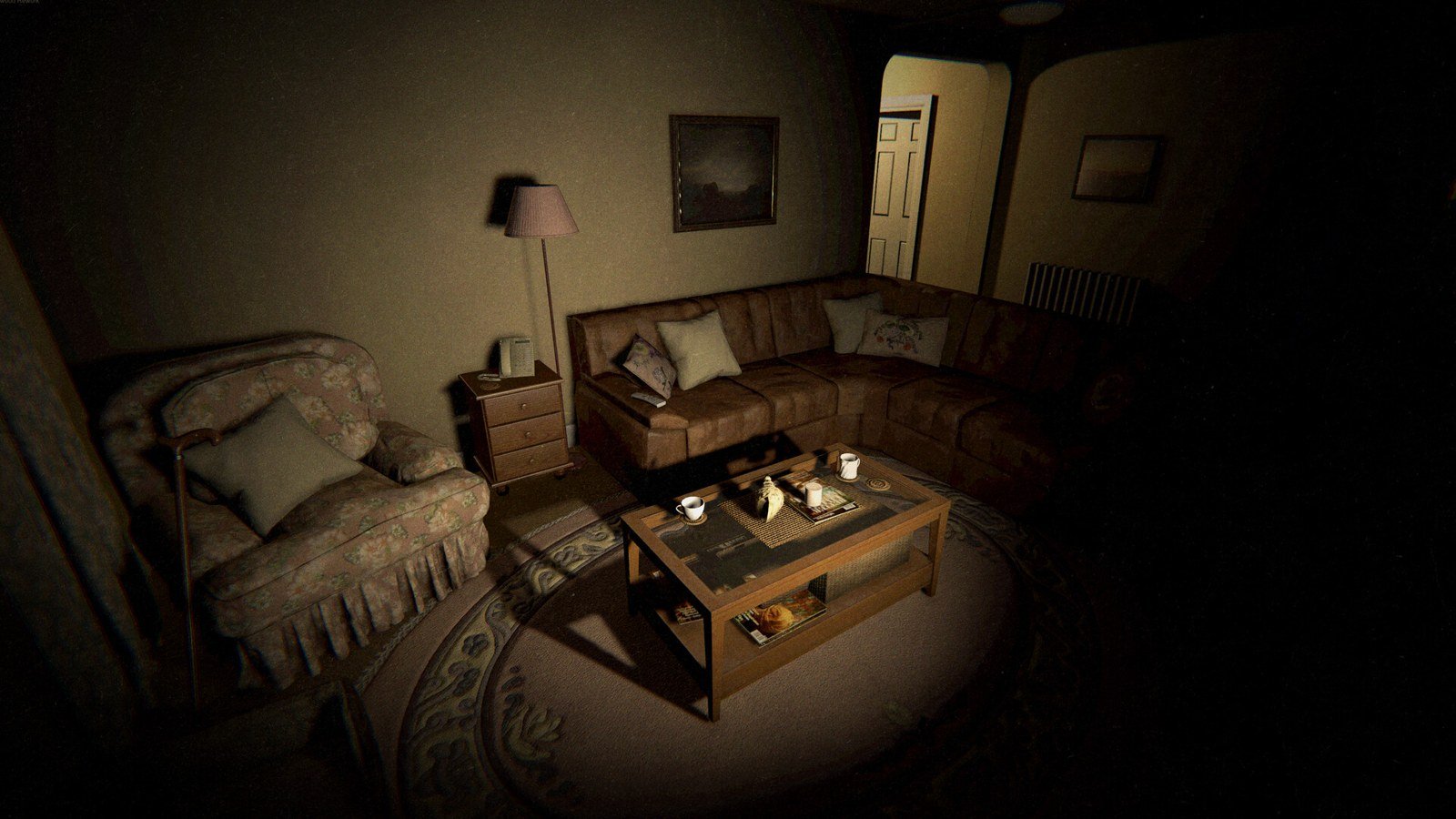
Kinetic Games launched Phasmophobia in PC Early Access on September 18, 2020. Teams use equipment, collect evidence, and attempt to identify which type of ghost the game has generated. Witnessing an apparition does not end the investigation: discoveries must be interpreted according to the rules, and remaining on site continues to carry risks.
Splitting responsibilities may make the search more efficient but can separate players with complementary knowledge. A discovery needs to be communicated; someone farther away may be unaware of what teammates are facing. This cooperation is about deduction and exposure, not conventional monster elimination.
In June 2026, Kinetic announced version 1.0 for the second half of 2027, postponing an earlier target. Its official statement separates that future plan from interim improvements. At this article’s editorial date, the game remained in Early Access. The Crimson Eye event started October 8, 2026, and was scheduled to end November 1; its preparatory patch was moved to October 7 without changing the event’s start.
Lethal Company, R.E.P.O., and social objectives

Zeekerss released Lethal Company in Early Access on October 23, 2023. Teams search for scrap to meet quotas imposed by a fictional company. Continuing to collect can improve the result, but increases exposure and puts what has already been gathered at risk. Communication, creatures, routes, and decisions create situations that do not need a fixed sequence of scenes.
This is emergent gameplay: events produced by the interaction between rules and participant actions. A carefully organized plan can change when someone loses contact or encounters danger. In October 2026, the store still identified the game as Early Access; popularity does not equal a version 1.0 launch.
Semiwork’s R.E.P.O. entered Early Access on February 26, 2025. Collecting and transporting valuable objects involves physics, coordination, and threats. How an object moves becomes part of the problem, distinguishing its collection from Lethal Company.
Content Warning (2024) connects risk with recording frightening events and social goals that also generate humor. The Outlast Trials organizes cooperative challenges within a different setting and tradition. Cooperation describes who participates together, not a single set of tasks.
Asymmetric horror and the player-controlled threat
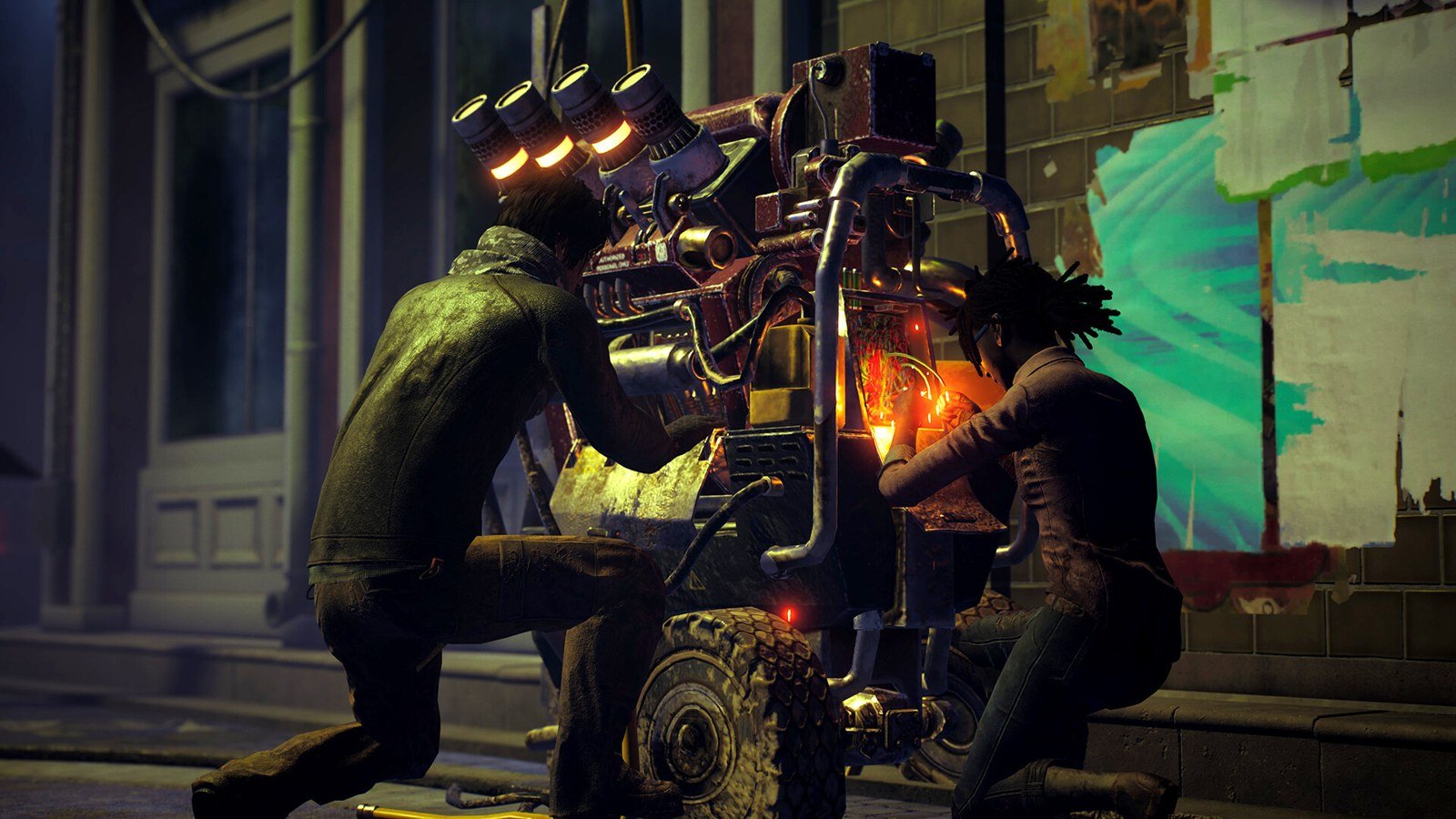
In asymmetric multiplayer, participants have different roles and abilities. Survivors can cooperate while another player tries to prevent their objectives. Not everybody is cooperating on the same side. A human opponent expands the range of decisions but remains bound by the game’s available tools and rules.
Behaviour Interactive released Dead by Daylight on June 14, 2016, popularizing the classic structure of four survivors versus one killer. Tasks, rescues, chases, and opportunities to escape interact with powers, perks, and progression. Original characters and licensed content add identities without turning this feature into a competitive loadout guide.
The game continued to receive updates in October 2026. The official version 10.2.0 record identifies an October 6 release, after September’s public test, with features including preset messages between survivors. Official support lists update notes. An earlier test must not be presented as the only available version.
Changes to support are not equivalent situations
Friday the 13th: The Game (2017) is historically important to asymmetric roles, but was removed from sale and lost services and support. It should not be recommended as though it still retained the same infrastructure and availability as at launch.
The Texas Chain Saw Massacre (2023) announced the end of new content, balance changes, and fixes in May 2025 after a patch planned for that month. Gun’s announcement distinguished that decision from removing the game from sale and announced a future move to peer-to-peer matches. A later Gun update reported that the change would not go ahead at that time, keeping the May 22, 2025 build for stability.
The plan must therefore not be described as completed, and the end of new content must not be confused with automatic closure of matches.
Virtual reality: presence, scale, and comfort
Virtual reality (VR) changes spatial perception by tracking head movements and, depending on the system, controllers. The height of a creature or the proximity of a passage can be perceived within the virtual space. This introduces new ways of paying attention and interacting, without guaranteeing an equally intense fear response from everyone.
Resident Evil 7 supported the original PlayStation VR; Resident Evil Village has a PS VR2 mode. These are different platforms and conditions, not universal support across every title. Five Nights at Freddy’s: Help Wanted adapts activities and mechanisms to manipulation and presence in VR.
The Walking Dead: Saints & Sinners (2020) combines action, survival, and physical interaction with the environment. Position, gesture, and objects shape its challenges. Comfort and movement settings also matter: evaluate VR modes according to the particular game and hardware, rather than assuming everyone has identical options.
How does horror combine with other genres?
Horror describes an approach centered on fear and discomfort; other classifications may describe combat, progression, or problem-solving. Overlap does not require abandoning the defining identity of each system.
| Category | Core characteristic | Relationship to horror | Examples |
|---|---|---|---|
| Horror | Fear, tension, suspense, discomfort | Broad category | Silent Hill, SOMA |
| Survival horror | Vulnerability and survival when facing threats | Specific horror tradition | Resident Evil, Signalis |
| Stealth | Avoiding detection and managing exposure | Can heighten vulnerability and evasion | Outlast, Alien: Isolation |
| FPS | First-person gunplay | Can blend action and horror | F.E.A.R., Doom 3 |
| Puzzle | Solving problems through rules and logic | Can guide exploration and mystery | Inscryption, Amanda the Adventurer |
| RPG | Character development and statistical systems | Can support narrative or cosmic horror | Bloodborne, Fear & Hunger |
| Visual novel | Text-and-image interactive narrative | Can explore psychological horror | Doki Doki Literature Club!, Higurashi |
| Asymmetric multiplayer | Players with different roles and objectives | Can create player-versus-player pursuit | Dead by Daylight |
| Immersive sim | Interacting systems and alternative solutions | Can combine systemic choices with science-fiction horror | Prey |
Stealth manages exposure and detection, as Alien: Isolation demonstrates; espionage games can also use it without trying to frighten players. Our stealth feature explores this distinction. F.E.A.R. (2005) and Doom 3 (2004) combine shooting and horror atmosphere, but that does not mean the entire DOOM franchise has the same focus. The FPS feature contextualizes these systems.
Puzzles can structure exploration in Silent Hill and Amanda the Adventurer without becoming the main objective as in Portal. Inscryption combines cards, narrative, and mystery, discussed in our card games feature. The comparison with puzzle games helps identify what the challenges do without revealing their surprises.
Bloodborne, Darkest Dungeon, and Fear & Hunger develop different relationships between progression and horror themes. Soulslike design is not defined merely by monstrous aesthetics. Arkane’s Prey combines science fiction with environments offering systemic possibilities; our immersive sim feature explains that design approach.
Recent releases and continuity through October 2026
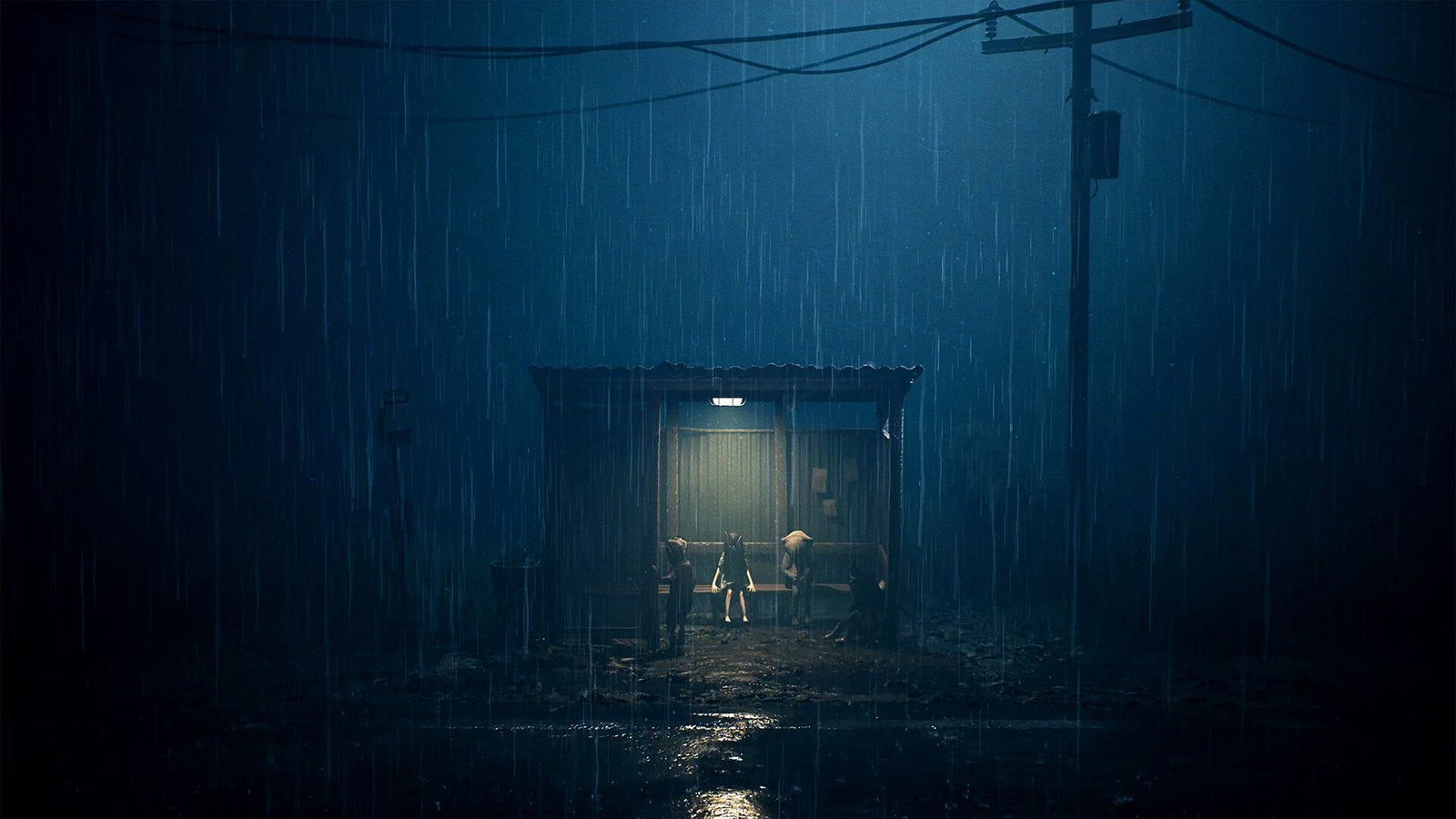

Resident Evil Requiem, released February 27, 2026, is the ninth main entry in the series. Grace Ashcroft and Leon S. Kennedy provide different approaches to tension and action, with options to switch between first- and third-person viewpoints. Capcom’s post-launch announcement confirms the date and dual protagonists, while the official game listing describes its perspectives.
Tarsier Studios and THQ Nordic released Reanimal on February 13, 2026. Adventure, exploration, and cooperation establish another relationship with danger through two protagonists and disturbing environments. The publisher’s confirmation distinguishes the launch from earlier announcements.
Remedy Entertainment’s Alan Wake 2 (2023) blends investigation, different narrative viewpoints, and audiovisual presentation. Independent productions such as Signalis and Crow Country also reinterpret classic traditions. Together with Silent Hill f and independent releases, they show how storytelling remains important without relying solely on repetitive jump scares.
Timeline of major milestones
This selection identifies contributions and release stages. It is not a ranking of the scariest games. Originals, remakes, and Early Access releases are distinguished, and the 1981–1982 range reflects the documentary discrepancy surrounding 3D Monster Maze.
| Game | Year | Contribution or feature |
|---|---|---|
| 3D Monster Maze | 1981–1982 | First-person maze pursuit and tension |
| Haunted House | 1982 | Exploring a dark mansion and avoiding threats on Atari 2600 |
| The Lurking Horror | 1987 | Horror through a text adventure |
| Sweet Home | 1989 | Exploration and horror with RPG systems |
| Alone in the Dark | 1992 | Polygonal characters and fixed cameras in horror |
| Resident Evil | 1996 | Popularized survival horror |
| Silent Hill | 1999 | Atmosphere and psychological horror |
| Silent Hill 2 | 2001 | Psychological storytelling and symbolism |
| Fatal Frame | 2001 | Supernatural horror and camera mechanics |
| Doom 3 | 2004 | FPS mechanics combined with horror atmosphere |
| F.E.A.R. | 2005 | First-person shooting and supernatural horror |
| Dead Space | 2008 | Science fiction and body horror |
| Amnesia: The Dark Descent | 2010 | Vulnerability and first-person exploration |
| Slender: The Eight Pages | 2012 | Independent horror built around pursuit |
| Outlast | 2013 | Escape, video camera, and night vision |
| Five Nights at Freddy’s | 2014 | Surveillance and threat management |
| Alien: Isolation | 2014 | Evading a persistent threat |
| P.T. | 2014 | Repetition and horror in a confined space |
| SOMA | 2015 | Science fiction and existential horror |
| Dead by Daylight | 2016 | Popularized asymmetric multiplayer horror |
| Layers of Fear | 2016 | Environmental transformation and storytelling |
| Doki Doki Literature Club! | 2017 | Metanarrative horror |
| Visage | 2018 Early Access; full release 2020 | Psychological horror in domestic spaces |
| Phasmophobia | 2020 Early Access | Cooperative paranormal investigation |
| Inscryption | 2021 | Cards, storytelling, and horror |
| Iron Lung | 2022 | Fear through extremely limited perception |
| The Mortuary Assistant | 2022 | Tasks and supernatural investigation |
| Signalis | 2022 | Independent survival horror with its own identity |
| Dredge | 2023 | Exploration, fishing, and cosmic horror |
| Alan Wake 2 | 2023 | Narrative horror and audiovisual presentation |
| Lethal Company | 2023 Early Access | Cooperative horror and emergent situations |
| Mouthwashing | 2024 | Independent narrative and psychological horror |
| Silent Hill 2 Remake | 2024 | Modern remake of the 2001 classic |
| Silent Hill f | 2025 | Psychological horror set in 1960s Japan |
| R.E.P.O. | 2025 Early Access | Cooperative horror featuring object physics |
| Reanimal | February 13, 2026 | Cooperative horror adventure |
| Resident Evil Requiem | February 27, 2026 | Horror and action with two protagonists |
| Fatal Frame II: Crimson Butterfly Remake | March 12, 2026 | Remake of the second game featuring Camera Obscura and new interactions |
| Silent Hill: Townfall | September 24, 2026 | Entirely first-person psychological horror with CRTV investigation |
Intensity, accessibility, and choosing an experience
Fear is subjective. A chase may be more difficult for one player than a disturbing story, while someone else reacts in the opposite way. Intensity alone does not measure quality or test courage. Atmosphere, coherence, narrative, and how the systems function also matter.
Difficulty options such as SOMA‘s Safe Mode can reduce particular pressures without removing a work’s themes. Subtitles, visual indicators, and alternatives to audio cues matter when sound provides information needed for decisions. Field-of-view, camera movement, and comfort settings may improve an experience where available, especially in first person and VR.
Age classifications and official content warnings help describe the experience. A North American or European rating should not automatically be treated as equivalent to a Brazilian one. Evaluation depends on the work and region, and not every visually dark game contains the same violence or sensitive topics.
Someone seeking storytelling and perception will have different priorities from a group interested in investigation or a person who wants competitive pursuit. Pacing, access to matches, support, and availability also matter. P.T. has historical importance without its original distribution; online services can change; Early Access identifies a development stage, not a promise that everything will remain unchanged.
Horror extends beyond what appears on screen
Text, cameras, instruments, storytelling, and communication offer different ways to face the unknown. Fighting, watching, fleeing, and cooperating can all be part of that relationship.
What unites these approaches is not an obligation to show monsters, violence, or jump scares. It is the ability to turn uncertainty, setting, storytelling, and interaction into fear, tension, and discomfort. Sometimes the decisive moment is an apparition. At other times, it is information that changes the meaning of something already seen—or the decision to keep going without fully understanding what lies ahead.
About the Author