Among Us (2018), em captura oficial do catálogo: mensagens e votos participam da identificação de impostores. Imagem: Innersloth.
Imagine a game with eight people. Most need to cooperate, but two players have been assigned secret objectives that clash with everyone else’s. After an elimination, the group meets. Someone says they saw the red player near the scene; that player replies that they were completing a task. A third person confirms part of the story but introduces a contradiction. Someone may be lying, someone may have misread what happened, or an important piece of information may still be missing.
That uncertainty becomes part of the gameplay. In Among Us, encounters around the map turn into arguments during meetings. Town of Salem uses ability results, factions, and claims. Goose Goose Duck adds neutral characters and individual objectives, while Project Winter puts cooperation under threat from traitors in a hostile environment. Video games expanded a tradition that began long before them, with in-person experiences such as Mafia and Werewolf.
Social Deduction is a category of games in which discovering or concealing information about players’ identities, allegiances, and objectives is central to the experience. Trust, suspicion, and interpretation become decisions that can change the outcome. Not every example requires impostors, sabotage, or eliminations: this structure can work through conversation, missions, tasks, combat, or combinations of these systems.
In this feature, we trace the history from groups gathered around a table to digital environments, examine the underlying mechanics, and distinguish the different formats that have developed their own identities within social deduction.
Updated October 22, 2026.
Nesta matéria
What defines social deduction, and how is it different from multiplayer?
Hidden information may concern identities, abilities, events, or victory conditions. In a classic arrangement, a minority knows its allies while a majority must discover them. Other games have several factions or independent interests. This information asymmetry—knowledge distributed unequally—creates the problem players must solve.
The challenge is not merely that something is unknown; it is interpreting people who have different reasons to share or conceal what they know.
Bluffing is common, but not everyone needs to lie. An innocent player can truthfully report an investigation, withhold their ability to avoid being targeted, or accuse someone by mistake. An opposing faction can use carefully chosen truths to steer the conversation. Similarly, “impostor” is a specific identity popularized by Among Us, not a compulsory role in all games of this genre.
Multiplayer simply means that several people participate. Social deduction describes how a conflict over information organizes that participation. Counter-Strike and League of Legends demand communication and the ability to read opponents, but their traditional modes do not primarily require discovering which teammate has a secret identity. Nor does the mere presence of a conversation or vote establish the genre.
Mario Party uses boards and minigames with generally known opponents. Phasmophobia involves cooperative paranormal investigation, but the investigated entity is controlled by the game—not a human investigator secretly assigned to sabotage the team. These examples help distinguish social interaction, investigation, and social deduction while acknowledging that individual modes can mix them.
The key criterion is the role information plays in decisions. If uncovering or hiding allegiances and objectives among participants drives the experience, the game has a social-deduction structure. It can work without a map, without characters walking around, and without eliminating anybody: a statement, a team selection, or an action’s outcome can provide enough evidence for the next clash of interpretations.
Mafia and Werewolf: the in-person origins
Bluffing games, parlor activities, and hidden-objective games predate modern social deduction. Poker, for instance, lets players represent a stronger hand than they actually hold, but is not primarily organized around identifying secret factions among participants. Mafia did not invent lying in games; its contribution was establishing a recognizable structure of concealed identities and collective decisions.
Created by Dmitry Davidoff in the university community of Moscow, then part of the Soviet Union, Mafia originated in the 1980s. Accounts disagree on whether it began in 1986 or 1987. Andrew Plotkin’s account gives 1986 and reproduces information provided by Davidoff himself. Preserving that disagreement is more accurate than presenting one date as universally accepted—or confusing the game’s creation with a later commercial edition.
In the most widely known traditional structure, players receive secret roles. Mafia members know their teammates; townspeople must identify the opposing faction. This creates an informed minority versus an uninformed majority. A moderator manages phases and actions without competing like the others. At night, certain characters act secretly; during the day, the group interprets events and may vote to eliminate someone.
Variants exist, and these rules should not be indiscriminately attributed to every historical version.
In 1997, Andrew Plotkin adapted Mafia into Werewolf, hiding werewolves among villagers. The theme fits the alternation between day and night: apparently ordinary residents can become a different threat when the village closes its eyes. Plotkin describes this adaptation in his account of Werewolf, explicitly crediting Davidoff’s earlier creation.
Over time, variants added numerous investigative abilities, protective powers, and special effects. That does not mean every role now associated with Werewolf existed in the 1997 version. Player counts, role revelation, powers, and victory conditions vary according to the rules chosen. Mafia and Werewolf share a tradition, but neither name refers to one fixed, unchanging rulebook.
The Resistance and Avalon: deduction without eliminating someone every round

Social deduction continued to evolve through tabletop games. Don Eskridge’s The Resistance had its earliest editions around 2009. The premise involves resistance members and undercover agents. Instead of relying solely on votes to eliminate players, the group must decide which people will join certain missions.
Imagine that three people must be chosen for an operation. Someone proposes a team, and the others evaluate its membership and vote according to the rules. If approved, the selected members undertake the mission—but one of them might be an infiltrator. The outcome supplies information without necessarily revealing which participant worked against the group.
In 2012, The Resistance: Avalon adapted the system to Arthurian legend, adding special roles and information. The Resistance demonstrates that teams and mission outcomes can sustain deduction without removing participants every round. Both originated as tabletop games, not video games.
Secret Hitler and Blood on the Clocktower: other ways of organizing information
Released in 2016, Secret Hitler is a tabletop game based on factions, elections, and collective decisions. Participants have different identities and levels of information. Choices about leadership and approving proposals influence the match. The theme includes historical and political references, but does not endorse the ideologies depicted. Its relevance to social-deduction history lies mainly in the mechanics of hidden roles, voting, and distrust.
Blood on the Clocktower and the Storyteller

Developed by The Pandemonium Institute, Blood on the Clocktower represents another important development in in-person social deduction. The project attracted attention before its commercial release, including a crowdfunding campaign in 2019. Physical editions began commercial distribution in 2022.
The game has a narrator called the Storyteller, who manages events, information, and abilities within the rules. Numerous characters have different roles, creating situations in which players may receive partial information or information affected by specific effects.
One important distinction concerns eliminated players. In Blood on the Clocktower, death does not necessarily end all participation. Dead players can remain involved in conversations and retain limited means of influence under the rules. This addresses a common problem in traditional games: spending a long time waiting after an early elimination.
From face-to-face conversations to forums and chats
Before major commercial releases, communities were already organizing Mafia and Werewolf games through forums, chatrooms, and websites. That transition changed how people could play. An in-person gathering requires everyone to share a physical space; online, people far apart can join the same match.
In some communities, participants posted messages to discuss events. Decisions could unfold over hours or days, creating an experience distinct from face-to-face discussions.
Other adaptations used live chatrooms where a moderator administered roles and events. Later, digital systems automated some of these functions.
Distributing identities, recording votes, and resolving effects demanded less manual work. It also became possible to create more numerous character abilities. But no single website invented online social deduction. The transition happened gradually across different communities and projects.
Town of Salem: turning the Mafia tradition into a video game
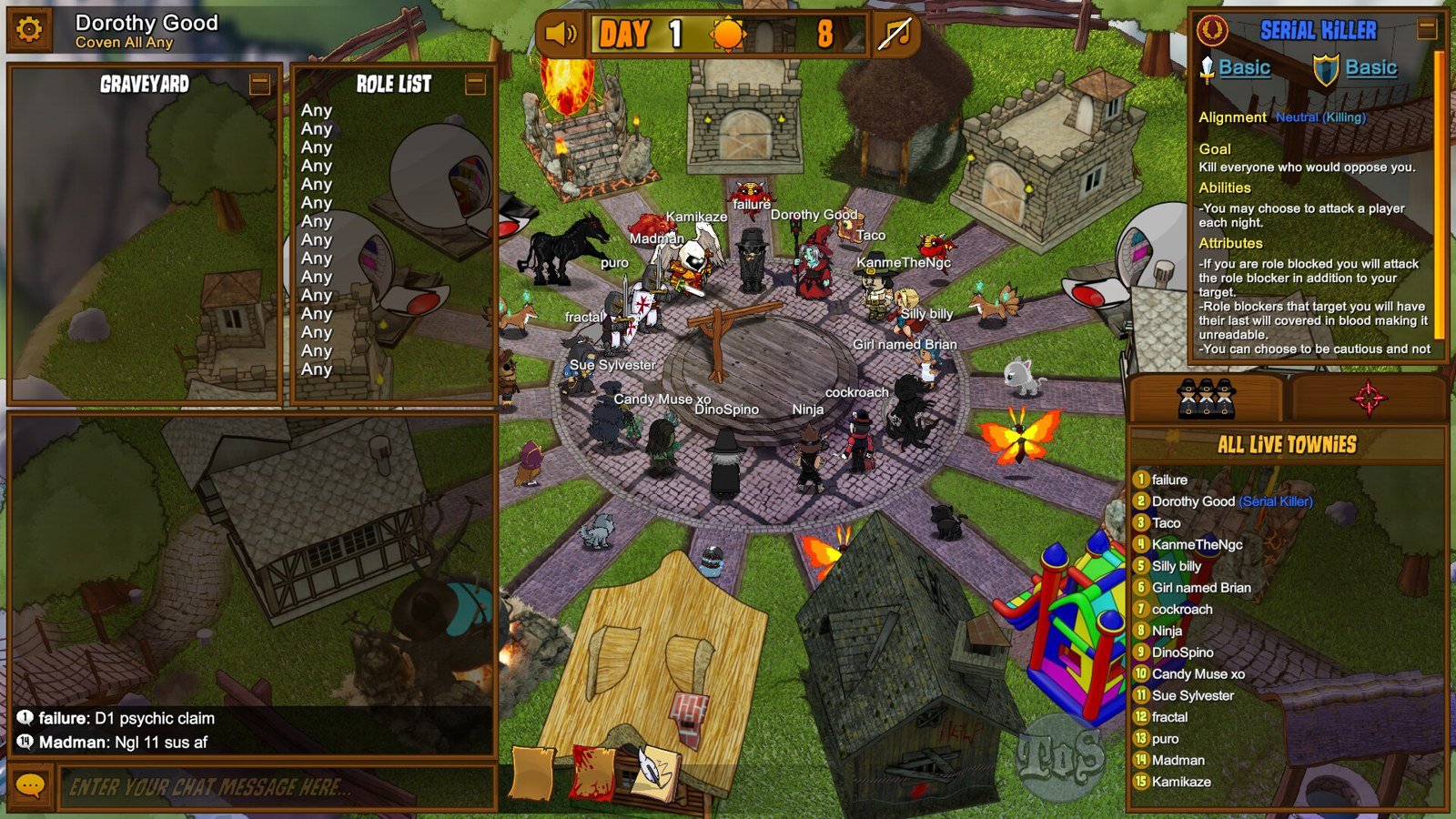
In 2014, BlankMediaGames released Town of Salem. It became an important reference point for digital social deduction before the enormous popularity of Among Us. The game takes place in a town whose participants receive secret identities. It features different roles, abilities, and factions, with information varying according to the assigned role.
Players enter a lobby and receive their roles. At night, certain characters can perform special actions. During the day, the group discusses the available information. Accusations and votes may eliminate a player.
Imagine having an investigative role. During the night you obtain specific information about somebody else. You can share the result the next day, but everyone must decide whether to believe you. An opponent might also claim to have a similar role, creating new opportunities for deduction.
Town of Salem developed a structure with multiple groups and victory conditions. Its composition varies by game mode. It would be inaccurate to say that every match has exactly the same factions or roles.
The game demonstrated that a digital interface could support deep deduction without turning the genre into action gameplay. Automated resolution of abilities expands the possibilities, while conversations and decisions remain central.
Town of Salem 2: new roles and systems
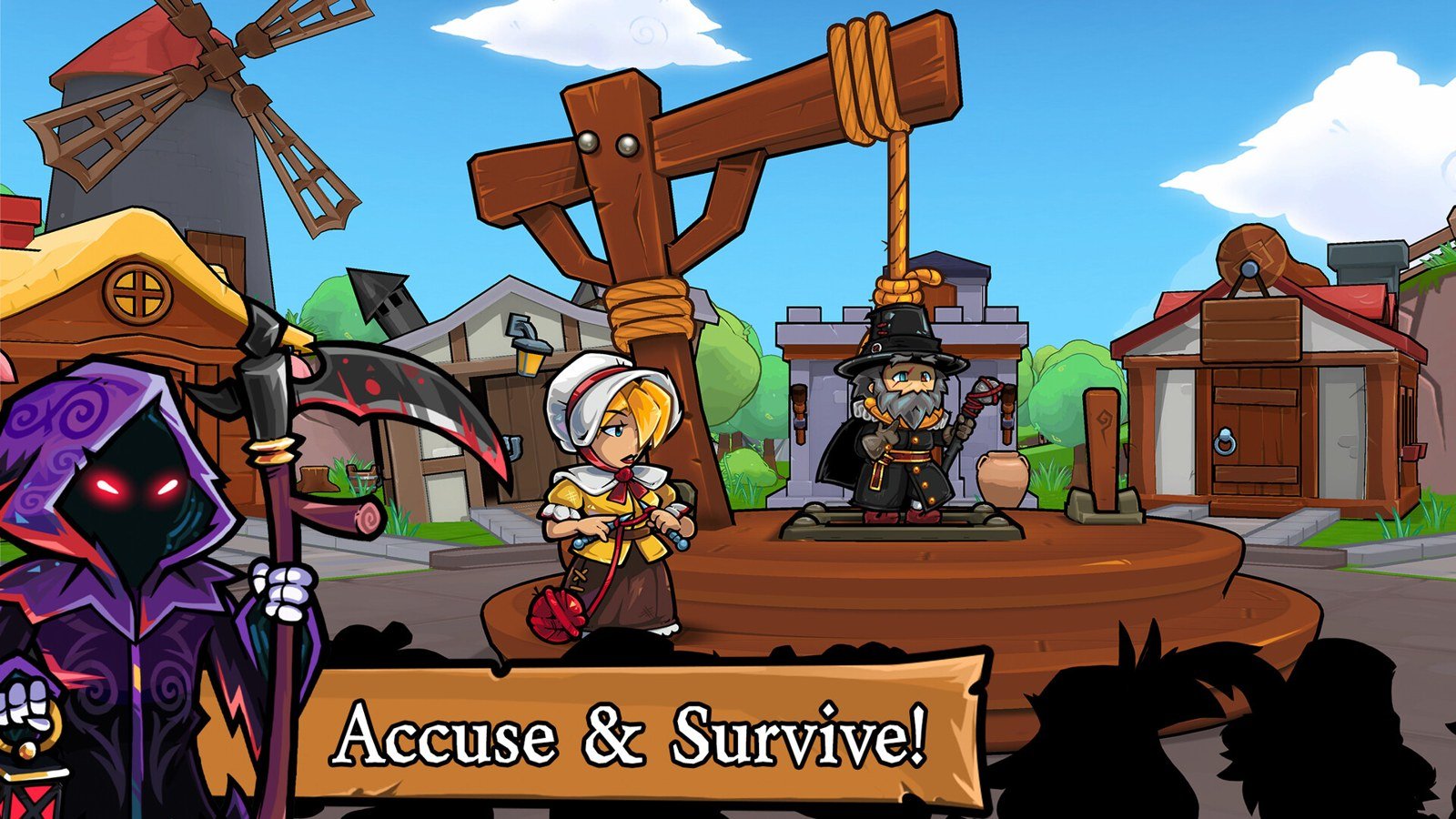
Town of Salem 2 entered Early Access on May 26, 2023, and received its full release on August 25, 2023. The sequel retained hidden roles, discussions, and abilities while changing its interface and systems.
On September 15, 2023, the game introduced a free-to-start option with its own conditions and limitations alongside additional paid options. It should therefore not simply be described as a game that always requires an upfront purchase.
On March 24, 2026, the official Flexible Factions update notes published by Digital Bandidos detailed balance changes and the option to specify compatible roles’ starting factions during setup. This does not mean every role can freely change factions during any match. The official Town of Salem news page documents these changes.
On July 27, 2026, the official voice mode FAQ introduced Custom (Voice) as an option while retaining traditional text modes. This requires Deed to the Town and regional availability of Discord, though not a Discord account; text chat is disabled within that voice mode. Proximity and houses shape private conversations. Text and voice therefore should not be presented as simultaneous alternatives in every lobby.
Among Us: tasks, impostors, and emergency meetings
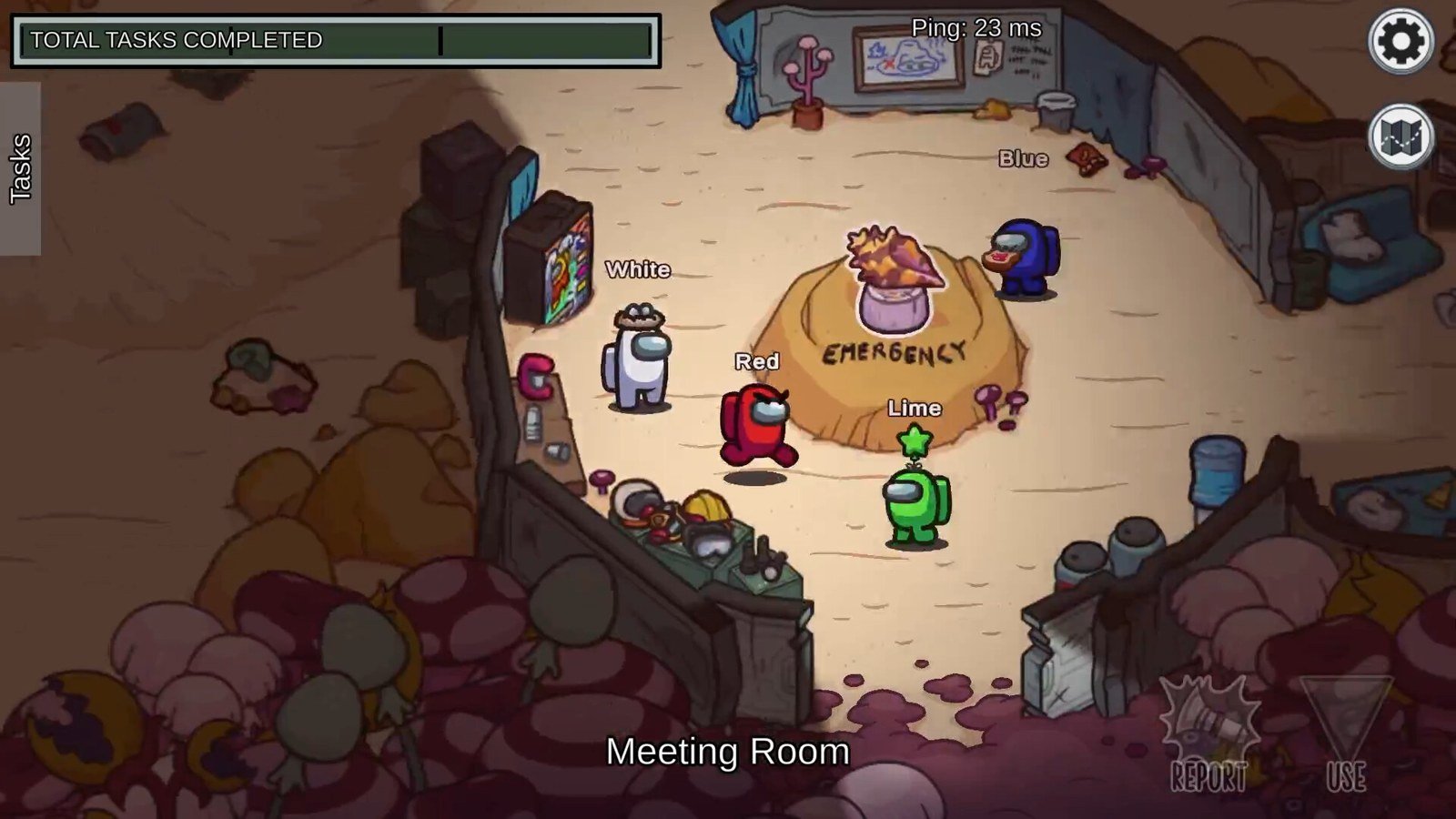
Innersloth released Among Us on mobile devices on June 15, 2018. Later versions expanded to other platforms and reached a wider audience. It combines social deduction with movement around maps and practical activities, an important difference from traditional Mafia.
Players receive roles. In the classic arrangement, most are Crewmates and a minority are Impostors. Crewmates need to complete tasks and identify their opponents; Impostors try to undermine the team without revealing who they are.
Imagine repairing a system aboard a spaceship. To do so, you walk to a location and complete an activity. Along the way you encounter other players, and those encounters may matter later. Perhaps you see somebody enter a room, then learn another player was eliminated nearby. That observation may shape a future discussion.
Impostors can cause problems within the rules, forcing Crewmates to respond. Some sabotages demand immediate attention; others change visibility or movement conditions.
Under certain conditions, players can gather to discuss suspicions and arguments. A vote may eject somebody, but ejecting an innocent Crewmate harms the team.
In the classic mode, Crewmates win by completing the required tasks or ejecting all Impostors. Impostors can win by reaching parity with the living Crewmates or by allowing a critical sabotage to go unresolved. Settings, roles, and modes matter: Hide n Seek has a different structure.
Among Us and the rise of streaming in 2020
Although it launched in 2018, Among Us became hugely popular in 2020. This distinction between release and popularization matters: the game had already existed for roughly two years when it began attracting much more attention.
Content creators showcased matches through videos and livestreams. Arguments, accusations, and revelations became entertainment for spectators as well. Meetings could produce funny or surprising moments, encouraging the sharing of clips.
Relatively simple controls and mobile availability lowered the barrier to entry. The basic idea of identifying suspects was easy to grasp, even though mastering rules, maps, and communication took practice.
This growth happened during pandemic-related social isolation, when many people sought ways to connect at a distance. The context, distribution, community, and content creators contributed in different ways; there is no single documented cause explaining the entire success. Popularizing the formula does not mean inventing it: the genre already had decades of history.
How Among Us evolved through October 2026
After 2020, Innersloth continued developing Among Us. New maps, roles, and customization expanded its possibilities, while updates also refined interfaces, settings, and game modes.
Early versions had a simpler Crewmate-versus-Impostor structure. Later additions gave certain roles abilities that change how information is gathered, how characters move, or other conditions. Those roles are not necessarily included in every match: availability depends on settings and rules.
The official Hide n Seek mode differs from classic social deduction, focusing more on pursuit and survival. One title can therefore contain activities with distinct identities.
On August 18, 2026, update v18.0.0 introduced the Judge. After finishing the required tasks, this Crewmate can use Overrule once per match to overturn a vote and choose someone to eject. If that person is not an Impostor, the Judge is ejected instead. The ability raises the stakes of decision-making without ensuring that the judgment is correct.
On September 29, 2026, update v19.0.0 introduced the Influencer, a Crewmate ghost role. The ability lets the ghost choose up to three pictures from a random selection and send them to a living Crewmate. Uses are limited, and the pictures can be misinterpreted; players cannot simply type an Impostor’s identity freely. Cooldown can be configured, and tasks still matter. Innersloth explains the Influencer in its official announcement.
That change expands the possibilities for participation after death. On October 1, 2026, the developer also announced Impostor Month activities. Among Us was still receiving new material. Announcements about future content, however, must be distinguished from features already available in the standard edition.
Among Us 3D and first-person social deduction

The Among Us formula also inspired a virtual-reality adaptation. Among Us VR launched in 2022, developed by Schell Games in partnership with Innersloth, as a social-deduction experience in three-dimensional environments.
In 2025, the project adopted the name Among Us 3D. On May 6 of that year, it also launched for PC without requiring a virtual-reality headset, widening participation.
The first-person perspective changes how players perceive others and their surroundings, while proximity voice chat makes location matter to conversations. Among Us 3D supports crossplay between its PC edition and VR versions officially listed for Meta Quest, SteamVR, PlayStation VR2, and PICO. However, it does not support crossplay with the classic top-down Among Us. These are different experiences; the 3D edition is not a mandatory update to the original.
In March 2026, a transition of development and operations from Schell Games to Innersloth was announced. The Definitive Edition, initially planned for March 24, was delayed until April 7, 2026. Support transferred to Innersloth with that update, which made formerly time-limited event features, roles, and content permanent. Innersloth officially confirmed the future of Among Us 3D.
This trajectory illustrates how social deduction can work through different perspectives and technologies.
Separate from that multiplayer experience, Among Us Story: On Guard is a single-player narrative adventure. As of October 22, 2026, its full release was still in the future: Innersloth announced February 17, 2027 and made a demo available for Steam Next Fest, October 19–26. A demo is not the full launch, nor does a solo story become a new multiplayer deduction update.
Roles, information, and decisions: how a match is organized
An illustrative loop helps connect these different formats: receive a role, observe, act, gather information, discuss, decide, and evaluate the result. Not every game follows that order or requires a formal meeting. In Mafia, a moderator leads the action; in Town of Salem, the software resolves abilities; in Among Us, continuous movement produces events that will later be interpreted. Actions and discussions reinforce each other.
Factions establish shared interests, but belonging to the same side does not mean knowing every ally. Special roles distribute different capabilities, such as investigation or protection. Neutral characters may have independent victory conditions. Two people cooperating in a vote might not share the same ultimate objective. Identifying someone’s role, discovering their allegiance, and understanding what they need to win are therefore related but distinct questions.
We also need to distinguish private, public, and interpreted information. Your role is private; a vote may be public; a statement is an account that must be assessed. If an ability supplies a result, its meaning depends on the rules and any active effects. Announcing that result does not automatically prove its authenticity to everyone else. An opponent can claim the same ability, and an ally might misunderstand what they saw.
A contradiction is not automatically a lie. Memory, perception, misunderstood instructions, and special abilities can explain incompatible accounts. Nor does nervousness prove guilt: shyness or an unfair accusation may cause discomfort. Speaking confidently does not guarantee accuracy. Behavior influences the social experience, but it is not a scientifically reliable lie detector.
Formal alliances arise from factions; informal alliances emerge when players believe their reports fit together. Both can influence collective decisions. In voting games, majorities, ties, abstentions, and role revelations follow particular rules. Approving a mission team in The Resistance is not the same as ejecting someone in Among Us. The cost of an error varies, too: a failed mission, fewer active allies, or an advantage to another faction.
This combination explains why the genre supports strategic decisions without absolute certainty. Information must remain incomplete while still producing understandable consequences. If every hypothesis were instantly confirmed, negotiation would lose relevance; if no choice helped players learn, deduction could become arbitrary. The balance lies in providing clues that can be compared without doing the interpreting for the players.
Elimination does not always mean the end of participation
In traditional Mafia variants, eliminated players generally stop taking part in active discussion until the next game. This prevents information from leaking from the moderator or eliminated players, but can leave somebody waiting a long time after an early exit. Werewolf adaptations vary, so the rules should be agreed upon before playing.
Among Us keeps eliminated characters as ghosts, with tasks and abilities determined by the available roles. This is not unlimited permission to tell living players everything they observe. The Influencer’s picture-based, limited communication shows why information after death still needs to follow the game’s rules.
Blood on the Clocktower allows continued conversation, and under the general rules a dead player may spend one vote during the rest of the game. Specific abilities and exceptions can change conditions. The Resistance instead keeps everybody involved across repeated missions without eliminating someone each round. These systems approach the same question differently: how can a game preserve consequences without reducing some participants to spectators?
Goose Goose Duck: more factions and different paths to victory

Developed by Gaggle Studios, Goose Goose Duck entered Early Access on April 29, 2021, and reached its full release on October 3 that year. Its bird-inspired characters take part in a social-deduction structure. The premise resembles Among Us in some respects but has important differences.
In traditional modes, Geese cooperate, while Ducks pursue opposing objectives. Actual team composition depends on the mode.
The game also includes roles with goals separate from its main factions. Someone can therefore behave suspiciously without necessarily belonging to the Ducks.
Different characters possess special abilities. Some roles gather information; others change how elimination or movement works. Listing every role is not necessary to understand the design.
Depending on settings and available systems, proximity-based voice chat allows information to circulate among small groups.
The October 1, 2026 v4.12 update added the Wereduck to Trick or Treat. It transforms to hunt; eliminated Villagers return as Thralls, who help find opponents and strengthen the pack when nearby. These mechanics belong to that specific mode, not every standard match. Seasonal Halloween bonuses also have their own time limits.
Calling the game merely a copy would erase meaningful differences. Although these titles share reference points, Goose Goose Duck develops distinctive factions, roles, and victory conditions. Its official Steam page describes the multiplayer game. It shows how map-based social deduction can grow more complex through varied objectives and roles.
Project Winter: cooperative survival and hidden traitors

After beginning Early Access on February 7, 2019, Project Winter received its full PC release on May 23, 2019. It combines cooperative survival and social deduction in a snowy setting where players need to complete objectives to escape—but not everybody wants the same outcome.
The environment poses threats of its own. Players need resources, cooperation, and completed tasks, while traitors try to prevent escape. That creates two overlapping problems: surviving the environment and identifying participants who may be sabotaging the group’s efforts.
Imagine three people leaving to gather materials. One returns empty-handed. Perhaps they ran into trouble; perhaps they are concealing something. Returning without supplies, however, does not prove their identity. The others must interpret several events together.
Communication is fundamental to Project Winter: players exchange information and organize activities, but the presence of traitors changes how they collaborate.
The game underwent major changes, including Project Winter 2.0: Cabin Fever, described on its official store listing as a faster experience. Classic continued to provide the more demanding traditional structure. The official Steam page for Project Winter explains these differences.
Both genre labels fit. Surviving harsh conditions is central, but hidden identities and conflicting goals matter just as much. The combination demonstrates how social deduction can work beyond traditional voting.
Deceit and other combinations of action, horror, and betrayal

Released on March 3, 2017, Deceit combines horror, first-person action, and secret identities. Its Steam listing now says that the original is no longer available in the store; this is different from the sequel’s availability. The multiplayer experience contains characters who hide their threatening roles, connecting the need to face danger with the need to discover opponents.
Imagine exploring a dark environment with other people. You need to cooperate to progress, yet somebody might be concealing their true role. That possibility changes the meaning of their movements and decisions.
Weapons and physical threats do not eliminate the importance of hidden information. Players must still determine which people have conflicting objectives.
Deceit 2 initially launched for PC on September 14, 2023, with console versions following later. Its systems feature Innocent, Infected, and Cursed, each with different goals and possibilities depending on the available rules.
Deceit 2 switched to a free-to-play model in 2024, with optional additional content still offered in October 2026. The official Deceit 2 website describes its features and platforms.
This game combines several categories. Its perspective and confrontations connect it to FPS; the environments and dangers draw from horror; and secret identities support the social-deduction classification. None of those aspects alone fully describes the experience.
Science fiction: Unfortunate Spacemen and First Class Trouble
Social deduction also appears in science-fiction games built around action.
Unfortunate Spacemen places space workers in dangerous situations involving objectives, combat, and threats that may be concealed among the participants. The result mixes social investigation with action. The game entered Early Access in 2016 and reached full release on June 12, 2020, according to its official Steam listing.
Its relevance lies in the use of hidden identities in science-fiction environments.
Released in 2021, First Class Trouble is a multiplayer experience aboard a spacecraft. Some players are human Residents, while others secretly play Personoids. Everyone must cooperate toward objectives, but some participants may be trying to undermine the group.
Unfortunate Spacemen has a more direct relationship with action and combat. First Class Trouble emphasizes social interactions, tasks, and information about participants. Neither follows exactly the same rules as Among Us. They demonstrate that a space setting can support very different deduction games.
Text, voice, and proximity change how information circulates
An in-person match lets you notice who is speaking, interrupting, or addressing someone else. On forums, posts may remain available and decisions may take hours or days. Real-time chats speed up the rhythm, while written logs make it easier to check earlier contradictions. Available time and how information is presented shape discussions as much as character abilities do.
Classic Among Us concentrates debate in meetings and does not have native proximity voice chat equivalent to Among Us 3D. Groups can use outside apps under agreed rules, while community mods raise separate compatibility questions. Settings used during a livestream should not be presented as a universal feature of the original game.
Continuous voice chat and proximity voice chat are different. With the former, players may converse while exploring; with the latter, location determines who can hear. Goose Goose Duck and Among Us 3D use local conversations. Project Winter combines proximity, radios, text, and gestures according to its systems. Information told to two people may never reach the rest of the team, creating choices about relaying it and how much to reveal.
Town of Salem retains its written-discussion tradition, while Town of Salem 2 introduced an optional voice mode in 2026 with distinct rules. That does not turn every room into the same communication experience. Text, voice, and mode availability must be checked for the specific game and version; alternatives are not necessarily equivalent.
Rules governing dead players and external channels also matter. A spectator who knows every role can ruin a match by revealing secrets to living participants. Friends may agree to remain silent during certain phases, but public rooms also depend on service tools and moderation. Communication belongs to the rules, rather than being merely a convenient way to talk while playing.
How social deduction relates to party games, cards, and other genres
| Category | Main characteristic | Examples |
|---|---|---|
| Social Deduction | Discovering or hiding identities, factions, and objectives | Among Us, Town of Salem |
| Party Games | Entertainment and social interaction through varied activities | Mario Party, Jackbox |
| Puzzle | Solving problems through logic and understanding rules | The Witness, Baba Is You |
| Investigation | Collecting clues and reconstructing events | Return of the Obra Dinn |
| Stealth | Avoiding detection and managing exposure to opponents | Metal Gear, Hitman |
| Horror | Creating fear, tension, and discomfort | SOMA, Phasmophobia |
| Survival | Staying alive through resource management and decisions under threat | The Long Dark, Project Winter |
| Asymmetric multiplayer | Participants have different roles or capabilities | Dead by Daylight |
| Card Games | Cards are fundamental components of the rules | Magic Arena, Hearthstone |
Suspectives, included in The Jackbox Party Pack 11, released October 23, 2025, bridges social deduction and party games: personal survey answers become clues for identifying a criminal participant. Players interpret those answers and suspects’ defenses. This does not turn all of Jackbox into social deduction: Trivia Murder Party, for instance, focuses mainly on trivia and minigames.
In-person games sometimes use cards to distribute roles, but that differs from drawing and using creatures, spells, and resources in Magic or Hearthstone. In Werewolf, a card may simply communicate someone’s identity; gameplay continues through actions and discussion. The physical component alone does not define the experience. Our Card Games feature explores that separate tradition.
In Puzzle, players understand rules and solve problems; in social deduction, some clues come from people with conflicting interests. Return of the Obra Dinn requires reconstructing events, but its characters are not rival human players hiding roles during a match. Investigating a story and negotiating the credibility of other players use information in different ways.
In Stealth, controlling exposure and avoiding detection drive the challenge. Disguises in Hitman do not automatically turn its campaign into a conflict over secret player identities. An Among Us Impostor may act stealthily, but their hidden role belongs to a broader social system.
Horror creates fear and tension without necessarily requiring traitors. Deceit mixes these intentions, while Phasmophobia uses cooperative paranormal investigation. Survival emphasizes the conditions required to remain alive: Project Winter combines this with infiltrating opponents. One classification need not exclude another.
Finally, asymmetric multiplayer means participants have different roles or capabilities. In Dead by Daylight, the general killer role does not need to be secretly identified among the survivors. In Among Us, finding out who was assigned the opposing role is essential. Asymmetry and social deduction can coexist, but one does not guarantee the other.
Different formats within a shared tradition
| Format | Main characteristic | Examples |
|---|---|---|
| In-person discussion | Secret roles and group-led decisions | Mafia, Werewolf |
| Missions and teams | Approving participants and evaluating mission results | The Resistance, Avalon |
| Special roles | Characters with different information and abilities | Blood on the Clocktower |
| Phase-based deduction | Secret actions followed by structured discussions | Town of Salem |
| Tasks and movement | Information gathered during activities on maps | Among Us |
| Multiple factions | Varied roles and victory conditions | Goose Goose Duck |
| Survival and betrayal | Environmental cooperation combined with hidden goals | Project Winter |
| Horror and action | Concealed information combined with physical threats | Deceit |
| First-person and VR | Deduction in three-dimensional environments | Among Us 3D |
These formats can overlap. The table identifies each representative’s emphasis; roles, factions, and movement are not exclusive to any one game.
Balance, group size, language, and accessibility
Player count shapes how much room there is for suspicion, how long discussions last, and how significant each elimination becomes. The number of traitors must be considered together with abilities, starting information, and victory conditions. A suitable Among Us configuration cannot simply be copied into Town of Salem. Random role assignments are common, but rule sets and role lists may restrict combinations or allow custom setups.
Special roles increase variety but also increase the learning burden. Beginners may benefit from a smaller selection with clearer goals and information; experienced players may enjoy more complex interactions. Player experience affects outcomes but does not replace the need for balanced rules. Adding roles without considering their interactions may create advantages that are hard to offset.
Friends and strangers create different social contexts. People who know one another may recognize communication habits and also place too much trust in previous assumptions. In public lobbies, trust needs to be built during the match itself. Knowing someone outside the game does not reveal their role, just as being quiet does not demonstrate allegiance to the opposing faction.
Language matters particularly here: understanding an accusation can be as important as executing a command. A Portuguese interface does not guarantee a Portuguese-speaking lobby or fully localized instructions and content. Of the digital examples, the Steam listings of Town of Salem 2 and Project Winter indicate Brazilian Portuguese interfaces, but that does not determine which language participants will use.
Text and voice create different opportunities and barriers. Fast discussions may disadvantage players who need more time to read or form their thoughts. Font size, contrast, clear icons, controls, and communication alternatives should be checked in the selected edition. Few rules do not imply universal accessibility; a straightforward system can still demand fast reading, hearing, or intense verbal participation.
Among Us and Goose Goose Duck offer mobile versions, widening access. That does not mean virtual keyboards, controllers, accounts, or interfaces work identically on every platform. Before starting, it helps to agree on language, meeting duration, and communication methods within the available settings.
Early quits, early elimination, and the difficulty of gathering players can undermine a session. A commercial store page does not ensure that smaller communities have full lobbies at all hours or in every language. When the rules depend on group participation, leaving early may affect balance and victory conditions for those who remain.
Permitted bluffing is not cheating or a license for harassment. Breaking rules through forbidden external communication, collusion, or spectators transmitting secret identities undermines the game. Personal attacks and discrimination call for moderation. Discussions can be intense without making the player outside the game a target. User-generated speech and chat must also be considered, especially in public rooms.
Evolution through October 2026 and choosing a game for your preferences
Recent changes broadened ways to participate rather than establishing one necessary technology. New Among Us roles change what can be communicated; Among Us 3D uses first-person perspective and proximity; Town of Salem 2 adds faction-setting options and a dedicated voice mode. Goose Goose Duck develops alternate objectives, while survival and horror sustain hybrid designs. Earlier sections explain these differences without reducing all progress to the addition of more roles.
The in-person tradition remains relevant. Mafia and Werewolf can work with simple preparation; The Resistance rewards comparisons of teams and missions; Blood on the Clocktower relies on varied abilities and administration by the Storyteller. None loses its identity simply because online interfaces or virtual reality exist. Nor is there any requirement to prefer the title with the largest number of roles.
For people who mainly enjoy debating and comparing results, in-person formats and the Town of Salem tradition provide useful examples. Among Us adds movement and tasks; Goose Goose Duck has a steeper learning curve due to role variety; Project Winter also demands environmental management. Deceit and other action-focused games require additional movement and combat skills.
Enjoying mysteries does not guarantee that every social-deduction game will suit you. Those who prefer solo experiences or minimal communication may struggle, while someone who likes observing and organizing information need not enjoy heated accusations or bluffing every round. The right choice depends on the interaction style, group size, language and access barriers, and the setting.
Timeline: from in-person hidden identities to digital worlds
This selection highlights milestones and interpretations, not a ranking. Dates of origin, crowdfunding, Early Access, and commercial release refer to different events. Showing the variety matters more than assigning absolute pioneer status to every title.
| Game | Year | Contribution or characteristic |
|---|---|---|
| Mafia | 1986–1987, historical origin | Established the informed minority against an uninformed majority |
| Werewolf | 1997 | Werewolves and villagers as an adaptation of the theme |
| The Resistance | 2009, early editions | Deduction through teams, missions, and sabotage |
| The Resistance: Avalon | 2012 | Special roles and information in missions |
| Town of Salem | 2014 | Digital social deduction with roles and discussions |
| Secret Hitler | 2016 | Hidden factions, elections, and collective decisions |
| Deceit | 2017 | Social deduction combined with horror and action |
| Among Us | 2018 | Tasks, sabotage, and meetings on maps |
| Project Winter | 2019 | Cooperative survival with traitors |
| Blood on the Clocktower | 2019 crowdfunding; 2022 physical release | Varied roles and continued involvement |
| Goose Goose Duck | Apr 29, 2021 Early Access; Oct 3, 2021 full release | Multiple roles, factions, and objectives |
| First Class Trouble | 2021 | Hidden traitors in a science-fiction setting |
| Among Us VR | 2022 | Social deduction in virtual reality |
| Town of Salem 2 | May 26, 2023 Early Access; Aug 25, 2023 full release | Evolution of roles, factions, and interface |
| Deceit 2 | Sep 14, 2023 | New interpretation of horror and deduction |
| Among Us 3D | 2025 identity and PC release | First-person deduction with crossplay between PC and VR |
| Suspectives — The Jackbox Party Pack 11 | Oct 23, 2025 | Survey answers become social clues |
| Among Us 3D: Definitive Edition | Apr 7, 2026 update | Permanent formerly temporary content and support transition to Innersloth |
| Among Us — Judge and Influencer | Aug 18 and Sep 29, 2026 updates | New meeting decisions and limited post-death communication |
| Goose Goose Duck — Wereduck | Oct 1, 2026 v4.12 update | Transformation and Thralls in Trick or Treat |
Mafia, Werewolf, The Resistance, and Blood on the Clocktower belong to the in-person or tabletop tradition; Town of Salem, Among Us, and the other digital examples use electronic systems. Making that distinction avoids confusing the creation of a rule set with a console launch, or a crowdfunding campaign with the distribution of a physical edition.
Social deduction turns uncertainty into gameplay
Hidden information, trust, uncertainty, alliances, and human decisions form game systems. The experience can take place in a circle of chairs, through text messages, while walking around a spaceship, or by voice in a virtual environment. The medium changes which clues circulate and who can share them, but does not provide a universal solution to the conflict between knowledge and self-interest.
A truth can protect the group; a convincing interpretation can lead it astray. The challenge is to connect evidence, understand objectives, and make decisions without complete certainty. Social deduction’s identity lies in turning interpretation between participants into an activity governed by rules and consequences. Finding out what happened matters—and choosing whom to believe is itself part of the discovery.
About the Author