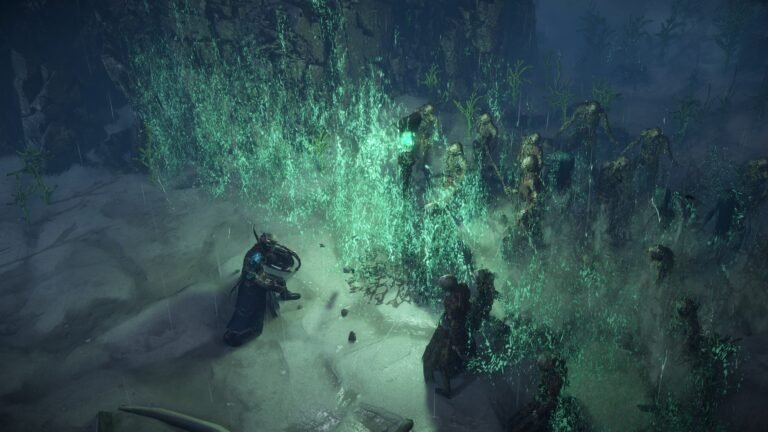
Choose a region, let your Pokémon battle wild creatures, and return to manage experience, captures, and resources. That is the idea behind Pokéidle.io, a free browser-based idle MMO. Gyms, PvP, guilds, and bosses add goals beyond collecting, while players decide where to hunt and which Pokémon to develop.
Pokéidle.io is an independent fan project, with no license or affiliation with Nintendo, Game Freak, Creatures, or The Pokémon Company. Its marketplace also involves Gems and an advertised USDT buyback mechanism. This guide explains the gameplay systems while separating the operator’s claims from what ZAUS.GG has not independently verified.
Editorial update: October 20, 2026. The public application displayed v1.337.0. The Terms reviewed identify a document dated October 12, revised October 16, 2026; registration and acceptance notices refer to the same document. Announcements without clearly verifiable effective dates are identified as such, not presented as features necessarily released on our review date.
Nesta matéria
What Is Pokéidle.io?
Pokéidle.io is a browser-based Pokémon idle MMO. “MMO” describes a shared online service; “idle” refers to play with less continuous manual input. Our Idle and Incremental genre guide explores that distinction. Here, the terms describe automated hunting and collection progression.
Players create a trainer, choose a starter Pokémon, and explore zones called hunts, where they encounter wild creatures. After selecting a region, the Pokémon searches for opponents and battles automatically. The player checks progression, manages resources, and decides when to change objectives.
According to the project, its official server opened on September 7, 2026, after beta testing, with a partial reset. The public FAQ says Shiny Pokémon, P5 Pokémon, purchased Diamonds, and purchased Gems not yet withdrawn were preserved; other beta progress was reset.
Levels and guilds do not automatically make this a conventional MMORPG. The game combines collecting, idle combat, and multiplayer services that are still changing.
Who develops Pokéidle.io?
It is presented as an independent fan creation, with community and support channels, including support@pokeidle.io. The published Terms identify the service provider as PEDRO HENRIQUE REIS RODRIGUES DESENVOLVIMENTO DE SOFTWARE LTDA, trading as FASI SISTEMAS E TECNOLOGIAS, Brazilian company registration CNPJ 68.748.721/0001-18. The document lists an address in São Paulo and assigns personal-data processing to this company.
That is the operator’s published identification, not a corporate-registry verification or operational audit by ZAUS.GG; the Terms do not fully identify every developer.
Is this an official Pokémon game?
No. The website does not claim a Nintendo, Game Freak, Creatures, or The Pokémon Company license or official endorsement. Using Pokémon names, creatures, and other franchise elements as a fan project does not automatically grant permission to use protected intellectual property.
The Terms acknowledge that rights holders may request content removal or even shutdown. Continuity is therefore a material risk, particularly when paid items and balances are involved.
How Does a Pokéidle.io Session Work?
The core loop starts with choosing a hunt appropriate for your trainer and a Pokémon that can survive it. Searching and fighting proceed automatically, providing experience and resources. Levels unlock areas; captures and materials expand team options.
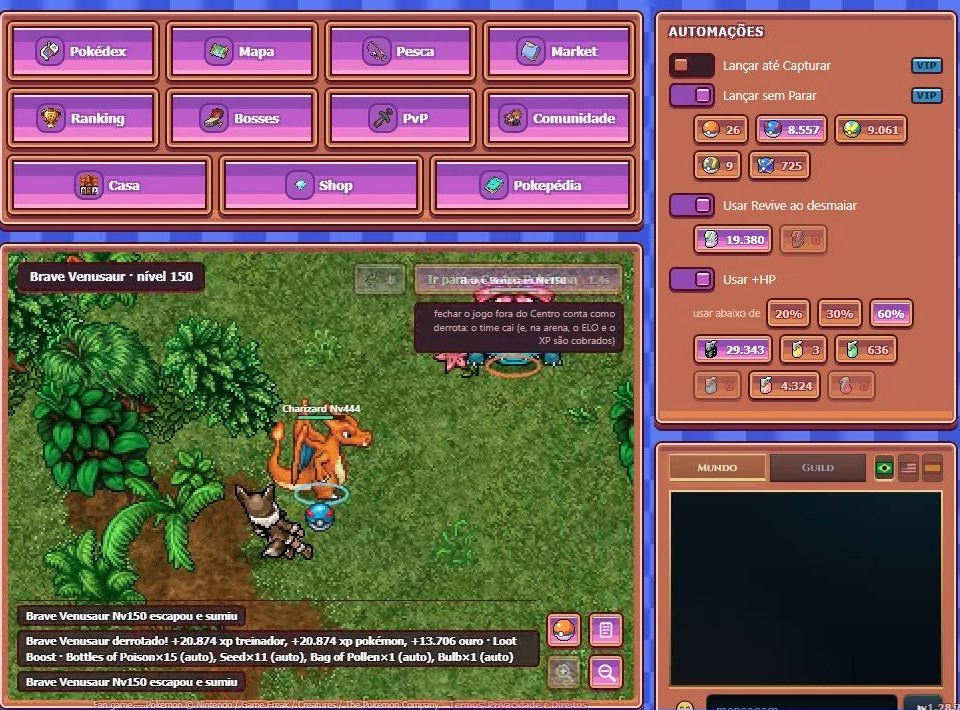
The player still manages survival, capture, and growth. During normal hunts, individual attacks are not selected manually, but you decide when to move or change activities.
How do you start?
Access the Pokéidle.io application on desktop or mobile. Registration supports email/password, Google, or Discord, with a required declaration that you are 18 or older. Password accounts must verify email before first login. Trainer names are public and unique; the October 16 Terms revision says they cannot be changed through the interface.
Choose a starter, open the map, and pick an available hunt. The starter has P2 potency and the minimum IV and quality thresholds explained below. The interface offers Portuguese, English, and Spanish.
Does Pokéidle.io Run With the Browser Closed?
Not for ordinary hunts. The project’s introduction says the browser tab must remain open. Background tabs may be throttled or suspended by a browser or a device’s power-saving settings. Economy Mode reduces processing and network use; it does not permit unlimited hunting while the browser is shut down. Egg incubation has separate rules and may continue offline; that exception does not extend to hunts.
Regions and Exploration: From Kanto to Paldea
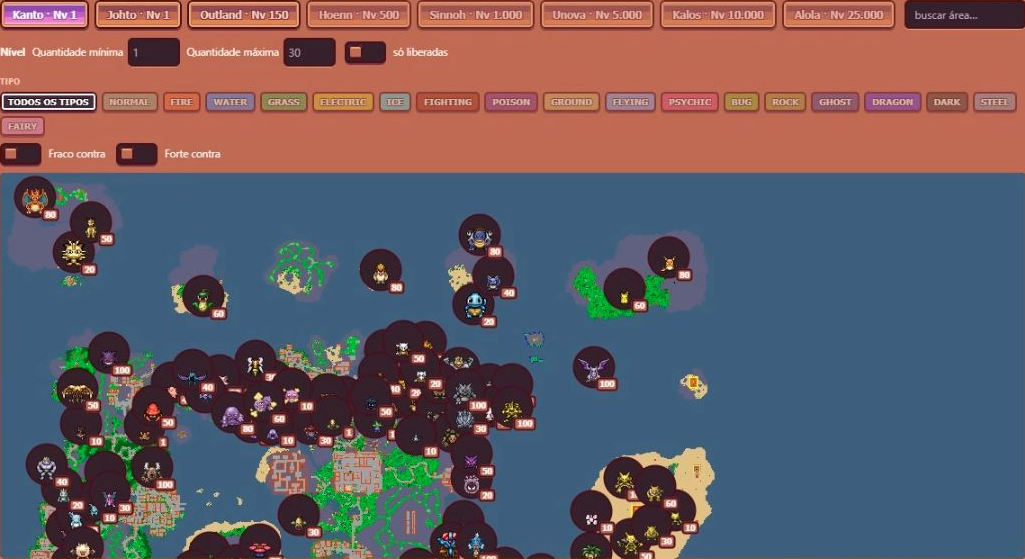
The project’s website says it includes Pokémon from nine generations, covering Kanto, Johto, Hoenn, Sinnoh, Unova, Kalos, Alola, Galar, and Paldea. The operator advertises 752 hunts, 1,277 species, and 796 Shiny forms. These are operator-reported totals, not independently counted by ZAUS.GG, and may change.
How are new areas unlocked?
Hunts have trainer-level requirements. Public announcements describe Johto being moved to levels 200–470, after the first Outland (150) and before Hoenn (500). Outland 2–8 is listed at levels 1,000, 2,000, 4,000, 8,000, 16,000, 24,000, and 36,000. Another notice, following the addition of Galar and Paldea, outlines Alola 25,000 → Galar 40,000 → Paldea 75,000.
Because not all notices carry an unambiguous effective date, these are records from the public history, not a claim that each change launched on October 20. Check your account’s map for the actual unlock requirements.
The operator also advertises Hunt Analyser, which estimates experience and Coins per hour for a particular team and location. Those figures are context-dependent estimates, not guaranteed earnings.
What is Outland?
Outland is an advanced progression area starting at level 150, according to the operator. It features increasingly difficult tiers and rare rewards, including fragments associated with Shiny Stones, houses, and some boss access. A detailed creature-by-creature reward list belongs in a separate exploration guide.
How Do Automatic Hunts Work?
Hunts automate searching, combat, and the acquisition of rewards. Whether they continue depends on the area, team survival, and available supplies. The official presentation does not describe an overall energy bar that stops basic hunting after a fixed number of hours.
A notice titled “Loot Turned Into Gold” says materials previously useful only for selling to NPCs were converted into Coins and incorporated into kill rewards. Stones and fragments with other uses remain. Since the notice has no unequivocal effective date, it should not be read as proof that all item drops were removed.
Healing and automation
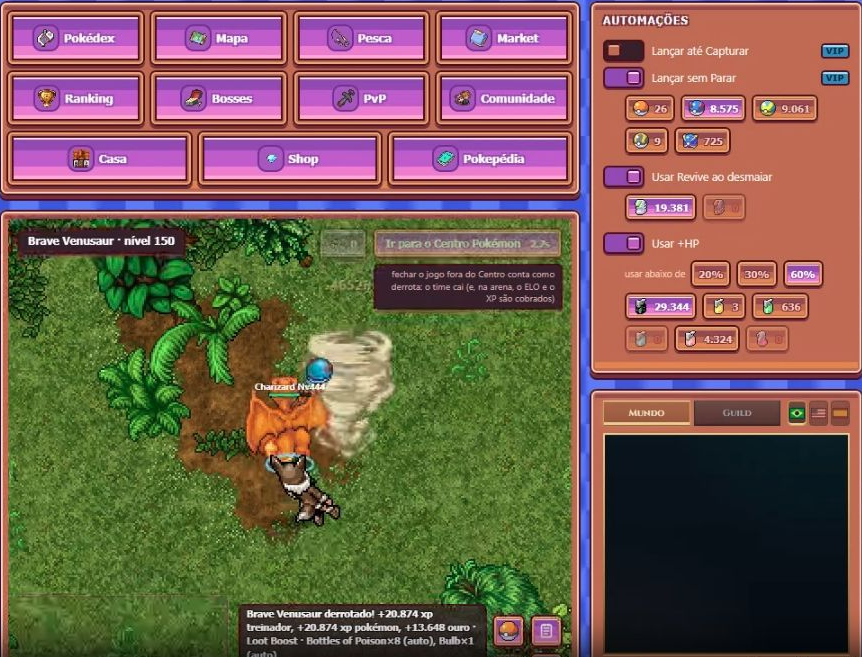
A September 22 (v1.154.0) notice says Auto Potion, Auto Revive, and Return to Hunt are enabled by default. They still require potions and revives in stock. A later announcement assigns normal Revive 10% HP restoration and Max Revive a full HP bar.
Automated combat itself is free. Throw Until Caught and Throw Continuously are identified as VIP conveniences. Automatically throwing balls does not mean better catch odds, as the next sections explain.
How Do You Catch Pokémon?
After defeating a wild Pokémon, the project describes a roughly 30-second capture window in which a Poké Ball can be thrown. Catching follows Pokéidle.io’s proprietary mechanics rather than necessarily reproducing the official console games’ rules.
What affects the catch rate?
Section 12 of the October 12 Terms, revised October 16, gives a 0.3%–10% probability per throw, associated with species and ball, without remaining HP in the published formula. The previously cited 75% cap is inconsistent with the currently accessible document.
Capture Boost doubles the chance, while the Kick bonus can add 15%, but normal catches remain capped at 10%. VIP does not improve these odds. The Pokédex displays each ball’s base chance.
A separate, undated-effective-date notice (“Johto Now Unlocks at Level 200”) describes catch probability by evolutionary stage rather than species, equal across regions. Its examples are 2.93%, 2.35%, and 1.88% with Beast Ball, and 1.46%, 1.17%, and 0.94% with Ultra Ball, by stage. This historical announcement does not replace the live Pokédex’s per-species and per-ball display; legendary and mythical Pokémon follow distinct conditions.
Which Poké Balls are available?
The Terms list Poké Ball, Great Ball, Super Ball, Ultra Ball, and Beast Ball, with relative strengths of 1, 2, 3, 4, and 8. The stated probabilities scale within the applicable caps. Beast Balls are sold for Diamonds, while the others cost Coins. These are Pokéidle.io’s rules, not assumed statistics from traditional Pokémon games. For an actual capture decision, consult the current in-game probability.
Shiny Pokémon: How Do Rare Variants Work?
Shiny Pokémon are prized collector variants. Here, their rarity is not purely cosmetic: the Terms say Shiny creatures have three times the normal version’s stats, making them relevant to team progression.
What are the Shiny odds?
The Terms state a base chance of 1 in 24,000 per ball throw, before the catch result, for species with a Shiny form. This differs from older explanations that placed the roll only after a successful capture. If the catch fails, the Shiny outcome is lost with the creature. The operator says this preserves the same base rate among Pokémon ultimately caught; it is not a 1-in-24,000 roll per wild encounter.
The document clarifies when the random draw occurs but not every step of the visual reveal. It cannot substantiate a guarantee that the Shiny model always appears before or after a particular animation. The Terms also say Outland hunts have no Shiny encounters.
Shiny Secret Lure doubles the chance to 1 in 12,000. The published +15% Kick bonus, combined with the Lure, gives a stated factor of 2.3, approximately 1 in 10,435. VIP Auto-Catch throws balls but does not improve the rate. The Mystic Arena and Mystery Eggs use their own rules, while a Shiny Egg always produces a Shiny.
All of these rates are operator claims, not probabilities independently audited by ZAUS.GG.
How do you evolve a Shiny?
A Shiny Stone is used for certain Shiny evolutions, preserving the relevant special form. The official presentation connects its fragments to Outland. Evolution conditions can still vary by species and resource requirements.
P1–P5 Potency, IVs, and Pokémon Stats
Two Pokémon of the same species need not perform alike. Pokéidle.io uses P1–P5 potency, individual values (IVs), and combat stats.
What do P1, P2, P3, P4, and P5 mean?
Potency modifies the creature’s attributes. The published distribution is:
| Potency | Stated chance per capture | Stat bonus |
|---|---|---|
| P1 | 74.495% | +0% |
| P2 | 20% | +5% |
| P3 | 5% | +10% |
| P4 | 0.5% | +25% |
| P5 | 0.005% | +100% |
According to this table, P5 is a 1-in-20,000 capture outcome. Potency and level are different: a rare Pokémon still needs to gain experience and is not automatically optimal for every activity.
What are IVs?
IVs are individual stat values used to distinguish otherwise similar Pokémon. The Terms specify six IVs — HP, Attack, Defense, Sp. Atk, Sp. Def, and Speed — independently drawn from 1 to 32, with equal odds for each value. Shiny IVs are rerolled until their sum exceeds 110.
A starter is P2, has minimum quality 1.3, a total IV sum above 140, and each IV at least 16. Mystery Eggs have fixed potency by egg; the Mystic Arena has its own minimums. According to the Terms, purchases do not change ordinary potency probabilities or the normal IV draw. The information does not fully specify the final combat formula.
Which attributes matter?
Attack, Defense, Sp. Atk, and other combat properties influence performance in specific encounters. Evaluate the full set of stats, moves, and activity requirements, not just a Pokémon’s rarity label.
How does regular evolution work?
Species requirements appear in the interface, sometimes involving stones. Announcements include branches such as Scyther → Scizor or Kleavor, and Dialga/Palkia Origin forms; do not assume every rule from the official games applies. Under the Terms, the Offering permanently sacrifices Pokémon from the Depot for a stone roulette: each Pokémon provides 20% of a roll, and five ensure a stone but not a freely selected type.
How Do You Build a Pokémon Team?
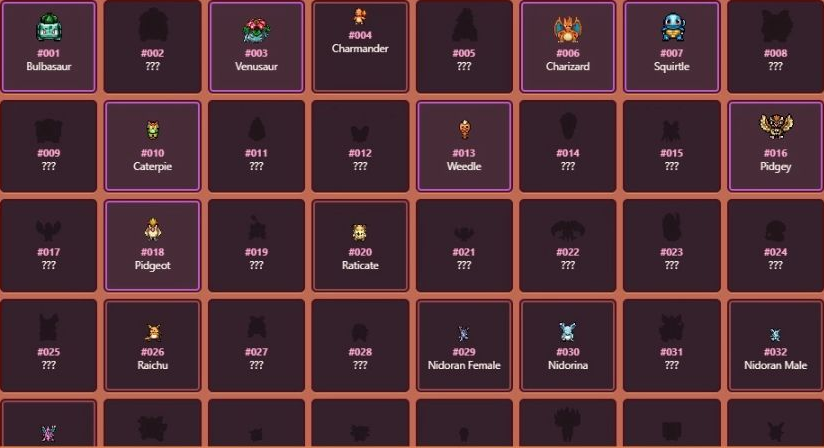
The operator describes teams of up to five Pokémon, with the rest stored in the Depot, advertised as having no overall storage limit. The Pokédex keeps track of discovered and registered species. The map, Pokédex, and market screenshots used here came from the project’s public tour and may show historical interfaces.
What matters when choosing a team?
A team must handle different types and opponents. Compare moves, stats, potency, and real performance in each activity. Elemental interactions reflect Pokéidle.io’s implementation, which may differ from official Pokémon games. PvP team planning also differs from the hunt team and may use a concealed battle order.
Gyms: Competition Between Players
The project advertises 18 gyms, one per elemental type. Instead of only battling NPC leaders, trainers contest leadership against each other. The published entry requirement starts at level 150.
What rewards are offered?
Holding a gym can award a title and +25% hunt damage when using Pokémon of the corresponding type, according to the operator. Control and bonuses depend on competition and may change.
How Does Pokéidle.io PvP Work?
Ranked PvP involves automated 1v1 trainer battles, with teams of up to five Pokémon, starting at level 80. Seven tiers are advertised: Bronze, Silver, Gold, Platinum, Diamond, Master, and Challenger, with limited upper-tier slots.
The introductory page mentions monthly seasons, but later notices specify weekly Ranked PvP. Update v1.271.0 (October 12) places the reset and reward distribution at Saturday 11:59 p.m., changing to Sunday midnight Brasília time. This is the newest identified rule in the application’s public history.

Hidden lineup and strategy
The game introduced a hidden battle order: a player’s available Pokémon may be visible, but their order of entry remains concealed. Potency, IVs, moves, and stats influence performance, but this does not establish that every matchup is balanced. ZAUS.GG has not run its own PvP tests or statistical match analysis.
Tournaments and championships
Community tournaments are separate from Ranked PvP. The first announced Showdown was scheduled for October 14 at 9 p.m. Brasília time, recurring on Wednesdays, with sign-ups closing at 8 p.m. and one-minute rounds. Conditions include trainer level 100 and Pokémon no higher than 150, excluding Shiny, P5, legendary, Outland, and TM. The announced top-three prizes were 100, 50, and 30 Diamonds. Special events may have different rules; this announcement does not establish cash payouts. ZAUS.GG did not independently verify every event or prize delivery.
Guilds and Group Wars

Guilds organize players into communities, with crests, emblems, and colors. The early homepage described groups of up to six, but a later app notice announced no overall membership cap, with 10 players assigned to a war. The newer system supersedes the older simplified description.
How do wars work?
The published format simulates an automatic match between selected members, with daily wars at 22:00 UTC. Server-side results do not require every member to be online, and replays offer playback speed controls.
Update v1.236.0 (October 6) describes a 0–100 score: up to 60 points for survival and 40 for combat, determined by relative guild placements. GP derives from this score. Check the current roster and scoring rather than relying on old tutorials.
What are the benefits?
Guilds add cooperative goals beyond solo hunting. A Guild Boost grants a stated +10% trainer and Pokémon experience for seven days; the public history says the shared bank activates it after reaching 500 Diamonds.
Bosses and Legendary Pokémon
The homepage advertises 25 legendary bosses, an operator total not independently recounted. Boss fights require tokens, and rare rewards depend on victory and random drops. Winning does not guarantee a TM, Mega fragment, or ticket.
TM parts and fragments can be processed with Professor Oak. Boss-specific probabilities appear in the Pokédex and should not be confused with normal hunt loot boosts; access and difficulty vary.
Mystic Arena and legendaries
According to the Terms, the Mystic Ticket is a boss drop with 0.0005% per victory for the first level-300 pair, increasing by 0.0005% for each higher pair. It admits a randomly selected eligible legendary or mythical Pokémon and is consumed on entry; the roster depends on the creatures with custom artwork available.
After a victory, one capture attempt is available: 0.1% Poké Ball, 0.2% Great, 0.3% Super, 0.4% Ultra, and 0.5% Beast. The document says Capture Boost and Kick may raise the maximum to 1.15%. Caught Pokémon have minimum quality 1.20, at least 120 total IV points, and potency P2 or higher. These rules are not the ordinary hunt catch table.
Are Mega Evolutions Available in Pokéidle.io?
Yes, according to the game’s announcements. Promotional examples include Mega Aggron, Mega Charizard Y, Mega Gengar, and Mega Garchomp.

The original announcement mentioned 35 Mega forms, and notice v1.226.0 (October 3) cited 45. Neither is safe to state as the current total: later notices announce 25 more forms and then another six, including Mega Salamence and Mega Audino. Without independently recounting the Pokédex or clear effective dates, these announcements should not simply be added up as a current total.
For the featured level-300 bosses, the published chances were 0.50% Mega fragments and 0.25% Shiny Mega fragments — operator figures, not verified drop tests. The debut announcement described 10 fragments to craft a species-specific stone at Professor Oak’s station and called the form permanent. A later notice introduced Reverse Mega Evolution, so “permanent” is no longer a safe blanket rule. Check current forms, stones, and reversal options in-game.
Houses, Bicycles, and Other Systems
Pokéidle.io offers progression systems beyond catching and battling.
Houses and XP Share
Houses distribute experience to Pokémon assigned to XP Share. Five rarity tiers offer stated benefits of 25% to 100%; a legendary house can benefit two Pokémon. Multiple houses may be owned, but only one used at a time; switching removes Pokémon from XP Share.
According to the Terms, construction requires 10 Outland Key Fragments; upgrading uses five matching houses for one of the next rarity, only up to Rare. Mythic and Legendary require random acquisition.
Bicycles
Advertised movement bonuses are 15%, 25%, 50%, 75%, and 100% for Common, Uncommon, Rare, Mythic, and Legendary. Build one with 10 Outland fragments; combine five identical bicycles to upgrade as far as Rare. Players can own several and equip one, with a five-minute switching cooldown. Movement bonuses apply to hunts and the plaza, not damage or action speed in PvP, gyms, wars, or boss fights.
Shiny Eggs
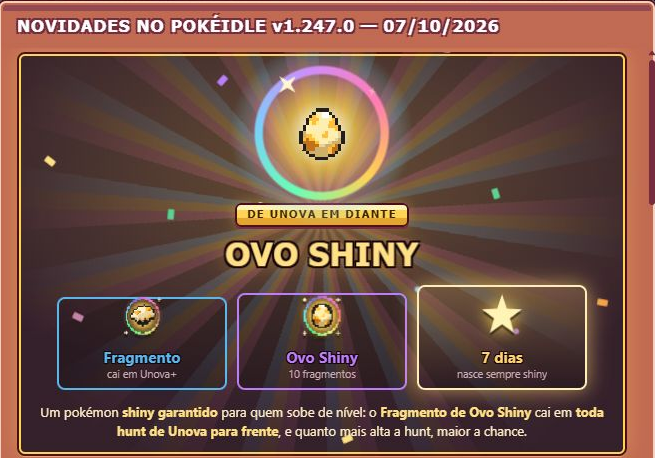
The app advertises fragments starting in Unova that can be combined into a Shiny Egg. Announced requirements are 10 fragments and seven days of incubation. The incubator can continue offline — again, an exception that does not change the always-open-tab requirement for normal hunts.
Events and social activities
Chat, the Pokémon Center, and temporary-bonus events round out the game. The public history also announces a Safari, accessed with tickets obtainable through a chance from boss victories or market purchases. The Terms describe a continuous one-hour session from entry, a random eligible roster, and catching with your own balls. Leaving or fainting ends it; losing connection does not pause the timer.
Wild Pokémon are reported as level 1, while caught creatures are assigned twice the species’ capture level, capped at 200. Defeating them yields no XP, Coins, or items. The launch date was not unambiguously shown in the notice reviewed.
How Does the Pokéidle.io Economy Work?
Before considering Gems or withdrawals: these mechanisms are described by the operator. ZAUS.GG has not deposited funds, traded, withdrawn, or independently confirmed liquidity. This game should not be treated as an investment.
Coins
Coins are conventional in-game currency earned through gameplay, used for systems, purchases, and player transactions. Their value should not be mistaken for a fixed exchange rate into US dollars or Brazilian reais.
Diamonds
Diamonds buy perks such as VIP, boosts, cosmetics, and special items. The operator advertises PIX and card purchases. Under the Terms, Diamonds are not directly withdrawable. Only Diamonds bought directly from the project create a quota that may be sold to other players. Free, awarded, or second-hand Diamonds do not expand that quota.
The Terms separately define VIP and the Premium Pass, and describe support-handled refund requests within seven days for unused purchased Diamonds. Redeemed benefits and resold Diamonds face restrictions; delivery or payment issues have separate rules. These are the operator’s stated policies, not a guarantee that every refund will be approved. Legitimate payment disputes are distinguished from abusive chargebacks.
Gems
Gems are used in part of the Community Market and the announced USDT conversion system. Unlike Coins and Diamonds, they have stated US-dollar purchase and buyback prices. The operator says Gems come from official purchases or other players’ market transactions, not as free hunt rewards.
How Do You Buy and Sell Pokémon and Items?
The Community Market is reached through the application’s trading interface. Eligible Pokémon and items may be listed for Coins or Gems. Under the Terms, certain store items such as skins and older Founder/Co-Founder Boxes can be sold, but Beast Balls and other items are not freely resellable. Another public notice says completed Z-Moves, AoE TM Disks, Shiny Stones, Shiny Eggs, and Mega Stones can no longer be listed, while fragments remain eligible.
Because that notice lacks a clear effective date, check the actual listing screen. Owning an item does not automatically mean you can sell it.
The marketplace uses escrow: while an item is listed, it is held aside and cannot be used normally by its owner. This is designed to prevent selling something that has already been consumed or transferred.
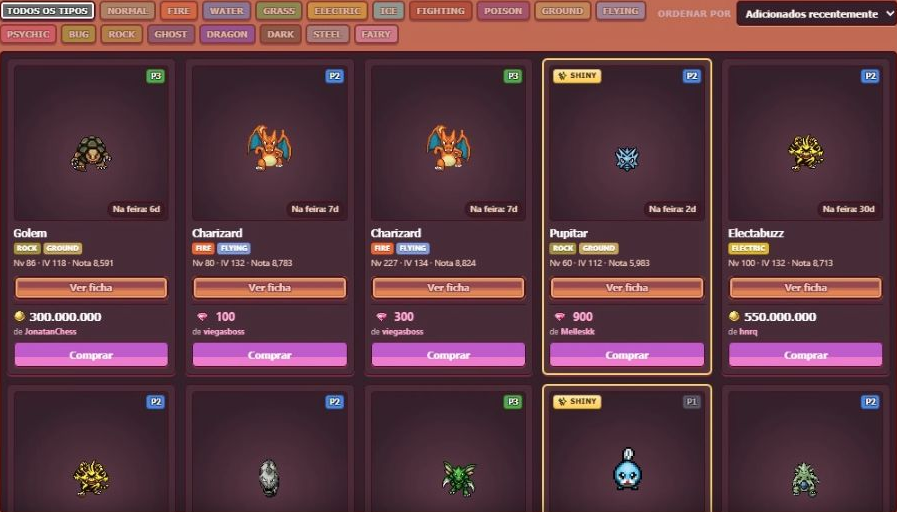
According to the Terms, the platform processes payment and the seller receives the balance after fees, which can be collected on returning online.
Which Pokémon can be sold?
Ordinary Pokémon must be level 50 or higher with quality 3.5 or higher. Shiny, P5, legendary, and mythical Pokémon are exceptions to those minimums. Shiny can only be listed for Gems. Eligibility still depends on the interface’s specific rules.
What are the marketplace commissions?
The Terms and more recent in-app notices publish these rates:
| Sale type | Published fee |
|---|---|
| Items or Diamonds sold for Gems | 15% |
| Pokémon sold for up to 500 Gems | 13% |
| Pokémon sold for 501–5,000 Gems | 10% |
| Pokémon sold for more than 5,000 Gems | 7.5% |
| Sales for Coins | 15% |
An unresolved conflict matters: section 11 of the Terms applies the rate to the full sale amount, whereas the “Pokémon Commission Has Dropped” notice describes a marginal, bracket-by-bracket calculation. The rates match, but resulting net proceeds differ. ZAUS.GG did not complete a trade to verify which formula is currently applied. Treat the table as published rates, not guaranteed net payouts; verify the amount received on the confirmation screen.
Players may reportedly keep 20 listings open. Listing a Pokémon costs 100,000 Coins per day, paid upfront for 1–30 days, even for sales denominated in Gems; unused listing days are not refunded after an early sale or cancellation. Items do not incur this daily charge.
Fees in Gems are rounded up to a whole Gem, which may exceed the advertised percentage for very small sales. Listings also have a two-minute lock after creation or a change in price or currency.
The introductory site still mentions older 10% Coins / 15% Gems fees. Newer Terms and notices agree on the rates above but do not settle the full-price-versus-marginal calculation dispute. Always inspect your net proceeds before confirming.
Are off-market transactions permitted?
No, under the published Terms. Pokémon and account sales through outside channels, including arrangements paid via PIX, are prohibited even if item delivery happens in-game. The operator says escrow protections apply only when the entire transaction occurs through the official Community Market. This does not eliminate every trading risk.
Can You Earn Real Money From Pokéidle.io?
The operator advertises player-to-player sales for Gems and subsequent buyback requests paid in USDT. Results depend on buyers, pricing, fees, and withdrawal approval. A rare catch is not guaranteed income. ZAUS.GG has not deposited, sold, withdrawn, or audited reserves or payouts.
Requests enter a manual approval queue, without a contractual processing deadline. One in-app notice cites an average review period of two business days, not a guaranteed payout date. Investigations, sanctions, and technical issues may delay or suspend requests.
How Do Gems and USDT Work?
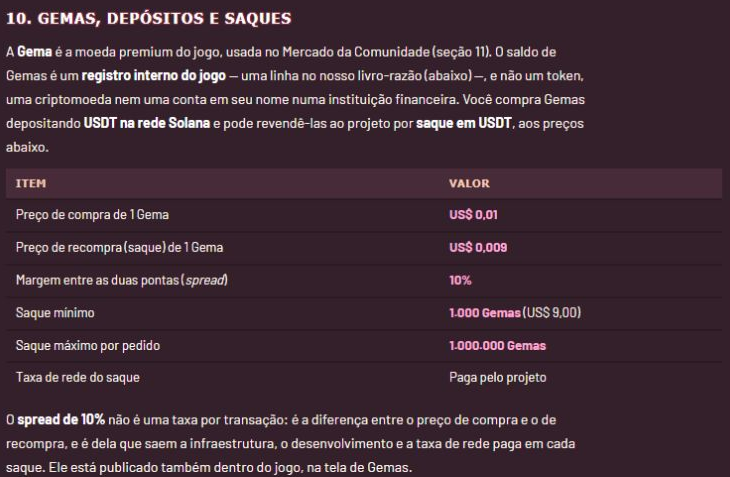
Section 10 of the October 12 Terms, revised October 16, gives a US$0.01 purchase price and US$0.009 buyback price per Gem. Previously cited US$0.007 buyback and 30% spread do not match the accessible document. Gems are internal ledger entries, not a proprietary blockchain token or bank account.
| Operation | Published value |
|---|---|
| Buy one Gem | US$0.01 |
| Buy back one Gem for withdrawal | US$0.009 |
| Difference between purchase and buyback | 10% |
| Minimum withdrawal | 1,000 Gems |
| Maximum per request | 1,000,000 Gems |
| Announced blockchain | Solana |
| Payout asset | USDT |
USDT is a stablecoin intended to track the US dollar. Receiving it in a cryptocurrency wallet is not the same as receiving bank deposits in US dollars or Brazilian reais. Converting to a bank currency may require other services, fees, checks, and additional risks.
A simple purchase-versus-withdrawal example
Buying 1,000 Gems at US$0.01 costs US$10. Requesting a buyback of those same 1,000 Gems at US$0.009 would have a stated value of US$9 — a US$1 difference (10%) before other costs. This illustration excludes marketplace commissions, digital-asset fluctuations, and external fees. The operator calls the difference a spread, not investment yield.
What happens when you sell a Pokémon?
The sequence is gross sale price → market commission → net Gems → potential buyback at US$0.009 per Gem → USDT. An older illustration of selling for 2,000 Gems was removed from the Portuguese article because the disagreement over tier calculations makes a guaranteed payout figure unsafe. Fees are rounded up in Gems. Even a plausible withdrawal estimate would not automatically be profit: acquisition costs, other expenses, and risk remain.
Is liquidity guaranteed?
No independent liquidity guarantee was identified. The Terms describe a Gem ledger and operator wallet, with the operator reportedly paying network withdrawal fees. Payouts are announced as USDT on Solana, sent to a user-confirmed compatible address; this does not prove every wallet, network, or exchange is eligible.
The October 16 revision says a withdrawal request cannot be canceled through the screen; asking to stop it before sending requires support. Requests may be denied for limits, balance, address, or irregularities, with Gems returned under the stated policy.
None of those provisions is an independent audit of reserves or assurance that every future request can be honored. The Terms also state that Gems are not investments, bank deposits, or guaranteed-yield products.
What are the risks?
An item may never find a buyer. Blockchain transfers may be irreversible; using an incorrect wallet or network can cause permanent loss. The system also depends on the server, operator, and project’s financial condition. It should be described as a game with an item marketplace, not a dependable source of income.
Is Pokéidle.io Free or Pay-to-Win?
You can start for free. The operator says regions, hunts, bosses, gyms, and PvP do not require direct admission fees, but VIP, boosts, items, and automations can accelerate progress or remove repetitive tasks. Monetization is therefore not merely cosmetic.
Convenience and faster progression may affect competitive readiness. Measuring balance would require controlled paid-versus-free account testing and match results; ZAUS.GG has not performed those tests and cannot issue a definitive verdict.
Is Pokéidle.io Safe?
This research does not support a categorical claim that Pokéidle.io is either safe or fraudulent. The responsible approach is to distinguish published safeguards from independent verification.
What does the project say about security?
It publishes Terms, a Privacy Policy, and a support contact. The operator says passwords are stored using salted scrypt hashes and Gem transactions are logged. It states that the game has no native two-factor authentication, so users should protect their email or sign-in provider with 2FA.
The operator also describes item reservation and last-moment price checks to reduce market fraud. Those are descriptions of safeguards, not an independent security audit.
What data does the service request?
Email/password registration asks for email, password, and confirmation. The trainer name is public. Google and Discord sign-in are also available. Withdrawals involve cryptocurrency wallet addresses. The Privacy Policy describes Google and Meta advertising measurement tools receiving technical data after cookie consent, plus IP, browser, activity, and purchase records. Wallet addresses, and potentially identity and proof of address during withdrawal investigations, may also be collected. Review the policy before signing up if privacy is a concern.
Are there age restrictions?
Yes: 18 and over, consistently across the registration screen, consent notice, and Terms reviewed. Older provisions for teenagers no longer match the October 12 document as revised October 16. This establishes the published requirement, not the independent effectiveness of age checks.
What happens if the service shuts down?
Its unofficial status is a major long-term uncertainty. The project admits using protected Pokémon intellectual property and may face content-removal requests or closure. The Terms do not guarantee uninterrupted availability.
The operator says it would try to notify players and allow a withdrawal period if the service ended. That is a stated intention, not proof of sufficient funds or a guarantee that every transaction could be completed.
What Makes Pokéidle.io Different From Other Pokémon Idle Games?
It combines automatic hunts, collection, gyms, PvP, and guilds in a browser service. The advertised Gem-to-USDT conversion brings additional financial risk to a game that can otherwise be explored for free.
Do not confuse pokeidle.io with pokeidle.online, unrelated projects named PokeIdle, PokeIdle Oficial, or PokAidle. Similar names or inspiration do not demonstrate common ownership or shared rules. This article’s sources refer specifically to pokeidle.io.
Is Pokéidle.io Worth Checking Out?
Pokéidle.io offers collection, team decisions, and automatic progression with competitive and social activities. It may interest players who enjoy comparing stats and building Pokémon over time, provided they accept the need to keep a tab open for hunts and follow changing rules.
Free access makes it possible to explore the basic experience. VIP automation, acceleration, and the Gem marketplace add separate considerations: progression advantages, financial uncertainty, and dependence on an unlicensed fan project. Public documents describe the model but do not replace balancing tests, security audits, or independent payout verification, none of which ZAUS.GG performed.
Battles may run automatically, but decisions about play, spending, and trading remain yours. Collecting for fun is not the same as counting on a collection for income.
About the Author