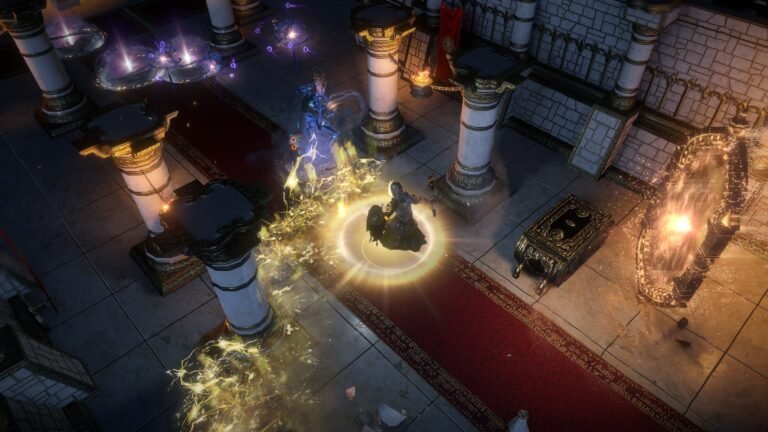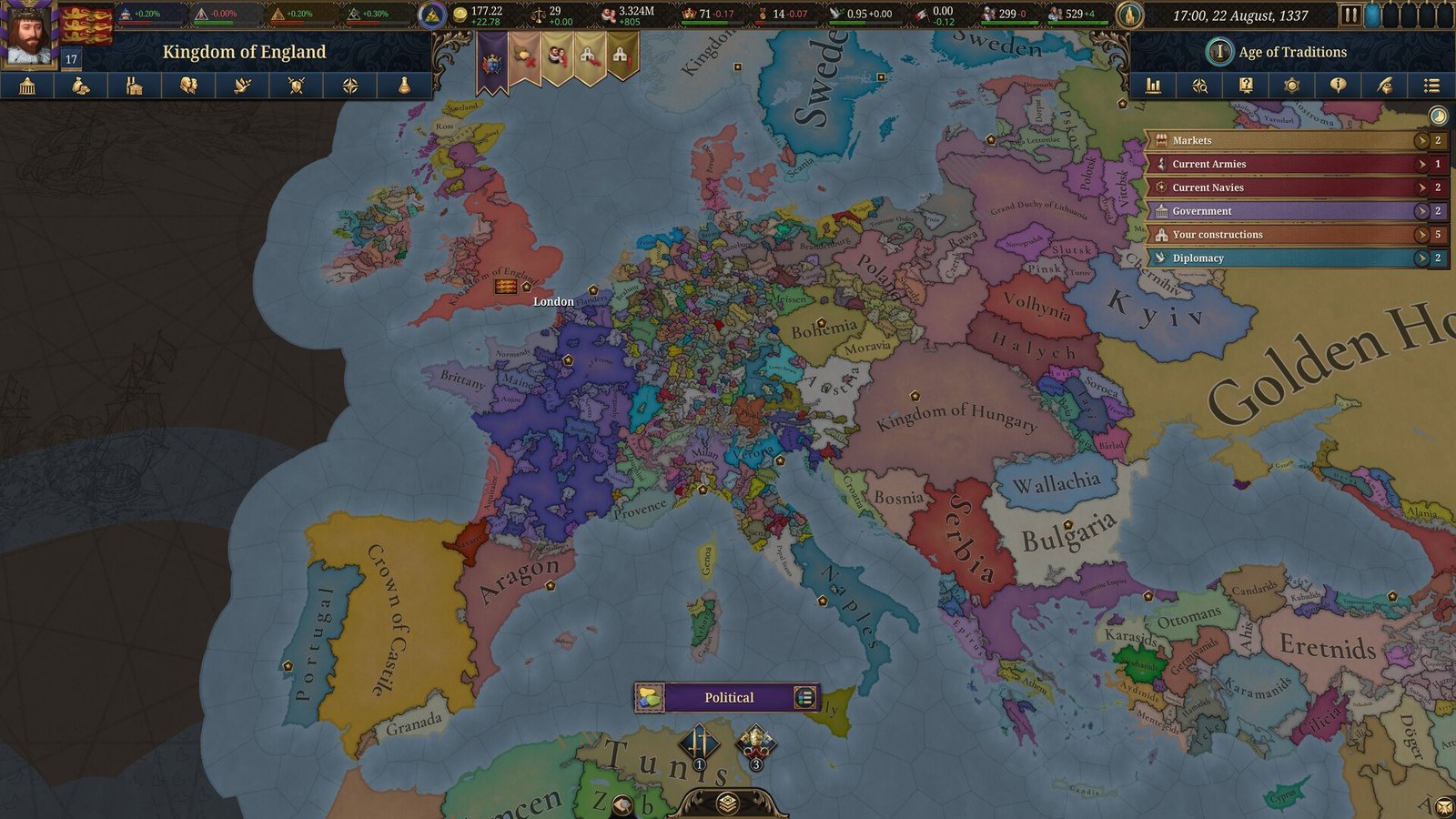
Estados e fronteiras formam o cenário internacional de Europa Universalis V. Captura oficial de gameplay. Imagem: Paradox Tinto / Paradox Interactive.
Imagine taking control of a kingdom facing an economic crisis. Tax revenue is not enough to support the army, merchants are struggling, and a neighboring power begins massing troops along the border. You could raise taxes, but that might provoke unrest at home. You could negotiate an alliance to discourage an invasion, although the agreement could create obligations later. Another option would be to cut military spending and invest in the economy, betting that development will pay off in the long run.
The problem is that other countries continue making decisions of their own. While you try to resolve the crisis, wars, political changes, and historical events may transform the situation. This relationship between different forms of power is at the heart of Grand Strategy games.
Grand Strategy is a category of strategy games built around governing states, dynasties, nations, or empires on a broad scale, with political, economic, diplomatic, and military decisions. Europa Universalis follows historical powers; Hearts of Iron emphasizes military preparation; Crusader Kings focuses on dynasties; Victoria highlights economics and society; and Stellaris takes imperial administration into science fiction. Each franchise organizes these decisions differently, and not all offer a traditional victory condition.
What connects them is the need to consider how a decision affects different parts of a political power. In this feature, we explore the origins of Grand Strategy, how its campaigns work, and how the genre evolved into modern games. Updated October 21, 2026.
Nesta matéria
What defines a Grand Strategy game?
The defining feature is not simply a huge map, thousands of soldiers, or dozens of menus. It is the scale of decisions. In a traditional military strategy game, the goal might be to organize units and win a particular encounter. In Grand Strategy, a choice may determine whether a country can finance its forces, maintain diplomatic relationships, or preserve political stability for years.
A war depends on more than battlefield results: equipment, resources, infrastructure, and international relations also matter. Similarly, an internal reform may improve economic conditions while drawing resistance from interest groups. The genre seeks to connect different instruments of power within a single strategic experience.
Must Grand Strategy depict historical countries?
Not necessarily. Europa Universalis, Hearts of Iron, Victoria, and Crusader Kings use historical settings or references, while Stellaris features fictional empires in a science-fiction galaxy. The setting may change as long as broad strategic decisions remain central to the experience.
Does the player control every battle directly?
That depends on the game. Many Grand Strategy titles let players manage armies, commanders, operations, or fronts without commanding individual soldiers. Hearts of Iron IV allows operational planning and division management; Crusader Kings III links armies to commanders, troops, and campaign conditions. Other games resolve combat in more abstract ways. Governing a power does not necessarily mean fighting every encounter directly.
Where did the term Grand Strategy come from?
The phrase predates video games. In military and political studies, grand strategy refers to coordinating different resources and instruments of power in pursuit of broad objectives. Military operations do not exist in isolation: sustaining a conflict also demands political, economic, social, and diplomatic capacity.
The idea has roots in strategic thinking and received important formulations during the nineteenth and twentieth centuries. In the twentieth century, B. H. Liddell Hart influentially connected military and nonmilitary resources to political objectives. A U.S. Army War College overview distinguishes the coordination of a particular war from a wider approach applicable in war and peace. The concept subsequently became a way of examining how states pursue long-term objectives through several means.
In video games, the term acquired conventions of its own. It describes experiences in which players make territorial, political, economic, and military choices, often watching powers change over long periods. This does not mean games reproduce academic grand-strategy theories in full: the historical idea influenced the name, while gameplay developed its own rules.
Board games and wargames as predecessors
Before digital Grand Strategy became popular, board games and wargames already explored territorial maps, armies, and relationships between powers. Diplomacy, designed by Allan B. Calhamer and originally published in 1959, is an important example. The creator initially sold the game himself before other publishers took it on, as documented by the historical Diplomacy World archive.
Set in Europe before World War I, Diplomacy emphasized negotiations, alliances, and orders issued by players. It showed that relationships between participants could matter as much as troop movements. That does not make it a modern digital Grand Strategy game; it represents one of the traditions behind political and territorial strategy games.
Other wargames and historical simulations incorporated economics, production, and administration. In Japan, Nobunaga’s Ambition and Romance of the Three Kingdoms developed their own historical strategies around rulers, officers, territories, and warfare. In 1997, Frog City Software’s turn-based Imperialism connected industrial development, trade, diplomacy, and territorial expansion. That date refers to the first game, before Imperialism II (1999). These examples show that many Grand Strategy ingredients existed before its modern commercial identity.
Europa Universalis and the consolidation of modern Grand Strategy
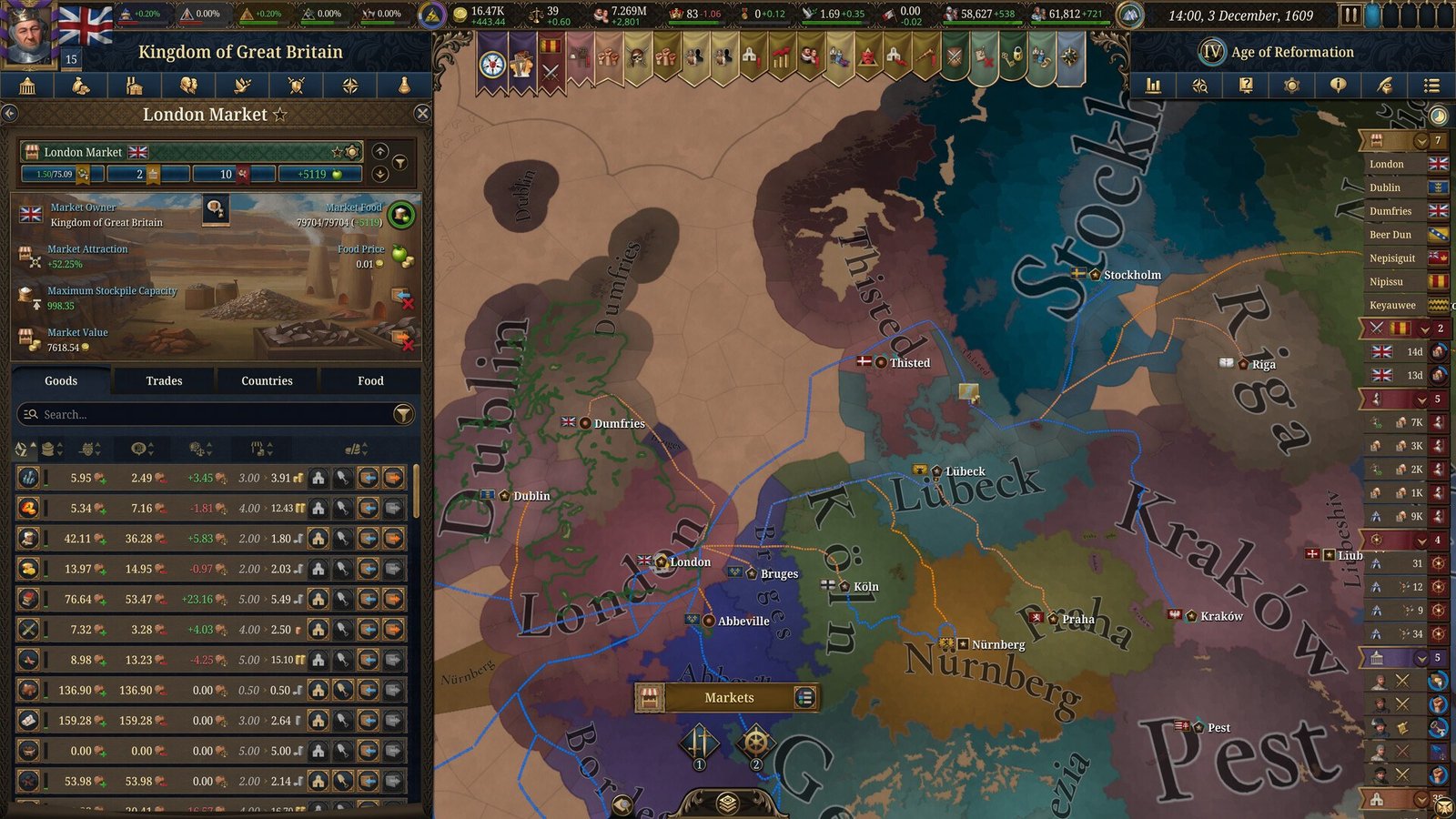
The first Europa Universalis debuted in 2000, developed by Paradox, with broader international distribution in 2001. It was based on a board game of the same name conceived by Philippe Thibaut, identified as its creator in the AGEod historical material. Regional debut and subsequent distribution explain why some stores list 2001 for the original game.
Players governed a historical power through a long period, making decisions on territorial expansion, politics, trade, diplomacy, and war. Rather than focusing on one military campaign, the game presented a world in which states pursued interests of their own. Alliances offered security, wars could expand territory but consume resources, trade could support economic development, and political changes or historical events introduced fresh challenges. This framework helped give historical computer Grand Strategy its recognizable identity.
How the franchise evolved
Europa Universalis II (2001) expanded the historical experience; Europa Universalis III (2007) developed further methods of governing and evolving states. Europa Universalis IV arrived in 2013, becoming an important reference point for the series. Its diplomacy, expansion, trade, technology, and administration were repeatedly revised through updates and expansions.
The series allows campaigns with many different powers. Governing a major European kingdom presents challenges unlike those of a smaller state or a power elsewhere. Political, economic, and diplomatic circumstances shape each campaign.
Europa Universalis V: a new generation
Europa Universalis V launched on November 4, 2025, for PC, developed by Paradox Tinto and published by Paradox Interactive, as listed on its official Steam page. Starting in 1337, the campaign devotes more attention to the late Middle Ages and subsequent centuries. Paradox’s announcement confirms the starting date and new population model.
One of the most important changes is how populations are represented. Rather than treating territories solely as administrative units, the game uses population groups with distinct characteristics and needs. They contribute to production, employment, and social organization. Systems for trade, markets, institutions, laws, and estates—power groups such as nobles and clergy—also play a role. Populations differ in culture, religion, and social position, and their demands affect the economy.
Why does population matter?
Suppose a kingdom urgently needs a larger army. Mobilizing more people may strengthen its forces, but can remove workers from economic activities and alter national output. Likewise, greater production may require workers, resources, infrastructure, and suitable market conditions. The army does not exist independently of society. Europa Universalis V models these connections through more detailed population and administration systems, alongside advisers, social groups, research, and institutional change. This marks an evolution from Europa Universalis IV, not a simple copy of its older systems.
On May 6, 2026, Fate of the Phoenix launched as a paid Immersion Pack focused on the Byzantine Empire, with imperial bureaucracy, a specific disaster, and cultural and religious paths, including Orthodox options. It arrived alongside the free 1.2 Echinades update, which introduced wider changes to the economy, institutions, and other systems. Paid content and the free update are separate; not every May change required buying the pack. Both were available at the editorial cutoff.
For October 28, 2026, Paradox announced Across the Pillars, a paid Chronicle Pack about Castile/Spain, Morocco, Granada, and the Strait of Gibraltar, alongside the free 1.4 Rio Salado update. The former was announced to add regional historical situations; the latter was planned to revise expeditions, religion, dynasties, and trade. Both were still future releases as of October 21, the article’s editorial date.
Hearts of Iron: war, industry, and logistics on a global scale
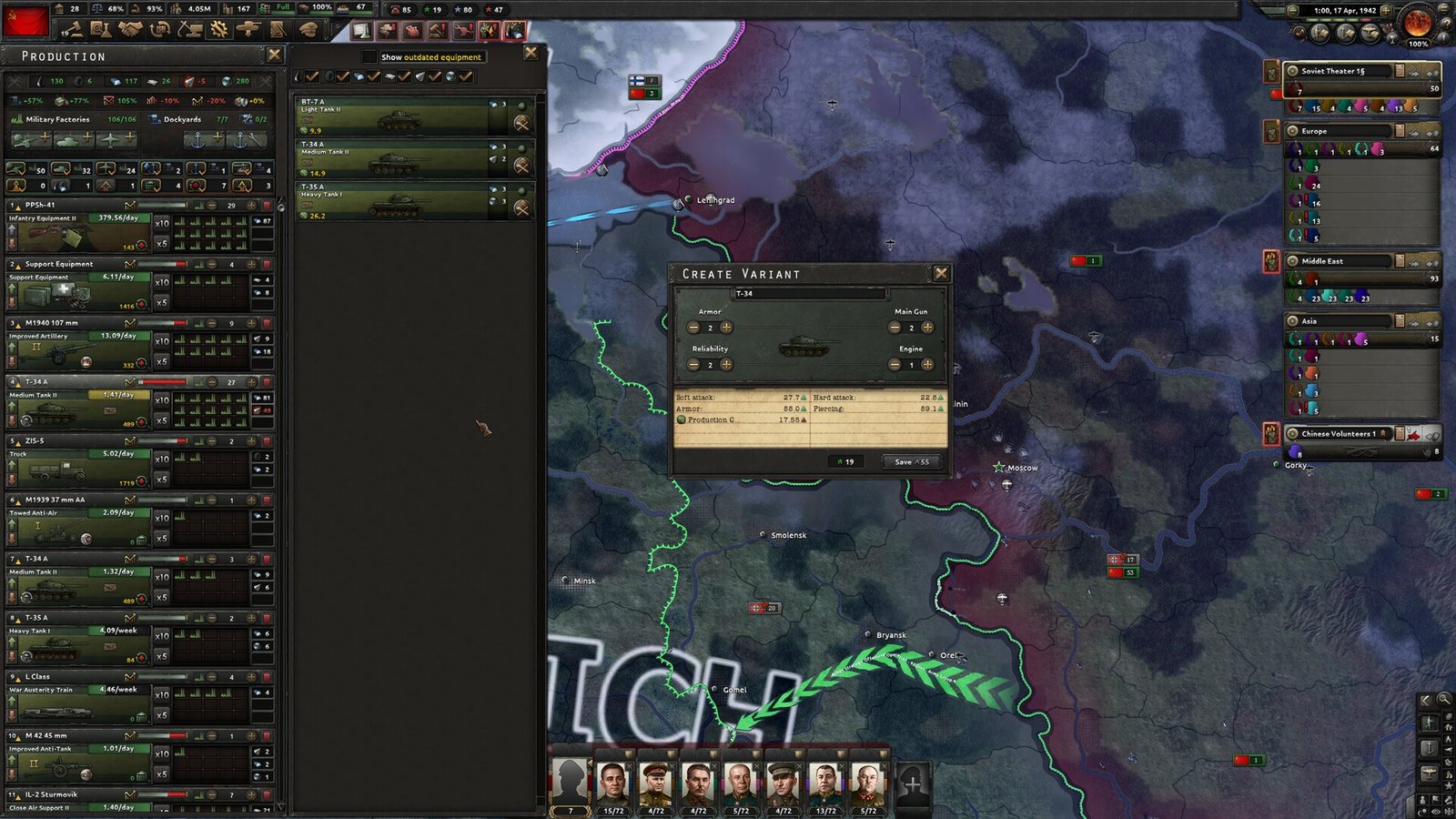
Hearts of Iron offers another interpretation of Grand Strategy. Its first game was released in 2002, focusing on World War II and its political and military setting. The series developed the idea that preparing for and conducting war requires choices beyond the battlefield. Hearts of Iron IV, released on June 6, 2016, by Paradox Development Studio and Paradox Interactive, became one of its best-known entries. The player governs a country amid international tension and military conflict, making political, economic, and strategic decisions.
Why is producing equipment as important as having soldiers?
A country may field numerous divisions but lack the weapons, vehicles, and equipment needed to make them effective. Production must match military needs, and industrial capacity devoted to one item cannot be used elsewhere. Research changes what can be manufactured and how forces fight. Military preparation therefore depends on economic choices made before and during a war.
Logistics and front lines
Railways, supply hubs, infrastructure, and geography affect whether armies can operate in a region. A rapid advance may fail if forces outrun their supply network. Terrain, enemy operations, and the priorities of other fronts can also change the outcome.
On November 23, 2021, the paid No Step Back expansion arrived with the free 1.11 Barbarossa update. The supply and logistics overhaul belonged to the free update, according to the official launch announcement. Thus, those systems should not be described as identical to the 2016 release or entirely dependent on purchasing the expansion.
This approach separates Hearts of Iron from traditional RTS games. Players coordinate large operations and front-line plans rather than directly controlling every soldier. On June 11, 2026, the paid Thunder at Our Gates Theater Pack expanded options for Australia, Siam, and the Dutch East Indies/Indonesia, while adding naval captains and army headquarters. A simultaneous free update also introduced new ways to attach support units to divisions; those base-game changes did not all require buying the pack.
Alternate history and political decisions
Although grounded in World War II, the series can depart from historical outcomes. Choices may change governments, international relations, and political paths, through systems designed for individual countries and campaign options. It is not a perfectly faithful military-history simulation: its models and rules turn a complex period into interactive gameplay.
Crusader Kings: when a dynasty matters more than the state
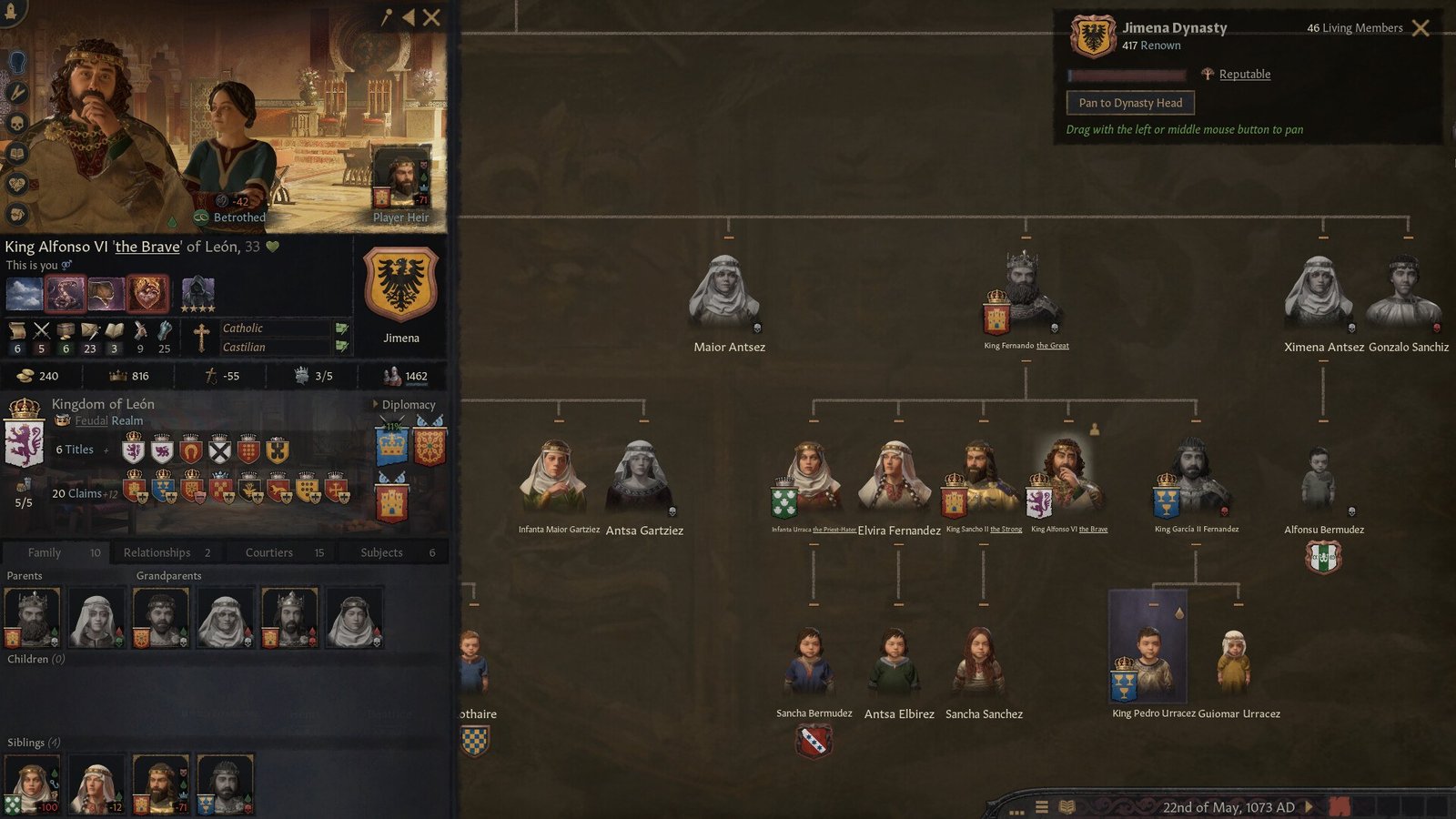
In 2004, Paradox released Crusader Kings, introducing a character-, family-, and medieval-politics-centered approach to Grand Strategy. Crusader Kings II followed on February 14, 2012, and Crusader Kings III on September 1, 2020, both developed by Paradox Development Studio and published by Paradox Interactive. Those are PC dates; console editions have their own release histories.
Rather than simply administering the same country throughout the campaign, players typically follow a ruler and the continuity of their dynasty. This changes how politics works.
What happens when a ruler dies?
Imagine building a kingdom, conquering lands, and securing marriage alliances, only for the ruler to die years later. Depending on succession laws, titles and lands may pass to different heirs. Alliances may shift and vassals may support rival claimants. The campaign continues according to the successor and the resulting political situation. Rules depend on the government, laws, and installed content: not every title is inherited in the same way.
Succession therefore becomes a central strategic concern. A family decision can carry territorial and military consequences.
Marriages, vassals, and intrigue
Marriages can create alliances or dynastic claims. Vassals have interests of their own and may cooperate or cause trouble. Personality traits, education, religion, and other character attributes affect events. Players manage both territories and individuals, giving the series certain RPG-like qualities.
Is Crusader Kings an RPG or Grand Strategy?
It is primarily associated with Grand Strategy, while incorporating meaningful role-playing and character-development elements. Crusader Kings III gives rulers distinct traits, relationships, and lifestyles that can change decisions and encounters. It does not, however, use the familiar party-based exploration and direct combat structure of a traditional RPG. Its identity comes from dynastic politics, territorial administration, and characters.
On September 30, 2026, the PC version of Crusader Kings III received By God Alone, a paid Core Expansion. It adds playable theocracies—including archbishops and the Pope—and systems involving the College of Cardinals, archdioceses, and religious-authority disputes. The free 1.20.0 Crozier update launched the same day. These are separate releases, and the date should not automatically be applied to consoles.
Silk & Silver, announced on October 19 for November 17, 2026, was still a future paid expansion. Its announced design covers merchant families, companies and trade routes, playable republics, and rival patrician houses. These were neither features of the 2020 base game nor content already available at the October 21 cutoff.
Victoria: economics, population, and social change
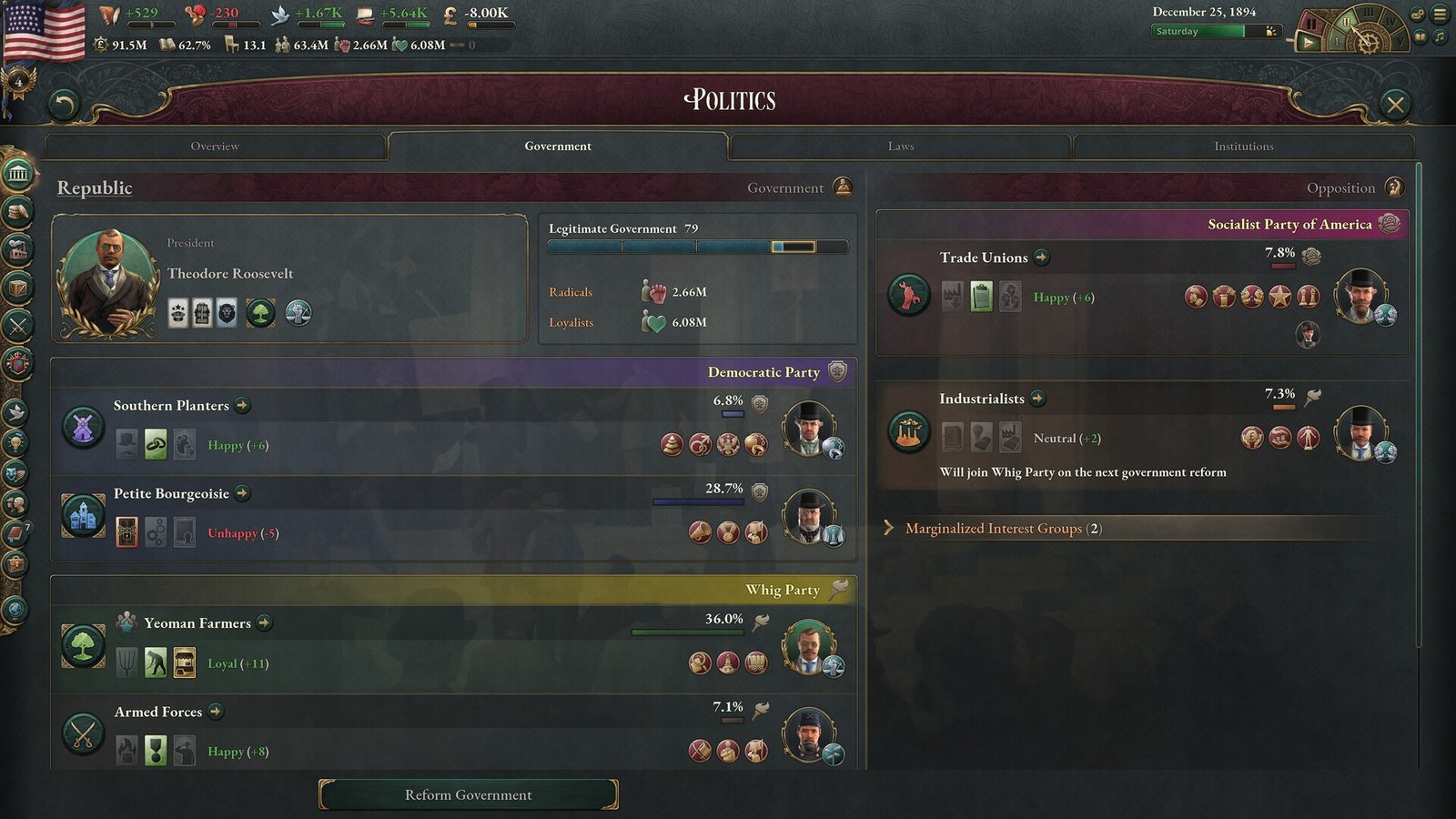
The Victoria series approaches Grand Strategy from another direction. Victoria: An Empire Under the Sun (2003) emphasized the economic, political, and social transformations of the nineteenth century. Victoria II followed in 2010, and Victoria 3 arrived on October 25, 2022, developed by Paradox Development Studio and published by Paradox Interactive.
While Hearts of Iron focuses heavily on military preparation, Victoria gives particular weight to how societies and economies function. Wars and international rivalries remain possible, but developing a country involves much more than moving its borders.
Population and social groups
In Victoria 3, Pops are population groups with their own attributes and needs. They work, earn income, consume goods, and may support different political interests. Industrialization illustrates the consequences: building factories increases potential output, but factories need workers, inputs, and customers. Changes in work and living conditions can reshape society and politics. Growth is about relationships between people, production, incomes, and consumption—not merely placing more buildings.
Reforms and political interests
Interest groups represent different viewpoints within the game’s society. A reform may gain support from some and opposition from others; new laws can change political and economic possibilities. Conflicts can therefore emerge without a battle. Decisions about labor or institutions may alter a government’s stability and the direction of a campaign. These systems are simplified models of complex societies, not neutral or exhaustive representations of real economic and political history.
Diplomacy and development
Markets, trade, industrialization, and relations among powers allow international influence without necessarily conquering neighbors. This shows how Grand Strategy can revolve around social change rather than solely warfare. On April 28, 2026, the paid The Great Wave expansion introduced ship construction and customization, ship sales, and naval diplomacy, linking industry to power projection. It also explored Japan’s historical transformations; these features were additions after the original 2022 release.
By contrast, the paid State and Revolution Immersion Pack was still scheduled for October 22, 2026, one day after this article’s editorial update. Its announced focus included the Russian Empire, tsars, revolutions, and national and cultural conflicts. Being part of the Volume 3 pass did not make its systems available on October 21.
How does a Grand Strategy campaign work?
Despite differences between games, a general decision-making loop helps illustrate the experience:
Assess the situation → Set priorities → Manage resources and policies → Negotiate or act → Respond to events → Adjust the plan.
This is an illustration, not a mandatory sequence. Events may happen simultaneously, and choices often need revision as circumstances change.
The political map as a decision-making tool
Maps may show countries, provinces, borders, regions, armies, and routes, but they do more than display geography. Map modes can expose economic, political, diplomatic, and military information. In Europa Universalis, the positions and relationships of states shape governance; in Hearts of Iron, front lines and infrastructure reveal military requirements; in Victoria, regional and economic views explain production and population. Terms like province, state, or region do not necessarily mean the same thing across franchises.
Domestic politics, economics, and diplomacy
These areas must be considered together. Preparing a war may require funding and foreign support while weakening domestic stability. A policy’s impact depends on the surrounding systems, not only its immediate benefit. Recruitment changes production in Europa Universalis V; industry sustains operations in Hearts of Iron; reforms confront competing interests in Victoria. Priorities must be reconsidered as conditions change.
Technology and modernization
Technology influences strategy in different ways. Hearts of Iron researches equipment, industry, and military capabilities. Europa Universalis has its own research, administration, and development systems. Crusader Kings ties innovations to cultural and historical conditions. Victoria relates advances to industrialization, production, and social transformations. There is no single universal technology tree: possibilities vary with each game’s era and design.
Real time with pause and simultaneous decisions
Many Paradox Grand Strategy games use continuous time that the player can pause. Days and other periods advance while political, economic, and military events unfold. Players can pause to examine information and issue orders, or adjust the speed when the game allows it.
Imagine managing a war while other powers negotiate and your economy continues operating. Pausing allows you to assess developments without responding to everything immediately. Real time with pause is neither a Paradox invention nor a requirement for every Grand Strategy game. Historical and hybrid titles may organize time differently; this feature does not define the genre by itself.
Alternate history, emergent narratives, and objectives
A defining pleasure of Grand Strategy is seeing a campaign diverge from known history. A state might win a war it lost in real life, a dynasty may survive longer, or an unexpected alliance may prevent conflict. Such outcomes emerge from the interaction between historical settings, rules, and decisions.
Represented history versus alternate history
Represented history supplies the starting context of countries, characters, territory, and events inspired by real periods. Alternate history is what happens when the campaign follows another path. An emergent narrative grows from interactions between systems, characters, and events while playing. In Crusader Kings III, a family dispute may spiral into an unforeseen political crisis; in Europa Universalis, an alliance may change international relations for decades.
Not everything is emergent: developers also create scripted events and systems that favor certain historical paths.
Does Grand Strategy have a victory condition?
It depends. Some games have end dates, explicit objectives, or ways to measure success; others let players set their own goals. In Crusader Kings, a campaign might be about preserving a dynasty; in Europa Universalis, expanding influence or meeting historical goals; in Victoria, developing a society and economy; and in Hearts of Iron, navigating political or military scenarios. World conquest is not mandatory. Watching a power change can be satisfying without a traditional victory screen.
Stellaris: where Grand Strategy meets 4X
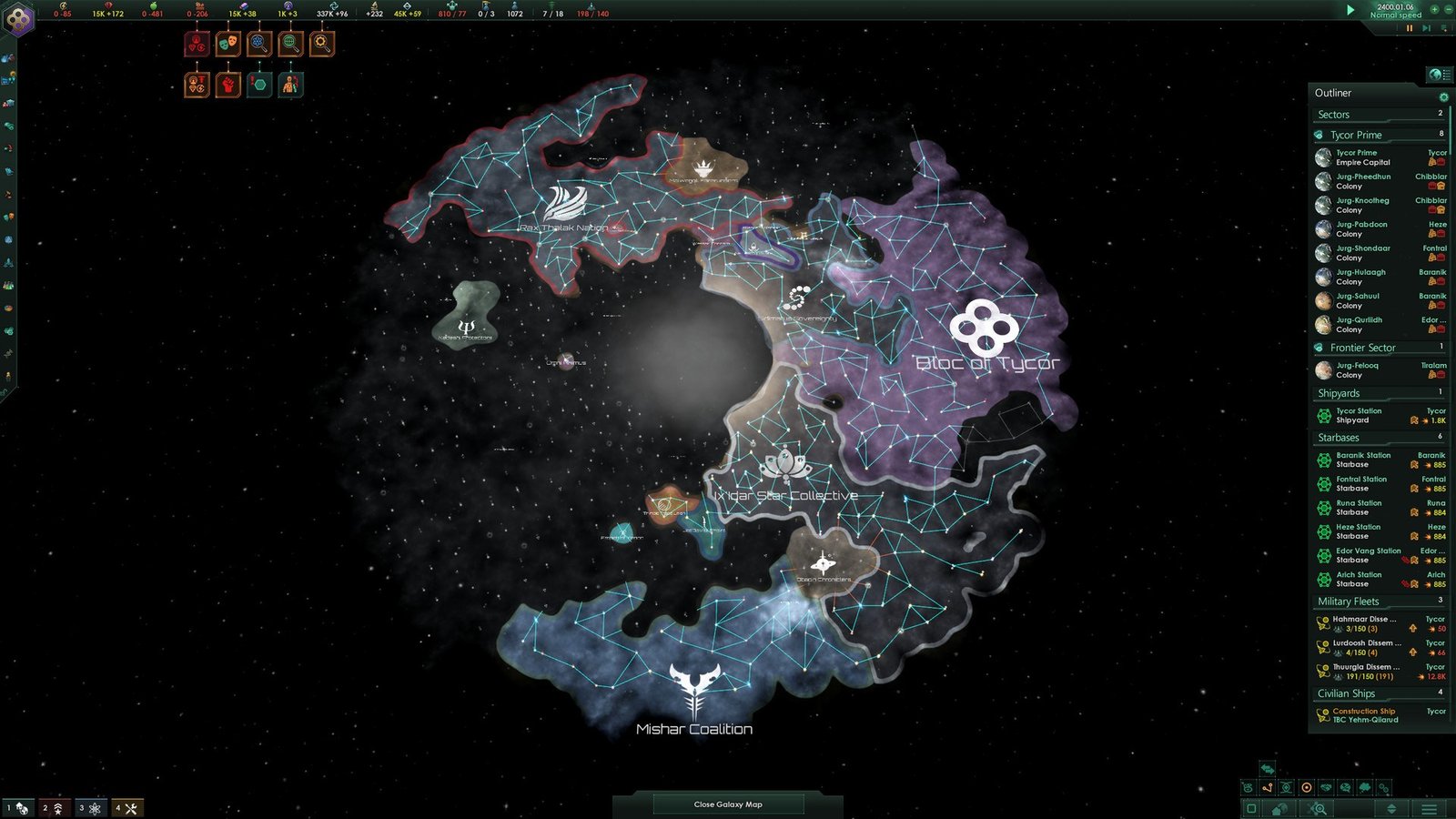
Released for PC on May 9, 2016, Stellaris, developed by Paradox Development Studio and published by Paradox Interactive, combines two strategic traditions. It draws on 4X through exploration, expansion, resource development, and competition between empires, and on Grand Strategy through political, economic, and diplomatic administration. Players build an interstellar empire, explore unknown systems, encounter civilizations, and eventually manage borders, population, diplomacy, and military power.
Why does Stellaris belong to both traditions?
Science ships and colonization connect discovery to territorial growth. As new empires appear, borders, economics, populations, and diplomacy demand more attention. Exploration does not disappear; relations between powers become an additional layer. Civilization customization and the political consequences of choices reinforce the overlap. Stellaris runs in continuous time with pause, yet its imperial administration is not simply the direct unit control of a traditional RTS.
Our ZAUS.GG feature on 4X Strategy explores discovery, expansion, exploitation, and rivalry in more detail. Here, Stellaris demonstrates how those systems coexist with Grand Strategy.
On June 15, 2026, the paid PC expansion Nomads introduced nomadic empires with habitable Arkships, trade routes, and contracts with other powers. Mobility and external relations offer an alternative to traditional territorial colonization. The free 4.4 Pegasus update, released on the same day, separately revised joining or leaving ongoing wars, jobs, the interface, and performance.
Announced on October 21, 2026, Willpower was scheduled for November 23 on PC. This future paid expansion was designed to develop ethics into cross-border ideologies influencing populations, domestic factions, and diplomacy, alongside the planned free 4.6 Corona Borealis update. Both were future content at the editorial cutoff, not systems already available or tested.
Grand Strategy vs. 4X Strategy vs. RTS: what is the difference?
These genres all involve planning, resources, and strategic choices, but emphasize different aspects.
| Category | Main focus | Examples |
|---|---|---|
| Grand Strategy | Large-scale political, economic, diplomatic, and military governance | Europa Universalis, Crusader Kings, Hearts of Iron |
| 4X Strategy | Exploration, expansion, and empire development while competing with other powers | Civilization, Master of Orion |
| RTS | Real-time strategy, often with direct unit control and tactical battles | Age of Empires, StarCraft |
| City Builder | Building and managing cities or settlements | SimCity, Cities: Skylines |
| Simulation games | Interactively representing activities and systems with varied priorities | Microsoft Flight Simulator, The Sims |
Grand Strategy vs. 4X Strategy
In Civilization, players often start with little territory and grow through exploration and expansion. Europa Universalis generally begins with historical states, borders, political relationships, and economies already in place. These are tendencies, not universal rules. Not every 4X begins with one city, and not every Grand Strategy game starts with a fully known map. Stellaris overlaps both traditions; classification depends on how the systems shape the campaign, not just how much territory is known at the beginning.
Grand Strategy vs. RTS
RTS stands for Real-Time Strategy, whose history is covered in our RTS feature. In StarCraft and Age of Empires, players typically manage the economy and units while reacting directly to battlefield events. Grand Strategy acts at a broader political and territorial scale. Hearts of Iron IV also runs in continuous time, but focuses on states, military production, logistics, and operations across fronts; that does not make it a traditional RTS. The distinction is about decisions and scale, not just the passage of time.
Grand Strategy vs. City Builder and simulation
Grand Strategy may model populations, economics, and infrastructure, but governing an entire state differs from concentrating on city construction. SimCity and Cities: Skylines are closely associated with City Builders. Economic and social simulations such as those in Victoria 3 can overlap, but not every economic simulator is Grand Strategy. Our Simulation Games feature explores their distinct purposes. These classifications can overlap without describing identical experiences.
Other games related to Grand Strategy
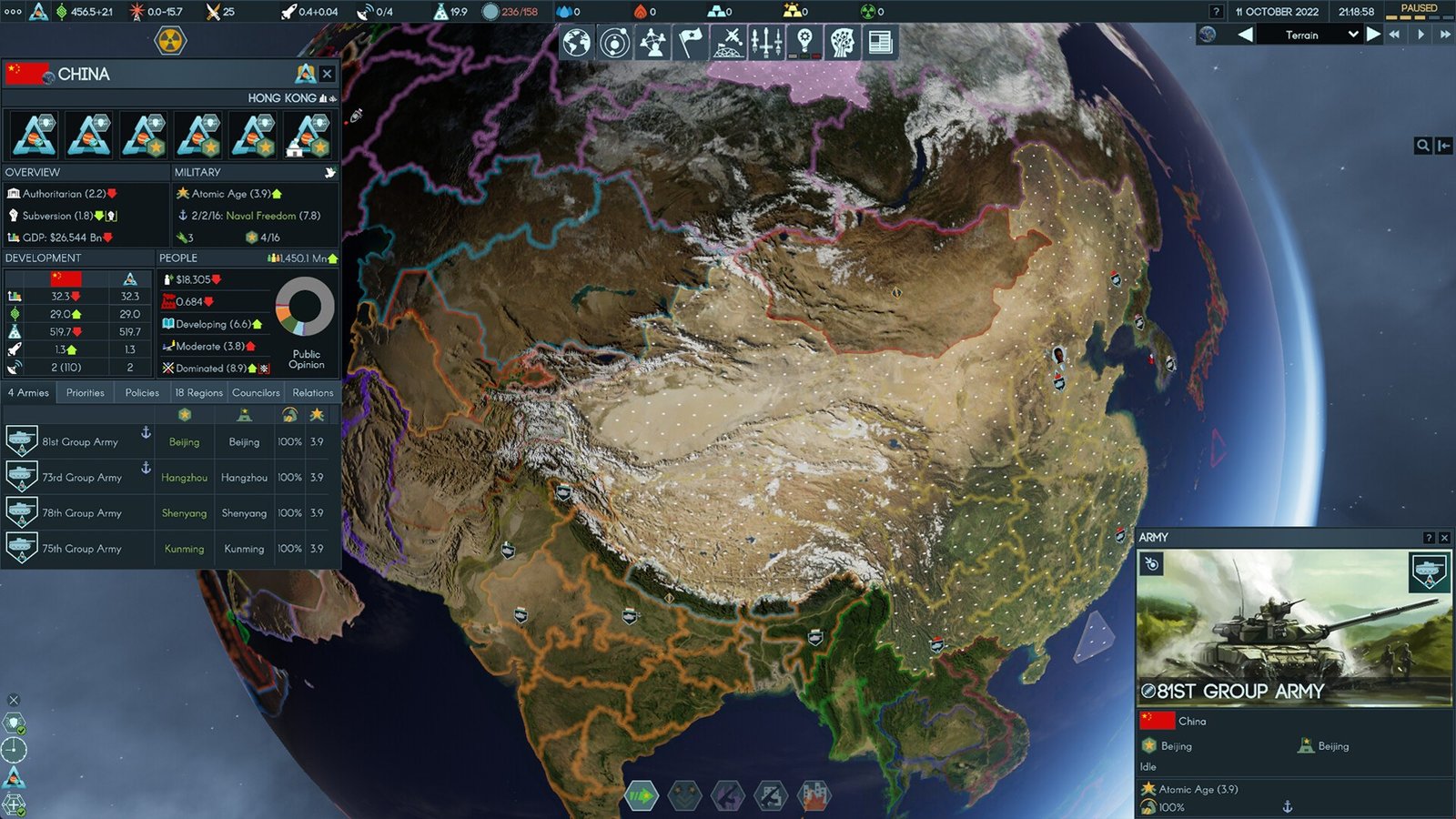
The tradition extends beyond Paradox franchises. Koei Tecmo’s Nobunaga’s Ambition and Romance of the Three Kingdoms have long depicted Asian historical periods through rulers, officers, territories, and warfare. Creative Assembly’s Total War combines turn-based strategic campaigns with real-time tactical battles, a split shown in the official series materials. Although often discussed alongside large-scale historical Grand Strategy, it follows its own formula rather than reproducing Europa Universalis.
Terra Invicta, developed by Pavonis Interactive and published by Hooded Horse, places players in charge of a transnational organization responding to an alien presence. Influencing states, gathering resources, and expanding into the Solar System connect geopolitics to space development. It is not simply a fixed-country campaign modeled after Europa Universalis.
Field of Glory: Empires, developed by AGEod and published by Slitherine in 2019, depicts ancient powers through economics, culture, decline, and territorial rivalry. Its turn-based play reinforces that continuous time with pause is not a universal requirement.
Afterworld, announced by Paradox Development Studio and Paradox Interactive on August 25, 2026, was still in development for PC as of October 21. It proposes guiding survivors through a post-apocalyptic North America, linking scarcity, laws, and social organization to empire formation. Moving from a small group to continental governance is a different setting for Grand Strategy, but an announcement is not proof of how the finished game will work.
These examples show that boundaries vary by title and definition: a historical strategy game need not follow the Paradox formula to contain grand-strategic elements.
How did Grand Strategy continue evolving through 2026?
The genre increasingly models relationships between people and institutions: populations produce goods, rulers struggle over authority, and economic decisions affect international policy. New settings bring these connections outside conventional historical eras. The design challenge is to make consequences understandable. An interface explaining why supplies are lacking or who opposes a reform may be just as important as adding another mechanic. Greater complexity does not automatically mean greater depth; it matters when it creates meaningful choices rather than repetitive tasks.
Expansions and mods
Grand Strategy communities often create mods: player-made scenarios, maps, rules, and other content. Some reinterpret history; others build alternate universes or change gameplay systems. Mods are not official releases, and compatibility may depend on game versions. Official expansions can also change a title substantially, which makes it important to distinguish launch features from later additions.
Multiplayer and diplomacy between people
Some games support campaigns with other human players. Alliances, negotiations, and rivalries may then involve actual participants instead of only computer-controlled states. The possibilities vary by game and mode. Multiplayer is optional but can transform the diplomatic experience.
Why is the learning curve sometimes steep?
Players may need to understand territory, economics, politics, international relations, and military systems, each with distinct interfaces and rules. A seemingly small choice can affect other systems much later, requiring gradual learning. Campaigns can last many hours and consequences may take time to appear. This is attractive to players who enjoy long-term planning and alternate history, while those who prefer quick matches or direct troop control might favor other strategy genres. Complexity is valuable only when it creates interesting, understandable decisions.
Games that marked the evolution of Grand Strategy
This selection mixes historical predecessors and important representatives. It is not a best-games ranking.
| Game | Year | Main contribution or characteristic |
|---|---|---|
| Diplomacy | 1959 | Board-game predecessor built around negotiations between powers |
| Imperialism | 1997 | Industry, economics, trade, and diplomacy |
| Europa Universalis | 2000 | Consolidation of modern historical Grand Strategy |
| Europa Universalis II | 2001 | Further development of the series’ historical approach |
| Hearts of Iron | 2002 | Global military strategy during World War II |
| Victoria: An Empire Under the Sun | 2003 | Economics, society, and political transformations |
| Crusader Kings | 2004 | Dynastic strategy and medieval politics |
| Europa Universalis III | 2007 | Evolution of historical state administration |
| Hearts of Iron III | 2009 | Expanded military strategy systems |
| Victoria II | 2010 | Development of economic and social systems |
| Crusader Kings II | 2012 | Expansion of dynasty-centered strategy |
| Europa Universalis IV | 2013 | Consolidation of a new franchise generation |
| Stellaris | 2016 — May 9 | Combination of Grand Strategy and space 4X |
| Hearts of Iron IV | 2016 — June 6 | Production, logistics, and military planning |
| Crusader Kings III | 2020 | New approach to dynastic strategy |
| Victoria 3 | 2022 | Populations, markets, and economic change |
| Europa Universalis V | 2025 | Detailed populations and new administrative systems |
Diplomacy is a board-game predecessor, not a video game. The dates mark significant historical releases and do not imply that original editions already included mechanics introduced in later patches or expansions.
Who is Grand Strategy for?
These games may particularly appeal to people who enjoy history, politics, economics, diplomacy, and long-range planning. Campaigns can focus on national transformation, family relationships, military preparation, or economic and social change, while others move those decisions into science fiction. A favorite setting may matter as much as a preference for specific mechanics.
The choice depends on whether you want to follow a dynasty, industrial development, military campaigns, or alternative societal paths. You do not need to pursue world conquest to have a rewarding campaign. The central appeal is setting goals and watching interconnected decisions transform a power.
Grand Strategy means managing the consequences of every decision
A plan may look sound until a ruler changes, supplies run out, or an unexpected alliance emerges. The player must recognize which commitments can still be sustained and which goals need to be reconsidered. That continuity gives choices weight: preparing a war, signing an agreement, or passing a reform matters because of what it makes possible next. The experience lies in guiding a power through change, with priorities that can evolve along the way.
About the Author