A organização de cidades e territórios conecta o crescimento do império em Civilization VII. Imagem: Firaxis Games / 2K.
Imagine starting a game with a single city and a small territory around it. You send a unit out to explore and discover fertile land near a river. It looks like an excellent place to found a second city. But there is a problem: another civilization is approaching the same area.
You can spend resources to claim the land quickly, strengthen your existing city, or try to reach a diplomatic agreement. You might also research technologies that offer advantages later. None of these decisions happens in isolation. Expansion costs resources; resource production requires infrastructure; research opens new options; and a military decision can affect relations with other peoples for the rest of the game.
This interconnected design lies at the heart of 4X strategy games, a category associated with exploration, territorial expansion, economic development, and competition between civilizations or empires. The name comes from four English words: Explore, Expand, Exploit, and Exterminate.
Civilization popularized the development of historical civilizations; Master of Orion and Stellaris explore space empires; and Endless Legend and Age of Wonders approach empire building through fantasy settings, distinctive factions, and combat systems. Despite their differences, these games share one essential trait: decisions made early can shape events much later.
In this feature, we trace the origins of the term 4X, explain the genre’s central mechanics, and explore how empire-building games have evolved. Updated October 21, 2026.
Nesta matéria
What does 4X strategy mean?
The term 4X refers to four activities commonly associated with building and developing empires.
| Original term | Meaning in a game |
|---|---|
| eXplore | Discover territories, uncover resources, and gather information |
| eXpand | Extend cities, colonies, borders, or influence |
| eXploit | Use and develop available resources |
| eXterminate | Confront rivals and compete for power, territories, or objectives |
Explore means discovering what remains unknown. Exploit means using opportunities and resources to strengthen an empire. Exterminate, literally the elimination of rivals, reflects a tradition of conquest and conflict, but its literal meaning does not summarize every modern 4X experience. Not all games require players to destroy every rival to win. Depending on their rules, they may allow scientific, cultural, economic, or diplomatic victories.
Is 4X strategy always about warfare?
No. Military combat may matter, but it is normally one part of a much broader set of decisions. A civilization must sustain its economy, research technology, administer territory, and deal with other powers. Even a militarily strong empire can struggle if it cannot support its cities or pay for its forces. A player pursuing scientific victory may still need defense and diplomacy to protect their progress. The genre generally rewards balancing immediate decisions against long-term consequences.
Are all 4X games turn-based?
No. Civilization and Master of Orion are traditional turn-based references, but Stellaris runs in continuous time that can be paused. The 4X label primarily describes the strategic organization of an experience, not the speed at which time passes.
Where did the term 4X come from?
The expression became popular in 1993 when journalist and game designer Alan Emrich wrote about Master of Orion for the American magazine Computer Gaming World. The article appeared in issue 110, September 1993, pages 92–93, under the title “MicroProse’ Strategic Space Opera Is Rated XXXX!” The preserved original issue contains the passage introducing the four Xs.
It was a preview, not a definitive review of the commercial release. Emrich used the four Xs to describe exploration, expansion, economic exploitation, and confrontation in a space-strategy game. The label eventually applied to other games with similar structures. Several games now classified as 4X existed before the term: Emrich recognized an emerging design tradition rather than inventing its mechanics, and Master of Orion was not the first game to combine them.
The predecessors of 4X games
Empire-building video games drew inspiration from board games, wargames, and earlier digital experiences involving territorial conquest. Previous projects already featured the management of forces, contested regions, and economic or military systems. One example is Walter Bright’s Empire, whose roots go back to the late 1970s; the original source code preserved by its author identifies a FORTRAN version for the PDP-10 from around 1978.
Another important predecessor was Andromeda Conquest, published by Avalon Hill in 1982, with space conquest and strategic administration. In 1983, Strategic Studies Group released Reach for the Stars, developed by Roger Keating and Ian Trout. This commercial space-strategy game predates the 4X label. Players managed a space power, explored systems, established colonies, developed an economy, and challenged rivals. Because it already brought together many of the four Xs, it is often cited as an early important commercial example of the genre. That does not mean its design was identical to later games. The history of 4X developed gradually, before it had a widely accepted name.
Civilization and the popularization of empire building
In 1991, MicroProse released Sid Meier’s Civilization for computers, created by Sid Meier with contributions from Bruce Shelley. It let players guide a civilization from its early development through different historical periods. They explored the world, founded cities, built infrastructure, researched technology, encountered other civilizations, negotiated, and fought wars. These systems would become recognizable features of many 4X games.
Why are Civilization’s decisions different from those in an isolated battle?
Imagine you have enough resources either to produce a military unit or improve a city’s infrastructure. The unit could respond to an immediate threat; the economic building might provide benefits for many turns. The best choice depends on the map and your goals. Research can take time to pay off, but unlock technologies that transform the economy or the military. This connection between the present and the future made Civilization particularly influential.
How has the franchise evolved?
Civilization II (1996) developed the original’s presentation and strategic possibilities. Civilization III (2001) emphasized culture and cultural borders. Civilization IV (2005) expanded religion, civics, and city development. Civilization V (2010) introduced hexagonal maps and different combat organization, including a limit of one military combat unit per tile. Civilization VI (2016) developed districts, making the placement of urban structures especially important. Throughout these releases, the franchise retained civilization building while changing the relationships between cities, territory, and gameplay systems.
Civilization VII and the transformation of ages
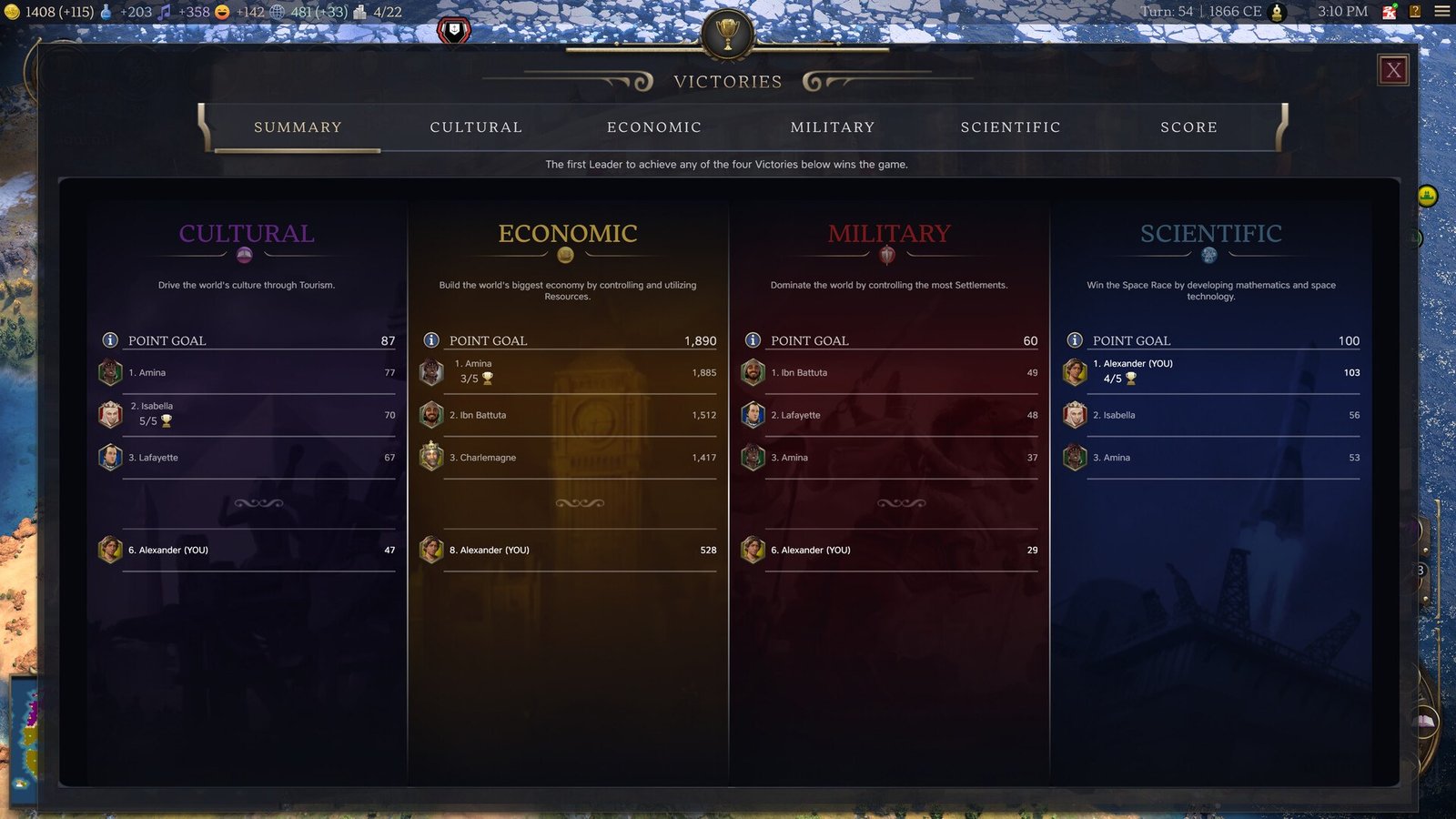
Released on February 11, 2025, Civilization VII, developed by Firaxis Games and published by 2K, introduced another major structural change. Its initial release was for PC and consoles; later versions and updates have separate timelines. The campaign was organized around major historical ages: Antiquity, Exploration, and Modern. Transitions changed systems, opportunities, and civilization development. At launch, one key feature was selecting different civilizations as ages progressed.
That rule subsequently changed. On May 19, 2026, the free Test of Time update introduced a choice: keep the same civilization across ages or select another at a transition, through the Time-Tested Civs system. It also revised victory conditions and replaced Legacy Paths with Triumphs, optional goals associated with six empire attributes: militaristic, cultural, scientific, economic, diplomatic, and expansionist. Those six attributes are not the same as the game’s four victory categories.
It would therefore be inaccurate to describe switching civilizations as mandatory in October 2026. On September 5, 2026, 2K announced future content: the free Arc of Tomorrow update, planned for 2027 with a fourth, Atomic Age, and Earthrise, a paid expansion planned for later in 2027 featuring space and environmental themes. Neither was available on the article’s editorial date, October 21, 2026. They were announcements, separate from changes already delivered in Test of Time. Civilization VII illustrates how even an established franchise can experiment with the structure of empire development.
Master of Orion and the consolidation of space 4X

In 1993, Master of Orion, developed by Simtex and published by MicroProse, arrived on computers. Players controlled a space civilization competing with other species for dominance of a galaxy. Traditional cities were replaced by planets and star systems. Exploration, colonization, and fleet development drove expansion. Technology improved the economy, equipment, and military options.
How did the development of a space empire work?
Discovering a promising planet with a scout ship does not mean immediate colonization is always the right choice. Distance can make defense harder, and resources spent on the colony cannot also fund research or fleets. Meeting another species introduces the choice between negotiation and competition for the same system. Exploration creates opportunities, but taking them depends on the economy and the ability to defend expansion. This interplay of planets, technology, diplomacy, and military strength helped establish the identity of space 4X games.
Master of Orion II and the franchise’s continuation
Master of Orion II: Battle at Antares arrived in 1996, expanding colonization, planetary management, technology, diplomacy, and customization of empires and military units. The franchise later gained additional games and a modern reinterpretation released in 2016. Rules of the original titles must not be confused with those of later versions. Its historical contribution is the consolidation of a space-strategy structure that influenced many 4X games.
How do the four Xs work during a game?
A simplified loop is: Explore → Expand → Develop resources → Research → Negotiate or compete → Pursue victory. This is only an illustration, not a compulsory sequence. While a ship explores distant systems, colonies may produce resources and a war may take place while new technologies are researched. Multiple kinds of decisions overlap throughout the match.
Explore: discover territories and opportunities
At the beginning of many 4X games, much of the map is still unknown, often concealed by fog of war. Scouts reveal regions, resources, and possible threats. In Civilization, discovering fertile land can determine where to found a city; in Master of Orion, finding a suitable planet offers a colonization opportunity. Discovering it does not guarantee the resources needed to occupy it, and another power may want it too. Exploration turns uncertainty into possibilities for decision-making.
Expand: increase the empire’s presence
After discovering regions, a player can increase their territory or influence. In Civilization, that often means founding cities and establishing borders; in space 4X games, it can mean creating colonies or controlling star systems. Expansion increases access to production, research, and resources, but it also has costs. Distant cities need infrastructure and protection, isolated colonies are vulnerable, and rapid growth can strain administration. The goal is not simply to claim as much space as possible, but to occupy what you can sustain.
Exploit: use and develop resources
The third X can cause confusion. Here, Exploit means making use of resources to sustain an empire’s growth. Cities may produce food, materials, science, or wealth; planets may supply energy, minerals, or industrial capacity. These resources can build infrastructure, fund research, and equip military units. A newly conquered resource-rich region might offer little immediate benefit without the necessary production facilities. A sustainable economy must balance priorities: investing everything in science can delay defense, while paying only for armies can undermine future growth.
Exterminate: conflict, conquest, and competition
The fourth X covers competition between powers. Expansion can clash with another empire’s interests and lead to territorial disputes, battles, or larger wars. In Civilization, armies defend cities or conquer positions; in Master of Orion, fleets contest star systems. But Exterminate does not require every game to end with the destruction of all opposing civilizations. Alternative victory paths depend on each game’s rules. The four Xs describe a strategic tradition, not four identical obligations in every match.
Economy, technology, and managing empires
The four core concepts rely on interdependent systems, especially economics, research, infrastructure, and territorial administration.
Produce now or invest for the future?
Imagine two cities: one can produce military units quickly, while the other is well suited to scientific research. You might develop them similarly or specialize them for different tasks. The choice depends on the game’s rules and each region’s productive potential. Cities and colonies are more than points on a map: they contribute to the whole empire’s economy. As territory grows, so does the need to manage buildings, production, and resources.
The importance of technology
Many 4X games have a technology tree (tech tree) that organizes research and prerequisites. Research can unlock buildings, units, and economic improvements. However, there is no universal model: some games feature structured research paths, while others offer variable options or distinctive discovery systems. Scientific progress usually changes the strategic possibilities as a match continues. Timing matters: a military improvement can meet an immediate danger, while a scientific investment may be more valuable later. Neither priority is always better.
The challenge of micromanagement
As an empire grows, a player may need to supervise numerous cities, colonies, and units. Managing each building, production queue, and movement individually is often called micromanagement. Detailed control can be engaging, but it can also make late-game turns long and repetitive. Some games automate tasks or reduce individual decisions; others preserve more direct control. There is no universal solution. Balancing detailed administration with broad planning is a major 4X design choice.
Diplomacy and different ways to win
Building an empire requires more than raising armies. When multiple powers share a map, their relationships affect development. Diplomacy can create trade agreements, alliances, or opportunities to avoid conflict, while incompatible interests may produce rivalries.
Why can negotiation matter as much as fighting?
Imagine two civilizations contesting a strategic region. War may win the land but consume resources and leave other borders exposed. An agreement may avoid some of those costs, although negotiation cannot resolve every clash of interests. Each game has its own systems. Civilization, Master of Orion, and Stellaris differ in how they handle diplomacy: some emphasize trade, treaties, and politics; others are simpler. Diplomacy is a tool for development, not merely a way to postpone battles.
Can you win without conquering the entire map?
Yes, in many games. Different Civilization editions have offered military, scientific, cultural, and diplomatic paths under their own rules. In Civilization VII, May 2026’s Test of Time rework retained four main victory categories—military, economic, cultural, and scientific—while revising their progression and completion. It reworked these victories; it did not invent all four concepts for the franchise.
A science-focused victory may require infrastructure and research; an economic strategy emphasizes production and resources; a military victory may depend on expansion and territorial control. Some games also use scoring or particular campaign objectives. Victory conditions shape plans from the beginning, although surprises may force players to adapt.
Stellaris: 4X strategy and Grand Strategy in one universe
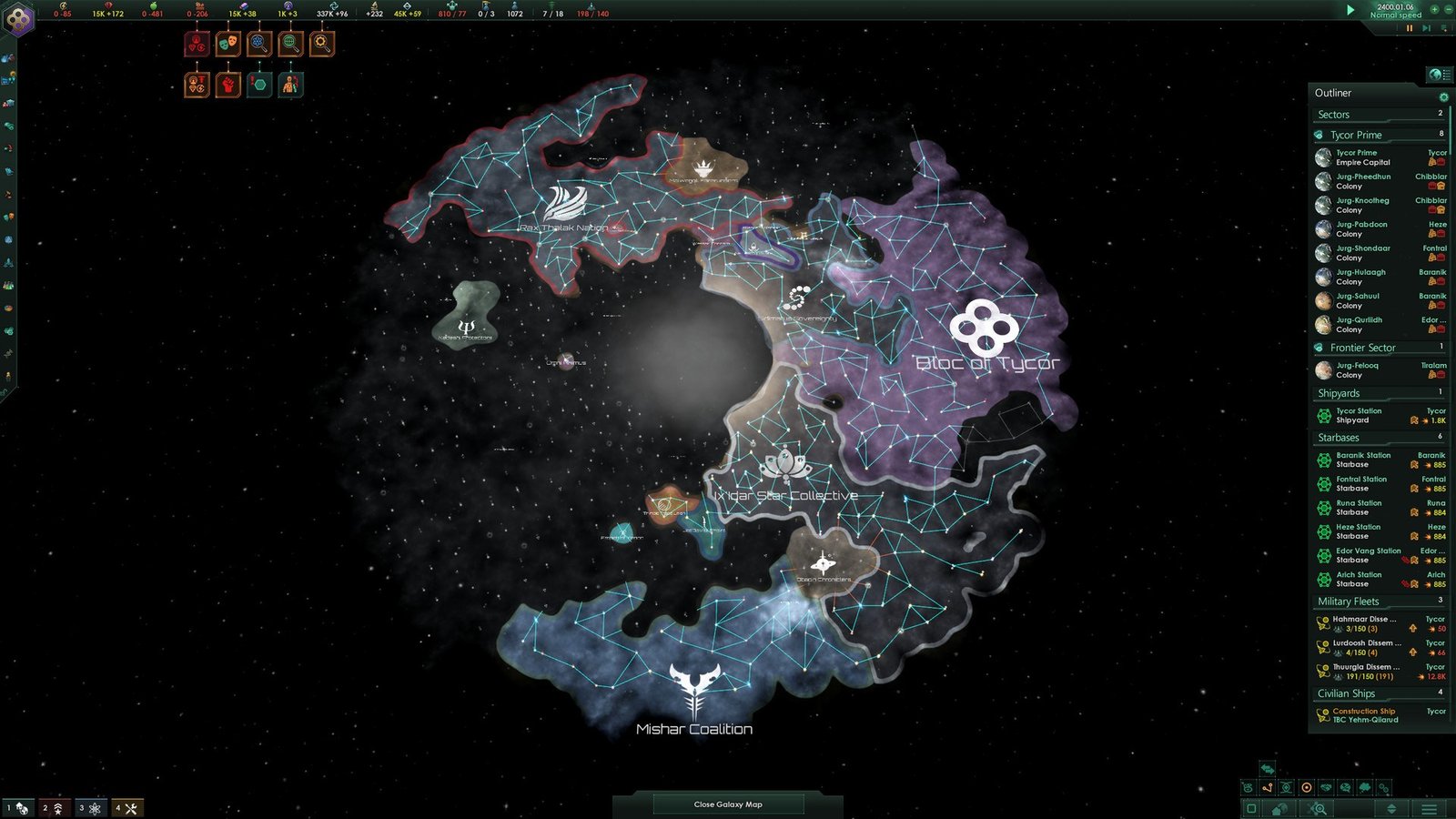
Released on May 9, 2016, Stellaris, developed by Paradox Development Studio and published by Paradox Interactive, blends 4X with Grand Strategy: political, economic, diplomatic, and military administration on a large scale. Players develop an interstellar empire, explore unknown systems, discover species, and manage economics, technology, populations, diplomacy, and armed forces. Its time structure differs from classic turn-based 4X games.
Time keeps moving
In Civilization, players usually make decisions within turns. In Stellaris, events proceed continuously, though time can be paused or its speed changed. As science ships explore, planets develop economies, diplomatic relations shift, and fleets fight. This enables simultaneous decisions without turning Stellaris into a classic RTS like StarCraft. The emphasis is managing a galaxy-spanning empire, not primarily directing units in fast tactical engagements.
Creating empires and emergent stories
Customization is another defining feature. Stellaris lets players design empires with different governments, values, populations, and traits, subject to available options. These decisions affect social development and foreign relations. Discoveries and unexpected events can also redirect initial plans. A civilization oriented toward diplomatic expansion might encounter a new threat; another may develop a very different economic or political system as play continues. The interaction of systems generates its own stories.
How has Stellaris continued evolving?
Since 2016, Stellaris has received many expansions and updates. On June 15, 2026, Paradox released the paid Nomads expansion for PC alongside the free 4.4 Pegasus update. These were two distinct parts of one release.
Nomads introduced the option to build nomadic empires around Arkships, large customizable, habitable ships with their own movement and relationships with other powers. This differs from traditional planetary colonization but does not make every empire nomadic. Pegasus brought free changes and fixes to the base game. The example shows 4X’s flexibility: empire building remains central even if one specific approach does not require conventional territorial colonization. Stellaris combines exploration, politics, economics, and interstellar relations within a broad strategic structure.
Endless Legend, Age of Wonders, and Galactic Civilizations: other versions of 4X
4X games have also evolved through fantasy settings, tactical battles, and different models of space administration.
Endless Legend: fantasy factions with distinct identities
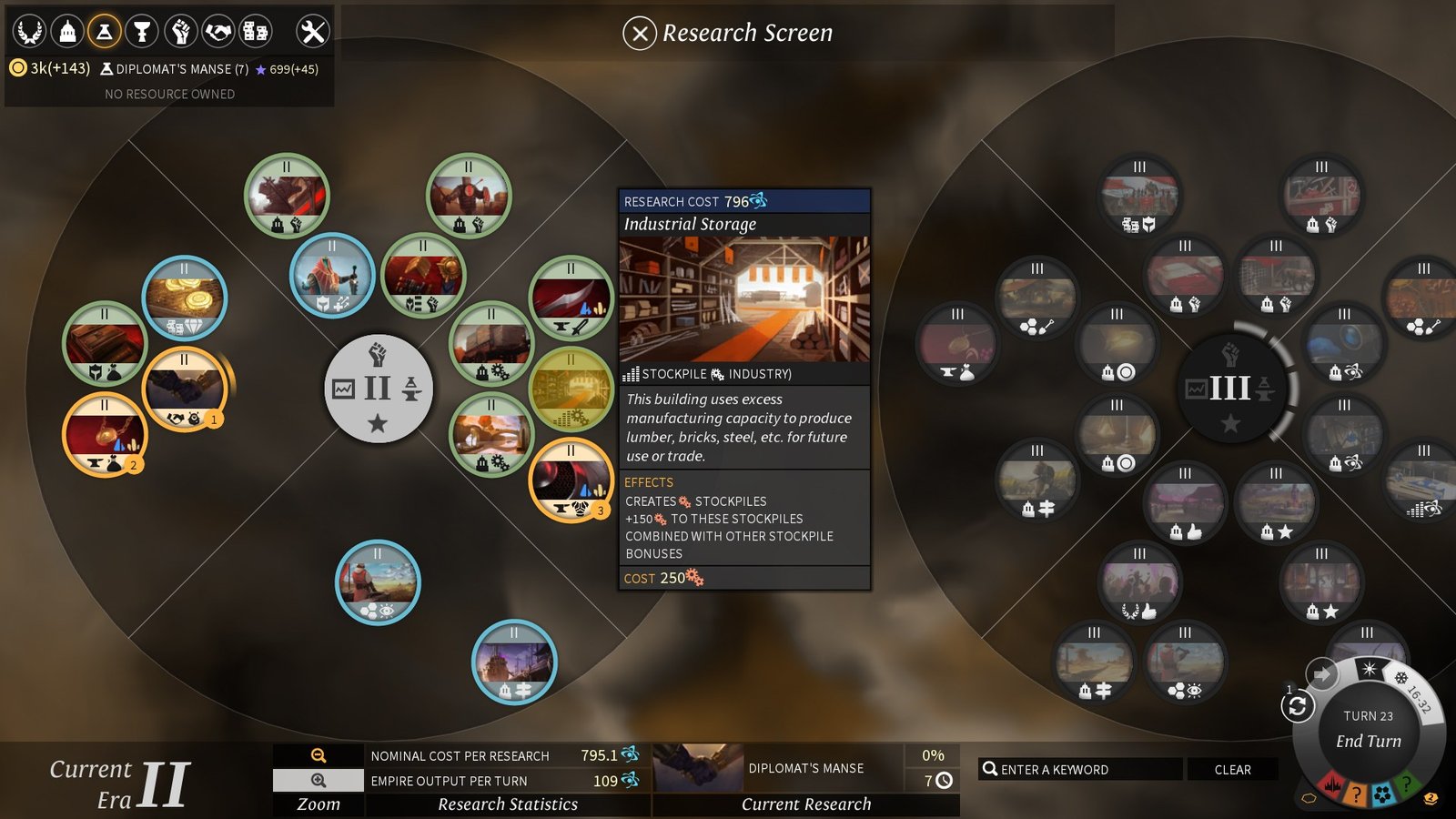
Released in 2014, Amplitude Studios’ Endless Legend brought 4X to the fictional planet Auriga. This is the first game, with its own rules and factions. It involves exploring, growing cities, managing resources, and competing with other peoples, in a fantasy setting with science-fiction elements. Its factions behave differently: the Necrophages lean strongly toward conflict, while the Drakken have features favoring different diplomatic relationships. Such differences change empire management. The game also incorporates faction stories and quests, showing how narrative can complement 4X systems.
The sequel, Endless Legend 2, developed by Amplitude Studios and published by Hooded Horse, entered Early Access in 2025 and reached its full 1.0 release on September 17, 2026 for PC, PS5, and Xbox Series X|S. Its setting is Saiadha, not Auriga. Asymmetric factions, heroes, and battles remain tied to empire administration.
One distinctive system involves receding waters during Tidefall events, which expose new land. This changes settlement opportunities and map connections. A border once protected by water may need new defenses, while newly accessible regions reopen competition for resources. Influence also affects city expansion and diplomacy. Exploration and expansion planning remain relevant throughout the campaign, rather than only at the start.
Age of Wonders 4: empire building and tactical combat
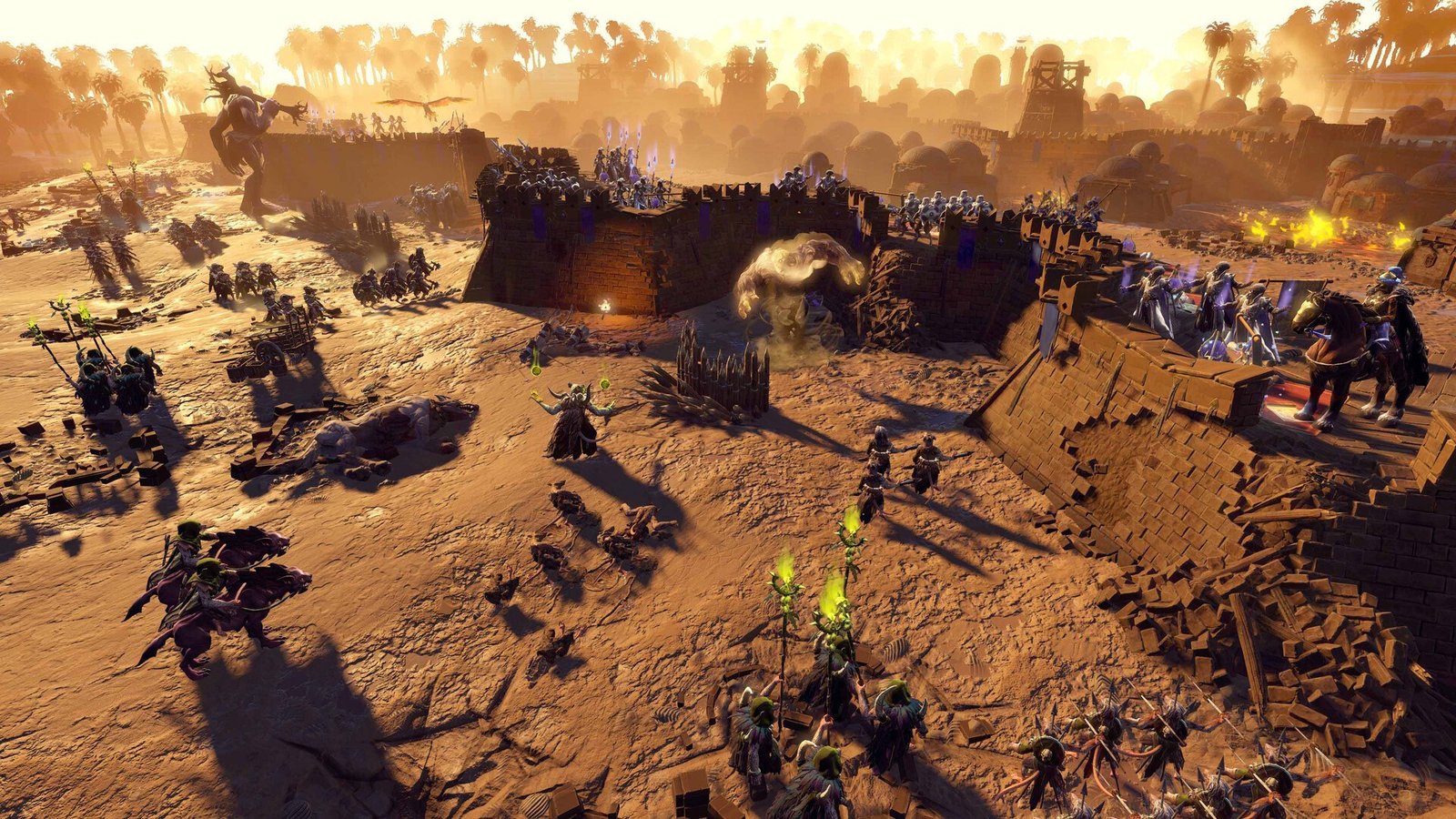
Released on May 2, 2023, Age of Wonders 4, developed by Triumph Studios and published by Paradox Interactive, launched on PC, PS5, and Xbox Series X|S. This fantasy 4X is centered on creating empires, exploration, and the development of factions. Players expand territories and use the game’s distinctive magic, fantasy technologies, and progression systems. An important difference is combat: while empire administration takes place at the strategic level, battles can use separate tactical maps in which unit placement matters. Tactical combat does not erase the game’s 4X identity because empire development remains essential.
Paid content released in 2026 included Rise from Ruin on March 9 and the narrative pack Secrets of the Archmages on June 16. Rise from Ruin added a culture, form, and tomes associated with ruin and reconstruction. Secrets of the Archmages added three story realms, new tomes, powers, and creation options. They are different products and had already launched by the editorial date.
On October 1, 2026, Paradox announced Expansion Pass 4, with Singer of Storms already available. The Silver Seas, expected on November 3, 2026, was still upcoming at the time of this article. Its planned seaborne colonization and merchant culture would add decisions beyond land settlement. Being announced or included in a pass does not mean an expansion has already been released.
Galactic Civilizations: the continuing tradition of space 4X

The Galactic Civilizations franchise continues the space empire-building tradition. Its games combine exploration, colonization, research, diplomacy, and rivalry. Stardock Entertainment’s Galactic Civilizations IV initially launched on April 26, 2022. The Supernova edition arrived on October 19, 2023, after its own Early Access period, with important new and revised systems.
Its administrative scale is distinctive. Rather than managing every planet in exactly the same detail, the game uses Core Worlds and colonies supplying them with resources. The original presentation of Galactic Civilizations IV already described that relationship in 2022; it did not first appear with Supernova. Players can also customize civilizations and research technology. This is another solution to a common 4X challenge: managing huge empires without turning every decision into a repetitive chore.
Different games, different priorities
Historical, space, or fantasy settings are only one part of their differences. Time systems, the importance of diplomacy, faction autonomy, and the balance of strategic administration against tactical combat also vary. All can belong to the broad 4X tradition without following an identical formula.
4X strategy, RTS, Grand Strategy, and City Builder: what is the difference?
These categories all involve planning, resources, and management, but emphasize different things.
| Category | Main focus | Examples |
|---|---|---|
| 4X strategy | Explore, expand, and develop empires while competing with other powers | Civilization, Master of Orion |
| RTS | Real-time strategy, often with direct control of units and an economy | StarCraft, Age of Empires |
| Grand Strategy | Large-scale political, economic, diplomatic, and military administration | Crusader Kings, Europa Universalis |
| City Builder | Construct and manage cities or settlements | SimCity, Cities: Skylines |
| Turn-based strategy | Organize decisions into turns | Civilization, XCOM |
These categories can overlap.
4X strategy vs. RTS
RTS means Real-Time Strategy, a tradition explored in our feature on the origins and evolution of RTS. In games like StarCraft, the economy and military operate as events continue in real time. 4X games frequently emphasize broader empire development, exploration, expansion, diplomacy, and long-term decisions. But the distinction is not absolute. Stellaris runs in continuous time and has strong 4X traits, while Sins of a Solar Empire combines elements of both. Real-time gameplay alone does not determine whether a game is 4X.
4X strategy vs. Grand Strategy
Grand Strategy often emphasizes managing states or societies through political, economic, diplomatic, and military systems. Europa Universalis, Crusader Kings, and Victoria take different approaches to this tradition. 4X games typically place stronger emphasis on discovering territory and progressively developing a competitive empire. In many Grand Strategy games, much of the world is already known or divided into existing states. The boundaries are flexible: Stellaris is a prominent overlap, explained in our Grand Strategy feature.
4X strategy vs. City Builder
Building cities is part of many 4X games, but it does not define the entire experience. In Civilization, a city supports civilization-wide economic, scientific, and territorial development. In SimCity or Cities: Skylines, examples of City Builders, the construction and management of cities is the main experience. SimCity also illustrates links to simulation games. City Builders are not necessarily less strategic; the overall structure of goals and mechanics is different.
4X strategy vs. turn-based strategy
A turn-based game is not necessarily a 4X game. XCOM uses turn-based tactical decisions without the same traditional empire exploration, expansion, and management structure. Fire Emblem combines tactical combat and character progression, as discussed in our tactical RPG feature. Civilization, by contrast, is turn-based within a 4X structure. How time passes and what strategic systems the game uses are different classification dimensions.
How do 4X games keep evolving?
Recent experiences also change who makes decisions, how a civilization evolves, and how much work an empire’s economy demands. Old World, Humankind, and Ara demonstrate differences beyond mere setting.
Old World: characters and dynasties

Mohawk Games’ Old World had its full release on the Epic Games Store on July 1, 2021, distinct from its later Steam launch. It combines empire building with mortal characters, dynasties, and political decisions. Because rulers age and die, family relationships and succession can determine the continuity of power. Planning an empire involves people and political interests that may change before a long-term project is finished.
Humankind: cultures across the ages
Amplitude Studios’ Humankind, released in 2021, develops a civilization through different cultures across historical eras. Its own structure should not be treated as identical to Civilization VII‘s.
Ara: History Untold and organizing production
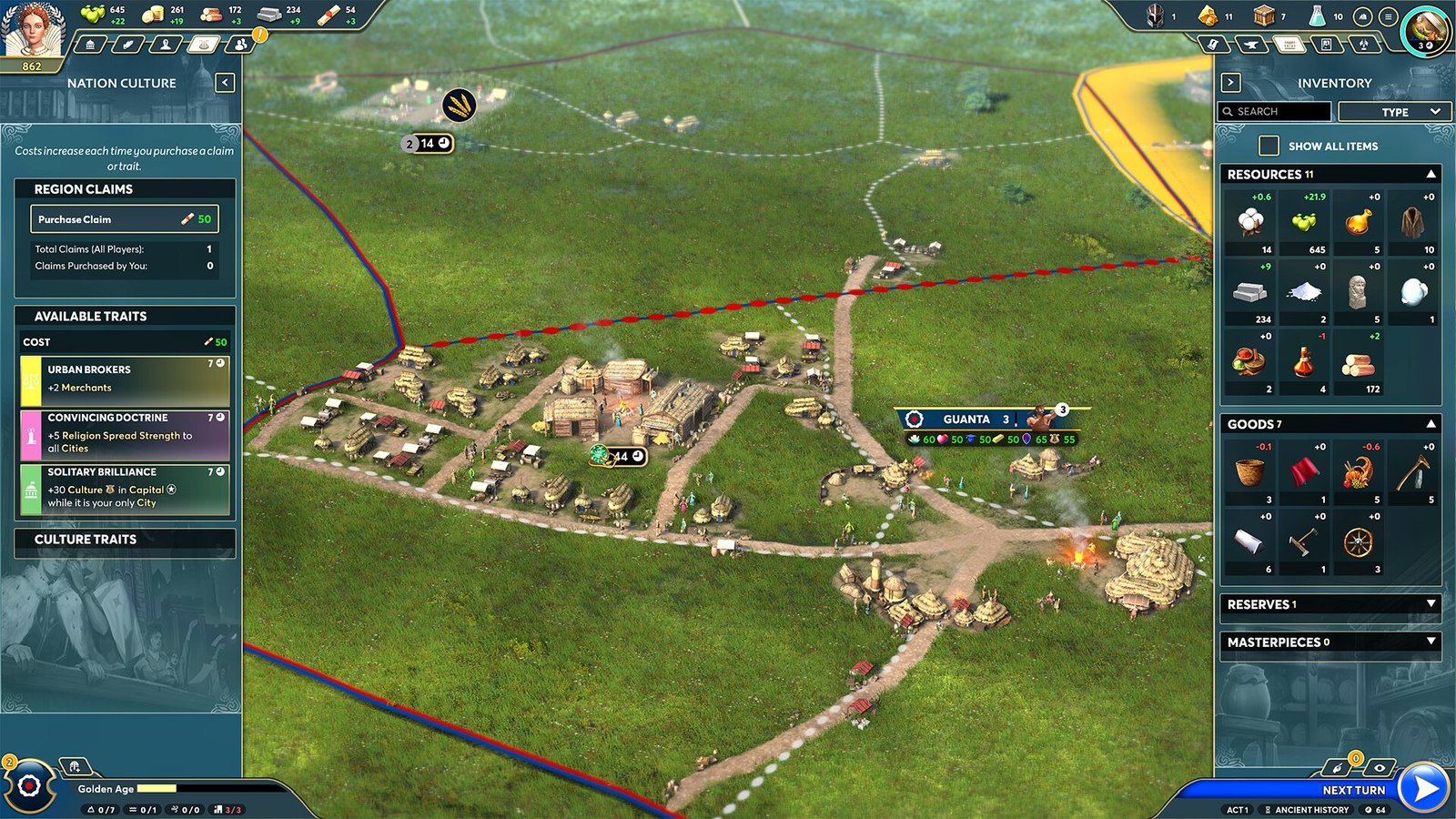
Developed by Oxide Games and published by Xbox Game Studios in 2024, Ara: History Untold takes another approach to historical strategy, using its own economic, production, and administration systems. Its nationwide crafting system transforms raw materials into goods and components. Simply owning resources is not enough: players must organize production and decide how to use its outputs, whether to support cities or build improvements. Coordinating these supply chains makes management more than adding resources each turn.
These games show that the genre evolves through interaction between systems, not just larger maps or better graphics.
Multiplayer and mods
4X games may feature computer opponents, other human players, or both. In multiplayer, diplomacy can take on another dimension because human opponents follow their own plans and negotiate differently. Not all games provide the same shared-play options. Communities also create mods, unofficial content that may add maps, factions, rules, and gameplay systems. Civilization and Stellaris have strong modding traditions. However, mods may depend on particular game versions, and updates can break compatibility.
The challenge of long matches
Founding one city early can be a defining decision; managing dozens of territories later requires monitoring production, defense, and diplomacy without endless repeated tasks. Clear interfaces and administrative automation help focus attention on meaningful choices. This automation does not turn 4X games into Idle or Incremental games: its purpose is to reduce repetitive work. Complexity alone does not guarantee strategic depth; meaningful alternatives and their consequences do.
Games that shaped the history of 4X strategy
This selection highlights historical milestones and different interpretations of the genre. It is not a ranking of the best games.
| Game | Year | Contribution or defining feature |
|---|---|---|
| Reach for the Stars | 1983 | Important precursor of space 4X |
| Sid Meier’s Civilization | 1991 | Popularized turn-based civilization building |
| Master of Orion | 1993 | Established space strategy associated with the 4X label |
| Civilization II | 1996 | Advanced the franchise’s systems and presentation |
| Master of Orion II | 1996 | Expanded space empire management and strategy |
| Sid Meier’s Alpha Centauri | 1999 | Factions and empire building in science fiction |
| Galactic Civilizations | 2003, Windows version | Expanded the space empire tradition |
| Civilization IV | 2005 | Developed political, religious, and economic systems |
| Civilization V | 2010 | Hexagonal maps and reworked combat |
| Endless Space | 2012 | Another vision of space 4X |
| Endless Legend | 2014 | Asymmetric factions and fantasy on Auriga |
| Stellaris | 2016 | Blended space exploration and Grand Strategy |
| Civilization VI | 2016 | Districts and territorial planning |
| Old World | 2021 — July 1, full release | Dynasties and political decisions in empire building |
| Humankind | 2021 — August 17 | Historical development through successive cultures |
| Age of Wonders 4 | 2023 | Fantasy empires and tactical combat |
| Galactic Civilizations IV: Supernova | 2023 | New approaches to space empire management |
| Ara: History Untold | 2024 | Distinctive production and historical strategy systems |
| Civilization VII | 2025 | Distinct ages and revisions to empire development |
| Endless Legend 2 | 2026 — September 17, full 1.0 release; Early Access in 2025 | Asymmetric factions and changing terrain as the waters recede on Saiadha |
The Galactic Civilizations franchise began before its 2003 Windows version. A public OS/2 beta existed in October 1993, followed by a commercial release in 1994, according to Stardock’s history of the series. The table highlights the Windows generation, not the origin of the entire franchise. It also covers games that subsequently received expansions, rereleases, and changes without attributing modern systems to their original versions.
Who are 4X strategy games for?
The genre particularly appeals to players who enjoy making long-term plans and observing their consequences. Historical, space, and fantasy games give different weight to economics, diplomacy, customization, and tactical battles. Choosing one involves both the setting and the kind of decisions you enjoy. Complexity varies: some games have numerous screens and systems that must be learned gradually, while others offer automation or configurable rules. Players who prefer immediate combat and short matches may find many 4X games slower paced. Those who enjoy exploration, technology, diplomacy, and economic development can find a wide range of experiences. Satisfaction often comes from seeing how small choices reshape an empire.
4X strategy means building an empire through connected decisions
The appeal of 4X lies in following a plan that meets limitations and must adapt. A discovery can change expansion, an alliance may make science investment possible, and a poorly prepared economy can make conquest difficult to sustain. Each franchise assigns different weight to these relationships. Choosing a game also means choosing which decisions you want to manage—and watching their consequences transform your empire.
About the Author