A GLOO Cannon combina combate e interação com o ambiente em Prey (2017). Captura oficial: Arkane Studios / Bethesda Softworks.
Imagine needing to enter a room protected by a security system. The main entrance is guarded. A door is locked, and you do not have its key. Looking more closely, you notice a maintenance duct near the ceiling and several movable objects.
Perhaps you could fight the guards. Another option would be to use a terminal to disable security. You might also search for a less obvious route or use a tool to reach the duct. The objective remains the same: enter the room. What changes is how you decide to solve the problem.
This freedom of approach is one of the defining qualities of immersive sims, or immersive simulation games. An immersive sim is a design approach built around interactive environments, interconnected systems, and consistent rules that allow players to tackle situations in multiple ways.
From Ultima Underworld and System Shock to Deus Ex, Dishonored, and Prey, the tradition combines exploration, tools, and environments in distinctive ways. These games borrow elements from RPGs, shooters, exploration, and stealth, but are not defined simply by the presence of those mechanics. The relationship among the systems is what matters. A tool need not serve a single purpose, and a problem need not have only one solution specifically prepared by the developers.
In this feature, we explore the roots of this design philosophy, how its systems work, and why Ultima Underworld, System Shock, Thief, Deus Ex, Dishonored, and Prey remain such important reference points. Updated October 21, 2026.
Nesta matéria
What Defines an Immersive Sim?
The term immersive sim abbreviates immersive simulation. In video games, it describes experiences designed around environments that respond to player actions through multiple systems. Those systems can govern objects, physics, character behavior, tools, abilities, and environmental rules. Players learn those rules and look for ways to use them to overcome challenges.
The essential difference is learning how the rules work and recognizing opportunities to combine them. Several predesigned routes may offer choice; systemic design also lets the same interaction apply to different situations, within what the developers have actually implemented.
Is Immersive Sim a Genre or a Design Philosophy?
Both interpretations are used. Immersive sim can refer to a family of games associated with studios such as Looking Glass, Ion Storm, and Arkane Studios. It can also describe a design philosophy applied within other genres. Some major examples are first-person RPGs; others emphasize stealth, combat, or investigation.
There is no universal, undisputed checklist of mandatory features. The label is nevertheless useful because it identifies a clear priority: create systems that enable players to find their own solutions.
Does It Require Realistic Graphics or a First-Person Camera?
No. Many classic immersive sims use a first-person perspective, but that camera alone does not define the experience. Nor does immersive simulation mean recreating reality with scientific accuracy. Dishonored features supernatural powers; Prey introduces fictional technology and alien creatures.
The important thing is that the systems follow understandable rules within their own fictional worlds. An ability that could never exist in reality may still belong to an immersive sim if it interacts consistently with other mechanics and opens up interesting possibilities.
The Origins: From Ultima to Interactive Worlds
The history of immersive sims began before the expression became widely known. Tabletop RPGs already encouraged participants to devise their own solutions to situations presented by the game master. Rather than always following a predetermined sequence of actions, players could use equipment, skills, and information in unexpected ways.
Some of that flexibility influenced computer RPGs. Computers, however, introduced a challenge: developers had to program the rules governing how the world responded. Writing dozens of specific outcomes for every obstacle was not the only approach. Another was to build more general systems whose interactions could produce different results.
Ultima VI and Ultima VII: Objects and Environments as Gameplay
Origin Systems released Ultima VI: The False Prophet in 1990. It presented an RPG world in which objects, characters, and environments took part in many interactions. Rather than serving only as decoration, elements of the scenery could be manipulated during exploration.
Ultima VII: The Black Gate, released in April 1992, expanded that approach through attention to daily life, characters, and environmental interaction. The classic edition preserved on GOG describes character routines and a world full of movable objects. Although discussed alongside the early Ultima tradition, it actually debuted after Ultima Underworld, which arrived in March 1992.
Players could observe routines, use objects, and experiment. These features reinforced an important idea: an environment should behave as a world, not merely as a backdrop for missions. Warren Spector, who worked within the Ultima tradition and later directed Deus Ex, emphasized allowing players to devise their own solutions. In his 2000 Deus Ex postmortem, he discussed the mix of immersive simulation, RPG, shooting, and adventure, as well as the role of the player in solving problems.
Ultima VI and Ultima VII are best treated as significant precursors of the philosophy, not as universally agreed first entries in an already-established genre.
Blue Sky, Looking Glass, and the Formation of a Tradition
This design philosophy grew through the work of several developers and studios. Paul Neurath founded Blue Sky Productions in 1990. The studio developed Ultima Underworld, and Neurath described the pursuit of freedom and immersion in 3D exploration in a Nightdive interview.
Doug Church helped advance systemic design in the Looking Glass tradition. Warren Spector played important roles in projects connected to Origin Systems, Looking Glass, and Ion Storm. Later, Raphaël Colantonio and other Arkane Studios developers would reinterpret those ideas.
In 1992, Blue Sky merged with Ned Lerner’s Lerner Research to form Looking Glass Technologies, subsequently known as Looking Glass Studios. Both the historical record for Lerner Research and Neurath’s preserved interview explain this development. It involved people, teams, and reorganizations, rather than a simple brand rename.
The term became associated with this lineage of games and ideas, but there is no uncontested single person or date that explains the entire origin. The collective contributions should not be mistaken for one individual inventing the whole philosophy.
Ultima Underworld: Exploring a Dungeon as a World

Ultima Underworld: The Stygian Abyss arrived in March 1992, developed by Blue Sky Productions and published by Origin Systems. Its classic edition on GOG preserves the game and its sequel.
The game placed players in a first-person fantasy environment with three-dimensional exploration and several RPG systems. The goal was more than crossing corridors and defeating enemies: the world contained characters, objects, equipment, spells, and interactions. Players could explore, talk, manage resources, and look for different ways to overcome obstacles.
What Made Ultima Underworld Important?
One key contribution was combining dungeon exploration with an attempt to represent a freer and more interactive 3D space. Movement was not confined to rigid steps between fixed grid positions. Elevation changes and the ability to manipulate environmental elements increased the possibilities for exploration.
Character development, equipment, and magic also contributed to the feeling of inhabiting a world governed by its own rules. This does not mean it was the first first-person RPG or the first 3D game. Its significance lies in how it brought exploration, interaction, and RPG systems together to give players freedom of action.
Ultima Underworld II: Labyrinth of Worlds followed in 1993, expanding the approach with new environments and possibilities. Dungeon crawling existed long before the series, but Ultima Underworld helped connect that tradition to what would become immersive-sim design.
System Shock: Science Fiction, Exploration, and Interconnected Systems

In 1994, Looking Glass Technologies developed System Shock, published by Origin Systems. Nightdive identifies the 1994 original as the historical basis for its later remake.
The setting shifted from medieval fantasy to science fiction. Players become a hacker who awakens aboard Citadel Station, now under the control of the artificial intelligence SHODAN. Exploration involves technological environments, dangers, limited resources, and tools. The game combines combat, environmental investigation, and interactions in a structure intended to make the station feel like a connected space.
A Space Station You Must Understand
Progress requires more than finding the next enemy. Players need to understand how areas connect and use information uncovered through exploration. Terminals, logs, and technological systems are part of the experience. Supplies and threats call for planning, making it important to understand relationships between different parts of the station.
The story does not depend exclusively on mandatory cutscenes. Records and environmental details reveal events and let players uncover some information themselves. This helped establish the importance of environmental storytelling within a broader systemic experience.
System Shock 2 and Character Progression
System Shock 2 arrived in 1999, co-developed by Looking Glass Studios and Irrational Games and published by Electronic Arts. The official Nightdive presentation preserves this historical combination of science fiction, exploration, and specialization.
The sequel expanded the RPG dimension, allowing players to develop capabilities, use equipment, manage resources, and pursue different specializations. Those decisions influence which tools are most effective and which challenges are easier to address. Atmosphere and vulnerability also remain important, but the sequel’s systems are not identical to those of the original.
On June 26, 2025, Nightdive released System Shock 2: 25th Anniversary Remaster for PC, published by Nightdive Studios/Atari. This modernization of the 1999 sequel is distinct from the 2023 remake of the first game.
The System Shock Remake
Nightdive Studios released the System Shock remake for PC on May 30, 2023. That is the PC launch date, not necessarily the release date of later console editions.
The project recreates the original with modern graphics, audio, and controls while preserving the identity of Citadel Station and SHODAN. It is essential to distinguish the 1994 original, the 2023 remake, and System Shock 2. The remake is a new interpretation of the first game, not a sequel released after the second.
Thief: Stealth Built Around Light, Sound, and Environment

Looking Glass Studios released Thief: The Dark Project, published by Eidos Interactive, in 1998. The expanded Thief Gold edition, from 1999, added content to that first game. It should not be confused with Thief II: The Metal Age, the sequel released in 2000.
The game follows the thief Garrett and favors observation, avoiding patrols, and using tools over constant direct confrontation. One of its most influential contributions was linking stealth with light and sound.
Why Are Light and Noise So Important?
In Thief, dark areas help Garrett avoid detection. Walking across a noisy surface, by contrast, can reveal his presence depending on surrounding conditions and nearby enemies. The layout of the environment therefore directly influences strategy.
Watching a patrol and selecting a less exposed route means applying these rules rather than simply pressing a generic hide button. Tools may change environmental conditions or distract enemies, but risk still depends on lighting, surfaces, and proximity. This connection between the level and enemy perception became a defining part of the game’s design.
The Role of Tools
Thief provides different arrow types and equipment to extend the possibilities for infiltration. Some items modify conditions in the environment; others create distractions or open access to particular areas. These resources provide different solutions to obstacles.
The game does not need to simulate human hearing and sight perfectly. It needs recognizable, usable rules. Thief II: The Metal Age developed the approach in 2000 with new environments, tools, and scenarios. Thief did not invent stealth games, but deepened the connection among observation, enemy perception, equipment, and level design.
Deus Ex: Different Ways to Complete the Same Mission

Ion Storm Austin launched Deus Ex in 2000, with Warren Spector leading the project and Harvey Smith as lead designer. Spector’s postmortem records its June 23, 2000 release and describes the team’s collective work.
The game follows JC Denton through a science-fiction story mixing conspiracies, espionage, combat, dialogue, and RPG systems. Deus Ex became an immersive-sim reference point because many missions could be tackled in different ways.
How Does Freedom of Approach Work?
In Deus Ex, specialization affects which approaches are practical or resource-efficient. Investing in technical skills helps deal with security systems; other choices support combat or infiltration. Maintenance passages and side entrances allow the player to plan around available abilities and combine tools as needed.
The mission establishes an objective, while the character’s progression and current resources influence the route chosen. Different playstyles can lead to legitimate solutions. This does not mean every mission supports every possible approach or that every obstacle can be overcome by any method.
RPG Elements, Choices, and Consequences
Character development is important in Deus Ex. Skills and upgrades change what players can do. Choosing one specialization may provide advantages in some situations while making others less accessible.
The game also features dialogue and narrative choices that can change events. Yet two kinds of freedom should be distinguished: freedom of approach concerns how a situation is solved, whereas narrative freedom concerns which events or outcomes choices can change. Deus Ex uses both at certain points, but immersive sims do not require stories with multiple endings.
How Did the Franchise Evolve?
Deus Ex: Invisible War (2003) reinterpreted the original formula by changing several structures and systems. Eidos-Montréal released Deus Ex: Human Revolution in 2011, featuring Adam Jensen and its own balance of combat, stealth, and technological augmentations. Deus Ex: Mankind Divided followed in 2016, with new environments and approaches to exploration and infiltration.
These games share a franchise identity without necessarily reproducing the same systemic depth or organization. Their value here is in showing how the original philosophy was reinterpreted across different generations.
Arx Fatalis and the Continuation of Immersive RPGs
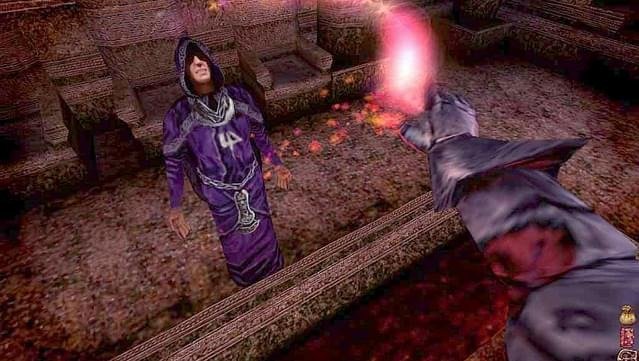
Arkane Studios released Arx Fatalis, its debut game, in 2002. Bethesda’s official retrospective confirms the year and its influences from Ultima Underworld and System Shock.
The game is a first-person RPG set in an underground fantasy world. Exploration, inventory, resources, spells, and object interaction all matter. Players need to understand environments and use the available tools to overcome different challenges, continuing a recognizable tradition without simply copying its predecessors.
Magic as a Form of Interaction
A well-known feature of Arx Fatalis is its spellcasting system, in which players trace gestures to form runes and cast spells. These spells are not all merely attacks: some also help exploration and problem-solving. It is another illustration of how a tool can function outside combat.
Arx Fatalis was not a simple reproduction of Ultima Underworld. Arkane developed its own world and interconnected systems, later exploring environmental interaction, powers, and different approaches in Dishonored and Prey. According to Arkane’s official history, Raphaël Colantonio founded the studio in Lyon on October 1, 1999, and the Austin team opened in 2006. These milestones also help explain the distinct teams behind later games.
Dishonored: Powers, Stealth, and Improvisation
Arkane Studios released Dishonored in 2012. Players control Corvo Attano in the fictional city of Dunwall. Stealth, combat, exploration, and supernatural abilities shape missions that can be completed using different tactics. Players can avoid detection, fight directly, or combine resources.
The design goes beyond a simple choice between sneaking and attacking: the way powers, weapons, and environments interact is what opens up additional possibilities.
Mobility and Alternative Routes
A key example is Blink, a supernatural movement power that enables characters to reach certain positions. Depending on a level’s layout, it can open access to higher areas or less obvious routes, changing how players read the space around them.
A window above a patrol is no longer just architecture: it may become an infiltration opportunity. Guard positions, nearby objects, and possible lines of movement all influence planning.
Combining Abilities
Other tools and powers make more elaborate strategies possible. Players can use distractions, target manipulation, attacks, or movement to create situations that do not depend on a single predetermined sequence of commands.
Arkane sought to develop systems that work together and leave room for improvisation. That does not mean every imaginable combination is available.
The Chaos System
Dishonored also features a chaos system, in which certain actions affect later conditions. The amount of violence and other decisions can influence the world and narrative. It should not be reduced to one universal good-versus-evil score: it is a specific system of consequences governed by the rules of the franchise.
Nor must every consequence in an immersive sim be a moral judgment. A choice might affect only the immediate situation, available resources, or accessible routes.
Dishonored 2 and Level Design
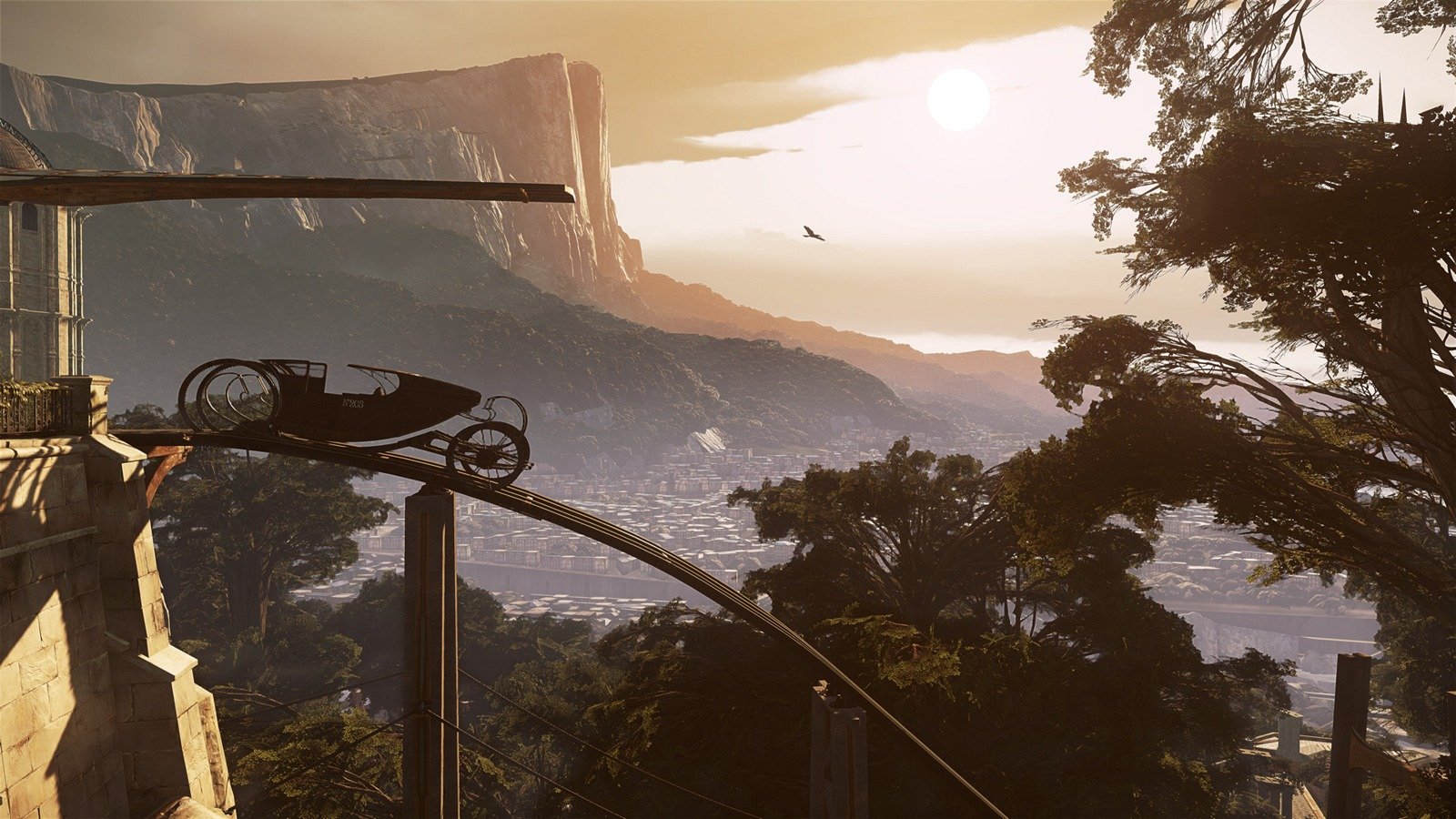
Released on November 11, 2016, Dishonored 2 was developed by Arkane Lyon and lets players choose Corvo Attano or Emily Kaldwin. Each has different powers and therefore supports distinctive approaches.
The sequel is also known for inventive levels that reward exploration and alternative solutions. The Clockwork Mansion, for example, features rooms whose arrangement can be altered through mechanisms. Other missions establish their own structures and rules, encouraging players to observe and experiment. The architecture becomes an active part of the challenge, rather than merely the place where it occurs.
Prey (2017): When One Tool Opens Unexpected Possibilities
Arkane Austin released Prey on May 5, 2017, published by Bethesda. Set aboard the space station Talos I, the game follows Morgan Yu as they investigate the facility, confront threats, and discover what happened.
Combat, equipment, abilities, inventory, investigation, and exploration all interact. The station contains connected areas, technological systems, and manipulable objects. Prey became a modern immersive-sim reference particularly because tools can solve problems in more than one way. It must not be confused with ***Prey* (2006)**, a separate science-fiction game with its own creators and identity.
The GLOO Cannon: More Than a Weapon
One of Prey‘s signature tools, the GLOO Cannon, fires a substance that can immobilize certain threats. But it can also create surfaces that help players reach higher areas.
Imagine a passage above normal jumping height. Rather than looking only for a ladder, the player may fire GLOO at a wall to create footholds. A weapon therefore becomes a movement tool. In the official introduction to Prey‘s weapons and gadgets, designer Ricardo Bare describes both restraining aliens and making improvised platforms to climb walls. The tool’s value comes from its interactions with the environment, not solely its use against enemies.
Objects, Abilities, and Security Systems
Prey also allows players to manipulate certain objects, use abilities, and interact with technological systems. One route may be blocked by a physical obstacle; another may require opening a protected door or working with a terminal. Depending on the character and the available equipment, different routes become viable.
Upgrades change the possibilities without making every obstacle limitless. Resource management also means that a possible solution may not be the most economical choice at a given moment.
Talos I as an Environment to Explore

The station is not simply a sequence of combat rooms. Terminals, recordings, messages, and environmental details reveal events and information. A player might discover records explaining a situation or suggesting a new opportunity to explore.
This environmental storytelling rewards observation and makes the space itself a means of learning the story. It is not exclusive to immersive sims, nor does it mean every important piece of information must be optional. Here, its role is to complement exploration and the player’s understanding of the world.
How Do Systems Create Different Solutions?
The defining quality of immersive sims is turning rules and tools into opportunities for decision-making. A simplified cycle might be:
Observe the environment → Identify systems → Choose tools → Experiment → Solve the problem → Deal with the consequences.
This is not a mandatory order. A player may notice a solution immediately, improvise after being spotted, or discover that an expected interaction does not work.
Consistent Rules
Imagine that a game lets players extinguish lights to make enemies less able to see. If this rule operates in different places, players can learn to rely on it strategically. The same idea applies to other interactions according to the rules of the specific game: objects may block paths, tools may change surfaces, noises may attract characters, and abilities may reach otherwise inaccessible places.
Consistency makes the system understandable. It does not require perfect real-world physics, all water to conduct electricity, or every object to be destructible. What matters is what the developers actually implemented.
What Is Emergent Gameplay?
Emergent gameplay occurs when interactions between systems produce situations or solutions that do not depend on a dedicated script for every possible combination.
Suppose a tool can move certain objects and another rule allows those objects to block a character’s path. The player may discover a way to combine both rules to hold back an enemy. The developers programmed the systems, but did not necessarily write a special instruction for that exact solution.
That differs from a scripted event that always produces a specified result when triggered; it also differs from simply exploiting a technical bug. Not every unexpected behavior creates interesting emergent gameplay.
Why Is Level Design So Important?
Environments must provide opportunities to use available tools. Windows, ducts, corridors, stairs, rooftops, and secondary entrances can change the available options. An elevated route may favor mobility and stealth; a terminal can reward technological specialization; a direct path might favor combat.
This is part of level design. Immersive sims use space to support different approaches to exploration and objectives, but they do not require enormous maps. One thoughtfully designed facility can offer more meaningful alternatives than a huge world with little interactivity.
Artificial Intelligence, Physics, and Tools: The Challenges of Systemic Design
Creating interconnected systems means anticipating combinations that may not appear when testing each tool in isolation. Detection, object movement, and character abilities must respond to one another without destroying the challenge or making the rules hard to understand.
Characters That React to Their Environment
Patrols, reactions to noises, and alert behavior should communicate their rules so players can learn to plan. Inconsistent reactions can feel arbitrary even if they are programmed. This does not demand simulated human intelligence or characters with unlimited possible actions.
Physics and Object Manipulation
Movable objects expand the options but also create combinations that are hard to test. Moving a piece of furniture might block a route or change access to an area. Developers need to decide which objects react, and how those reactions affect obstacles, without requiring every object in the world to be interactive.
RPG Systems and Specializations
Deus Ex, System Shock 2, and Prey use different forms of character progression. One skill may make an approach easier; investment in another might unlock different equipment or resources. Progression therefore influences strategic decisions.
But immersive sims do not necessarily need levels, skill trees, or traditional RPG attributes. Thief shows that tools and perception systems can support the philosophy without the same character-growth structure.
Why Doesn’t Greater Freedom Automatically Mean Better Design?
If one tool solves every challenge too easily, the other options lose importance. Inconsistent rules make results difficult to predict. Freedom may also demand thoughtful interfaces, tutorials, and environmental clues to help players understand what can happen.
A successful immersive sim is not simply the one with the largest number of interactions. It offers understandable, useful possibilities that produce interesting decisions.
Immersive Sim, FPS, RPG, Sandbox, and Stealth: What’s the Difference?
Immersive sims overlap with many genres but emphasize a distinct priority.
| Classification | Main focus | Examples |
|---|---|---|
| Immersive Sim | Interactive systems and different approaches to problems | Deus Ex, Prey |
| FPS | First-person gun combat | Doom, Quake |
| RPG | Character development, attributes, and choices | Various RPGs |
| Stealth | Avoiding detection and manipulating enemy perception | Thief, Splinter Cell |
| Sandbox | Experimenting with systems and choosing personal goals | Minecraft, Garry’s Mod |
| Simulation games | Interactive representations of activities or processes | Microsoft Flight Simulator, The Sims |
| Survival Horror | Tension, vulnerability, and survival against threats | Resident Evil, Silent Hill |
These categories can overlap.
Immersive Sim vs. FPS
FPS stands for first-person shooter. Doom is a landmark of direct combat and first-person movement. Deus Ex and Prey also use that perspective and weapons, but build a wider structure of interactive systems and problem-solving. A camera angle and gunplay alone do not establish an immersive sim.
Read more in ZAUS.GG’s FPS history and evolution feature.
Immersive Sim vs. RPG
RPGs can feature statistics, abilities, dialogue, inventories, and narrative choices. Ultima Underworld and Deus Ex combine RPG systems with immersive-sim design, but not every RPG offers environments in which multiple systems create emergent solutions. Likewise, an immersive sim need not include traditional level progression. The labels may coexist without meaning exactly the same thing.
Immersive Sim vs. Sandbox
Sandbox games emphasize experimentation and frequently let players set their own goals. In Minecraft, someone might choose to build a city or complex mechanisms; Garry’s Mod provides tools for creating situations.
Classic immersive sims usually provide missions or objectives and open up how they are executed. Deus Ex gives players a mission; Prey offers a station full of objectives and dangers. Freedom of approach does not require the same open-ended structure as a sandbox game.
Immersive Sim vs. Open World
Open world primarily describes how exploration and traversal are organized. Dishonored uses missions and Prey uses interconnected spaces; both can support many interactions in limited environments. A vast map does not, by itself, guarantee systemic freedom.
Immersive Sim vs. Stealth
Stealth means avoiding detection. Thief and Dishonored form a major intersection between stealth games and immersive sims, but stealth alone is not enough to define the latter.
Metal Gear Solid, Splinter Cell, and Hitman have distinctive infiltration systems. Modern Hitman games feature maps and interactions that approach systemic design, although whether they count as traditional immersive sims is debated. It is better to acknowledge the similarities than label all stealth games as equivalent.
Immersive Sim vs. Traditional Simulation Games
A flight simulator tries to represent aspects of flying an aircraft. A driving simulator may aim to recreate vehicle behavior. An immersive sim may instead rely on magic, fictional AI, and impossible technologies. Here, simulation refers to how the world’s internal rules interact, not to technical accuracy in recreating a real profession.
Immersive Sim vs. Survival Horror
System Shock and Prey share features with horror and survival experiences. Exploration, scarce resources, and threats can create tension, but none alone defines immersive-sim design. Resident Evil may combine combat, exploration, and resource management in a survival-horror structure without automatically becoming an immersive sim.
ZAUS.GG explores that distinction further in its Survival Horror feature.
BioShock and Other Games Influenced by Immersive-Sim Design
Not every game influenced by Deus Ex, Thief, or System Shock uses an identical structure. BioShock (2007), developed by Irrational Games, has important creative and historical links to System Shock, including developers who worked in those traditions.
BioShock brings together exploration, environmental storytelling, weapons, powers, and combat interactions. It is also frequently described as a narrative FPS with RPG elements and interactive systems. Whether it is a full immersive sim remains debated. Acknowledging influence does not mean assuming the two games offer equal systemic freedom.
Influence Beyond Traditional Examples
The philosophy also appears in discussions of many other games. Modern Hitman entries let players use characters, objects, and routines to plan actions in varied ways. The Legend of Zelda: Breath of the Wild and Tears of the Kingdom feature physics and environmental interactions that support creative solutions.
Baldur’s Gate 3 combines RPG rules with objects, abilities, and interactions that can produce unexpected results. S.T.A.L.K.E.R. uses environmental and character-behavior systems that help make its settings less predictable.
These titles share some qualities of immersive-sim design to different degrees; they are not automatically members of the same historical family as Deus Ex and System Shock. A design influence can exist in a different genre without changing its primary classification.
Independent Immersive Sims and Their Evolution Through 2026
Independent developers have created new interpretations of this tradition, often with smaller teams and more focused ideas. Some recover elements of older games; others explore investigation, physics, and tools in their own ways.
Gloomwood: Stealth and Dark Exploration
Gloomwood entered Early Access on September 5, 2022, published by New Blood Interactive and developed by Dillon Rogers, David Szymanski, and other contributors. It combines stealth, exploration, limited resources, and horror, with acknowledged influences from immersive sims and survival games of the 1990s and 2000s.
Players observe the environment, use tools, and choose how to cross dangerous areas. As of October 21, 2026, Gloomwood remained in Early Access, according to its official Steam listing. The current playable content must not be confused with the planned full 1.0 release.
Shadows of Doubt: Investigation in a Simulated City
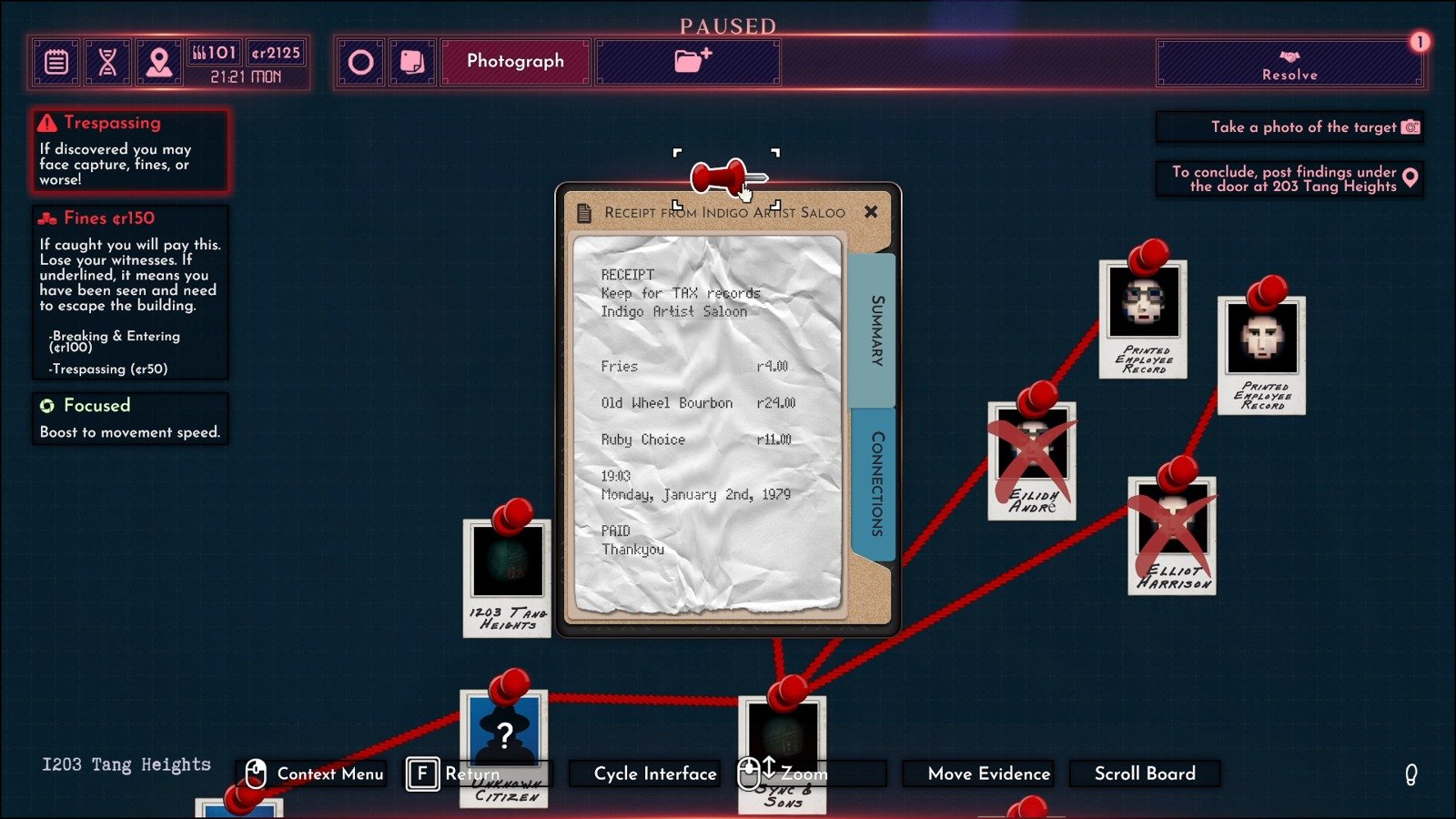
Shadows of Doubt, developed by ColePowered Games and published by Fireshine Games, began Early Access on April 24, 2023, and reached its full release on September 26, 2024. These are two different milestones recorded by its official store listing.
The game casts players as investigators in a science-fiction city with procedurally generated elements. Players search for clues, enter locations, collect information, and form hypotheses. Characters and environments participate in systems that support different investigative methods.
Its importance to immersive-sim design comes from freedom to use tools and explore possible solutions, but the investigation still follows its own rules and limitations. The game does not allow every conceivable action.
Ctrl Alt Ego: Transferring Control to Solve Problems
Released by MindThunk on July 22, 2022, Ctrl Alt Ego takes a science-fiction approach to creative problem-solving. Its distinguishing mechanic lets players transfer control between different units and systems, opening forms of environmental interaction that differ from traditional first-person games.
It shows how one central tool can profoundly affect challenge design. A game does not need to reproduce the exact weapons and powers of Deus Ex to be an immersive sim; what matters is the way rules support possible solutions.
Fallen Aces: Combat, Stealth, and Interactive Environments
Fallen Aces, developed by Trey Powell and Jason Bond and published by New Blood Interactive, entered Early Access on June 14, 2024. Its comic-book and crime-story presentation combines combat, movement, stealth, and environmental interaction.
Different objects and tools can be used during fights, supporting approaches beyond simply trading gunfire. As of October 21, 2026, the game remained in Early Access, with development organized into episodes. A new episode is not the same as the planned full 1.0 release.
Skin Deep: Infiltration and Physical Systems with Humor
Blendo Games released Skin Deep on April 30, 2025, published by Annapurna Interactive. This was the full release, unlike the projects in this selection that remained in Early Access.
The game places players in infiltration scenarios aboard a spaceship and uses physics and environmental interactions. Its approach blends stealth, sabotage, and humor while offering different ways to handle threats and obstacles.
Together these games reinterpret the tradition through investigation, control transfer, infiltration, and physical improvisation. On May 20, 2026, OtherSide Entertainment, published by Megabit Publishing, also released Thick as Thieves for PC. Its released design combines heists, stealth, and tools in solo or online co-op missions, adding coordination between partners.
The project involves veterans including Warren Spector and Paul Neurath, but it changed after its 2024 competitive PvPvE announcement. That earlier format does not describe the released game. The PC launch date also does not establish a simultaneous console release.
Games That Shaped the Evolution of Immersive Sims
The following list combines precursors, major classics, and later interpretations. It is not a ranking of the best games.
| Game | Year / release milestone | Significance or defining feature |
|---|---|---|
| Ultima VI: The False Prophet | 1990 | RPG precursor with an interactive world |
| Ultima Underworld: The Stygian Abyss | March 1992 | 3D exploration with RPG systems |
| Ultima VII: The Black Gate | April 1992 | Philosophical precursor with richer objects and interactions |
| Ultima Underworld II: Labyrinth of Worlds | 1993 | Continuation of immersive exploration |
| System Shock | 1994 | Science fiction, exploration, and interconnected systems |
| Thief: The Dark Project | 1998 | Stealth built on light, sound, and environment |
| System Shock 2 | 1999 | Character progression, resources, and exploration |
| Thief II: The Metal Age | March 2000 | Expansion of systemic stealth design |
| Deus Ex | June 2000 | Missions supporting multiple approaches |
| Arx Fatalis | 2002 | Immersive RPG with underground environmental interaction |
| BioShock | 2007 | System Shock influence; classification debated |
| Deus Ex: Human Revolution | 2011 | Modern reinterpretation of the franchise |
| Dishonored | 2012 | Powers, stealth, tools, and consequences |
| Deus Ex: Mankind Divided | 2016 | New environments and infiltration options |
| Dishonored 2 | 2016 | Level design and varied ability combinations |
| Prey | 2017 | Versatile tools and systemic exploration of Talos I |
| Ctrl Alt Ego | July 22, 2022 — full release | Technological interaction and creative solutions |
| Gloomwood | Sept. 5, 2022 — Early Access; still so on Oct. 21, 2026 | Dark stealth influenced by classic games |
| Shadows of Doubt | Apr. 24, 2023 — Early Access; Sept. 26, 2024 — full release | Investigation and systemic environments |
| System Shock | May 30, 2023 — PC remake | Modern reinterpretation of the 1994 original |
| Fallen Aces | June 14, 2024 — Early Access; still so on Oct. 21, 2026 | Combat and stealth with interactive objects |
| Skin Deep | Apr. 30, 2025 — full release | Infiltration and physical experimentation in science fiction |
| Thick as Thieves | May 20, 2026 — PC | Systemic stealth in solo and co-op missions |
Ultima VI and Ultima VII are included as important precursors. BioShock illustrates historical influence but has a disputed classification. Entries are ordered by their first listed milestone; Early Access and full releases must not be conflated, and a remake does not replace the original game’s date.
Why Can Immersive Sims Be Difficult to Learn?
Freedom of approach creates opportunities but also challenges. When tools have multiple uses, players must understand their rules. A secondary passage may not be obvious, an ability might have applications beyond its initial explanation, and the environment may contain important details that require careful observation.
Players who enjoy exploring and experimenting may find that rewarding. Those who prefer clearly marked objectives and more direct solutions may struggle.
Freedom Can Also Be Frustrating
When an object looks interactive but turns out not to be, players may lose trust in the rules. Interfaces, environmental cues, and feedback must communicate limitations clearly. The balancing and consistency issues discussed earlier therefore affect learning as well as development.
Who Might Enjoy This Approach?
Immersive-sim design especially appeals to people who like exploring environments, noticing details, and devising their own solutions. The appeal may come from dungeon exploration, infiltration, investigation, or combining powers and tools. Which game works best depends on which systems and environments interest the player most.
These experiences differ, but they share the satisfaction of understanding a system and discovering how to use it.
Immersive Sims Let Players Find Their Own Solutions
Finding a personal solution is most satisfying when the world responds in an understandable way. The experience involves developing a hypothesis, testing it, and adapting the plan to the result—even when things do not happen as expected.
Games in this tradition approach that process differently. A well-designed tool or environment can make discovery matter more than the sheer number of paths on offer.
About the Author