Astro Bot (2024): salto e leitura de profundidade em um ambiente 3D. Imagem oficial: Team Asobi / Sony Interactive Entertainment.
A moving platform travels between you and the far side of a chasm. Crossing requires watching its route, choosing when to move, and adjusting your jump. After a fall, your next attempt may reveal that momentum—not the platform’s speed—was the problem.
Learning how a character moves and applying that knowledge to obstacles lies at the heart of platform games, or platformers. From the arcades of Donkey Kong to the levels of Mario and Sonic, and from 3D worlds to the challenges of Celeste, this relationship has taken many forms.
This feature explains controls, level construction, and the history of those changes, including Astro Bot, Donkey Kong Bananza, and developments through October 2026.
Updated October 21, 2026.
Nesta matéria
What defines a platform game?
A platform game organizes its experience primarily around character movement and crossing spatial obstacles. Surfaces at different heights, distances, and hazards require players to understand the abilities at their disposal.
Jumping is common but not mandatory: climbing, sliding, gliding, or using bursts of movement can also support traversal. Combat, exploration, puzzles, and storytelling can complement this core, with different weight in each game.
Is every game with a jump button a platformer?
No. In an FPS or RPG, jumping might help reach positions without organizing the main activity. In Super Mario Bros., controlling running and jumping is essential to the route. Classification depends on the role of movement, not the presence of a jump button.
Are all platform games 2D?
No. There are side-scrolling journeys, three-dimensional exploration, and games with 3D graphics that restrict movement to a plane. Super Mario 64, Crash Bandicoot, and Spyro also show that sharing a third dimension does not imply the same level structure. Visual perspective must be distinguished from the directions in which a character can move.
How did platform games begin?
In arcades around the turn of the 1980s, different development teams experimented with climbing, jumping, and traveling between screens. The category had not yet settled into its modern meaning; identifying the first example depends on the criteria used.
Space Panic and early climbing games
In 1980, Universal released Space Panic in arcades, as recorded by the Museum of the Game.
Floors connected by ladders organized vertical traversal while the character prepared traps for aliens. There was no traditional jumping mechanic.
For that reason, it is frequently recognized as a forerunner of platform games, although its classification as the first game in the genre is debated. Another important title from the period was Crazy Climber, also from 1980, in which players climbed buildings while avoiding obstacles.
Donkey Kong: jumping becomes central to the challenge

In 1981, Nintendo released Donkey Kong, developed under Shigeru Miyamoto’s direction. The official Arcade Archives presentation identifies its origin as a 1981 arcade game.
Players control a character initially called Jumpman, who would later be named Mario. Their goal is to reach Pauline, held high above the structures by Donkey Kong.
To advance, players climb ladders, cross platforms, and avoid barrels and other hazards. Jumping has an important purpose: it allows players to clear obstacles and handle situations without relying exclusively on ladders.
What made Donkey Kong so influential?
Donkey Kong helped establish a recognizable combination of elements:
- A directly controlled character;
- platforms arranged at different heights;
- hazards distributed through the environment;
- the need to jump and position oneself;
- clearly identifiable traversal goals.
On predominantly fixed screens, observing the structures and combining ladders with jumps led to the objective. Donkey Kong established a lasting reference without inventing all these elements: the genre emerged from contributions by several teams.
It is also important to distinguish 1981’s Donkey Kong from the Donkey Kong Country series, which began many years later.
Jump Bug and the scrolling environment
Also in 1981, Jump Bug offered a different approach. Period advertising material preserved by the International Arcade Museum documents its release.
The vehicle jumped through environments scrolling horizontally and vertically, combining traversal and shooting. Moving beyond the limits of a single screen was already being explored before Super Mario Bros. Popularizing a formula is not the same as inventing scrolling.
Pitfall!: a platform adventure on Atari 2600
In 1982, Activision released Pitfall!, created by David Crane for Atari 2600. Activision’s own retrospective recalls its technical construction and debut that year.
Pitfall Harry crossed pits, traps, and enemies, sometimes using vines. Connected screens formed a broader journey than a fixed arena, bringing movement and exploration together on home consoles. Its organization still differed from the scrolling side-scrolling levels that would later become popular.
Super Mario Bros. and the establishment of side-scrolling platformers
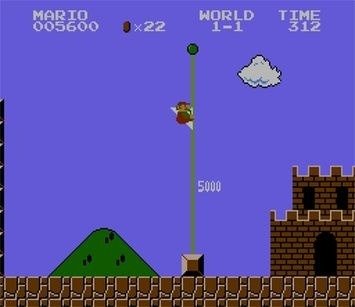
On September 13, 1985, Nintendo released Super Mario Bros. in Japan for the Famicom, internationally known as the Nintendo Entertainment System, or NES.
Mario crosses side-scrolling levels containing enemies, hazards, and items that alter his abilities. The game’s importance lies in the particularly influential integration of these routes with running and jumping controls.
Jumping as a tool for exploration and combat
In Super Mario Bros., jumping does more than cross chasms. It can also hit blocks, reach raised platforms, and defeat certain enemies. A single action has different uses depending on the situation.
That makes the basic controls easy to learn while supporting varied challenges. Players must discover when to jump, where to begin, and how speed affects the result.
How do levels teach their own rules?
Super Mario Bros. introduces blocks, pipes, enemies, and gaps gradually, before demanding more elaborate combinations. Learning by playing is part of level construction; the level-design section later explores this principle using disappearing platforms.
Speed, rhythm, and secrets
Running changes the range and rhythm of jumps. Exploring carefully and moving quickly produce different decisions, while hidden paths reward observation.
Super Mario Bros. did not single-handedly create side-scrolling, but it established and popularized a way of organizing levels and controls that would influence generations of games.
Super Mario Bros. 3 and Super Mario World
Nintendo kept developing that structure through sequels.
Super Mario Bros. 3, originally released in Japan on October 23, 1988, added a world map, different abilities, and more varied environments. Its North American debut came in 1990.
Super Mario World, released in Japan on November 21, 1990 and in North America in 1991, expanded the possibilities with Yoshi, alternate routes, and secrets scattered across the map.
In Super Mario World, a hidden exit could unlock a different route on the world map. The sequels broadened progression and character abilities without abandoning side-scrolling traversal.
Sonic the Hedgehog and a new approach to speed
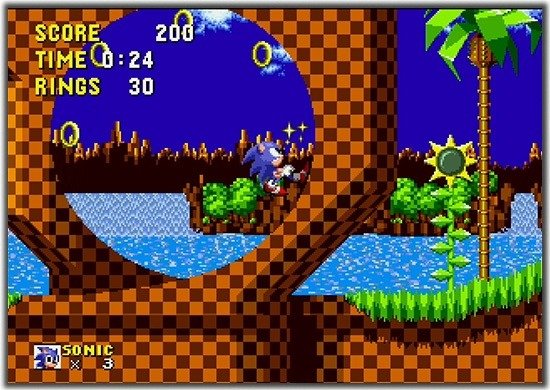
In 1991, SEGA released Sonic the Hedgehog for the Mega Drive, known as the Genesis in some markets. Its official 35th-anniversary retrospective confirms that starting point.
The game developed a style of platforming closely associated with speed. Sonic could accelerate, move across sloped terrain, and use momentum to reach different areas. Levels featured ramps, curves, platforms, and hazards that influenced movement.
Speed is not just running to the right
Imagine Sonic going down a slope. He can gain speed and use that momentum to cross an area or reach a different height. But a collision or a poor route choice can interrupt his movement.
Players need to learn how terrain affects speed. This relationship is often described in terms of momentum. In games, its behavior follows implemented rules rather than necessarily realistic physics simulation. What matters is that speed changes how the environment is traversed.
Routes and planning
Classic Sonic games often feature paths at different heights. An upper route may require reaching a platform with sufficient speed; another may be easier to access but have hazards of its own.
Players can therefore aim to maintain a fast pace or slow down to control their position more precisely. Rings also play a role by offering protection against damage under specific conditions.
Sonic’s identity does not mean Mario has no momentum. The franchises use it differently, and not every Sonic entry follows identical rules or places the same emphasis on speed.
Other directions for 2D platform games
The genre did not evolve through Mario and Sonic alone. Different franchises developed their own combinations of movement, combat, and exploration.
Mega Man: precise jumping and combat
Mega Man, released by Capcom on December 17, 1987, combined platform challenges with ranged combat. Players must cross obstacles, avoid hazards, and face enemies with distinct patterns.
Jump precision matters, but so do enemy positioning and the timing of attacks. The franchise also became known for allowing players to obtain weapons from certain bosses and use them in other situations. This adds choices to progression without removing movement from the core experience.
Castlevania: action and platforming at a different pace
Early Castlevania games, a series that debuted in 1986, combined combat, obstacles, and traversal with more deliberate movement. Controlling jumps and positioning was central to their challenges.
Later, some entries developed interconnected exploration structures associated with metroidvanias. It would therefore be inaccurate to treat every Castlevania game as though it used the same level layout. Classic side-scrolling progression and later exploration-oriented entries have different priorities.
Prince of Persia: animation and careful movement
Prince of Persia, created by Jordan Mechner and published by Brøderbund for Apple II, arrived in 1989. The creator’s archive preserves development records and the study of real movements used for its animation.
The game stood out for detailed movement animations developed using techniques that included studying real-world motion. The character must run, jump, climb, and cross traps; careful timing and positioning are crucial.
Prince of Persia helped develop a tradition of platform games in which bodily movement and animation strongly affect the player’s perception.
Kirby: abilities that change traversal
Kirby’s Dream Land, released for Game Boy in 1992, introduced a character who could float and use movements different from those in many traditional platformers. The series later broadened these possibilities through copied abilities and transformations.
This shows how a new movement ability can completely change the relationship between character and environment. An obstacle built for a character who can only jump works differently if floating is possible.
Donkey Kong Country, Rayman, and Yoshi’s Island
Donkey Kong Country arrived in 1994, developed by Rare and published by Nintendo for the Super Nintendo. Nintendo’s official retrospective highlights the year and its pre-rendered graphics.
It used side-scrolling movement, multiple characters, animal companions, and stages with varied hazards. Its presentation became known for characters and environments built from pre-rendered graphics.
Rayman, released by Ubisoft in 1995, developed another identity with expressive animation, acquired abilities, and distinctive platform challenges. Ubisoft’s anniversary retrospective distinguishes the original from later games.
On February 13, 2026, Ubisoft released Rayman: 30th Anniversary Edition, developed by Digital Eclipse. The collection preserves five versions of the 1995 classic, with a documentary and optional features such as rewind. It is a historical re-release, not Rayman 4 or a complete remake.
In 1995, Super Mario World 2: Yoshi’s Island offered an approach combining Yoshi’s movement, egg-throwing, and environmental challenges. These releases show how diverse 2D platform games had become before three-dimensional environments grew popular.
How does movement work in a platform game?
Although systems vary, a useful illustrative loop for many platformers is:
Observe the environment → Move → Judge the obstacle → Perform the action → Learn from the result → Advance.
The loop changes with exploration, combat, and other systems. The common foundation is learning how controls respond in order to plan the next action.
Jump height and distance
Imagine a character with a maximum jump height. A platform above that limit cannot be reached with an ordinary jump. Players may need to find another route or use an additional ability.
Horizontal distance likewise depends on the available abilities and movement behavior. Running before a jump may extend the distance in some games, while making less of a difference in others. Challenges must account for those abilities.
A platform that cannot be reached with the tools currently available is not necessarily a skill test. It may indicate that players need to unlock an ability or find another route.
Acceleration, momentum, and air control
Movement can also involve acceleration and deceleration. One character may take a moment to reach top speed; another may respond almost immediately to input. Control during a jump also varies.
Some games allow significant directional changes in midair. In others, initial momentum has more influence on the trajectory. These properties create different sensations of movement. They do not need to recreate real-world physics: they are built to support the intended control response and challenges.
Small allowances that help the player
Certain games make controls more forgiving. One technique is coyote time, a short window in which a character can still initiate a jump after leaving a ledge.
Another is jump buffering: a jump input made shortly before landing can be stored and executed when the action becomes possible. In some games, holding the button also affects jump height.
These features help shape responsiveness and reduce specific frustrations. In Celeste & Forgiveness, Maddy Thorson explains the coyote time and jump buffering used in Celeste, without claiming these techniques were invented there. They are not implemented identically in every game.
Collisions and landing
Players need to understand when a character is standing on a platform, has touched an obstacle, or has finished a particular movement. Games use collision rules to determine these situations.
Poor collision handling can make a seemingly correct jump end in a fall. Likewise, animations that misrepresent the character’s position can make spatial judgment harder. Controls must work together with visual presentation; clarity is especially important in games that demand precision.
Level design: how obstacles teach and challenge
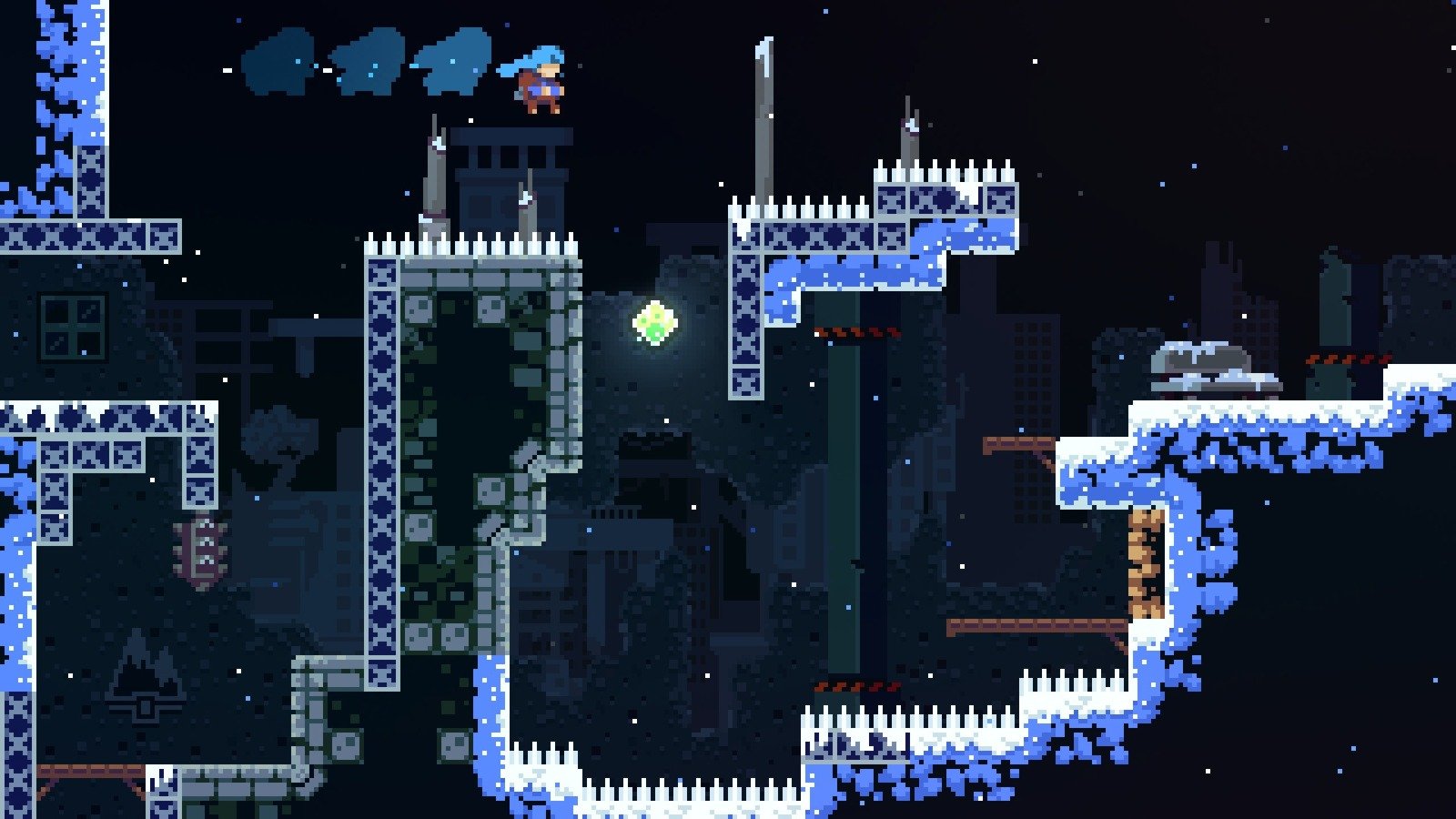
Level design is the arrangement of spaces, obstacles, and situations a player encounters. In platformers, it is directly linked to the character’s abilities. A stage may be simple or complex, but its challenges must reflect what the player can actually do.
Introduce a mechanic before requiring mastery
Imagine a game introducing a platform that disappears shortly after being stepped on. First, players might cross it without much risk. Later, it could appear over a chasm. Eventually, several disappearing platforms could demand a sequence of jumps.
The mechanic remains the same; the challenge grows as the environment demands greater mastery. Games such as Super Mario Bros. and Celeste use different versions of this progression. That does not mean every platformer follows exactly the same teaching structure.
Pace, obstacles, and rewards
Stage organization also influences pacing. A string of jumps can be followed by a calmer area that offers time to observe the environment. An alternate passage may reward mastery of an ability, while a collectible can encourage exploring a harder route.
Rewards do not have to be tied to difficulty alone. In some games, discovering a secret or finding a visually interesting place is part of the enjoyment.
The camera is part of the challenge
A platform may lie within a character’s normal range, yet a camera that makes distance hard to judge can make the jump difficult for unintended reasons.
In 2D games, distances are typically conveyed more directly along horizontal and vertical axes. In 3D games, depth must also be considered. Camera position, shadows, character placement, and other visual cues become more important.
A good camera does not have to remove the challenge; it should allow players to understand space and movement.
2D, 2.5D, and 3D platformers: what changes?
The differences go beyond how the graphics look. They also involve the directions available to the character and how players perceive the environment.
| Presentation or approach | Main characteristic | Examples |
|---|---|---|
| 2D platformer | Movement mainly along two axes | Super Mario Bros., Celeste |
| 2.5D platformer | A mixture of 2D and 3D elements, often with movement restricted to a plane | Donkey Kong Country Returns, certain stages in other games |
| 3D platformer | Movement with spatial depth | Super Mario 64, Astro Bot |
| Precision platformer | Challenges requiring careful mastery of movements, in 2D or 3D | Super Meat Boy, Celeste |
Precision describes a style of challenge, whereas 2D, 2.5D, and 3D describe presentation and spatial possibilities. A game can therefore be both 2D and precision-focused.
There is no universal definition of 2.5D. It often means three-dimensional graphics with movement on a plane, but it can also refer to other perspective combinations. Looking at actual movement avoids confusing appearance with traversal options.
2D platformers: side-on readability and precision
Clear horizontal and vertical axes help players judge timing and distance, but do not automatically make a game simple. Difficulty depends on the rules and obstacles, as the very different approaches of Celeste and Sonic demonstrate.
3D platformers: depth and orientation
Depth adds directions to movement and requires interpreting distances in perspective. Not every game allows a free camera: it may be fixed, guided, or adjustable. The orientation issues discussed in level design are part of traversal itself, rather than merely graphical presentation.
The arrival of 3D platform games
During the 1990s, several projects experimented with cameras and three-dimensional traversal before a commercially established formula emerged. The transition was collective and did not replace 2D platformers.
Jumping Flash!: an important early example
Jumping Flash! arrived on PlayStation in 1995. The official PlayStation classic release identifies its first-generation PlayStation origin and the 1995 copyright.
Players controlled Robbit, a robotic rabbit capable of very high jumps in three-dimensional environments. The game used a first-person viewpoint and spatial traversal challenges.
Jumping Flash! is recognized as one of the earliest important examples of fully three-dimensional platforming. Its existence explains why calling Super Mario 64 the first 3D platformer in history would be incorrect. The two games nevertheless use very different camera and movement designs.
Super Mario 64: establishing modern 3D platforming

In 1996, Nintendo released Super Mario 64 for Nintendo 64. Its original instruction manual documents the controls and the relationship between movement and camera.
Mario could explore three-dimensional spaces with greater freedom of movement. Analog control allowed finer movement adjustments than traditional directional inputs. His move set also included different jumps and actions for crossing environments.
Why was Mario 64 so influential?
Rather than simply reaching the end of a route, Mario could search for stars tied to different tasks in the same area. Those rewards organized progression by bringing exploration, objectives, and mastery of movement together.
Camera and spatial readability
Super Mario 64 also became a reference point for connecting camera, control, and depth. Its solutions had lasting influence, although they have noticeable limitations compared with modern games. Recognizing this achievement does not require calling it the first 3D platformer or describing its controls as perfect.
Crash Bandicoot, Spyro, and Banjo-Kazooie: different kinds of 3D platforming
Crash, Spyro, and Banjo-Kazooie organized three-dimensional movement around different priorities: guided routes, gliding, and objective-based exploration.
Crash Bandicoot: more directed routes
Released for PlayStation in 1996, Crash Bandicoot, developed by Naughty Dog and published by Sony Computer Entertainment, offered a different approach from Super Mario 64.
In many stages, the character advances through three-dimensional corridors with directed challenges. Jumps, enemies, and obstacles appear along guided routes, alternating side-on and into-the-screen sections. Crash shows that a 3D platformer can rely on linear levels and precision rather than large open areas.
Spyro the Dragon: exploration and gliding
Spyro the Dragon, developed by Insomniac Games, arrived in North America on September 9, 1998.
It offers three-dimensional environments that encourage exploring different areas and searching for objectives. Spyro can run, jump, and glide, providing his own movement options. Gliding changes the distances he can cross and how jumps are planned, while attacks also contribute to exploration and encounters.
The combination of traversal and reward collection creates a different pace from Crash Bandicoot.
Banjo-Kazooie and objectives spread across worlds
Also released in 1998, Rare’s Banjo-Kazooie emphasized exploration, abilities, and multiple objectives across three-dimensional worlds.
Banjo and Kazooie use different skills to reach areas, overcome obstacles, and find items. Progression often means discovering what an environment offers and learning new ways to move. This design became associated with exploration- and collection-oriented platform games.
What does collectathon mean?
A collectathon is a structure in which locating objects and completing tasks scattered across environments organize much of the progression. Banjo-Kazooie and Donkey Kong 64 are reference points: exploration and abilities lead to objectives that unlock further progress.
This differs from collecting coins while crossing a level in Super Mario Bros. Having collectibles alone does not define the format, which does not strictly require 3D or an enormous world.
How did Mario continue developing 3D platforming?
Nintendo introduced other approaches over time. Super Mario Galaxy (2007) explored environments arranged around small celestial bodies and gravity rules that changed movement.
Super Mario 3D World (2013) developed more structured three-dimensional stages, with a strong emphasis on pacing and traversal.
Super Mario Odyssey (2017) expanded freedom of exploration through different kingdoms and objectives. Cappy’s capture ability also allowed Mario to use the distinctive abilities of other characters and creatures.
Precision platformers: when mastering movement is the challenge
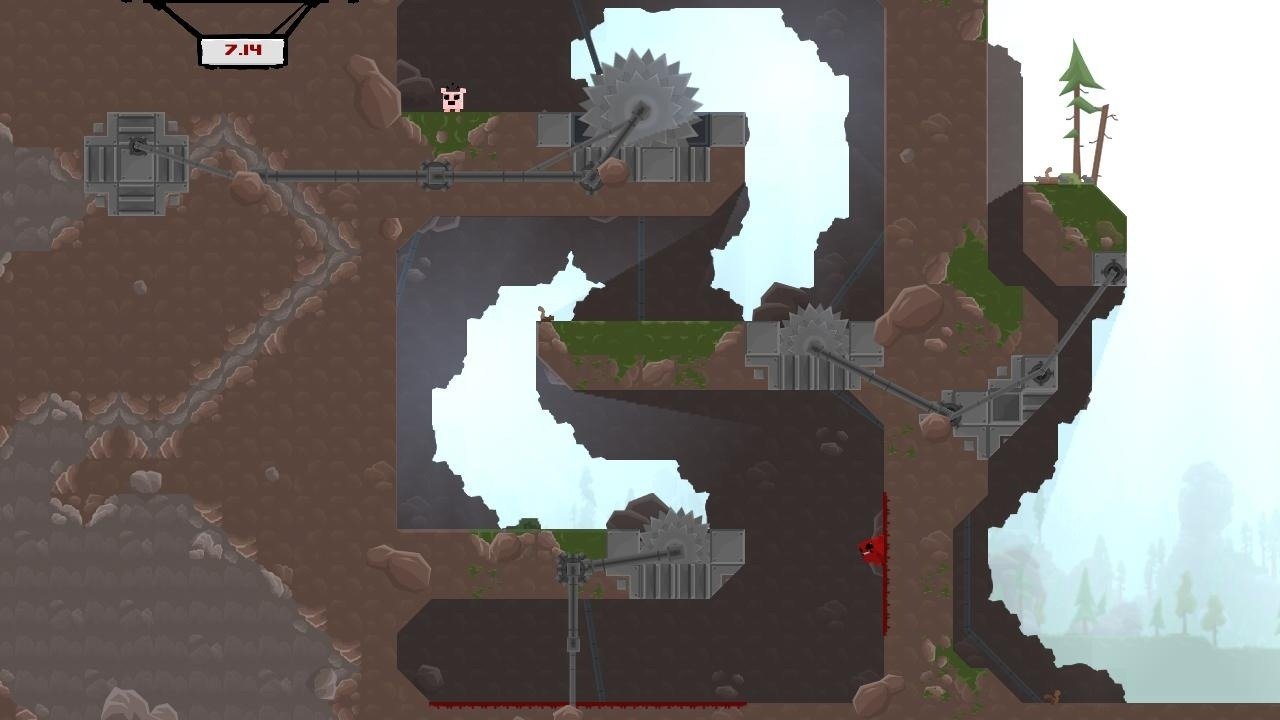
Precision platformers make carefully executed movement an especially important part of their challenges. This can mean jumps with tiny margins for error, closely spaced hazards, and sequences that demand a strong understanding of the controls.
Precision lies in the relationship between the character’s abilities and obstacles that require careful execution; it does not simply mean high difficulty in any game system.
Super Meat Boy: fail, learn, and try again
Team Meat released Super Meat Boy in 2010; its PC release on Steam arrived on November 30 that year.
The game presents stages full of saws, spikes, and other dangerous obstacles. The character moves quickly and can use walls during certain traversals. A key feature is the fast restart after defeat.
Picture a series of narrow platforms between saws. One attempt teaches the distance; another, when to jump or leave the wall. Quick restarting keeps attention on that section, turning failures into knowledge without long interruptions.
Super Meat Boy did not invent difficult platform games, but it helped popularize a modern approach centered on precision challenges and quick attempts.
Celeste: precision, narrative, and assistance
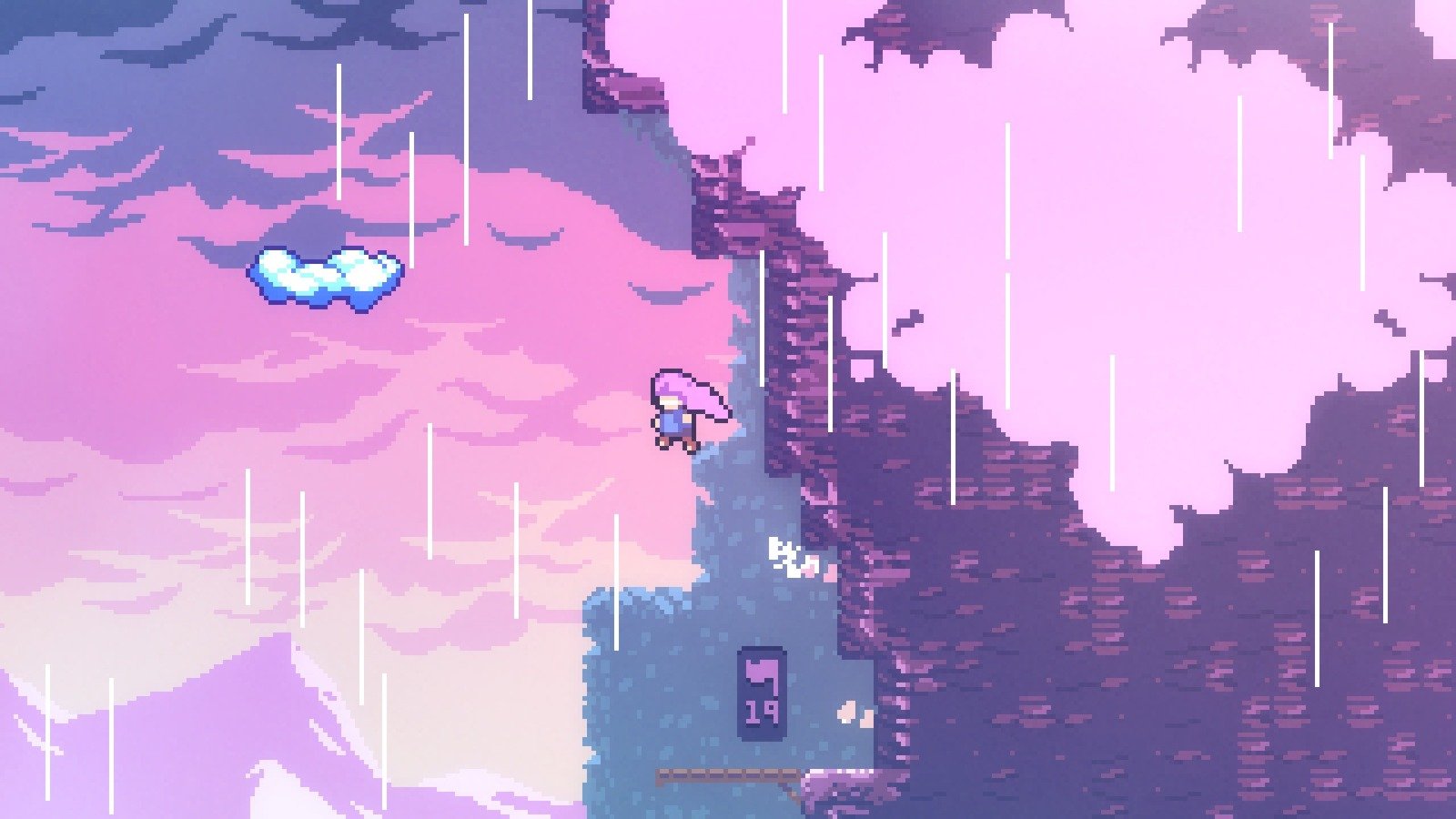
Celeste launched on January 25, 2018, according to its official PC release. It follows Madeline as she attempts to reach the summit of a mountain, combining precision platforming with a personal narrative.
Its basic moves include jumping, climbing, and performing a quick burst of movement—a dash—in certain directions. These abilities support challenges built around different combinations of traversal.
How does the dash change challenges?
Imagine a platform too far away for a normal jump. By dashing, Madeline can extend or redirect her movement according to the available rules. That allows levels to demand decisions about when to jump and which direction to dash.
As the game progresses, new situations require increasingly careful combinations. The challenge does not depend on dozens of different commands, but on learning to use a relatively small set of moves in varied situations.
The importance of Assist Mode
Celeste includes an optional Assist Mode with settings that change aspects of difficulty. Options include reducing game speed, providing unlimited stamina, increasing dash availability, and enabling invincibility.
These are player-selected assistance settings, distinct from the subtle control allowances discussed earlier. The official update history also documents Assist Mode.
These options make it possible to adapt the experience without confusing chosen assistance with underlying control tolerances. Celeste brings precision, narrative, and accessibility together in one project.
Other examples of precision platforming
N++, originally released in 2015, develops movement based on speed, hazards, and carefully constructed challenges. The End Is Nigh (2017) uses a demanding platform structure, with levels and obstacles that encourage learning and repetition.
These games differ in important ways, but share an emphasis on movement at the center of the experience.
Platforming and other genres: where are the differences?
Platform games can combine movement with combat, exploration, and other structures. This creates hybrid experiences that do not always belong exclusively to one category.
| Classification | Main focus | Examples |
|---|---|---|
| Platformer | Movement and crossing obstacles | Super Mario Bros., Astro Bot |
| Precision platformer | Careful mastery of movement and challenges | Celeste, Super Meat Boy |
| Metroidvania | Interconnected exploration and abilities that unlock paths | Super Metroid, Hollow Knight |
| Platformer with roguelite elements | Traversal and action organized into varied runs | Spelunky, Rogue Legacy |
| Puzzle platformer | Movement combined with solving puzzles | Braid, Limbo |
| Action-adventure | Combat, exploration, and other goals in a broader structure | Tomb Raider, Uncharted |
| Rhythm game | Actions executed according to musical or timing patterns | Various rhythm games |
Categories can overlap.
Platformer vs. Metroidvania
While Super Mario Bros. organizes traversal into stages, metroidvanias typically use interconnected areas and abilities that open previously inaccessible paths. In Hollow Knight and Ori and the Blind Forest, movement combines with gaining abilities and returning to earlier locations. Both categories can coexist without requiring the same precision challenges as Celeste.
ZAUS.GG explores the structure in its Metroidvania genre feature.
Platformer vs. Roguelike and Roguelite
In Spelunky, obstacles, enemies, and hazards are rearranged between attempts. Rogue Legacy combines platforming and combat with generations of characters and progression between runs; Dead Cells combines side-scrolling action with a roguelite structure.
Restarting a level after a loss is not sufficient for this classification. Celeste and Super Meat Boy focus repetition on mastering designed routes rather than depending on the variable runs of Spelunky.
ZAUS.GG examines that difference in its Roguelike vs. Roguelite feature.
Platformer vs. Puzzle Platformer
In a puzzle platformer, crossing an area depends on understanding a problem. Braid (2008) uses rules involving time; Limbo (2010) and Inside (2016) combine movement, objects, and environmental mechanisms. An isolated puzzle in another adventure does not necessarily give puzzles the same structural importance.
Platformer vs. action and combat
Mega Man combines shooting and jumps; Shovel Knight brings melee attacks into side-scrolling traversal. In Cuphead (2017), boss encounters and run-and-gun elements play a particularly important role.
These combinations differ from climbing and jumping within a broader adventure such as Tomb Raider or Uncharted: the key is which system organizes the experience.
Platformer vs. rhythm, racing, and parkour
Geometry Dash connects obstacles and execution to music-related timing patterns, but rhythm games do not need platforms. Mirror’s Edge builds on first-person parkour, while Neon White combines shooting, cards, and fast routes. They relate to traversal while retaining their own identities.
Likewise, ramps and jumps do not automatically make a vehicle racing game a platformer. The criterion is the role movement plays in structuring challenges.
Astro Bot and the continuing tradition of 3D platforming

Astro Bot, developed by Team Asobi and published by Sony Interactive Entertainment for PlayStation 5, arrived on September 6, 2024.
Across Astro Bot‘s stages and planets, temporary tools change movement or the interaction with enemies and obstacles. Variety comes from building situations around these abilities rather than simply demanding progressively harder jumps.
Levels built around different ideas
In the image, spring-loaded frog gloves extend Astro’s punching range. They change how players deal with targets and give the level a particular action to explore beyond basic jumping.
The game also uses DualSense controller features, including haptic feedback and adaptive triggers, to complement some interactions.
Astro Bot also received free additional stages after launch. Team Asobi announced new challenges in February 2025 and another five levels for July 2025, expanding its speed and precision situations.
Astro Bot continues a tradition that never disappeared, interpreting platforming through varied situations and tools.
Donkey Kong Bananza: when the environment can be reshaped

Nintendo released Donkey Kong Bananza exclusively for Nintendo Switch 2 on July 17, 2025. Its official presentation details the partnership with Pauline, transformations, and destructible terrain.
Donkey Kong explores underground areas alongside Pauline, breaking sections of terrain, digging paths, and using pieces of the environment during exploration.
How does destruction change traversal?
Imagine finding a wall that appears to block your route. In a traditional platformer, you might need to look for a platform that lets you cross over it. In Donkey Kong Bananza, depending on the material and applicable rules, players can use the character’s strength to destroy part of the structure and open another passage.
The environment is no longer merely a set of fixed surfaces: it can also be changed while moving. Other actions include attacks, jumps, and transformations that alter particular abilities. These tools create a different experience from classic Donkey Kong Country.
Is Bananza different from Donkey Kong Country?
Donkey Kong Country traditionally uses side-scrolling levels. Bananza combines 3D exploration with environmental transformation. Destructible terrain broadens routes and traversal choices without becoming a requirement for every game in the genre.
The recent evolution of platform games
The genre’s continuation does not depend solely on major franchises. Independent games and productions of different scales have also developed new approaches.
Sonic Mania (2017) revisited the franchise’s side-scrolling tradition with levels and mechanics inspired by the classics. Pizza Tower (2023) offered fast-paced side-scrolling action, expressive animation, and movement challenges.
Super Mario Bros. Wonder, originally released for Nintendo Switch on October 20, 2023, evolved Nintendo’s 2D formula through Wonder Flowers, which can temporarily change level rules and situations.
The Nintendo Switch 2 Edition + Meetup in Bellabel Park, released on March 26, 2026, adds cooperative challenges and minigames, playable Rosalina, and Luma as a helper. It is an expanded edition of Wonder, distinct from the 2023 original and from any future sequel. Those additions are not automatically present in the Switch version.
Prince of Persia: The Lost Crown, released on January 18, 2024, combines platform movement and combat with a metroidvania structure.
These approaches coexist with precision platforming and 3D exploration without forming a single scale of technological progress.
Yoshi and the Mysterious Book, released by Nintendo for Switch 2 on May 21, 2026, connects traversal with investigation: exploring habitats within the pages of a book and experimenting with creatures reveals their properties. This is a new adventure, not a remake of Yoshi’s Island.
Cooperative play, level creation, and communities
Super Mario 3D World, Rayman Legends, and Sackboy: A Big Adventure let players share movement challenges, each according to its own rules. It Takes Two makes cooperation mandatory within its adventure, unlike games that also support solo play.
What changes when several players participate?
Cooperation may involve synchronizing actions, sharing space, and adapting to different paces. Some levels or features may depend on working together, but multiplayer is not a requirement of the genre.
Super Mario Maker and creating levels
Super Mario Maker (2015) and Super Mario Maker 2 (2019) made route construction central to their design. Players can use familiar franchise tools and elements to develop their own challenges.
The services for each edition must be distinguished. On Wii U, Super Mario Maker stopped accepting level uploads on March 31, 2021, and its other online services ended on April 8, 2024. Previously downloaded levels can still be played, according to Nintendo’s official support.
For Super Mario Maker 2 on Switch, the official website continues to describe online sharing and access to levels, requiring Nintendo Switch Online and a compatible connection. This distinction remained relevant as of October 21, 2026.
Building a course reverses the perspective: creators need to evaluate reachable distances, combine hazards, and decide where an alternate route rewards observation. The editor allows players to apply the level-design principles discussed earlier.
LittleBigPlanet and Geometry Dash
LittleBigPlanet (2008) also emphasized level creation and sharing, within its own distinctive platform-game identity. This is a historical legacy: official servers for the PS3 and PS Vita games closed in 2021, and those for LittleBigPlanet 3 on PS4 remained offline indefinitely after the January 2024 disruption.
As of October 21, 2026, official online access to other players’ creations was unavailable. PlayStation’s discontinued services page distinguishes unavailable online features from local functions.
Geometry Dash developed a community centered on creating courses with hazards and timing patterns. Such communities expand the possibilities for level creation, although not every platformer includes an editor. Authorship still matters: making a level playable does not automatically permit editorial reproduction of it.
Difficulty, checkpoints, and learning
The arrangement of obstacles and the cost of failure distinguish welcoming experiences from more demanding ones. High difficulty is neither required by the genre nor a guarantee of quality.
Checkpoints and restarts
Checkpoints allow players to resume at a designated location after failure. Their distribution strongly influences pacing.
In a long level, losing and returning to a distant checkpoint can require replaying situations already mastered. Another structure might restart the player almost directly at the obstacle they still need to learn.
That difference explains the value of quick restarts in Super Meat Boy and Celeste: attention stays on the obstacle not yet mastered. Other games may choose different penalties and rhythms.
Accessibility and challenge
Assistance, difficulty settings, and guidance can adapt demands to different needs. Celeste‘s Assist Mode, explained earlier, shows that offering alternatives does not prevent developers from designing demanding challenges.
Speedrunning and mastering movement
Speedrunning means completing a game or challenge in the shortest possible time. In Mario, Sonic, and Celeste communities, selecting routes, starting jumps at the right moment, and preserving momentum turn knowledge of controls into time savings.
Some techniques use intended movements; others arise from unexpected interactions between physics and game systems discovered by the community. Whether glitches and shortcuts are allowed depends on the category and rules of each competition, not on a universal standard.
That mastery is an option, not an obligation. Discovering secrets and overcoming obstacles at one’s own pace are still part of the experience.
Games that shaped the evolution of platformers
This selection brings together forerunners and different historical interpretations. It is not a ranking of the best platform games.
| Game | Year | Contribution or characteristic |
|---|---|---|
| Space Panic | 1980 | Early example of climbing between platforms, without jumping |
| Donkey Kong | 1981 | Established jumping and obstacle traversal on fixed screens |
| Jump Bug | 1981 | Platforming with scrolling environments |
| Pitfall! | 1982 | Exploration and traversal across multiple screens |
| Super Mario Bros. | 1985 | Popularized the side-scrolling level and movement formula |
| Mega Man | 1987 | Combined platforming, precision, and combat |
| Prince of Persia | 1989 | Animation and careful movement challenges |
| Super Mario World | 1990, Japan | World-map exploration, Yoshi, and alternate exits |
| Sonic the Hedgehog | 1991 | Speed, momentum, and multiple routes |
| Donkey Kong Country | 1994 | Side-scrolling movement and pre-rendered visuals |
| Jumping Flash! | 1995 | Early milestone for fully 3D platforming |
| Rayman | 1995 | Movement and abilities in side-scrolling stages |
| Super Mario 64 | 1996 | Established 3D exploration and movement |
| Crash Bandicoot | 1996 | More directed three-dimensional routes |
| Banjo-Kazooie | 1998 | Exploration and collecting objectives in 3D worlds |
| Spyro the Dragon | 1998 | Gliding and three-dimensional exploration |
| Super Mario Galaxy | 2007 | Gravity-based movement and challenges |
| Super Meat Boy | 2010 | Precision, quick retries, and movement mastery |
| Super Mario Odyssey | 2017 | Exploration and new interactions through capture abilities |
| Celeste | 2018 | Precision, narrative, and assistive features |
| Super Mario Bros. Wonder | 2023 | Temporary changes to rules of 2D stages |
| Astro Bot | 2024 | Varied challenges and abilities in 3D platforming |
| Donkey Kong Bananza | 2025 | Exploration and terrain transformation |
Dates refer to original debuts or specified regional milestones. This selection does not describe a linear replacement: 2D and 3D approaches continue to coexist.
Who are platform games for?
People who enjoy exploration may seek out worlds and secrets, while those who prefer refining execution may enjoy precision and speed. Storytelling, combat, and cooperation also change priorities. The choice depends on pace and movement as much as difficulty, since the genre encompasses very different experiences.
Platform games are about learning to traverse the world
Good traversal turns observation into action. Understanding momentum, recognizing a route, or trying an ability opens new possibilities in the environment. The pleasure lies in realizing that an obstacle once difficult has become readable and surmountable.
Rules and worlds change, but learning to move keeps creating opportunities for discovery, mastery, and invention.
About the Author