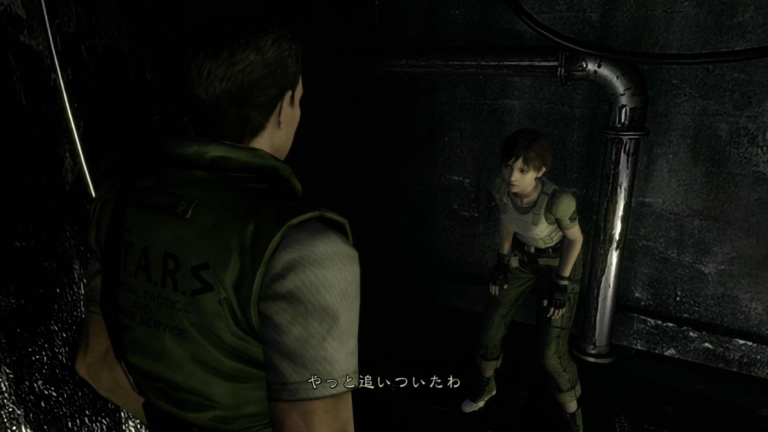
Resident Evil: mansion entrance hall and game logo. Image supplied to ZAUS.GG.
Resident Evil began in 1996 with an isolated mansion, unknown creatures, and the need to conserve every resource. Thirty years later, Capcom’s franchise spans investigations in infected cities, action-oriented campaigns, cooperative experiences, remakes, and first-person games. It also helped popularize survival horror, a genre that continues to evolve.
This is a spoiler-light overview of where the series came from, how its universe works, and which games defined each era, including spin-offs and recent releases. The order below follows the games’ release dates, not the chronology of the story.
On this page
How did Resident Evil begin?
Capcom released the first Resident Evil for PlayStation in Japan in March 1996 under the name Biohazard. Directed by Shinji Mikami, the project offered an exploration-focused adventure in which surviving meant paying attention to the environment, solving puzzles, and using ammunition carefully. The name Resident Evil was adopted for Western markets.
The game did not appear out of nowhere. Capcom’s Japanese game Sweet Home (1989) had already explored a mansion setting and resource management. Alone in the Dark (1992) had used three-dimensional characters, fixed camera angles, and hostile environments. The first Resident Evil brought together those influences and its own ideas in a presentation that expanded the genre’s commercial reach. For wider historical context, read ZAUS.GG’s feature on the origins and evolution of horror games.
Capcom itself recounts this trajectory in the official franchise history and its corporate history. Over the years, the company adopted new camera perspectives, combat systems, and storytelling approaches without entirely abandoning the theme of survival.
What defines the series’ survival horror?
In the early games, limited ammunition, restricted inventory space, exploration, and puzzles forced players to decide when to fight and when to bypass a threat. Locked doors, incomplete maps, and routes that required backtracking helped build tension. Fixed camera angles restricted visibility, while sound signaled dangers that had not yet appeared on screen.
Over time, the series alternated between different forms of horror and action: over-the-shoulder cameras, cooperative play, first-person viewpoints, and even competitive experiences in side titles. That variety does not erase the classics. To understand the differences between these approaches, ZAUS.GG has a guide to the origins and evolution of survival horror.
What is Resident Evil’s overarching story?
Its starting point is a world of biological research, accidents, covert operations, and biological weapons. The Umbrella Corporation occupies a central place in the series’ origins, while Raccoon City and the special police unit S.T.A.R.S. help connect the earliest events. As the games progress, the threats extend beyond a single location and take different forms of bioterrorism.
Characters such as Chris Redfield, Jill Valentine, Leon S. Kennedy, Claire Redfield, and, in a later era, Ethan Winters offer different perspectives on that world. The series’ fiction includes viruses, parasites, and other biological agents, but their details and the links between incidents belong in future game-specific story articles. Film and television adaptations should not automatically be confused with the games’ continuity, either.
Every main Resident Evil game and how the series evolved
The titles below cover the main series and its significant story-driven chapters, along with remakes that changed how those games play. The year given refers to each version’s original debut, which may vary by region.
1996–2000: from the mansion to Raccoon City
Resident Evil (1996). Chris Redfield or Jill Valentine investigates a mansion on the outskirts of Raccoon City. Fixed cameras, pre-rendered backgrounds, limited inventory space, and puzzles established the most recognizable identity of the classic era.

Resident Evil 2 (1998). Leon S. Kennedy and Claire Redfield arrive in a city in crisis. The sequel expanded the setting, the variety of characters, and the feeling of following connected stories while retaining exploration and resource management.
Resident Evil 3: Nemesis (1999). Jill attempts to survive in Raccoon City as a persistent threat increases the pressure throughout her journey. Urban exploration and repeated encounters with the pursuer create a different pace from the first game.
Resident Evil Code: Veronica (2000). First released for Dreamcast, it follows Claire through new settings connected to Umbrella’s research. It marked an important technical step by using real-time 3D environments while retaining controlled camera framing. Code: Veronica X (2001) is an expanded edition, not a remake.
2002–2005: rebuilding the classics and changing the camera
Resident Evil (2002 remake). Developed for GameCube, this version rebuilt the mansion, environments, and several systems of the 1996 game, preserving exploration-driven horror with a more sophisticated presentation. The later HD remaster is based on this 2002 remake.
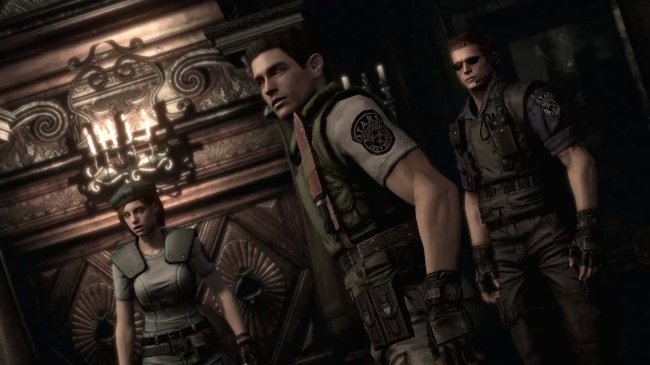
Resident Evil 0 (2002). Set before the first game in the story’s timeline, it follows Rebecca Chambers and Billy Coen. Its defining feature is switching between two protagonists and managing resources without relying on exactly the same inventory arrangement as earlier titles.
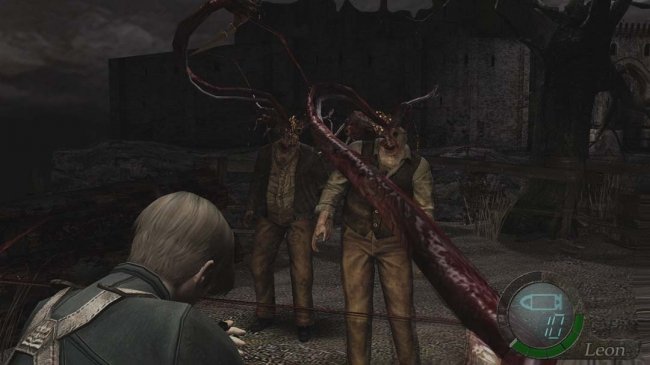
Resident Evil 4 (2005). Leon undertakes a mission in a rural European region. Its over-the-shoulder camera, direct aiming, more dynamic encounters, and combat-focused progression transformed the series’ language and influenced third-person action games. That does not mean the franchise stopped using tension or moments of vulnerability.
2009–2015: action, cooperation, and parallel experiences
Resident Evil 5 (2009). Chris Redfield and Sheva Alomar face a biological crisis in Africa. The game places more emphasis on action and builds its campaign around cooperation, offering a dynamic distinct from the solitude of the early entries.

Resident Evil: Revelations (2012). Originally released for Nintendo 3DS and later adapted to other platforms, this adventure revisits exploration and suspenseful atmosphere in enclosed environments. It is a significant narrative entry, even though it is not part of the numbered main series.
Resident Evil 6 (2012). Multiple protagonists appear in campaigns connected by an international threat. The game embraces a larger scale of combat and action sequences, illustrating how far the series had moved in that direction.
Resident Evil: Revelations 2 (2015). Initially released episodically, it alternates between Claire Redfield’s and Barry Burton’s perspectives and combines tension, exploration, and characters with complementary roles. It is another example of how unnumbered entries can expand the universe without following the latest main game’s formula exactly.
2017–2026: a return to horror and modern remakes
Resident Evil 7: Biohazard (2017). Follows Ethan Winters through an isolated property. Its first-person viewpoint, more intimate setting, and RE ENGINE help restore the emphasis on exploration, discomfort, and vulnerability.

Resident Evil 2 (2019 remake). Reimagines the 1998 game with an over-the-shoulder camera, modern controls, and a new depiction of the Raccoon City Police Department. Exploration and resource management remain central, but this is much more than a higher-resolution remaster.
Resident Evil 3 (2020 remake). Reinterprets Jill’s escape from Nemesis with contemporary systems and presentation. Its structure and pace differ from the 1999 original, so the two versions deserve to be identified separately.

Resident Evil Village (2021). Continues Ethan’s journey and expands the scale of the environments, mixing exploration, combat, and different types of threats in and around a village. Its original main campaign uses a first-person viewpoint, with additional options introduced in later editions.
Resident Evil 4 (2023 remake). Recreates the 2005 classic with reinterpreted visuals, combat, controls, and scenes. It shows how Capcom revisits the series’ more action-oriented era without pretending the earlier version never existed.
Resident Evil Requiem (2026). Released on February 27, 2026, it stars Grace Ashcroft and Leon S. Kennedy in experiences with different pacing. The RE ENGINE powers its visual presentation, and players can switch between first- and third-person perspectives. Capcom officially confirmed its release and announced in March that Requiem had sold over five million copies.
2027: Resident Evil Veronica, an announced remake
Capcom announced Resident Evil Veronica for 2027 as a remake of Code: Veronica (2000). The official press release confirms the use of RE ENGINE, a reimagining of the story, and planned versions for PlayStation 5, Xbox Series X|S, Nintendo Switch 2, and PC. The document consulted had not announced a specific release date. This is a new development of the 2000 game, not a brand-new sequel to its story.

Resident Evil spin-offs and secondary games
The series has also experimented with first-person shooting, mission-based action games, multiplayer, and mobile strategy titles. The list below covers its most significant and best-known spin-offs; it does not treat every mobile adaptation or regional release as a completely new game.
First-person shooters and arcade action
Resident Evil Survivor (2000) uses a first-person perspective in a standalone adventure. Resident Evil Survivor 2: Code Veronica (2001), first released in Japanese arcades, turns Code: Veronica settings and characters into an arcade-style shooting and survival experience. Resident Evil: Dead Aim (2003) combines third-person exploration with first-person aiming.
Resident Evil: The Umbrella Chronicles (2007) and The Darkside Chronicles (2009) adapt events and episodes from the universe into on-rails shooting games, using a perspective different from the traditional adventures. The Mercenaries 3D (2011) makes combat and score challenges into a standalone Nintendo 3DS game.
Multiplayer, cooperation, and alternate stories
Resident Evil Outbreak (2003) and Outbreak: File #2 (2004) feature ordinary citizens attempting to survive in Raccoon City through scenarios that could be tackled cooperatively, with online features depending on the region and PlayStation 2 infrastructure. Their premise differed from the traditional campaigns starring trained agents.
Resident Evil: Operation Raccoon City (2012) prioritizes team-based shooting in an alternate take on familiar events and should not be used to explain the main timeline as though all its choices were canon. Umbrella Corps (2016) focuses on competitive matches; Resident Evil Resistance (2020) pits survivors against a player controlling threats; and Resident Evil Re:Verse (2022) features multiplayer battles with characters from the franchise.
There is no reason to invent an elaborate storyline for games whose main focus is the match itself.
Handheld games and strategy
Resident Evil Gaiden (2001), for Game Boy Color, combines exploration with combat adapted to handheld hardware and tells its own story, which should not automatically be folded into the main continuity. Resident Evil: Deadly Silence (2006) revisits the 1996 game on Nintendo DS, adding touchscreen features and specific modes: it is an adaptation of the classic, not another new chapter from 2006.
Resident Evil Survival Unit (2025) brings the brand to mobile strategy games, with base building, resource management, and characters from the series. Aniplex announced the start of service on November 18, 2025, in 151 countries and regions, with availability expected to expand to other markets. Its format is not equivalent to the camera-driven exploration and survival horror of the main games.
There have also been mobile editions, ports to other consoles, versions with their own features, and digital re-releases. These products do not turn every version into an original chapter; identifying each work requires paying attention to the version and platform.
Original, remake, and remaster: what’s the difference?
An original is the release that established a work in a given year, such as Resident Evil 2 (1998). A remake rebuilds a game, such as Resident Evil 2 (2019), updating systems, graphics, and parts of its presentation. A remaster generally updates an existing game’s presentation while preserving more of its original structure, as with the HD remaster of the 2002 Resident Evil remake.
These terms are not interchangeable. Code: Veronica X is an expanded edition of the 2000 game; Resident Evil Veronica, announced for 2027, is a remake of that title. Playing only the remakes is not the same as experiencing all the original games’ design decisions.
Where should you start playing Resident Evil?
To discover its origins: start with the first Resident Evil (1996) or the 2002 remake, then progress from there. The original reveals the limitations and choices of its era; the remake offers a more approachable presentation while retaining the classic structure.
To start with modern games: Resident Evil 2 (2019) is a strong example of over-the-shoulder exploration; Resident Evil 7 (2017) is an entry point to first-person horror. Resident Evil 4 (2023) suits players who prefer more intense combat. These are different starting points, not a quality ranking.
To follow the story timeline: the chronological order of events is not the same as release order. Resident Evil 0, for example, debuted in 2002 but takes place before the first game; other titles occur around the same time or tell parallel stories. For a first visit to the universe, release order usually preserves how each game originally introduced its characters and systems. A complete chronology, with connections and spoilers, deserves its own article.
Why does Resident Evil still matter?
Resident Evil has remained relevant because it has been willing to change shape: it helped establish survival horror in the 1990s, experimented with more direct cameras and combat in the 2000s, introduced cooperation, and later revisited vulnerability and fear through other perspectives. Its impact does not erase earlier games’ contributions or imply that its evolution followed a straight line.
As of March 31, 2026, Capcom reported that cumulative sales of games in the franchise had exceeded 201 million units. This is a historical figure with a defined reference date, not a live total; it appeared in the Resident Evil Veronica press release.
This overview is a starting point. Each title may eventually receive two dedicated ZAUS.GG articles: one about the game itself, its development, and mechanics, and another about its complete story, clearly marked for spoilers. That way, readers who simply want to discover the franchise can explore its different eras without having each chapter’s plot revealed ahead of time.
About the Author