Heróis com armas e habilidades distintas em imagem promocional de Overwatch. Imagem: Blizzard Entertainment.
Imagine your team needs to push through a corridor defended by opponents. One character can create a protective barrier. Another can quickly reach high ground, while a third heals teammates.
Each has useful tools on their own. But when those abilities are combined, the team may advance through a route that seemed impossible.
This is one of the defining features of Hero Shooters: shooting games where characters with distinct weapons, abilities, and playstyles directly influence combat and team decisions.
In Team Fortress 2, different classes have recognizable roles and specialized equipment.
Overwatch developed this approach with individually designed heroes, abilities, and shared objectives.
Valorant uses agents with unique abilities within a precision-based, round-based tactical FPS.
Apex Legends combines specialized characters with the competitive survival of a Battle Royale.
Marvel Rivals, meanwhile, features third-person battles with superheroes and combinations of powers.
Although these games share elements, they do not follow the same structure. The genre grew out of class-based shooters and developed its own identity as developers placed greater importance on individual character traits.
Updated October 16, 2026.
Nesta matéria
What defines a Hero Shooter?
A Hero Shooter is a shooting game in which choosing a character also means choosing a distinct set of combat tools.
Those differences may involve weapons, abilities, movement, durability, range, or ways to assist teammates.
Imagine two characters who use firearms. One can move quickly and reach isolated opponents. The other can use equipment to protect allies and control an area of the map. Even if both need to aim and land their shots, their roles during a match may be very different.
That distinguishes a Hero Shooter from a first-person shooter (FPS) where every player has similar capabilities and chooses only their equipment.
Different characters alone are not enough
Having characters with different appearances or backstories does not automatically make a game a Hero Shooter. The essential feature is that their traits create meaningful gameplay differences.
Those differences may favor offense, defense, scouting, support, or movement. There is no universal checklist of mandatory abilities, however. Not every Hero Shooter uses tank, damage, and support roles, and not every character needs an ultimate ability.
The formula developed by Overwatch matters, but it does not cover every possibility in the genre.
Does a Hero Shooter have to be first-person?
No. Overwatch and Team Fortress 2 mainly use first-person combat, while Marvel Rivals uses a third-person perspective (TPS, or third-person shooter).
That is because FPS primarily describes the combat viewpoint, whereas Hero Shooter highlights the characters’ mechanical identities. A game can belong to both categories or combine Hero Shooter elements with other formats.
Team Fortress: the origins of class-based shooters
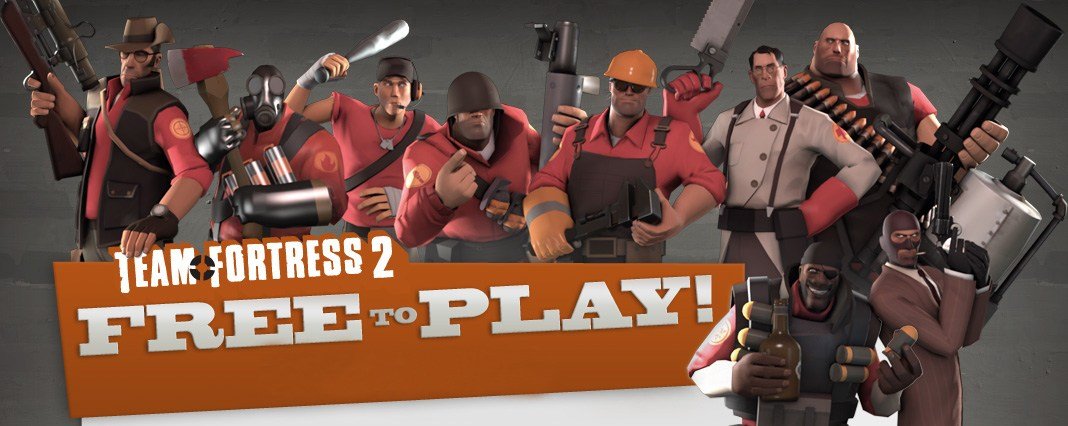
One of the main historical roots of Hero Shooters lies in Team Fortress, originally created as a Quake mod in 1996. Robin Walker, John Cook, and Ian Caughley developed the project, as documented in its creators’ accounts in the oral history of Team Fortress. This makes it an important predecessor without requiring the claim that it single-handedly invented class-based games.
At the time, many multiplayer FPS games centered competition on weapons found around the map and individual player skill.
Team Fortress explored a different idea: players selected classes with their own capabilities and contributed to their team in distinct ways. Speed, resilience, weapons, and equipment could vary by class.
One character might be better suited to scouting and movement, while another provided more firepower or support tools. The team became more than a group of players using similar equipment.
Team Fortress Classic
In 1999, Valve released Team Fortress Classic, building on that tradition using Half-Life technology.
The game retained the importance of classes and shared objectives. Players had to understand the strengths and limits of their choices rather than depend solely on one style of combat. This evolution helped establish foundations that other multiplayer shooters would develop further.
Team Fortress 2: classes with distinct identities
Released in 2007, Team Fortress 2 expanded on that concept with nine traditional classes featuring sharply different traits.
The Scout uses high mobility to reach positions and take part in objectives. The Heavy offers enormous firepower but has movement limitations. The Medic provides healing and support, while the Engineer can build devices such as sentry guns and dispensers. The Spy uses disguise and infiltration tools.
These examples show how each class changes a player’s contribution to a fight. A team may need to secure an objective, overcome a defensive position, or keep allies alive during an attack. Its chosen composition shapes its options.
Team Fortress 2 also placed strong emphasis on visual identity and personality, making each class recognizable through its behavior, appearance, and equipment.
It is a fundamental precursor to modern Hero Shooters, although it also rightly belongs to the tradition of class-based FPS games. The boundary between those labels is not absolute. The game helped establish many ideas that became more widely known through later Hero Shooters.
Overwatch and the popularization of the modern Hero Shooter

On May 24, 2016, Blizzard Entertainment launched Overwatch.
It combined first-person combat, individualized heroes, and modes built around team objectives. Each hero had distinct traits, including weapons, abilities, and movement tools.
Winning was not simply about defeating opponents. Teams also had to capture positions, protect allies, and meet the map’s victory conditions. This combination helped popularize Hero Shooter as a recognizable commercial game category.
Heroes and roles
In Overwatch, heroes such as Reinhardt, Tracer, and Mercy illustrate different ways of contributing to a match.
Reinhardt can protect allies and apply pressure in close-range encounters. Tracer uses mobility and quick attacks to find opportunities. Mercy offers support tools, including healing and other forms of assistance.
Other characters specialize in scouting, area control, or long-range attacks. This diversity creates opportunities for teamwork.
A protective ability may let an ally advance. A movement tool can help reach an important position, while offensive abilities can pressure opponents defending an objective.
Why does team composition matter?
Imagine a team with characters who deal heavy damage but struggle to stay alive in prolonged fights. It may secure eliminations while still having trouble controlling a defended area.
Another team might have enough defensive resources but limited ability to pressure its opponents. Choosing complementary heroes helps balance those needs.
There is no universally correct composition, however. Maps, modes, and updates change which strategies work best.
Ultimate abilities, available to many heroes, also affect decision-making. Using them at the right moment can swing a fight, but their mechanics vary between characters.
From Overwatch to Overwatch 2 — and back to Overwatch
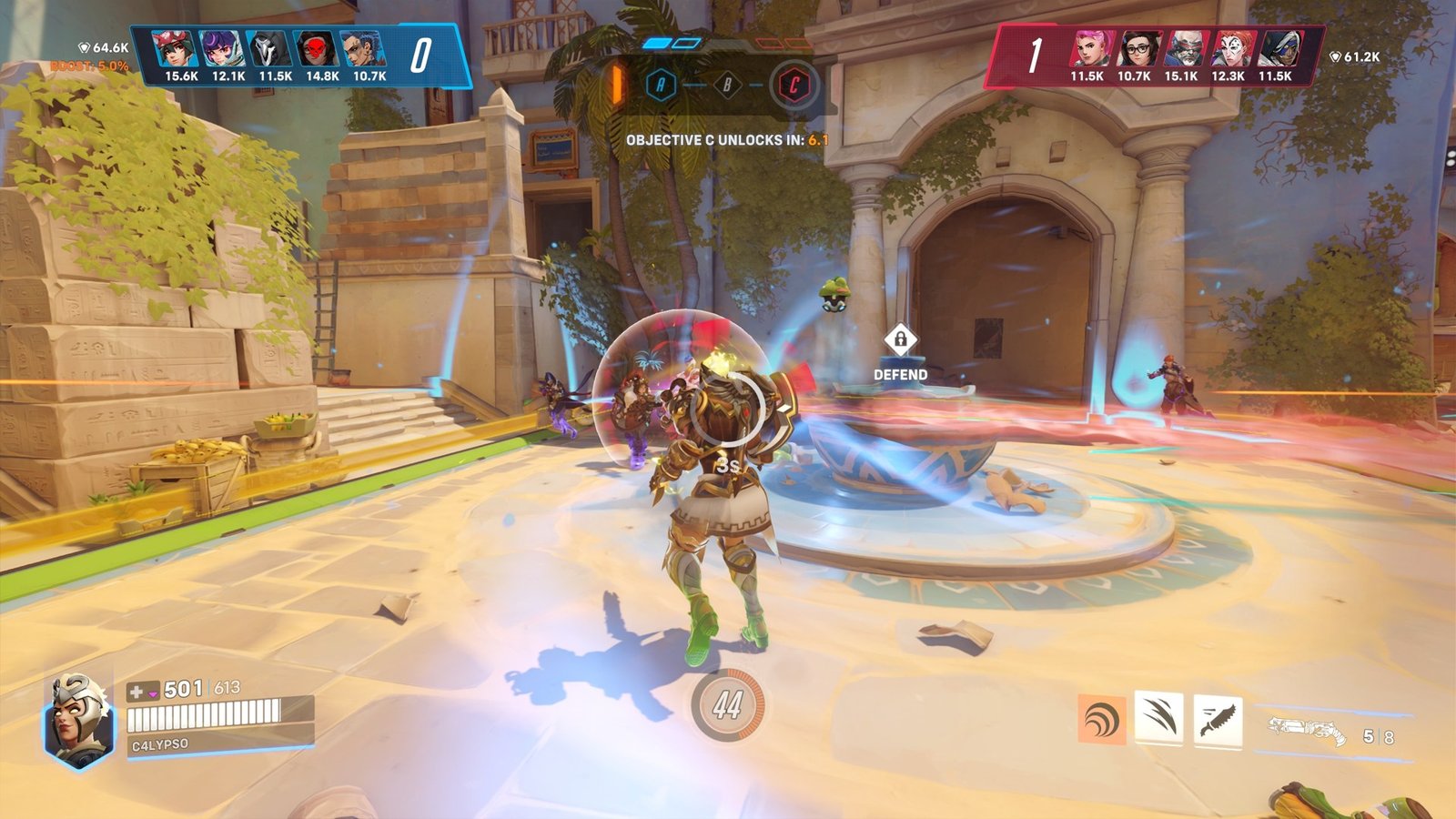
The franchise went through major changes after its original release. On October 4, 2022, Overwatch 2 launched as a free-to-play game, replacing the previous main experience and changing player-versus-player (PvP) combat, including a shift from six to five players per team in its main format.
Blizzard subsequently offered different team arrangements and modes again. As of October 2026, its official presentation includes 5v5 and 6v6 options, so the switch to five players no longer describes the entire game.
On April 22, 2025, Stadium mode introduced round-based matches and hero customization. Players earn currency during the contest to purchase items, while powers modify character capabilities. These systems belong to Stadium, not to every Overwatch match.
The mode also introduced the option of a third-person perspective, unlike the series’ traditional first-person presentation.
In February 2026, Blizzard dropped the number “2” from the commercial title, returning to the name Overwatch. The new phase revealed during Overwatch Spotlight began with the season released on February 10.
The change came alongside a new organization of seasons and updates. That history illustrates how a Hero Shooter can retain character identity and abilities while changing team sizes, modes, and other combat systems.
Paladins and character customization

Paladins: Champions of the Realm, by Evil Mojo Games and published by Hi-Rez Studios, was another important example of the genre’s expansion.
The game entered open beta in 2016 and officially launched on May 8, 2018. Teams are composed of champions with their own weapons, abilities, and roles.
One notable feature is the option to customize those champions through card and talent systems, depending on the applicable rules. This allows different interpretations of a single champion.
Two players can use the same character but select tools that favor different playstyles. This approach adds customization while maintaining each champion’s identity.
The systems must be compared in context: Overwatch later introduced Perks, and Stadium has its own in-match customization.
What happened to Paladins?
In February 2025, Hi-Rez’s restructuring was accompanied by reports of an internal communication saying that no further major updates were planned for Paladins. That information comes from an internal document reported by the press.
The reported communication described an intention to keep servers running for the foreseeable future, which is not a guarantee of indefinite operation.
At the October 16, 2026 check, the game was still listed on Steam. A store listing alone does not prove that all services are working or that active development has resumed. No later official announcement of a server shutdown had been located either.
Paladins remains an important historical reference for showing how customization can influence hero and team systems.
How do abilities, roles, and objectives work?
Despite differences between games, many Hero Shooters connect three decisions: which character to pick, how to use their abilities, and how to work with teammates to win.
In team-based objective modes, a simplified loop looks like this:
Choose heroes → Organize the team → Contest objectives → Combine abilities → Adapt the strategy.
This pattern mainly describes games such as Overwatch and Marvel Rivals. Valorant and Apex Legends have different competitive structures.
Tank, damage, and support
Three well-known Hero Shooter roles are:
- Tank: characters who create space, withstand threats, and provide protection for their team.
- Damage: characters primarily focused on offensive pressure and eliminations.
- Support: characters who assist allies through healing, protection, information, or other tools.
These roles should not be interpreted rigidly. A tank may contribute meaningful offensive power. A support can also deal damage, and certain heroes can fill different roles depending on the situation. Other games use their own character categories.
Abilities, cooldowns, and resources
Abilities broaden combat options but usually have limitations. Some require waiting through a cooldown before they can be used again. Others depend on charges, resources, or specific conditions.
Imagine an ability that protects several teammates for a few seconds. Activating it immediately might save the team. But if the decisive fight has yet to begin, it may be better to save it.
That decision is part of strategy. An ability’s strength depends not only on its effect but also on when and where it is used.
Combining abilities
One important Hero Shooter feature is the ability to combine powers. One character can put up a barrier to protect an advance. Another may use a scouting tool to locate opponents. A third can use that information to initiate an attack.
This interaction is commonly called synergy. Synergy does not necessarily require a fixed pairing of heroes. Often the coordinated use of complementary tools creates the advantage.
Maps and objectives
Maps also shape how characters are used. Some modes require taking and holding a position. Others involve escorting a payload or stopping opponents from completing an objective.
A hero with vertical mobility may reach positions that others struggle to access. Protective abilities can be more useful in areas where a team must remain during a fight.
Thus, a hero’s value also depends on the environment and the victory conditions.
Valorant and Apex Legends: Hero Shooter elements in different structures
The influence of specialized characters did not remain limited to games centered on control points and payloads. Two important examples show how these ideas can work within other genres.
Valorant: tactical FPS with agents
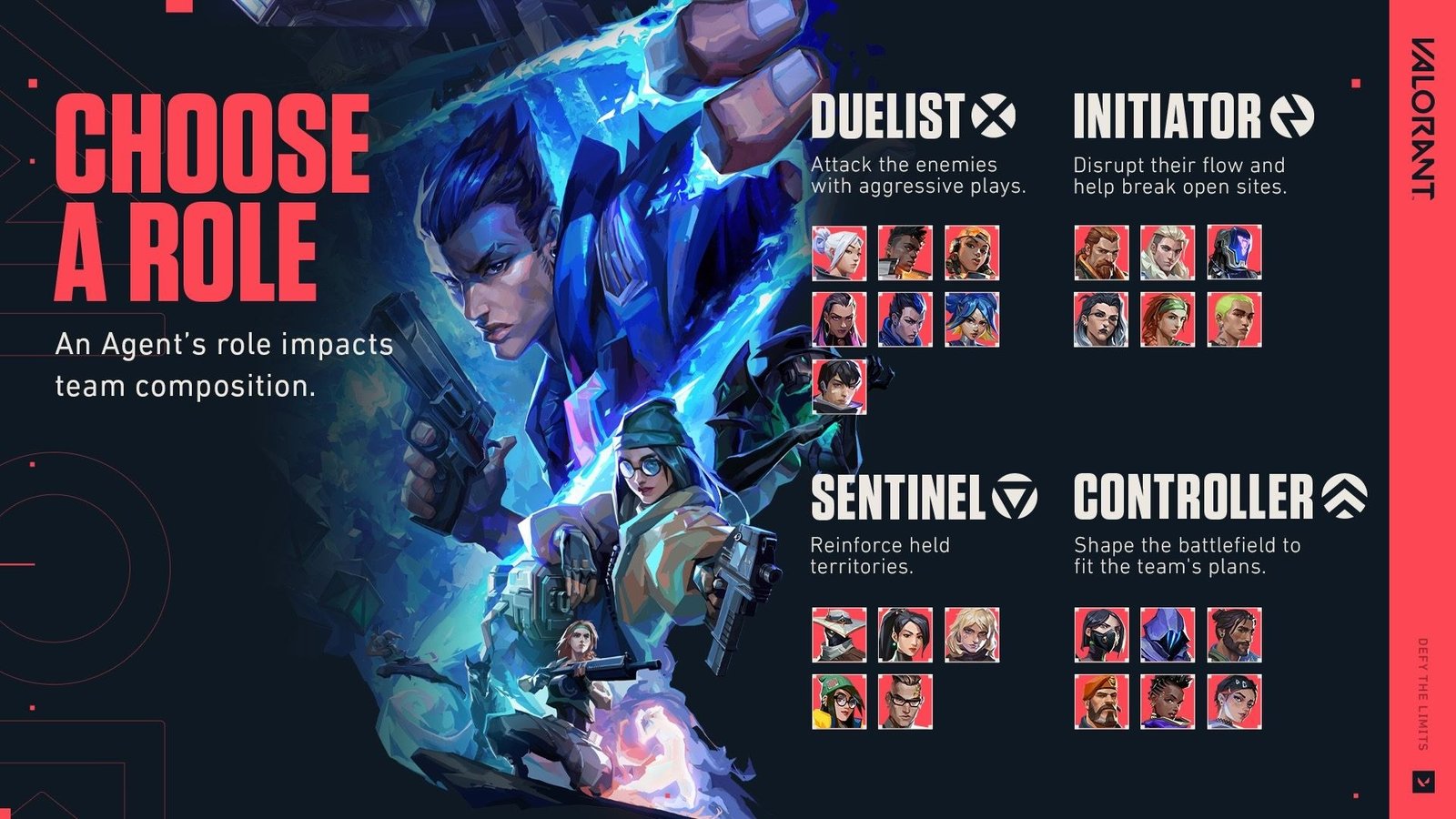
Released in 2020, Valorant combines Hero Shooter elements with the structure of a competitive tactical FPS.
In its traditional format, two teams play attack-and-defense rounds. Gunplay, precision, and equipment economy remain essential.
The distinguishing feature is its agents. Each has unique abilities that can gather information, control spaces, protect positions, or create offensive opportunities.
The official Riot Games guide divides agents into four main roles:
- Duelists: favor confrontations and offensive initiatives.
- Initiators: use tools to gather information and help teams enter defended areas.
- Controllers: help block lines of sight and control parts of the map.
- Sentinels: offer tools to defend positions, protect allies, or slow opposing advances.
These roles influence strategy, but they do not replace the importance of firearms. In Valorant, an ability might create an opening into an area; winning the gunfight generally remains decisive in exploiting that opening.
It is therefore more accurate to describe Valorant as a tactical FPS with Hero Shooter elements. Its design differs from Overwatch, even though both use specialized characters.
Apex Legends: Battle Royale with Legends

Respawn Entertainment launched Apex Legends in 2019. It combines first-person combat, a Battle Royale structure, and characters with distinct abilities known as Legends.
Squads enter a map, search for equipment, and face other teams as they compete to survive to the end. The Legends they select influence how the squad moves, spots threats, and handles encounters.
Some characters offer support tools, while others favor mobility, offense, or area control. This creates strategic choices tied to team composition.
The game’s competitive structure focuses on survival between squads, not continuous control of a point or escorting a payload.
Apex Legends is primarily an FPS Battle Royale with Hero Shooter elements. This distinction shows how specialized hero mechanics can complement other genres without replacing them.
Marvel Rivals: Hero Shooters also work in third person

Released on December 6, 2024, Marvel Rivals, developed by NetEase Games in collaboration with Marvel Games, created a Hero Shooter centered on characters from the Marvel universe.
It features third-person combat and teams of heroes and villains with different capabilities. Its structure includes attacks, abilities, movement, and shared objectives.
Characters are grouped into three main roles:
Vanguard: heroes who create space, resist threats, and help protect the team.
Duelist: characters with greater emphasis on attacks and offensive pressure.
Strategist: heroes who provide support, healing, and other forms of assistance.
These labels help organize teams, but they do not mean each character has only one way to fight.
Team-Up Abilities: special hero combinations
A notable Marvel Rivals mechanic is its system of Team-Up Abilities. Specific combinations of characters can unlock special interactions.
This encourages players to consider not only each hero’s individual powers but also the relationships between them. These interactions do not work for every possible pair: they depend on combinations explicitly supported by the game.
How they function may change between updates and seasons as Team-Up Abilities are added, removed, or adjusted.
Another feature is that parts of the environment can be modified or destroyed during combat, though that does not mean every object is destructible.
Marvel Rivals shows how Hero Shooters can combine specialized characters, third-person combat, and their own cooperation mechanics.
The game continued receiving content and balance changes throughout 2026, including changes to heroes and Team-Up Abilities documented in October. These combinations are subject to change, rather than permanent pairs.
Hero Shooter, FPS, MOBA, and Battle Royale: what is the difference?
These labels may involve characters, abilities, and objectives in common, but they describe different aspects of a game.
| Classification | Core characteristic | Examples |
|---|---|---|
| Hero Shooter | Characters with distinct capabilities that influence combat | Overwatch, Marvel Rivals |
| FPS | First-person combat | Counter-Strike, Overwatch |
| TPS | Third-person combat | Marvel Rivals, The Division |
| MOBA | Teams, characters, and objectives in a strategic structure with progression during a match | League of Legends, Dota 2 |
| Battle Royale | Competition based on survival and progressive elimination | PUBG, Apex Legends |
Hero Shooter versus MOBA
Both genres can use characters with abilities, roles, and synergies, but the structure of their matches differs.
In League of Legends and Dota 2, players typically develop their characters during the match, gather resources, fight units, and push toward the enemy base. Our feature on MOBA origins and evolution explores this structure in detail.
In Overwatch and Marvel Rivals, matches center on shooter combat and map-specific objectives. Having tanks, supports, or special abilities does not automatically turn a Hero Shooter into a MOBA.
Hero Shooter versus FPS
An FPS can give characters similar capabilities and depend mainly on their chosen weapons. Counter-Strike is an important example. Our feature on FPS origins and evolution covers this shooting-game tradition.
Overwatch, on the other hand, gives heroes substantially different tools, making the choice of character a central part of a match. Valorant combines the two traditions: it retains tactical FPS structure while introducing specialized agents.
Hero Shooter versus Battle Royale
In Apex Legends, surviving until the final stages remains the central competitive goal. Legends change how teams try to achieve that goal.
In other words, a game can include distinct character abilities while retaining Battle Royale as its main identity. These categories are not mutually exclusive.
How Hero Shooters evolved in 2026
The trajectories described here reveal different challenges in 2026: expanding modes and mechanics, as with Overwatch; developing rosters and combinations, as with Marvel Rivals; or maintaining long-term support, a question highlighted by Paladins. Specialized characters bring these games together but do not guarantee the same update model or commercial lifespan.
Balance changes and new characters
In a Hero Shooter, adding or changing one character can alter what an entire team can do. An ability that blocks an area may weaken strategies relying on that space. Mobility changes can also shift which positions are contested most intensely.
Balance updates must therefore consider both individual performance and interactions between heroes.
These changes influence tournaments and competitive strategies, though no single rulebook applies to every game. Overwatch has a competitive scene associated with the Overwatch Champions Series (OWCS), while Valorant uses its own VALORANT Champions Tour (VCT) circuits.
Apex Legends also has organized competitions, but with a Battle Royale structure.
The challenge of learning many characters
Variety is one of the genre’s defining qualities, but it may also make the learning curve steeper. Knowing your own abilities is only part of the challenge.
Players also need to understand what allies and opponents can do. A team might have individually effective heroes and still struggle to coordinate.
Frequent updates, role changes, and new heroes also require adaptation. This does not mean every Hero Shooter is necessarily more complex than every other shooter: difficulty depends on how the systems are organized and presented.
Games that shaped the evolution of Hero Shooters
This selection brings together historical milestones and different interpretations of the genre. It is not a ranking of the best games.
| Game | Year | Contribution or characteristic |
|---|---|---|
| Team Fortress, Quake mod | 1996 | Predecessor with classes and team roles |
| Team Fortress Classic | 1999 | Continuation of the class-based FPS tradition |
| Team Fortress 2 | 2007 | Nine classes with distinct identities and roles |
| Monday Night Combat | 2010 | Third-person combat with classes and MOBA elements |
| Battleborn | 2016 — May 3 | Hybrid shooter with progression and MOBA elements |
| Overwatch | 2016 — May 24 | Modern popularization of hero-based shooters |
| Paladins | 2016 open beta; 2018 launch | Champions, roles, and customization |
| LawBreakers | 2017 | Fast-paced combat and characters with different abilities |
| Apex Legends | 2019 | Battle Royale featuring Legends and abilities |
| Valorant | 2020 | Tactical FPS with specialized agents |
| Rogue Company | 2020 Early Access | Third-person tactical shooter with distinct characters |
| Marvel Rivals | 2024 | Third-person Hero Shooter and Team-Up Abilities |
These games did not all share the same structure. Team Fortress belongs primarily to the class-based FPS tradition. Valorant and Apex Legends are examples of combinations with other genres.
Monday Night Combat, by Uber Entertainment, brought a mixture of third-person shooting, classes, and MOBA elements to Xbox 360 in 2010; the PC edition came later. Battleborn, developed by Gearbox Software and published by 2K, launched before Overwatch in May 2016 with its own hybrid design. LawBreakers, by Boss Key Productions and published by Nexon, emphasized rapid combat and mobility. Rogue Company, by First Watch Games/Hi-Rez, entered Early Access in 2020.
These projects had different commercial paths. Battleborn shut down its servers on January 31, 2021, while official LawBreakers services closed on September 14, 2018. Rogue Company was among the games mentioned in reports about Hi-Rez’s 2025 internal communication ruling out further major updates. That report alone does not establish that its servers had shut down in 2026.
These games appear in the timeline for their historical contribution, not as a claim of current availability or a buying recommendation.
In a Hero Shooter, choosing a character also means choosing how to fight
From the classes of Team Fortress to the heroes of Overwatch, the genre increased the importance of roles, equipment, and cooperation. Paladins explored customization, Valorant and Apex Legends combined these ideas with different formats, and Marvel Rivals reinforced the possibility of developing them in third person.
What brings these games together is not camera perspective, a fixed number of players, or a universal requirement for tanks and supports. It is the way each character’s distinct capabilities alter combat and create different opportunities for the team.
In a traditional shooter, changing weapons may change how you fight your opponents. In a Hero Shooter, choosing a different character may change not only your weapons and abilities but also the role you play throughout the match.
About the Author