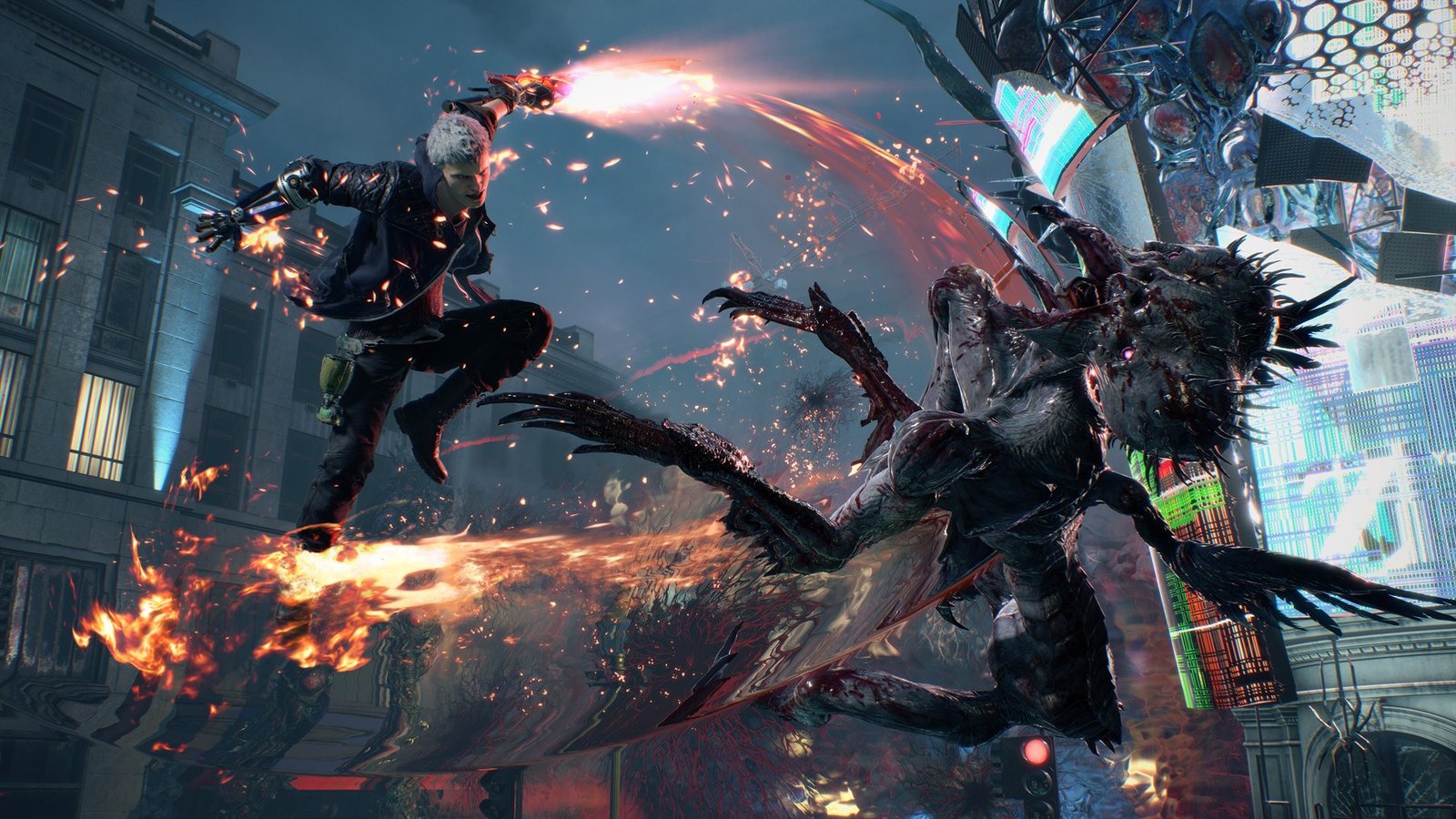
Armas, movimentação e combinações ofensivas fazem parte do combate de Devil May Cry 5. Captura oficial. Imagem: Capcom.
Imagine entering a room surrounded by demons.
You can rush forward with your sword and repeat the same attack until they are all defeated. Or you can launch an enemy into the air, keep the combo going, switch weapons, dodge another opponent, and end the encounter with a special move.
Either way, the enemies are defeated. The difference lies in how you won.
That relationship between attacks, movement, and mastery of combat is what gives one of the best-known interpretations of Hack and Slash its identity. The term describes games that place great emphasis on direct combat, often with melee weapons. Yet its meaning has changed over time and is not restricted to games with elaborate combos.
Devil May Cry and Bayonetta reward variety and precise execution. Ninja Gaiden demands constant awareness of opponents and openings. God of War helped popularize intense weapon-based combat and spectacular bosses. Dynasty Warriors, meanwhile, established an approach centered on fighting crowds of soldiers while pursuing strategic objectives.
There is another use of the term: games like Diablo and Path of Exile are also called Hack and Slash in certain contexts, particularly because they feature repeated battles against monsters, equipment acquisition, and character progression.
These experiences do not all belong to the same design tradition. To understand Hack and Slash, we need to trace where the term came from and how different games developed their own ways of making combat the main attraction.
Updated October 21, 2026.
Nesta matéria
What does Hack and Slash mean?
The English expression hack and slash evokes repeated chopping, striking, and cutting. In video games, it is usually associated with experiences in which fighting enemies directly is a central part of gameplay.
Many games feature swords, axes, blades, or other melee weapons, but that does not mean they follow the same rules. Some favor elaborate attack sequences. Others demand carefully timed defenses and counterattacks. In still others, the emphasis lies on the number of opponents faced rather than the complexity of each individual encounter.
For that reason, Hack and Slash is a broad classification whose meaning depends on context.
Does every Hack and Slash game need combos?
No. Combos are important in games such as Devil May Cry and Bayonetta, but they are not a universal requirement. The term also appears in discussions of older games, crowd-focused action games, and certain RPGs.
Likewise, combat does not have to involve swords exclusively. Firearms, magic, and special abilities may all be part of attack sequences. What these games share is the importance of combat, although they place different emphasis on execution, progression, and strategy.
The term’s origins in tabletop RPGs
Hack and Slash was already used in tabletop role-playing circles before Devil May Cry and the major 3D action games. One recorded example appears in issue 39 of Dragon magazine, dated July 1980, in a discussion of the possibilities of Dungeons & Dragons beyond repeated fighting.
In discussions about Dungeons & Dragons, the term described adventures or playstyles heavily focused on fighting and defeating opponents. It could contrast with campaigns emphasizing investigation, role-playing, and negotiation.
That does not mean tabletop RPGs were limited to combat. The term described one possible approach, not the whole medium. Nor should we imagine those encounters working like combos in a modern game: tabletop RPG actions were resolved through rules, participants’ choices, and a game master’s adjudication.
The association with recurring combat carried over into different digital RPG and action-game formats, eventually producing the uses we see today. The 1980 reference is evidence of earlier tabletop usage, not proof of who coined the phrase; its arrival in video games should not be credited to a single game or developer.
From arcades to three-dimensional action combat

Long before 3D games popularized elaborate combos, arcades offered experiences built around fighting groups of enemies. Irem’s Kung-Fu Master (1984) featured side-scrolling progression and successive battles. Atari Games’ Gauntlet (1985) placed fantasy characters in enemy-filled mazes, combining action with exploration.
Taito’s Rastan (1987) and Capcom’s Strider (1989) also contributed to the history of weapon-based action, movement, and enemies arranged throughout stages. These are related predecessors with their own action-platforming structures, not identical examples of one subgenre.
One particularly recognizable reference, however, is Golden Axe.
Golden Axe and its relationship to Beat ’em Ups
Released by SEGA in arcades in May 1989, Golden Axe blended fantasy, side-scrolling levels, and fighting groups of enemies. The Mega Drive conversion came later; the historical reference here is the original arcade release.
Its characters wielded melee weapons and could use magic while progressing through levels and battling bosses. Its structure is close to that of Beat ’em Ups, games in which players advance through environments while fighting successive opponents directly.
Double Dragon, Final Fight, and Streets of Rage are other important examples of that tradition. However, the difference between Beat ’em Up and Hack and Slash cannot be reduced to weapon type. It would be incorrect to classify every game with punches in one category and every game with swords in the other.
Golden Axe illustrates the overlap: it uses Beat ’em Up progression but is frequently associated with Hack and Slash because of its weapon combat and setting. Its stages are organized around groups of enemies; Devil May Cry would emphasize something else: encounters in which offensive combinations and performance ratings help shape the experience. It is a difference in structure, not merely fists versus swords.
As 3D environments arrived, developers began exploring new possibilities for movement, camera placement, and interaction with enemies. One of the most influential branches of modern Hack and Slash emerged from that transformation.
Devil May Cry and the rise of stylish combat

Capcom launched Devil May Cry on PlayStation 2 in 2001. Directed by Hideki Kamiya, it originated from an early project associated with the development of Resident Evil 4, a connection discussed by Kamiya in the Kamiya Chronicles interview series shared by PlatinumGames. This was an earlier attempt, not the Resident Evil 4 released in 2005.
During development, the concept moved away from survival horror and acquired its own identity centered on action and more elaborate combat. Dante, the protagonist, wielded a sword, firearms, and supernatural abilities against demons.
The result helped establish a tradition in which defeating opponents is not enough: the way you fight also matters.
Attacks, movement, and variety
Devil May Cry allowed melee attacks to be combined with shooting and other offensive tools. A particularly recognizable feature was launching enemies into the air and continuing to attack before they landed.
This structure expanded the choices available during an encounter. Players could attack directly or maintain pressure through a more elaborate sequence; movement and timing also influenced the outcome.
The style-ranking system
Devil May Cry included evaluations that encouraged players to improve their performance. Combat criteria and mechanics changed throughout the series, so the rules and options of later installments should not automatically be attributed to the original 2001 game.
The goal was not necessarily to eliminate every enemy as quickly as possible. Varying moves and controlling the encounter could also be rewarding. This approach helped popularize a kind of action game in which mastering the controls is satisfying in itself.
A newcomer may finish an encounter using only a few moves. An experienced player can use the same group of enemies to create much more varied sequences. Both progress through the adventure, but engage with different depths of its systems.
How did the franchise evolve?
Devil May Cry 3 (2005) developed the series’ identity with combat styles and new combinations of moves and weapons. Devil May Cry 4 (2008) introduced Nero as a playable protagonist with tools distinct from Dante’s, including the demonic Devil Bringer arm.
In Devil May Cry 5 (2019), each protagonist has a different system: Nero uses mechanical Devil Breaker arms, Dante combines styles and weapons, and V commands creatures to attack before stepping in to finish enemies. A Capcom combat guide published on PlayStation Blog explains those differences.
The series shows that deepening combat is about more than simply adding moves: new characters and tools can demand different decisions. Those systems were introduced and changed across installments; they were not all available in 2001.
In 2026, Devil May Cry 5: Devil Hunter Edition brought the 2019 game to Nintendo Switch 2 with additional content: the digital edition arrived June 23 and the physical release August 28. It is a later edition, not Devil May Cry 6 or the game’s original debut.
What are Character Action and Stylish Action?
Character Action and Stylish Action are terms used by gaming communities and some specialist outlets for action games that place exceptional emphasis on executing moves and varying combat. Devil May Cry and Bayonetta are frequent examples.
Understanding the playable character’s capabilities may be as important as recognizing enemy attacks. Players learn to chain moves, manage distance, dodge, and discover combinations that maintain the flow of an encounter.
What makes a combo interesting?
A combo is a sequence of connected offensive actions. Depending on the game, it may involve ground attacks, aerial strikes, shooting, weapon switching, or special abilities.
Execution also means recognizing when a sequence is no longer safe. If another enemy is preparing an attack, extending a long combo may leave the character exposed. Depending on the rules, retreating, dodging, or switching tools may be wiser.
Some systems allow certain animations to be interrupted or replaced through techniques known as cancels. Learning which actions can connect, and when, is part of mastering a moveset. That does not mean any attack can be canceled in every game. A short, well-timed sequence can be more effective than a lengthy combo attempted in the wrong situation.
Is every Hack and Slash game Character Action?
No. Hack and Slash is also used for games emphasizing crowds of enemies or RPG progression systems. Character Action and Stylish Action refer to narrower approaches, usually associated with control mastery and a character’s offensive and defensive options. Neither term is a mandatory official category used by every developer.
How does combat work in a Hack and Slash game?
Although systems vary, many action games involve a recurring set of decisions:
Observe the enemy → Position yourself → Attack → Chain moves → Block or dodge → Adapt.
This is merely illustrative. Actual combat need not follow a fixed sequence. Players might immediately react to an attack or use a special ability to interrupt several opponents. Understanding how actions interact is what matters.
Weapons, reach, and movement
Weapon choice can change attack speed, the distance required to reach a target, and how many enemies are hit. A fast sword may favor constant chains; a heavy weapon can deliver slower but more powerful attacks. Some tools hit several opponents, while others favor single-target encounters.
Not every game offers multiple weapons or intricate equipment systems. In some titles, the challenge is mastering a smaller repertoire of moves.
Dodges, blocks, and counterattacks
Attacking constantly is not always the best decision. When an enemy prepares a dangerous move, players may need to get out of range or use a defensive option.
Dodging means moving to avoid an attack. Blocking attempts to prevent or reduce its effects according to the game’s rules. A parry uses precisely timed defense to interrupt or deflect certain strikes, when the system allows it. A counterattack exploits an opening during or after an opponent’s action.
These tools vary considerably. Some games grant moments of invulnerability during particular moves; others require distancing or precisely timed defense. There is no single defensive system that defines all Hack and Slash games.
Enemies and bosses
Enemy composition also affects the challenge. A quick opponent demands different attention from a durable one. Ranged fighters may force players to keep moving while other enemies attack up close. Bosses often introduce patterns, phases, or specific tools players need to recognize.
Difficulty is not simply a matter of increasing enemy numbers. Positioning, speed, attack variety, and available space also matter.
Cameras and arenas
Perspective changes how players perceive threats and judge distances. The Devil May Cry series has used different framing approaches. God of War adopted cinematic presentations that emphasize the scale of combat. Other games position the camera closer to the character or offer more direct control over the viewpoint.
Arena layout matters too: fighting in an open area differs from facing enemies in a narrow hallway. Visual evolution therefore cannot be separated from camera decisions, movement, and encounter design.
God of War, Ninja Gaiden, and Bayonetta: three different approaches
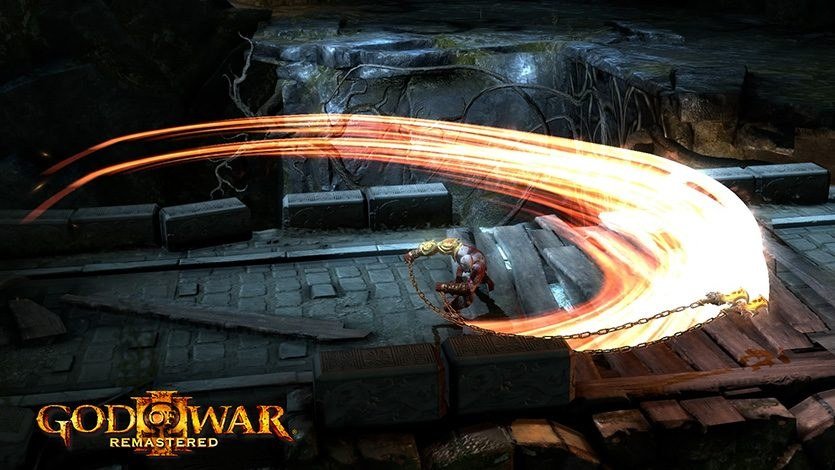
These franchises broadened the tradition of three-dimensional Hack and Slash, but each developed a distinct identity.
God of War: action and large-scale battles
Developed by Santa Monica Studio and published by Sony Computer Entertainment, God of War arrived on PlayStation 2 in 2005. It followed Kratos through an adventure inspired by Greek mythology, combining intense weapon combat, combos, puzzles, and enormous bosses.
Kratos’s blades enabled sweeping attacks and sequences against multiple enemies. God of War II (2007) and God of War III (2010) expanded that approach. Cinematic presentation and the scale of confrontations became hallmarks of the franchise.
What changed in 2018’s God of War?
The series underwent an important transformation with the release of a new God of War on PlayStation 4 in 2018. It was not a remake of the 2005 game.
The camera began following Kratos more closely, while combat developed a different relationship between movement, defense, and equipment. The Leviathan Axe became a central tool, including the ability to throw and recall it. Exploration, progression, and storytelling also acquired new structures.
God of War Ragnarök (2022) debuted on PlayStation 4 and PlayStation 5, continuing this approach and expanding combat tools. These are the console debut dates, preceding the PC releases.
That does not mean newer games abandoned melee action. The franchise adopted a structure different from its classics, combining fighting, adventure, and wider progression systems. Nor should they automatically be called Soulslikes simply because some encounters emphasize defensive decisions.
The series diversified further in 2026. God of War Sons of Sparta, released February 12 for PS5, was made by Mega Cat Studios with Santa Monica Studio. It features 2D action-platforming, a young Kratos, Deimos, and spear-and-shield combat. The same announcement confirmed that remakes of the Greek trilogy were in early development: they are distinct from remasters and were not yet available.
God of War Laufey, starring Faye, is scheduled for PS5 on February 16, 2027. As of October 21, 2026, that release was still in the future. These projects demonstrate different approaches without replacing the identity of the classic games.
Ninja Gaiden: reaction, defense, and technical mastery
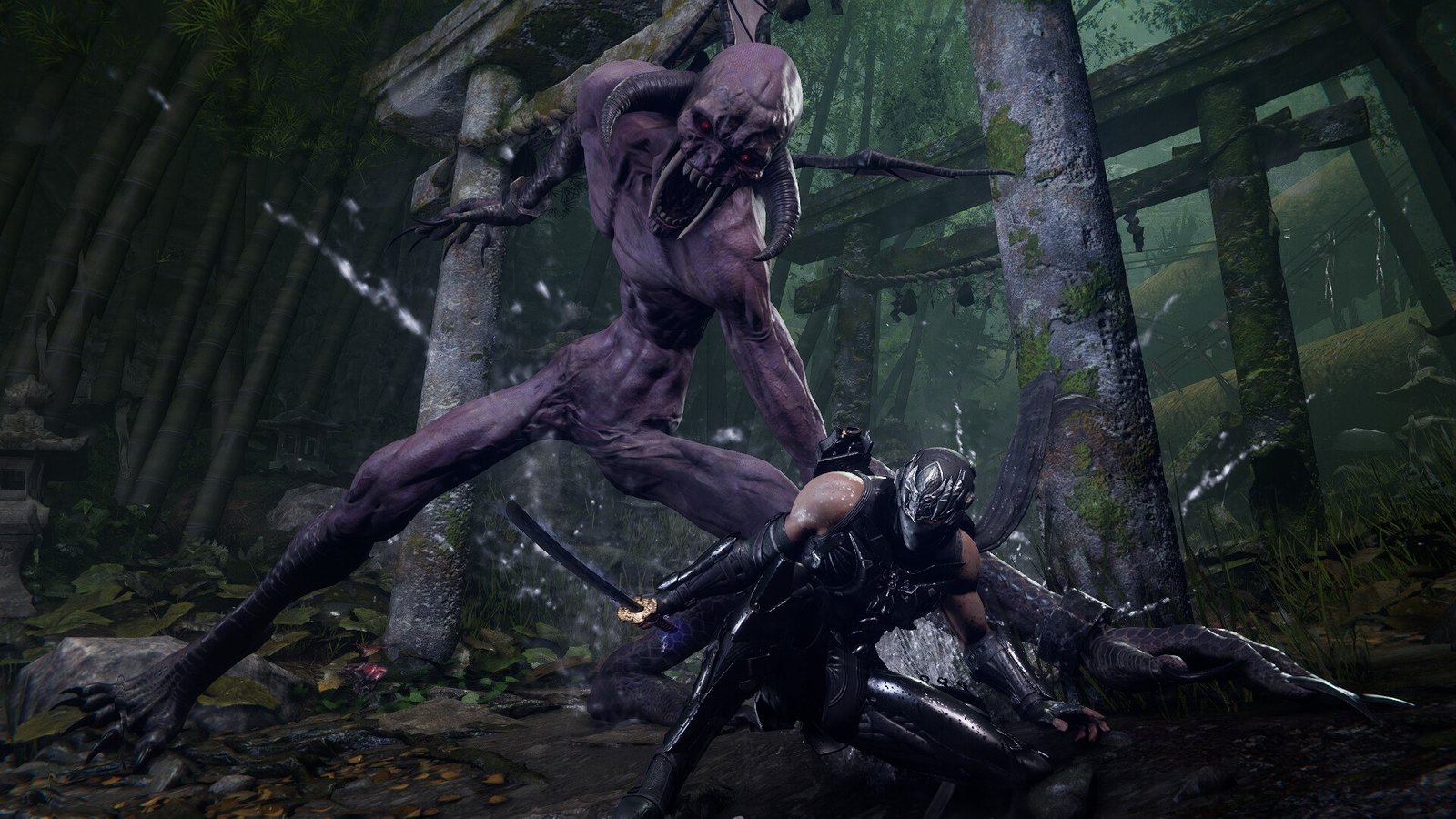
Tecmo’s Ninja Gaiden franchise predates 3D games, with different arcade and NES experiences in the 1980s. The 2004 interpretation was not the birth of the series.
In 2004, Team NINJA released a reimagined Ninja Gaiden for Xbox. Ryu Hayabusa faced aggressive enemies using weapons, movement, and combat techniques. Defense and positioning were especially important.
Some opponents demanded avoiding certain attack sequences before responding. Other encounters rewarded constant movement and rapid decisions. This helped distinguish Ninja Gaiden from games where performance is closely tied to style scores. The sequels developed their own systems and different interpretations.
Ninja Gaiden 4 launched on October 21, 2025, for PlayStation 5, Xbox Series X|S, and PC. Developed by PlatinumGames and Team NINJA and published by Xbox Game Studios, it introduces Yakumo as a new protagonist while also featuring Ryu Hayabusa, with distinct weapons, techniques, and movement.
The The Two Masters expansion arrived March 4, 2026. Alongside new chapters, an official presentation highlights Yakumo’s Solitaire scythe, Ryu’s Jakotsumon chained gauntlets, and Abyssal Road with 100 encounters. The new weapon’s reach and mobility expand how Ryu approaches opponents, showing mechanical evolution beyond extra stages. These features belong to the fourth game and its expansion, not the entire franchise.
Bayonetta: dodging and stylish combat

Developed by PlatinumGames, directed by Hideki Kamiya, and originally published by SEGA, Bayonetta debuted in Japan on October 29, 2009, for PlayStation 3 and Xbox 360; its international release followed in 2010. An official tenth-anniversary retrospective distinguishes the Japanese launch from subsequent editions.
The game shares influences with Devil May Cry but has its own systems and identity. Its protagonist uses weapons, melee strikes, shooting, and supernatural abilities against creatures.
One of its most recognizable mechanics is Witch Time. When triggered by certain well-timed dodges, it slows enemies down and creates attack opportunities. A defensive action thus becomes an offensive tool: players avoid a strike and exploit the opening to continue a combo.
Bayonetta 2, originally released on Wii U in 2014, and Bayonetta 3, released for Nintendo Switch in 2022, developed new combat abilities. Both were developed by PlatinumGames and published by Nintendo, unlike the original SEGA-published game.
The franchise demonstrates how depth can emerge from the interaction between movement, dodging, and control over enemies.
Dynasty Warriors and fighting crowds
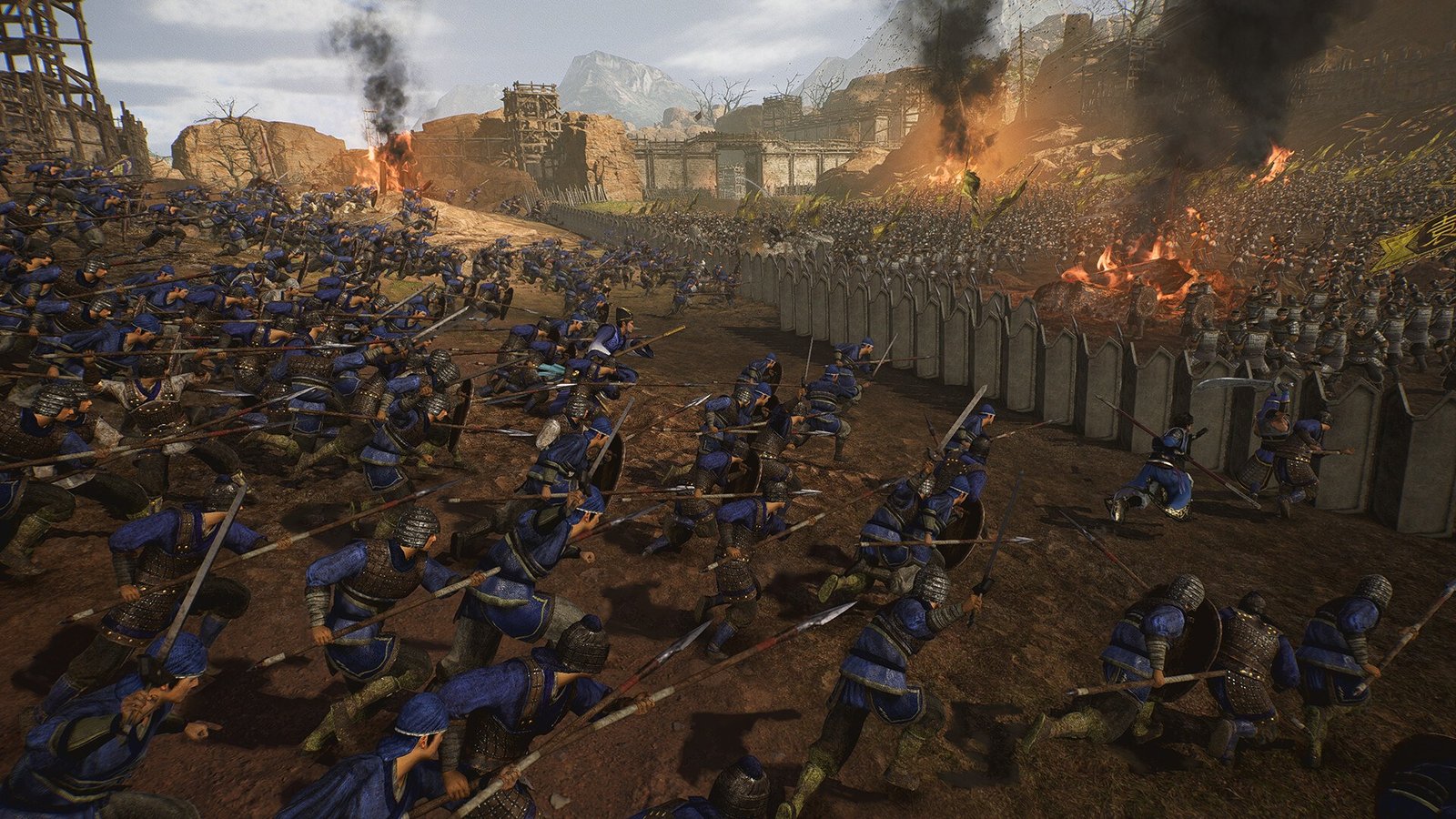
Not every game associated with Hack and Slash puts elaborate combos or style ratings at the center of the experience. Dynasty Warriors represents another important tradition.
The first Dynasty Warriors, developed by Omega Force and released by Koei for PlayStation in 1997, was a character-versus-character fighting game rather than the formula later made famous by the franchise.
It was Dynasty Warriors 2 (Omega Force/Koei, PlayStation 2, 2000) that established the modern formula. In Japan the title is called Shin Sangoku Musou; Western and Japanese numbering do not match, as shown in the official 25th-anniversary timeline.
Players control warriors on battlefields with hundreds of enemies. They defeat soldiers, fight opposing officers, and complete objectives across the map. Battles may involve advancing toward a position, defending allies, or stopping hostile forces from taking control of an area.
What is Musou?
Musou describes a tradition associated with Koei Tecmo’s Warriors games, especially combat against large enemy groups. A warrior defeating an army is not the whole experience. Officers and objectives compete for attention: helping an ally under pressure might mean abandoning a planned route to capture a position.
The significance of an encounter also depends on its consequences for the wider battle, not merely the number of defeated soldiers. Devil May Cry generally emphasizes variety and execution within individual encounters; Dynasty Warriors adds priorities scattered across a battlefield and the advance of armies. This is not an absolute opposition: both require combat awareness, but organize decisions on different scales.
Dynasty Warriors: Origins and the evolution of Musou
On January 17, 2025, Koei Tecmo released Dynasty Warriors: Origins, developed by Omega Force, for PlayStation 5, Xbox Series X|S, and PC. Its story follows an amnesiac martial artist drawn into the conflicts of the Three Kingdoms.
The game developed large-army combat with new approaches to presentation, movement, and allied participation, deepening the relationship between individual fights and decisions affecting the advance of battlefield forces.
The Nintendo Switch 2 edition arrived January 22, 2026. The same day, the paid Visions of Four Heroes expansion launched for Switch 2, PlayStation 5, Xbox Series X|S, and PC, adding alternative story paths, companions, and weapons. The base-game port and expansion are separate products, not one exclusive platform release.
Another way to revisit this tradition was Dynasty Warriors 3: Complete Edition Remastered, released October 1, 2026, by Koei Tecmo and Omega Force for PS5, Switch 2, Xbox Series X|S, and PC. It brings together the original and Xtreme Legends with updated visuals, controls, combat tools, and local cooperation.
Remastered features should not be attributed automatically to the classic release. Online co-op was announced as a later update but had not been confirmed as available at the time of this article’s revision.
Musou and Hack and Slash can overlap, but they are not perfect synonyms. Musou has its own characteristics, just as Character Action is a specific approach to combat.
Metal Gear Rising and other modern interpretations
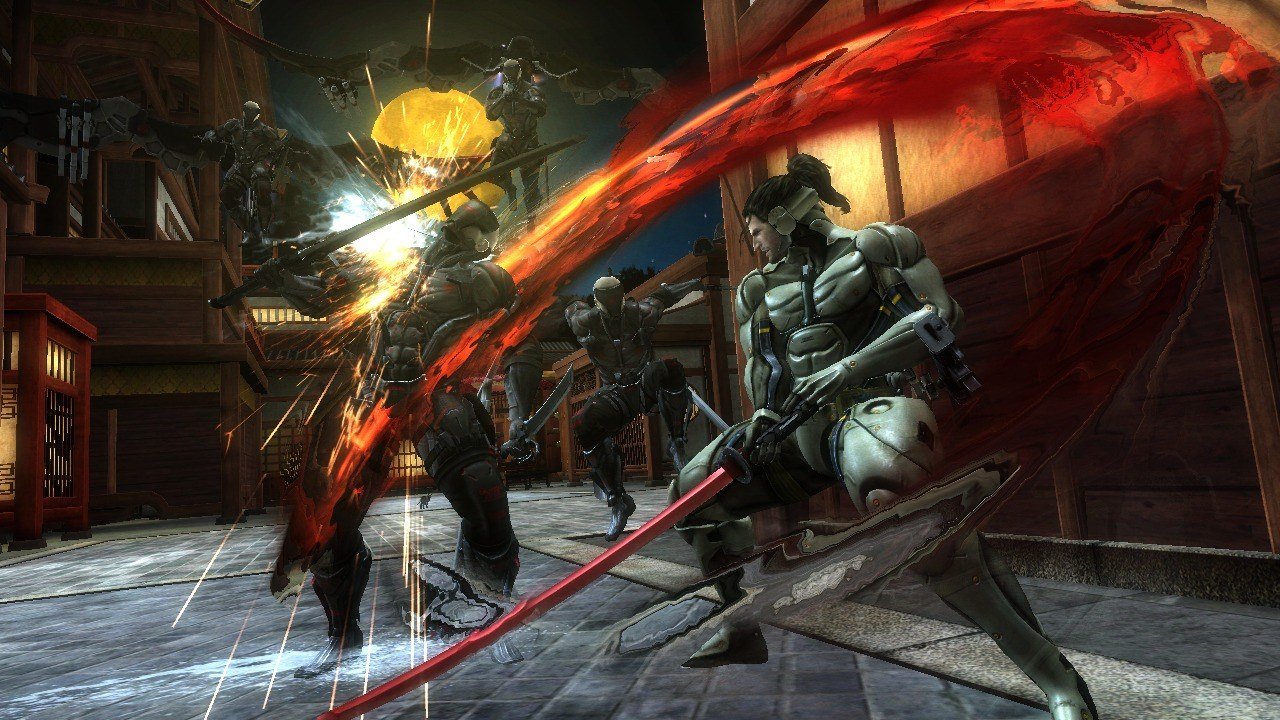
Metal Gear Rising: Revengeance (2013) offered another influential interpretation of action combat. Developed by PlatinumGames and published by Konami, it puts Raiden in encounters mixing swords, movement, defensive actions, and fights against mechanical enemies.
A defining feature is Blade Mode, which lets players aim individual cuts in particular situations. This changes how they interact with enemies and distinguishes the game from other examples.
Another tradition is Onimusha. Capcom’s Onimusha: Warlords (PS2, 2001) combined swordplay, exploration, demons, and soul absorption. Its return, Onimusha: Way of the Sword, launched September 4, 2026, for PS5, Xbox Series X|S, Switch 2, and PC. Capcom’s later statement confirmed the actual date, replacing the earlier September 25 estimate.
Set in Edo-period Kyoto, the game follows Miyamoto Musashi fighting the Genma with a sword, defensive techniques, and the Oni Gauntlet. Parrying and choosing openings shape encounters, while absorbing souls connects battle to equipment and ability development, as explained in Capcom’s presentation.
Its combination of adventure, swordsmanship, and supernatural powers differs from both Devil May Cry‘s style scores and Musou’s battlefield objectives. Simply featuring parries does not automatically make a game a Soulslike.
Other modern interpretations
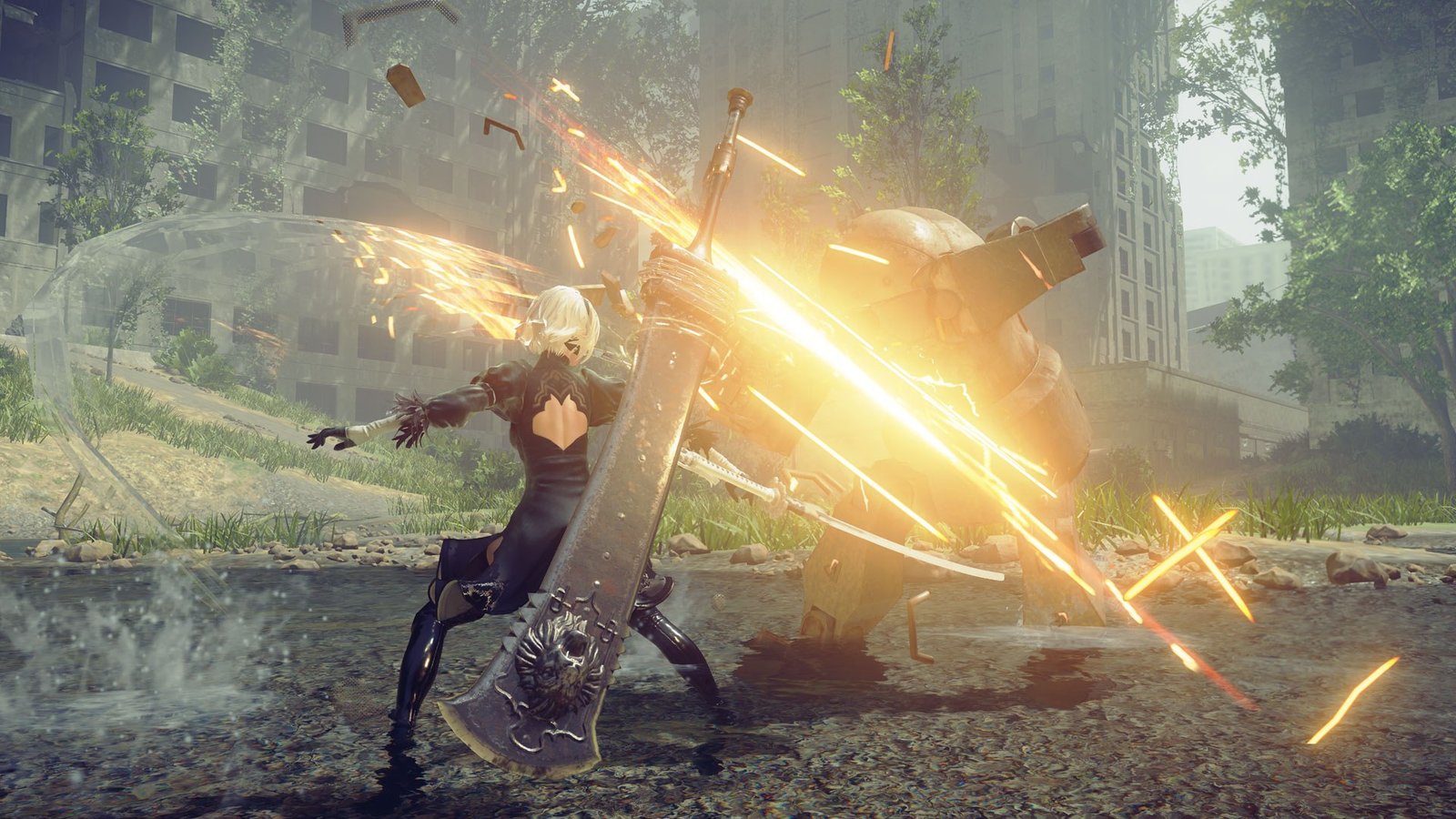
Other games have developed hybrid interpretations. NieR: Automata, developed by PlatinumGames and published by Square Enix in 2017, combines action combat with RPG elements and storytelling.
Astral Chain (PlatinumGames/Nintendo, Switch, 2019) centers on a special relationship between the protagonist and a Legion, a unit connected by a chain and controlled during encounters.
Hi-Fi Rush (Tango Gameworks/Bethesda Softworks, 2023) mixes action combat with musical rhythm. Attacks still work off-beat; following the rhythm improves execution and rewards instead of being a prerequisite for every hit.
Stellar Blade (Shift Up/Sony Interactive Entertainment, PS5, 2024) follows Eve through melee combat involving strikes, dodges, defense, and progression. Similarities with other action games do not require calling it a pure Soulslike.
These games need not be classified as identical Hack and Slash titles. They demonstrate how different systems can interact with the tradition of combat-focused action.
Hack and Slash, ARPG, and Soulslike: what’s the difference?
Hack and Slash can describe games from distinct traditions, while other labels help identify their main characteristics.
| Classification | Most recognizable focus | Examples |
|---|---|---|
| Action Hack and Slash | Direct combat, weapons, and repeated encounters | Classic God of War, Ninja Gaiden |
| Character Action / Stylish Action | Execution, combos, and mastery of moves | Devil May Cry, Bayonetta |
| Beat ’em Up | Stage-based progression with fights against groups | Final Fight, Streets of Rage |
| Musou | Combat against large armies and battlefield objectives | Dynasty Warriors |
| ARPG with Hack and Slash traits | Real-time fighting combined with loot and character progression | Diablo, Path of Exile |
| Soulslike | Combat, exploration, learning enemy behavior, and consequences of defeat | Dark Souls, Elden Ring |
These categories are not mutually exclusive. A game can have traits from more than one.
Why can Diablo and Devil May Cry both be called Hack and Slash?
In Devil May Cry, fighting involves direct execution, movement, attack combinations, and mastering controls. In Diablo, players develop a character, face large numbers of enemies, and seek equipment that improves their abilities.
Both can be associated with Hack and Slash, but they emphasize different systems. Action RPGs (ARPGs) commonly revolve around levels, abilities, gear, and builds — combinations defining a character’s specialization. In Character Action, mastery of movement options often takes greater prominence.
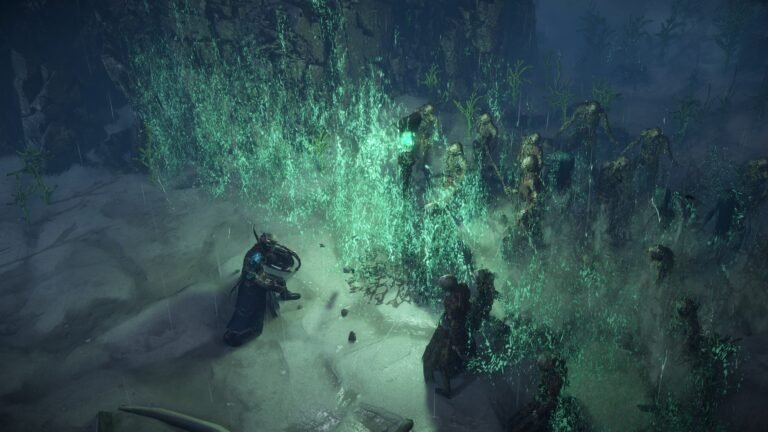
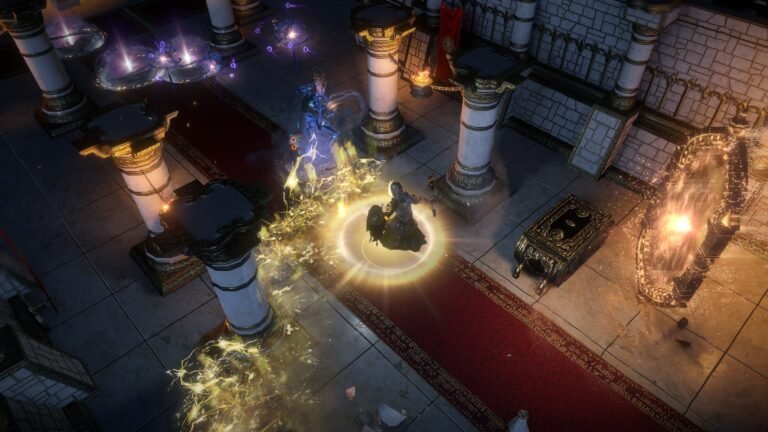
Path of Exile is a good example of the first tradition. Two builds may use vastly different abilities and equipment, completely changing how they approach enemies. That does not make Path of Exile equivalent to Devil May Cry.
ZAUS.GG explores this tradition further in its article on Action RPGs (ARPGs) and its retrospective of Path of Exile.
Is Hack and Slash the same as Soulslike?
No. Soulslike is associated with features popularized especially by Demon’s Souls and Dark Souls, such as fighting that rewards reading enemies, exploration, and certain consequences of defeat.
Action Hack and Slash games often emphasize combos, offensive variety, or movement, but these are not absolute boundaries. Ninja Gaiden can feature demanding encounters and a strong emphasis on defense, while a Soulslike may include fast weapons, special abilities, and attack sequences.
It would therefore be wrong to say Hack and Slash is always fast and easy while Soulslike is always slow and difficult. Differences depend on the interplay of mechanics and the structure of each experience.
Read more in ZAUS.GG’s feature on Soulslike games: origins, evolution, and the legacy of Dark Souls.
Games that marked the evolution of Hack and Slash
This selection covers milestones in different combat traditions. It is not a ranking of the best games.
| Game | Year | Significance or characteristic |
|---|---|---|
| Kung-Fu Master | 1984 | Direct fights and side-scrolling progression |
| Gauntlet | 1985 | Action against numerous enemies in mazes |
| Golden Axe | 1989 | Fantasy, weapons, and Beat ’em Up combat |
| Strider | 1989 | Blade-based action, mobility, and platforming |
| Dynasty Warriors | 1997 — PlayStation | Original fighting-game structure, preceding modern Musou |
| Dynasty Warriors 2 | 2000 | Establishment of the modern Musou formula |
| Onimusha: Warlords | 2001 — PS2 | Sword combat, adventure, and 3D action; Capcom |
| Devil May Cry | 2001 | Landmark of modern stylish action |
| Ninja Gaiden | 2004 | Demanding, technical 3D combat |
| Devil May Cry 3 | 2005 — February | More combat styles and options |
| God of War | 2005 — March | Action, combos, and large-scale encounters |
| Bayonetta | 2009 Japan; 2010 international | Dodges, Witch Time, and combos |
| Metal Gear Rising: Revengeance | 2013 | Sword combat and Blade Mode |
| NieR: Automata | 2017 | Action and RPG combination |
| God of War | 2018 | Transformation of the franchise’s camera and combat |
| Devil May Cry 5 | 2019 | Distinct systems for different protagonists |
| Bayonetta 3 | 2022 | New combat options and summons |
| Stellar Blade | 2024 | Reaction- and ability-focused melee action |
| Dynasty Warriors: Origins | 2025 | Large-scale evolution of Musou combat |
| Ninja Gaiden 4 | 2025 | A new chapter in the franchise’s technical action |
| Onimusha: Way of the Sword | Sep 4, 2026 | Return of sword adventure, the Oni Gauntlet, and soul absorption |
| Dynasty Warriors 3: Complete Edition Remastered | Oct 1, 2026 | Remaster of the original and Xtreme Legends with revised tools |
Dates distinguish original releases and, where specified, remasters; they do not cover every region or platform. The selection includes predecessors, central examples, and hybrid games without claiming they all belong to one narrowly defined category.
How are combat games still evolving?
Much of their evolution happens in the player. Unlocking techniques expands a character’s repertoire, but learning to recognize an attack and position yourself changes what can be achieved with tools already available. A once-difficult encounter can become understandable without simply raising character stats.
That is why repeating a battle can reveal new possibilities even after finishing a campaign: the reward becomes executing an idea with greater control or testing another solution. New cameras, enemies, and moves are valuable when they create readable choices, not merely when they increase the number of available actions.
What can make the experience difficult?
Complex combos, awkward cameras, and demanding defensive systems can create barriers for beginners. Repeating encounters or facing difficult bosses can also be frustrating in some games.
On the other hand, mastering controls and recognizing your own improvement may be the main attraction. Difficulty options and learning tools vary by title. No approach needs to be the ideal model for every player.
Hack and Slash is a combat tradition that keeps changing
Different combat traditions continue to discover their own ways of connecting action, decisions, and learning. A system may invite players to improvise a sequence, respond to a threat, or choose where to intervene in a battle. Understanding those priorities helps reveal what each experience offers.
In many Hack and Slash games, winning an encounter is only the beginning. Learning new ways to fight may matter just as much as reaching the next challenge.
About the Author