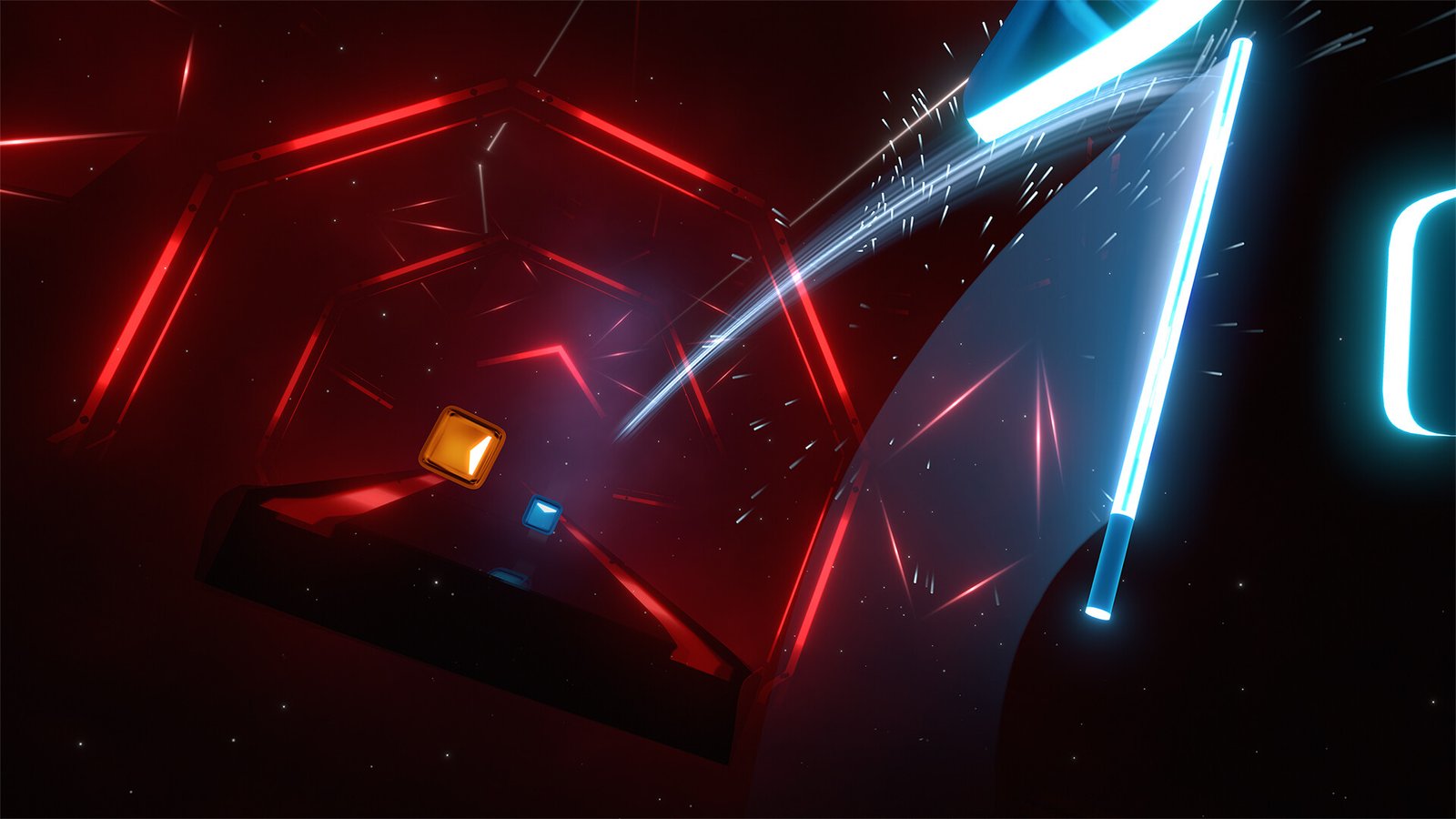
Blocos e cortes direcionais em Beat Saber. Imagem: Beat Games.
Nesta matéria
Imagine listening to a song while a sequence of symbols appears on the screen. The first calls for one button; the second, two simultaneous actions; then you must hold a note. You know the controls, but pressing too early can reduce your score, while pressing too late may turn the note into a miss. Once you find the right timing, your movements begin to follow the music almost naturally.
This relationship between perception and execution is at the heart of rhythm games. Guitar Hero turns parts of songs into commands; Dance Dance Revolution calls for synchronized steps; Taiko no Tatsujin represents percussion; Beat Saber uses directional cuts in VR; and Hi-Fi Rush integrates music with combat. This feature traces their history and explores how beats, notes, accuracy, and different interfaces turn music into action.
Updated October 22, 2026.
What defines a rhythm game?
Rhythm games make timing or musical patterns a central part of the challenge. Players may read symbols, listen to phrases, remember patterns, sing, or move their bodies. Falling notes, buttons, instruments, commercial songs, multiplayer, and professional musical knowledge are not universal requirements.
Does any game with music count as a rhythm game?
A soundtrack can intensify a fight without determining when to attack. In DOOM, for example, matching the beat is not a general requirement for shooting. In Guitar Hero, timing commands to the music is part of the rules. The distinction lies in what the music does within the challenge.
Dynamic music reacts to events: it may become more intense during combat and quieter during exploration. That reaction does not automatically make a game rhythm-based. Rewarding an attack for synchronization, as Hi-Fi Rush does, is different. Atmosphere, adaptive soundtracks, and musical mechanics can coexist.
Before modern rhythm games: early musical experiments
The genre has several historical paths, not one absolute inventor. Milton Bradley’s Simon (1978) presented sequences of lights and sounds for players to repeat. It was an electronic sound-memory toy and a predecessor to pattern-based challenges, not a modern rhythm game centered on musical performance.
Dance Aerobics and floor-mat controls
Aerobics Studio (1987), developed by Human Entertainment and published by Bandai in Japan for the Famicom, used the Family Trainer mat. Its North American adaptation, Dance Aerobics (1989), was published by Nintendo for NES with the Power Pad. Pressure-sensitive areas allowed players to perform sequences with their feet, bringing physical activity and video games together. Its system was not equivalent to the later notes and judgments in DDR.
Otocky: music and action in 1987
Also released in 1987, Toshio Iwai’s Otocky for the Famicom Disk System combined movement and shooting with actions that generated musical elements. Player interaction became part of the soundscape in an experiment different from the formula later associated with beatmania or Guitar Hero.
PaRappa the Rapper: rhythm gains characters and a story
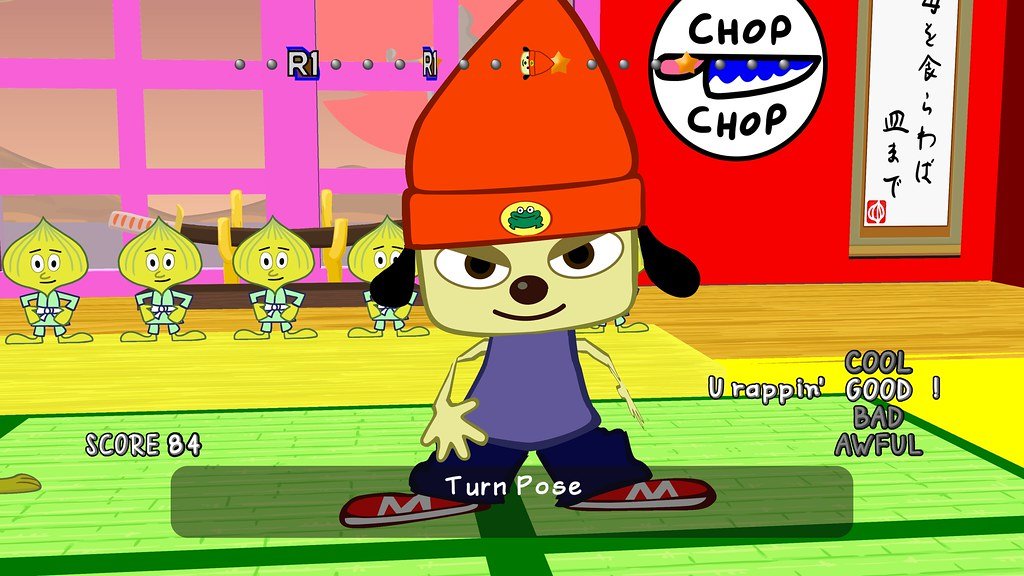
Released in Japan for PlayStation on December 6, 1996, PaRappa the Rapper was directed by NanaOn-Sha’s Masaya Matsuura, with characters designed by Rodney Greenblat. PaRappa the dog deals with situations through rap, giving each performance a humorous narrative context.
How does PaRappa work?
A teacher performs a musical phrase accompanied by button prompts. Players watch and listen to the pattern, then respond using the indicated buttons. Their performance receives a rating. The sequence works like a musical conversation: learning from and responding to a character is part of the scene, rather than merely selecting a standalone track.
Integrating characters, story, and music helped PaRappa popularize a modern rhythm-game identity on consoles. In a PlayStation Blog interview, Matsuura recalls exploring interactive music before the format had an established commercial genre label. That does not mean PaRappa invented every form of electronic sound interaction.
Um Jammer Lammy and PaRappa 2
NanaOn-Sha continued exploring this approach in Um Jammer Lammy (1999), whose protagonist plays guitar, and PaRappa the Rapper 2 (2001). They share creative roots but have their own situations and structures.
beatmania and the consolidation of arcade music games

Konami launched beatmania in Japanese arcades in 1997, as recorded in its official historical archive. The original cabinet had five keys and a turntable. Symbols moved toward a judgment area; pressing the corresponding key or spinning the disc at the indicated moment let players perform on a stylized DJ console.
The interface as a stylized instrument
Imagine pressing a sequence of keys while another note calls for the turntable. Coordinating these actions with both hands is the particular challenge of this interface. The sensation of participating in the track comes from that distribution of commands; it does not fully reproduce a professional DJ’s work.
The BEMANI tradition
Success helped expand Konami’s BEMANI line of music games. beatmania IIDX (1999) introduced seven keys per player and a turntable, with its own systems. The line also encompasses dance games and other interfaces: there is no single controller or judgment system shared by every BEMANI title.
Dance Dance Revolution: bringing music to your feet

In September 1998, Konami released Dance Dance Revolution (DDR) in Japanese arcades. It made footwork a central element of musical performance. The machine used a platform with directional panels. During a song, arrows traveled toward a reference zone on the screen, and the player had to step on the matching direction at the appropriate time.
From reading notes to moving your body
In beatmania, players mainly use their hands. In DDR, reading notes must translate into steps, adding coordination, balance, and body movement. A simple pattern may involve alternating feet across directions. At higher difficulties, patterns can demand fast movement, simultaneous inputs, and greater physical exertion. The game also has scoring and accuracy judgments.
The cabinet made performances visible to spectators: watching steps against the arrows encouraged gatherings, practice, and competition around arcade machines. This public dimension became part of its identity.
Pump It Up: another dance-game tradition
In 1999, South Korea’s Andamiro began the Pump It Up series, according to its official company history. Like DDR, it uses a physical platform and musical patterns. Its traditional layout, however, has five panels: four diagonals and one in the center. This changes the movement needed to execute commands.
Players may need combinations of steps and positions different from DDR‘s classic four-direction layout. The panel arrangement and unique patterns created another dance-game tradition. Some editions explore multiple platforms and different participation modes. Pump It Up also developed a community in Latin America; its library, scores, and rules have changed across editions since 1999.
Taiko no Tatsujin: rhythm through percussion

Namco launched Taiko no Tatsujin in Japanese arcades in 2001, a milestone recorded in the group’s history. Inspired by taiko drums, the interface uses colors and symbols to distinguish hits to the drum’s center and rim, creating a stylized representation of Japanese percussion.
How does a song work in Taiko?
In a pattern of red and blue notes, red asks for a center hit and blue for the rim. Alternating between them requires reading the pattern and striking at the correct time. Dense sequences and special combinations change the difficulty. Depending on the platform, players may use an arcade cabinet, standard controller, or compatible accessory.
Taiko no Tatsujin: Rhythm Festival
Taiko no Tatsujin: Rhythm Festival arrived on Nintendo Switch in 2022. On November 7, 2024, it received PlayStation 5, Xbox Series X|S, and PC versions. The edition brings together songs, different modes, and optional extra content. Taiko Music Pass expands the available song library under its own subscription terms on compatible platforms.
On May 28, 2026, Bandai Namco published a notice about discontinuing certain DLCs. The list includes different dates, including removals that had already occurred in April 2026; previously purchased content can still be downloaded again and used under the announced conditions. This does not mean the entire game or Taiko Music Pass was discontinued. It illustrates how the library of a music game can change while the main game remains available.
It would be incorrect to assume all Taiko no Tatsujin editions offer identical songs, controls, or services.
Guitar Hero: the plastic guitar becomes a phenomenon
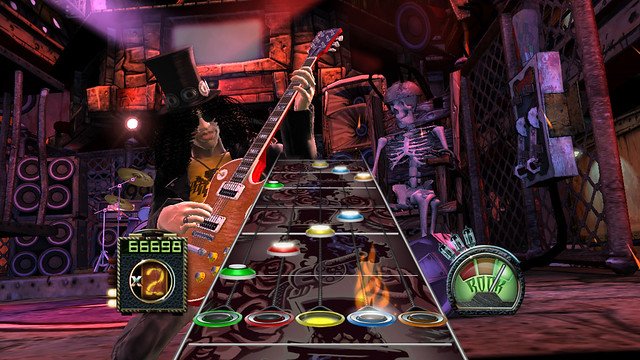
In 2005, Harmonix developed and RedOctane published the first Guitar Hero for PlayStation 2. A Harmonix retrospective distinguishes that project from Rock Band, which launched in 2007. The game used a guitar-shaped controller with neck buttons and a strum bar representing the act of playing strings. Colored notes moved down an on-screen highway, and players had to press the indicated combinations and strum at the right moment.
Is playing Guitar Hero the same as playing a real guitar?
Colored buttons and the strum bar represent parts of the music through simplified commands; they do not reproduce real chords, strings, or guitar technique. That does not make the game easy: advanced sequences demand fast, precise combinations and changes of hand position.
Recognizing songs and following their parts connects the repertoire to the fantasy of being on stage. Song choices help define each edition’s identity; the distribution conditions are discussed later in the music-rights section.
Guitar Hero II, III, and World Tour
Guitar Hero II (2006) expanded the original formula. Guitar Hero III: Legends of Rock (2007), led by Neversoft on PlayStation 3 and Xbox 360 with other teams handling ports, became one of the franchise’s best-known entries. Guitar Hero World Tour (2008) later expanded the concept to different instruments and a structure closer to a full band performance.
The series’ history is not simply a matter of replacing one button with another. It shows how a single stylized instrument opened the door to shared musical experiences.
Rock Band: forming a band with friends
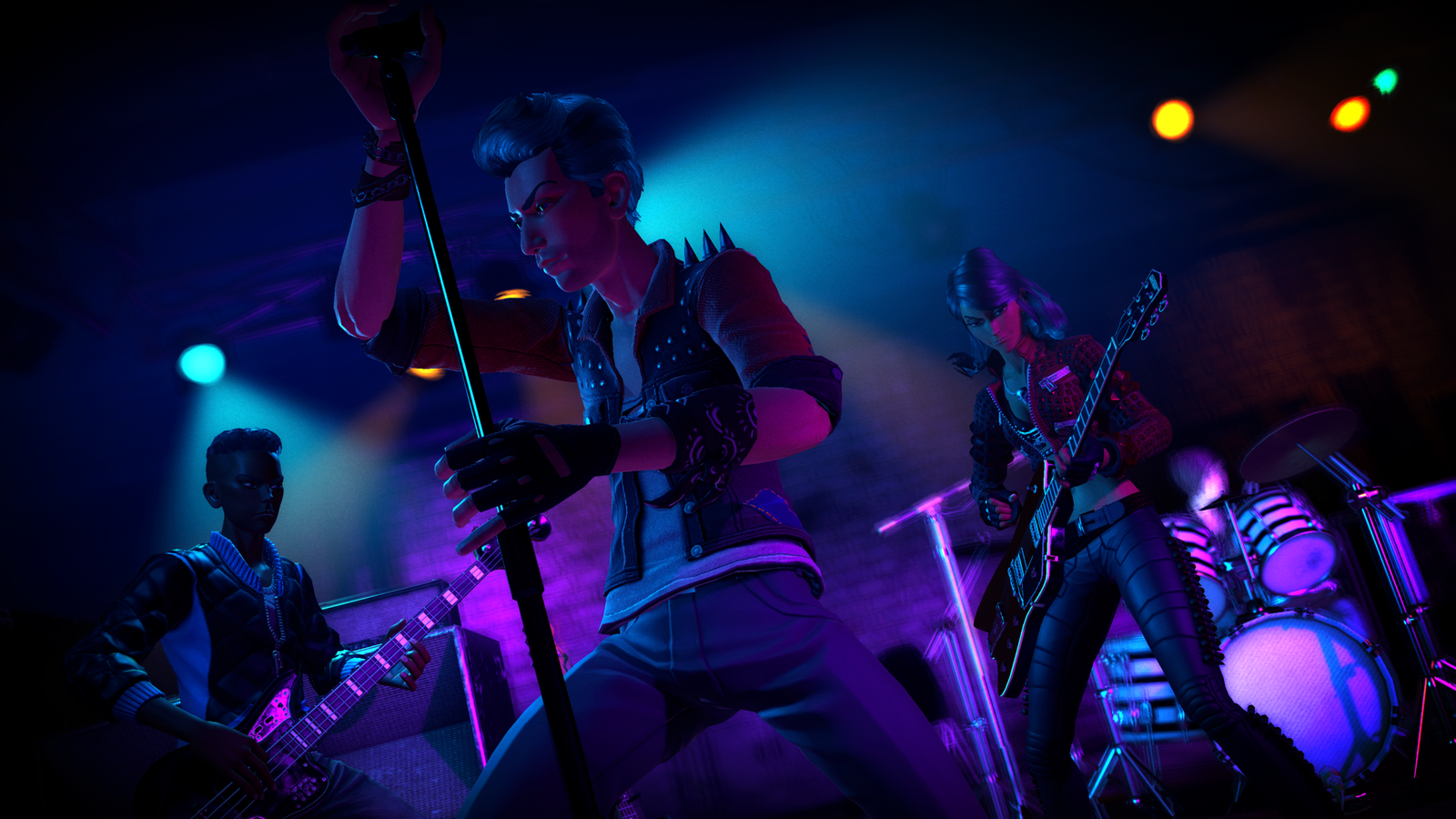
Harmonix’s Rock Band (2007) organized home performances around different roles: guitar, bass, drums, and vocals. Each person uses controls and rules adapted to their part in the band.
How does a group performance work?
Imagine four people playing the same song: one handles guitar, another bass, a third uses an adapted drum kit, and the fourth sings into a microphone. The result combines cooperation and performance, but controls and chosen difficulty can differ for every participant.
The franchises share creative roots, yet early Guitar Hero games centered on guitar, while Rock Band became known for organizing a full band. Later Guitar Hero editions also included multiple instruments. The comparison must account for the specific edition without crediting Rock Band with inventing every plastic instrument.
Rock Band 4 and licensing issues
Rock Band 4, released in 2015, carried the franchise into newer consoles and received an extensive catalog of extra songs. Harmonix had already ended weekly DLC releases on January 25, 2024. Ending new releases and removing items from sale are separate events.
However, a Harmonix notice reproduced in coverage of Rock Band 4’s delisting set October 5, 2025, for its removal from PlayStation and Xbox digital stores due to expiring licenses for the base soundtrack. Additional songs were also removed as their individual license terms ended. Existing owners could continue accessing purchases under the announced terms on compatible devices.
The case highlights a problem for music games that goes beyond technology: rights to distribute songs affect whether an experience remains commercially available.
SingStar, Karaoke Revolution, and singing games
Rhythm games are not limited to pressing note buttons. In some experiences, the player’s voice is the input. Karaoke Revolution (2003) and SingStar (2004 on PlayStation 2 in Europe) became important examples. They use microphones, lyrics, and systems that attempt to evaluate aspects of vocal performance.
Can a game tell whether somebody sings well?
A system can compare pitch and timing against a reference. Singing outside the expected pitch can lower the rating, but it does not amount to assessing every artistic quality of a voice: timbre, expression, interpretation, and technique go beyond those measures. Rules vary across games.
Group singing can support score-based competition or casual social play. That brings some karaoke modes closer to party games without making their scoring and participation identical.
Just Dance: following choreography at home
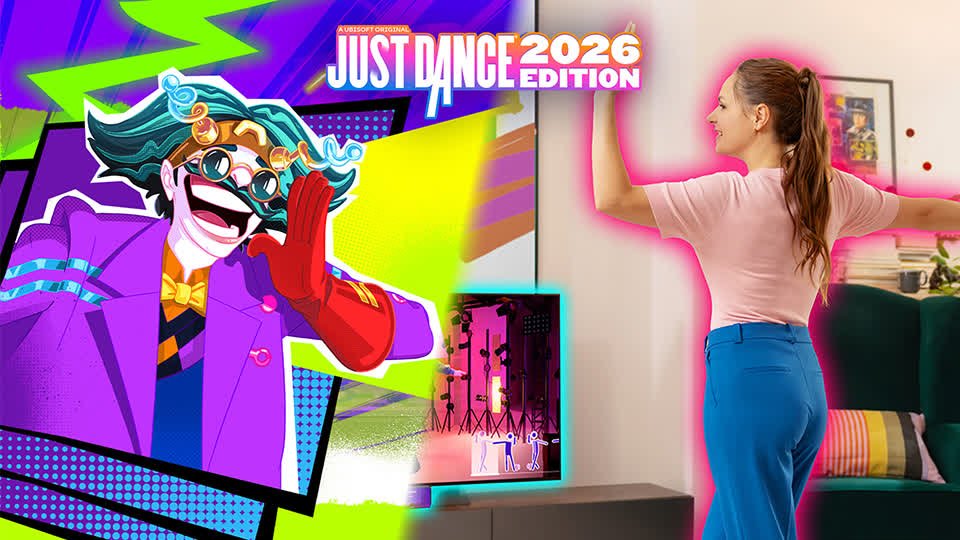
Ubisoft released the first Just Dance for Nintendo Wii in 2009. The franchise popularized home dance games built around choreographies shown on a television. Players try to mirror on-screen dancers’ movements, and the game evaluates certain aspects of their performance depending on the devices used.
Does Just Dance work like DDR?
DDR turns platform directions into steps; Just Dance asks players to follow the gestures and poses of choreography. Motion detection has changed between editions, using motion controllers and compatible devices. A camera is not required by the whole franchise.
Just Dance 2026 Edition
Just Dance 2026 Edition launched on October 14, 2025, continuing the annual releases with new songs and routines. It offers its own modes and group-play options, plus integration with Just Dance+, a subscription service that grants access to extra tracks according to the available catalog and conditions.
In the 2026 Edition, a compatible smartphone can serve as a controller. Camera mode tracks the body to award points in solo sessions; Switch also supports Joy-Con controls. Party Mode and workout mode have their own purposes, and not every device or mode is interchangeable. Motion recognition is not a professional assessment of dance technique: the software interprets information its equipment can record and scores it under its rules.
For context, Just Dance: Decades of Hits arrived on October 13, 2026, for Switch, PS5, and Xbox Series X|S. Its Switch 2 edition was announced for November 10, 2026, still in the future at this article’s editorial cutoff. Just Dance 2026 Edition remains a title released in 2025, not a new October 2026 launch.
Rhythm Heaven: when listening matters as much as looking
Nintendo released Rhythm Tengoku for Game Boy Advance in Japan in 2006. The series became internationally known as Rhythm Heaven. Its short, varied activities revolve around musical patterns. Rather than always showing long highways of descending notes, games may ask players to listen for audio cues and respond at the correct moment.
Minigames with simple controls
Imagine characters repeating an action on the beat. You learn the cue and respond when it is your turn. Another activity changes the action but still relies on your ability to hear and identify a pattern. Difficulty comes from memory, auditory attention, and rhythmic variations even when very few buttons are involved.
Rhythm Heaven Groove arrived in 2026
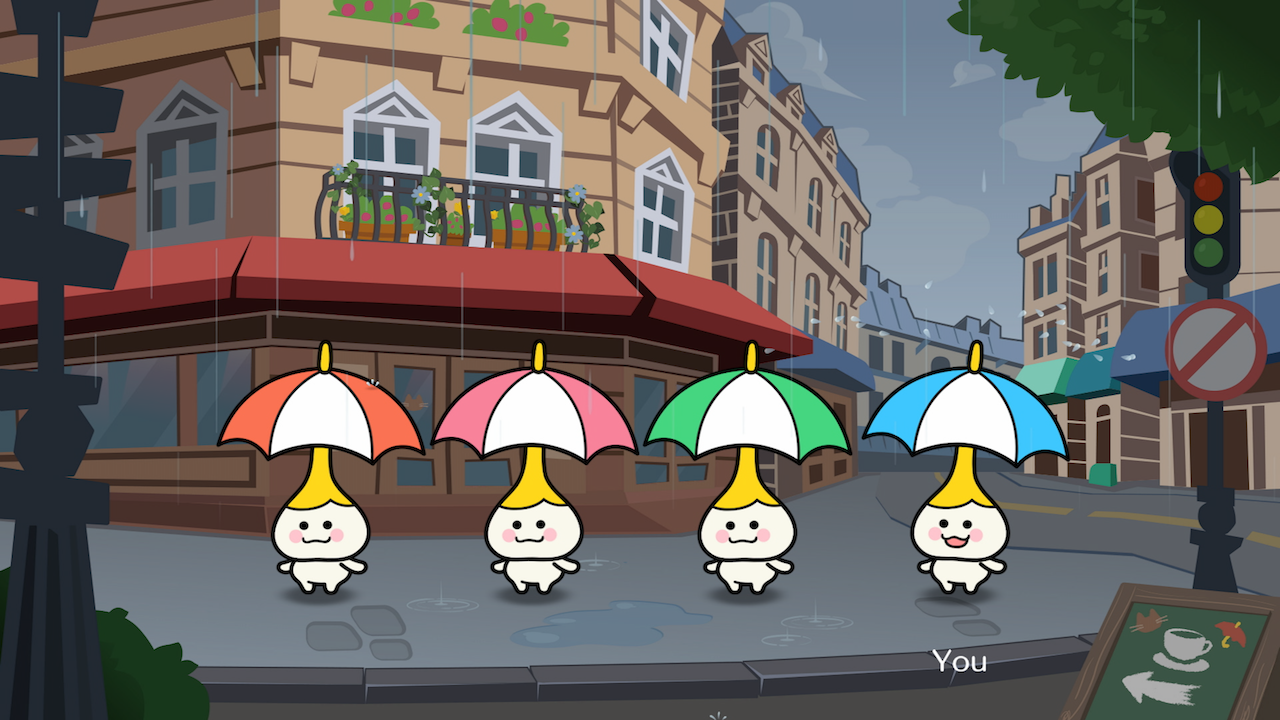
On July 2, 2026, Nintendo released Rhythm Heaven Groove for Nintendo Switch, also playable on Switch 2 through compatibility. Nintendo and TNX collaborated on development. The new installment continues the format of minigames built around rhythmic perception and execution. It includes more than 80 single-player activities and more than 30 cooperative or competitive multiplayer activities for up to four people on one console, depending on the minigame.
It also includes the unlockable Beatspell mode, which turns rhythmic commands into spells, and original songs, including compositions connected to Japanese musician Tsunku. Its release shows that listening-focused rhythm games with simple inputs remained active in 2026. Rhythm Heaven Groove should not be described as an upcoming announcement or confused with earlier entries.
How does a rhythm-game session work?
A common loop is listen and watch → identify a pattern → perform → receive a judgment → adjust your performance. After choosing a song, stage, or activity, players learn how cues relate to commands. The judgment may affect scores, progression, or completion depending on the game. Note highways, health bars, and one universal judgment system are not requirements.
Beat, rhythm, and BPM: the fundamentals
A few music concepts explain the mechanics. A beat or pulse is a timing reference perceived in music. Tempo describes the speed of that pulse. BPM means beats per minute: a measure used to express tempo. A song at 120 BPM has a reference of 120 beats per minute in the relevant count. Musical meter, meanwhile, organizes pulses into groups according to the composition.
Rhythm concerns the distribution of sounds, silences, and durations over time. These concepts are related, not synonyms.
Is a faster song always harder?
No. Imagine a fast song with widely spaced, repetitive commands. Now consider a slower piece with several simultaneous notes, unexpected pauses, and complex patterns. The second may require more attention and coordination despite its lower BPM. Difficulty depends on note density, pattern structure, accuracy requirements, and actions involved, among other factors. BPM is only one part of the picture.
Timing and judgment windows
Timing is when an action is executed. Pressing the right button may not be enough: an early note might receive a lower rating, an on-time note the best one, and a very late note a miss. The result depends on how far the action falls from the timing reference.
What is a judgment window?
A judgment window is the interval in which an action can receive a valid rating. Some games use categories such as:
- Perfect: execution considered very close to the ideal timing.
- Great: a successful hit meeting certain accuracy criteria.
- Good: an accepted input rated below the best results.
- Miss: an input not correctly performed under the rules.
These labels are examples, not a universal standard. Games can use different words and time limits, and may judge movement or held notes differently.
Early input → expected timing → late input. The game defines the tolerance between the player’s action and the reference; there is no universal number of milliseconds for a perfect hit.
Single, simultaneous, and sustained notes
A single note requires one action; a simultaneous note, two or more together; a sustained or hold note requires keeping the input down for a period. Other patterns use sliding, spinning, or directional changes. An osu! slider and a Beat Saber directional cut require different actions: each interface turns pattern recognition into its own challenges.
Combos, scoring, and accuracy
A combo is a sequence of successful actions according to a game’s rules and may trigger multipliers. Imagine finishing a song without breaking your combo but receiving less-than-perfect ratings on several notes. A full combo does not necessarily mean perfect accuracy or the highest possible score.
Conditions for full combos, perfect results, and top ranks differ by game. Some titles have extra criteria for holds and other input types; terminology and scoring formulas cannot be assumed to apply across the entire genre.
Difficulty and learning
Learning involves identifying patterns and performing consistent responses. Difficulty can increase through density, combinations, rhythmic variation, or physical demands—not only speed. Mastering cursor movement and circles in osu! does not automatically transfer the foot coordination needed for Pump It Up.
osu!: the growth of rhythm games on PC
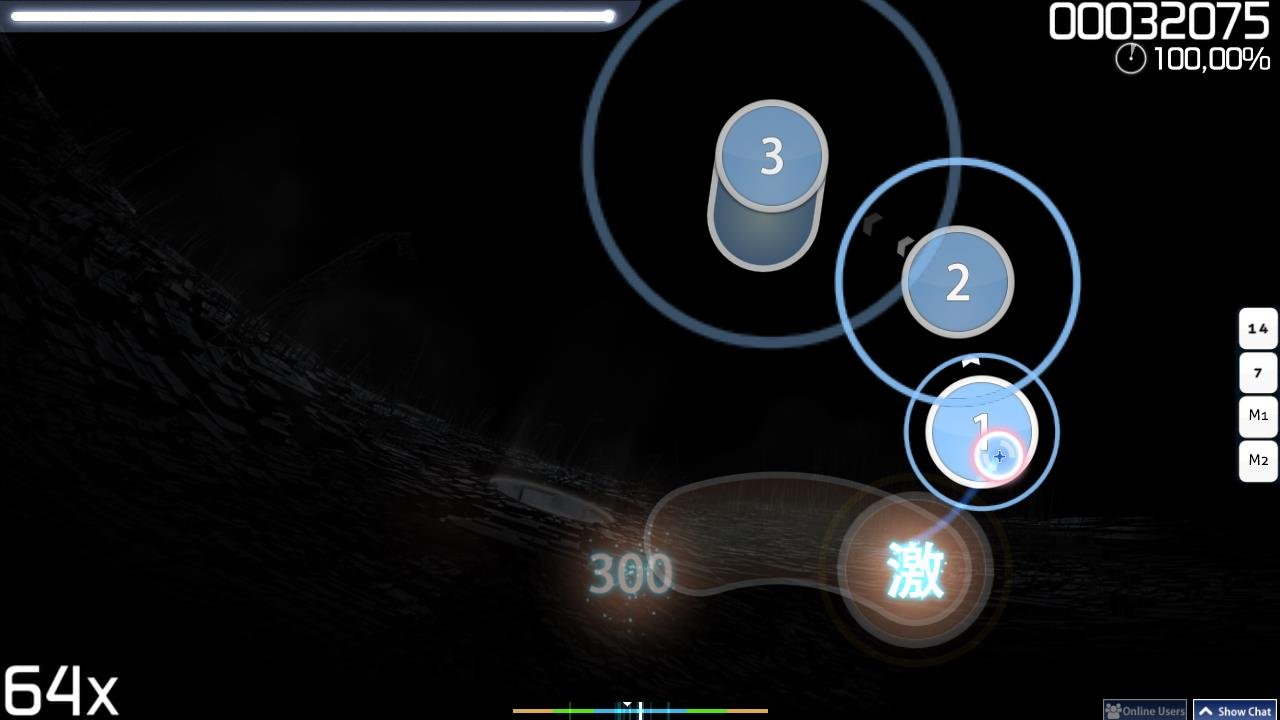
In 2007, Dean Herbert, known as peppy, started osu!. The game built a PC rhythm experience closely associated with accuracy and community-created content. In its best-known mode, numbered circles and other elements appear at different positions on the screen. Players move the cursor and perform actions in sync with the music.
In standard osu! mode, players may move the cursor with a mouse or graphics tablet while using keyboard inputs. A tablet is not mandatory; these are different control options for the same interface, based on player preference.
What is a beatmap?
A beatmap organizes the commands linked to a song, defining where and when to act. Community creation and sharing expand the available challenges, with patterns designed by different people.
osu! has several modes
The game goes beyond numbered circles. Its four main modes are:
| Mode | Characteristics |
|---|---|
| osu! | Circles, sliders, and other elements requiring accurate inputs |
| osu!taiko | Patterns inspired by percussion instruments |
| osu!catch | Catching objects that appear in time with the music |
| osu!mania | Column-based notes and keyboard commands |
Each mode has its own rules. Content made specifically for one mode must also be distinguished from automatically converted charts.
osu! and osu!(lazer)
The project also developed a more modern client, osu!(lazer), with differences in interface, systems, and operation compared with the traditional client often called stable. These are versions of the same project, not unrelated franchises. The official upgrading guide discusses score and performance-point submission alongside compatibility, scoring, and feature differences.
It would be wrong to call lazer merely a demo without online results or to assume full equivalence with stable. The four integrated modes are separate from further customized rule sets.
Rhythm games on smartphones
Touchscreens let players tap positions directly, slide, and perform simultaneous actions. This creates unique interfaces instead of simply shrinking arcade controls.
Cytus, Deemo, and Arcaea
Cytus (2012) developed a touch-based musical interface with inputs synchronized to a moving timing indicator. Deemo (2013) favored a piano-associated presentation and its own narrative structure. Arcaea (2017) introduced notes and paths distributed across different positions in its interface. These games show that touch controls are not merely simplified Guitar Hero or beatmania: they enable their own interaction patterns.
Phigros, Lanota, and Project SEKAI
Other games explored different approaches. Phigros features elements and judgment lines that can move in varied ways. Lanota arranges rhythms through a distinctive, visually expressive interface. Project SEKAI COLORFUL STAGE!, marketed under specific names in different regions, combines music performance with characters, stories, and material connected to Hatsune Miku and other virtual performers.
Their update systems, extra songs, and progression may differ. Availability of editions, services, and content must be checked individually. Mobile rhythm games do not form a single category of difficulty or quality: their interfaces can be as varied as those on arcade machines and consoles.
Beat Saber and the arrival of rhythm in virtual reality
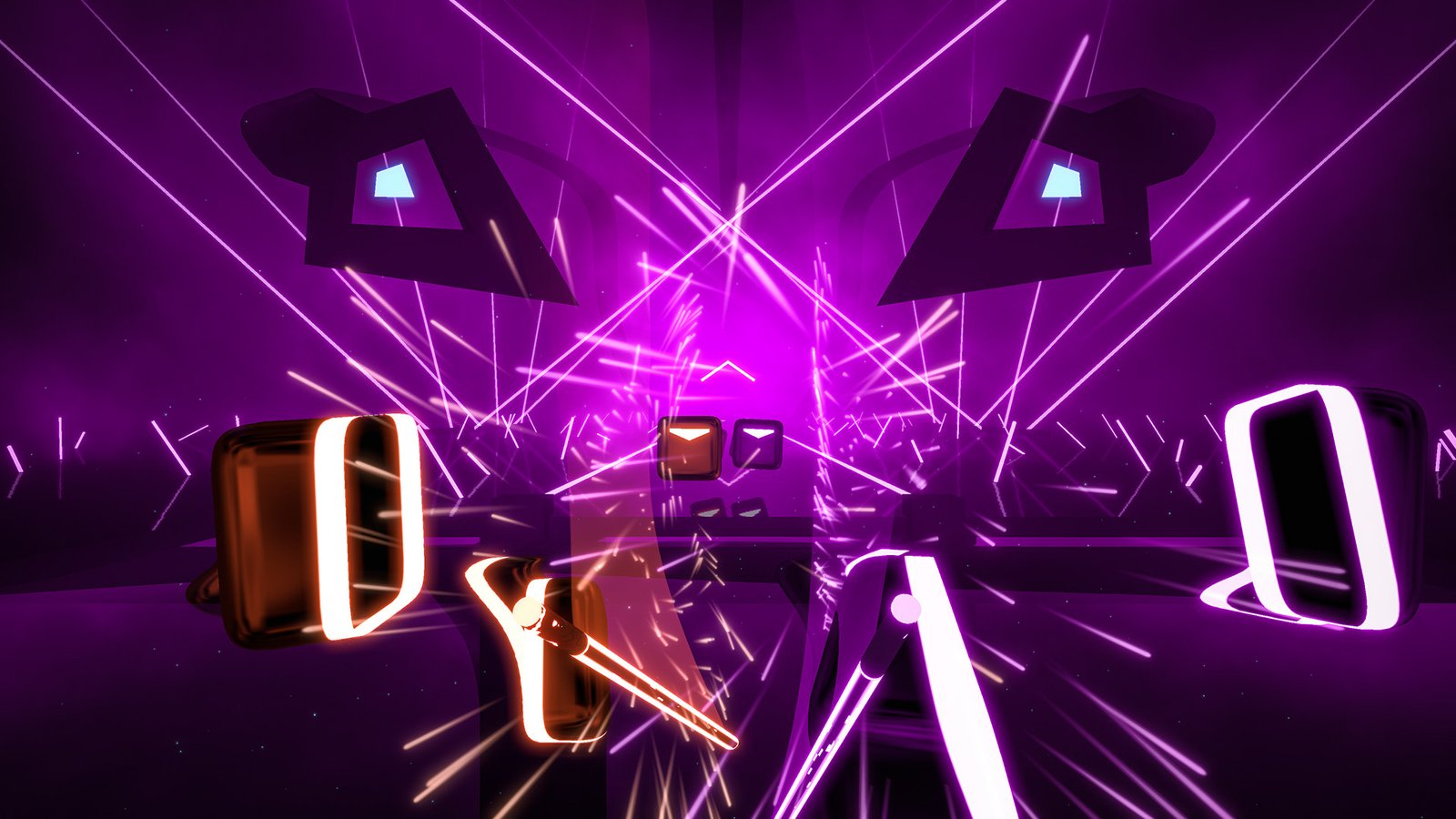
Beat Games’ Beat Saber entered Early Access in 2018 and launched in full on May 21, 2019. Wearing a VR headset and using compatible motion controllers, players swing glowing sabers to cut colored blocks approaching them.
Why movement matters
If a block calls for a top-to-bottom cut, reaching the right position alone is not enough: the swing must follow the indicated direction and hit the target on time. How the cut is performed influences scoring. Obstacles also require body movement, adding spatial coordination to musical pattern recognition.
The experience requires compatible VR hardware; a keyboard or standard gamepad does not replace a headset and motion tracking. Requirements vary by platform.
Beat Saber in October 2026
According to Beat Games’ official FAQ, new content for PS4 and PS5 ended on June 18, 2025, and multiplayer on those versions ended on February 26, 2026. The game and previously released music remain accessible under the announced conditions, with access to prior purchases. This did not end Steam support.
In September 2026, the team announced a major update for spring 2027 featuring Flux, hand tracking, and changes to the campaign and progression. These were future features as of the October 22, 2026 editorial cutoff, not mechanics already present in this article’s screenshots.
Other VR music games
Beat Saber is not the only way to combine rhythm and VR. Synth Riders uses hand movements along musical paths. Pistol Whip blends action and shooting with rhythm, movement, and score. Ragnarock places players on a fictional race between Viking ships, keeping time through percussion. Audica also combines weapons and musical targets using its own format.
None needs to use blocks or sabers. They share an emphasis on turning music and timing into mechanics through different forms of body movement.
Rhythm action: when music becomes part of combat
Rhythm action blends timed execution with combat, exploration, or other activities. Each game determines how this connection affects play.
Crypt of the NecroDancer: dungeon exploration to the beat

Crypt of the NecroDancer entered Early Access in 2014 and launched fully in 2015. It combines dungeon exploration, enemies, and roguelike elements with actions tied to musical beats. Its movement and combat rules encourage playing in rhythm, changing how players watch opponents and plan their moves. Recognizing that an enemy is nearby is not enough; the player must also consider when to act. The result combines spatial planning with timing accuracy.
ZAUS.GG discusses this tradition in Roguelike and Roguelite: Differences, Origins, and Evolution. The approach also inspired Cadence of Hyrule (2019), which uses characters and elements from The Legend of Zelda in its own musical adventure.
Hi-Fi Rush: fighting in sync with the world
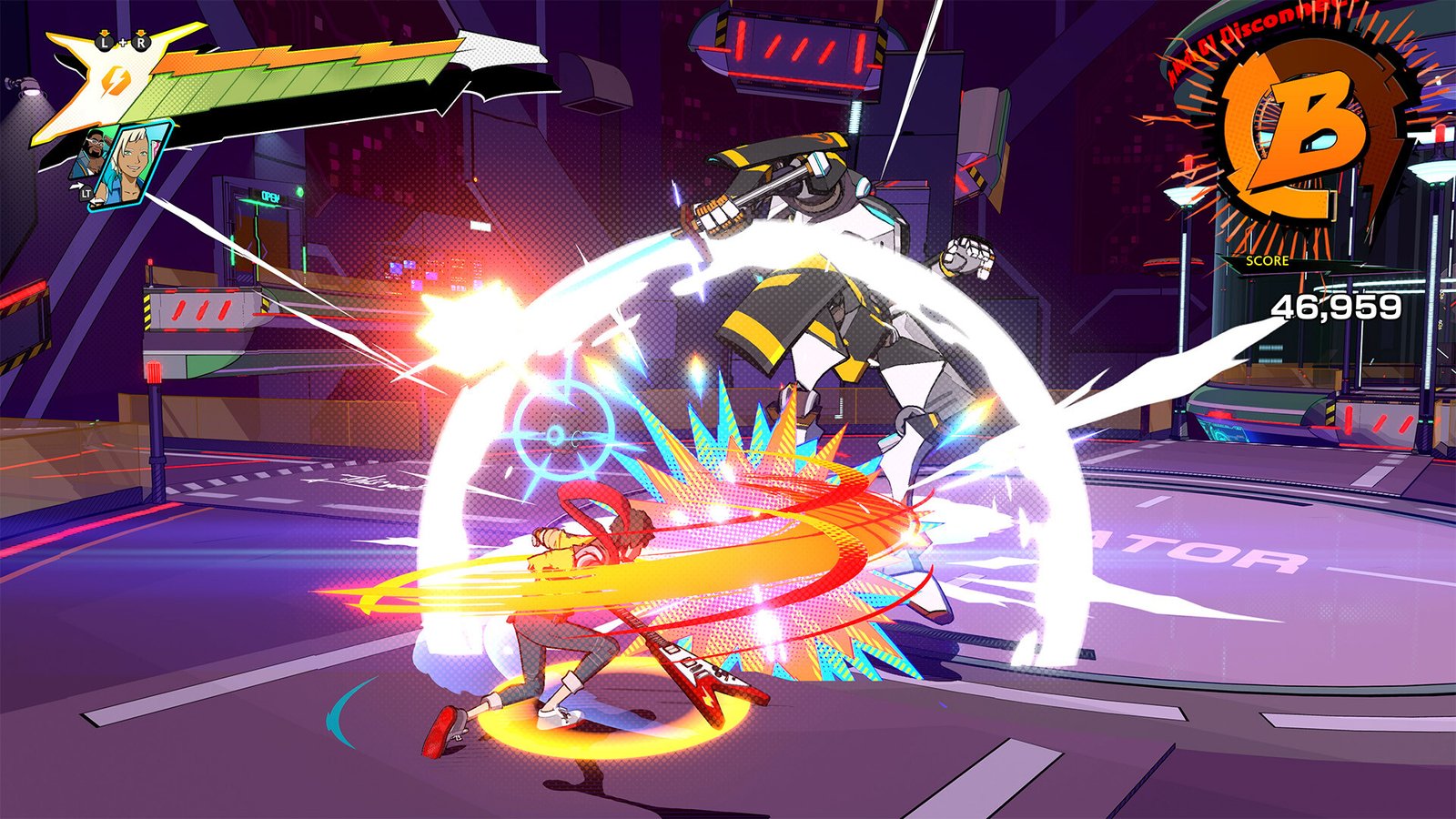
Tango Gameworks released Hi-Fi Rush in 2023. It follows Chai, a protagonist fighting enemies in a world where music and movement are deeply integrated. Players can attack directly, but synchronizing strikes with the rhythm offers combat benefits under the game’s rules. The audiovisual presentation reinforces that relationship: scenery, animation, and battles move with the music.
The game combines action sequences and movement with rewards linked to musical performance. ZAUS.GG’s Hack and Slash feature explains the combat side in greater depth. A loud soundtrack alone would not create the same integration.
Metal: Hellsinger and BPM: Bullets Per Minute
Metal: Hellsinger (2022) rewards synchronized actions in first-person shooting. Timing shots and maintaining sequences affects performance; this goes beyond hearing heavy metal during a fight. BPM: Bullets Per Minute (2020) also combines FPS and rhythm under its own rules. Such musical demands are not universal among first-person shooters.
Rhythm Doctor: one button, many possibilities

Developed by 7th Beat Games, Rhythm Doctor offers a different interpretation of difficulty. Its gameplay mainly uses one command to follow patterns based on patients’ heartbeats. The experience combines music, narrative, and challenges that require recognizing exactly when to act.
Why can one button be difficult?
Imagine a sequence in which you must respond after a specific count. The pattern begins simply. Later, situations interfere with perception, rearrange cues, or demand greater auditory attention. The number of controls remains small, but identifying the right moment grows harder. Rhythmic complexity does not necessarily require pressing many buttons at once.
Rhythm Doctor fully launched in 2025
After entering Early Access in 2021, version 1.0 launched on December 6, 2025, completing the game’s main story. Its development also included accessibility features and a level editor; by October 2026 the full campaign was already available.
Geometry Dash: platforming with strong musical integration
RobTop Games’ Geometry Dash (2013) combines jumps, obstacles, and movement precision with a strong musical identity. Its community also creates and shares levels.
Is Geometry Dash a rhythm game?
The close relationship with rhythm does not erase its platform-game identity: controlling trajectories and overcoming obstacles are central, and not every obstacle corresponds to a note. This differs from performing a beatmap in osu!. ZAUS.GG’s Platform Games feature explains the emphasis on traversal. Celeste also demands accuracy without organizing its challenge as musical performance.
Rhythm games, dance games, simulators, and party games
Categories can overlap because they describe different priorities.
| Category | Main challenge | Examples |
|---|---|---|
| Rhythm games | Synchronizing actions with timing or musical patterns | PaRappa, beatmania, Beat Saber |
| Dance games | Performing steps or body movements to music | DDR, Pump It Up, Just Dance |
| Musical simulators | Representing elements of playing or operating instruments | Different instrument simulators |
| Party games | Creating accessible social experiences for groups | Dance and karaoke games in certain modes |
| Platform games | Navigating obstacles through movement | Celeste, Geometry Dash |
| Rhythm action | Integrating rhythm into combat, exploration, or other action | Hi-Fi Rush, Crypt of the NecroDancer |
Stylized instruments versus musical simulation
Instrument-inspired controllers can improve coordination and perception without teaching every aspect of actual playing. A piano-training tool has different goals from Guitar Hero. ZAUS.GG’s Simulators feature explores the relationship between representation and interaction.
Can rhythm games also be party games?
Both labels can apply. Party game emphasizes group interaction; rhythm game emphasizes timed execution. Rock Band assigns different roles, Just Dance involves choreography, and karaoke uses the voice. Their social appeal does not make their inputs equivalent.
Competitions, records, and rhythm-game communities
Leaderboards, records, replays, and tournaments allow players to compare performances and share strategies for executing patterns. Some community members chase difficult tracks; others enjoy creation, performances, or gatherings without aiming for professional competition.
BEMANI Pro League and arcade competitions
Konami’s BEMANI PRO LEAGUE organizes music-game competitions under rules specific to each title. It is an example of a specialized circuit, not proof that every rhythm game has professional esports. Local meetings and friendly challenges sustain these communities too.
Creating and sharing maps
osu! beatmaps and Geometry Dash levels turn musical selections and pattern design into new challenges. Official editors must be distinguished from external modifications; access to a creation tool does not grant the right to distribute any recording or composition.
Fortnite Festival: the band enters Fortnite
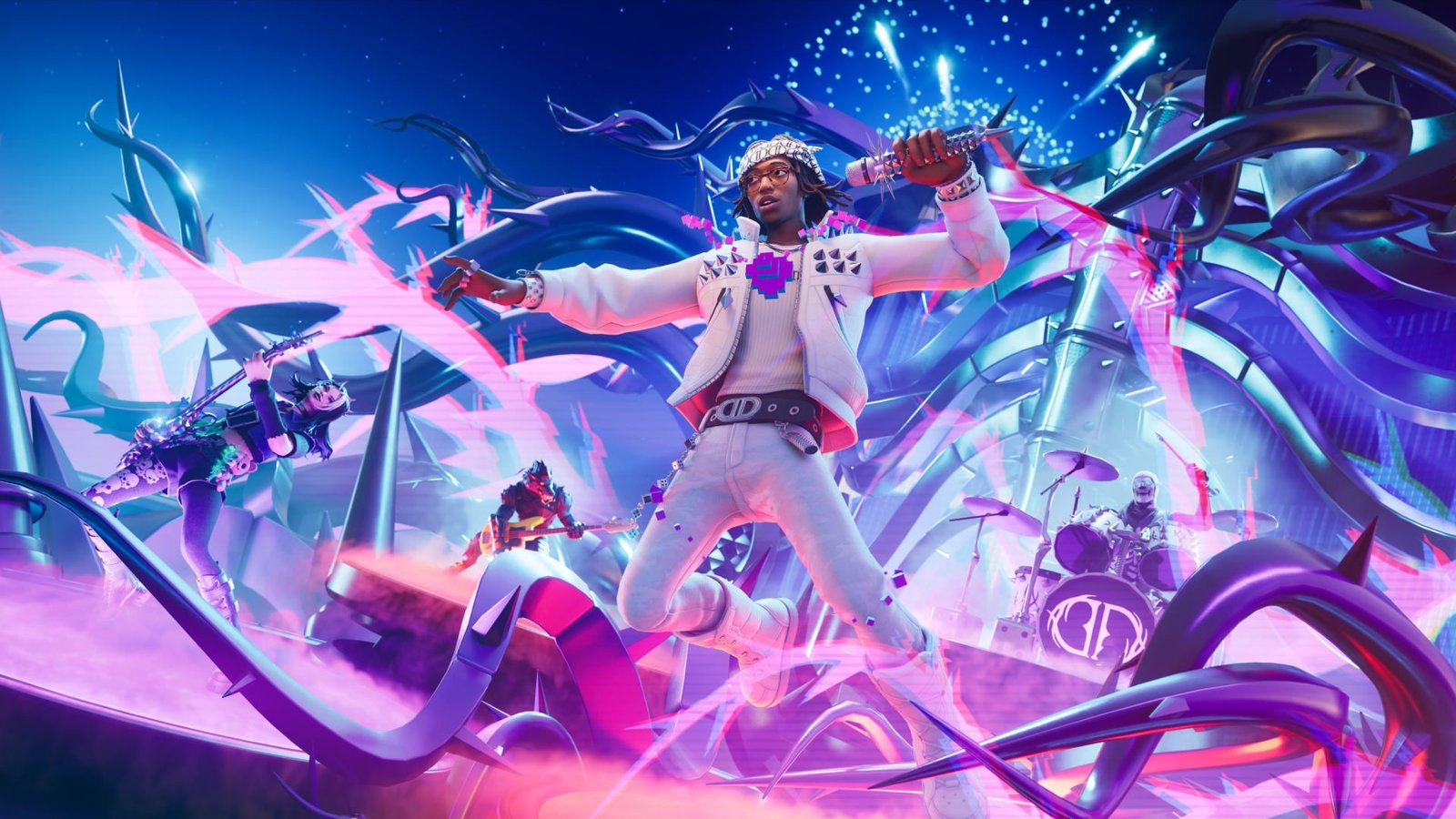
Released by Epic Games on December 9, 2023 and developed by Harmonix, Fortnite Festival brings instruments, songs, and group performance into the Fortnite ecosystem, with its own ongoing content and progression.
Its relationship with Rock Band
Harmonix’s involvement creates a direct creative connection to Guitar Hero and Rock Band. Still, Fortnite Festival is not simply Rock Band inside another app. Its modes, progression, and content were built for Fortnite. On the Main Stage, players follow note patterns and perform musical parts; the Jam Stage offers a different experience based on combining musical elements.
Support for compatible instruments also evolved. In April 2026, Mic Vocals added real-time microphone singing on PC and consoles, while Pro Drums gained support for Rock Band 4 drum kits and compatible MIDI kits. Battle Stage, meanwhile, went offline on April 16, 2026. Epic confirmed the continuation of Main Stage and Jam Stage, not the former competitive mode.
Content and seasons in 2026
Season 15 began on July 30, 2026 with Lil Tecca and themed content. The ongoing service does not guarantee the permanent availability of all past tracks or rewards; each method of distribution has its own terms.
Music rights: why do songs and games disappear from stores?
Games may license both a composition and a particular recording. Distribution permissions vary by platform, region, period, and usage. These commercial restrictions affect preservation: a song can remain culturally important even after it is no longer sold.
What happens when a license expires?
Removing content from sale, ending new releases, and shutting down servers are different events. Rock Band 4 left stores while previous access continued under the announced terms. Certain Taiko Rhythm Festival DLCs stopped being sold without ending the game or Music Pass. Battle Stage closing did not shut down Fortnite Festival. Each announcement must be read in relation to the actual service or product affected.
Music inside a game does not automatically authorize its use in videos
A company may have a license to include music in a game without granting players the right to use it in streams or monetized videos. Epic published specific guidance for Fortnite Festival content creators, recognizing the possibility of copyright claims on services like Twitch.
Recording gameplay does not necessarily give the recorder all the rights needed to republish its audio. The same care applies to artists’ photographs, album covers, and promotional assets. Licensing a song does not automatically authorize the use of performers’ images, or vice versa.
Calibration and latency: when hardware affects accuracy
Audio, video, and inputs travel through separate systems: headphones or speakers, a TV or monitor, and a keyboard or controller. Each may introduce delay, changing the perceived relationship between the sound, visual cue, and executed action.
Audio and video delay
Imagine hearing a beat before the note reaches its intended judgment area. Even when playing consistently, you receive lower scores and attempt to compensate for a misaligned reference. Bluetooth headphones, TV image processing, and input devices can have different latencies. Check audiovisual settings before blaming everything on skill.
What does calibration mean?
Calibration adjusts the relationship between cues and evaluation timing. In-game tools can compensate for differences, but no single millisecond setting applies everywhere: hardware, platform, and connections vary. Calibration helps make timing consistent; it cannot replace learning a difficult pattern.
Accessibility and different ways of following music
Visual reading, hearing, coordination, and mobility matter in different proportions across experiences. beatmania keys, DDR steps, and Beat Saber motions impose different physical demands. There is no single accessibility profile for the entire genre.
Possible accessibility features
Depending on the title, options may include difficulty levels, speed settings, interface adjustments, control remapping, and additional visual or audio cues. Rhythm Doctor, for example, added audio descriptions to the Night-Shift levels in version 1.0, according to announcements by 7th Beat Games, making the story more accessible to visually impaired players.
That does not remove other accessibility considerations, and one game’s options cannot be generalized to every rhythm game. Visual patterns may let players follow some titles without relying exclusively on sound; others depend heavily on listening. Check each game’s actual options and rules rather than judging accessibility across the genre from one example.
Games that shaped the evolution of rhythm
This retrospective includes predecessors and different approaches to the genre. It is not a ranking of the best rhythm games.
| Game | Year | Contribution or defining feature |
|---|---|---|
| Simon | 1978 | Electronic predecessor emphasizing sound memory and sequences |
| Aerobics Studio / Dance Aerobics | 1987 Japan; 1989 North America | Foot movements using a floor mat |
| Otocky | 1987 | Interactive music combined with action |
| PaRappa the Rapper | 1996 | Rap, characters, and storytelling in a rhythm experience |
| beatmania | 1997 | Arcade notes, keys, and a turntable |
| Dance Dance Revolution | 1998 | Popularized dance platforms |
| Pump It Up | 1999 | A different tradition of directional steps and panels |
| beatmania IIDX | 1999 | Expanded Konami’s DJ formula |
| Samba de Amigo | 1999 arcade; 2000 Dreamcast | Stylized percussion and motion controls |
| Taiko no Tatsujin | 2001 | Rhythm inspired by Japanese percussion |
| Karaoke Revolution | 2003 | Vocal-performance evaluation |
| SingStar | 2004 | Singing and home multiplayer |
| Guitar Hero | 2005 | Popularized a stylized guitar controller |
| Rhythm Tengoku | 2006 | Minigames and auditory perception |
| osu! | 2007 | Precision, PC, and community-created beatmaps |
| Rock Band | 2007 | Collaborative band performance |
| Just Dance | 2009 | Choreography and participation at home |
| DJ Hero | 2009 | Stylized DJ performances |
| Cytus | 2012 | Touch-adapted rhythm interface |
| Geometry Dash | 2013 | Platforming with strong musical integration |
| Crypt of the NecroDancer | 2014 Early Access; 2015 full release | Rhythm combined with roguelike dungeon exploration |
| Arcaea | 2017 | New possibilities for touch patterns |
| Beat Saber | 2018 Early Access; 2019 full PC release | Virtual reality and synchronized movement |
| BPM: Bullets Per Minute | 2020 | First-person shooting with rhythm rules |
| Metal: Hellsinger | 2022 | Synchronized FPS combat and music |
| Taiko no Tatsujin: Rhythm Festival | 2022 Switch; 2024 other platforms | Percussion with an expanded library |
| Hi-Fi Rush | 2023 | Action combat integrated with rhythm |
| Fortnite Festival | 2023 | Live-service collaborative music experience |
| Rhythm Doctor | 2021 Early Access; 2025 full release | Rhythm storytelling focused on simple inputs |
| Rhythm Heaven Groove | 2026 | Continuation of music minigames on Switch |
The dates distinguish original releases, Early Access periods, and new platforms. Simon is listed as a predecessor, not as a game identical to modern rhythm titles. Geometry Dash is a hybrid whose primary identity remains platforming.
Where did rhythm games stand in 2026?
Arcades, computers, phones, and VR support different kinds of play: precise keys or cursor movements, dancing, stylized instruments, touch interactions, and rhythm action all coexist. Community creations and music services add more variety, while new games with simple controls show that progress does not require increasingly complicated hardware.
Your choice depends on the interaction you want: a musical story, mastering patterns, physical performance, or group entertainment. Consider the equipment you have and try entry-level difficulties. The best fit does not need to be the most popular or technically demanding option.
Rhythm games turn music into action
Part of the satisfaction is watching a seemingly confusing sequence become understandable. Listening, anticipating, and acting begin to feel like one movement, whether it involves a button, a step, or a saber cut. The genre’s diversity lies in how each game creates that experience.
About the Author