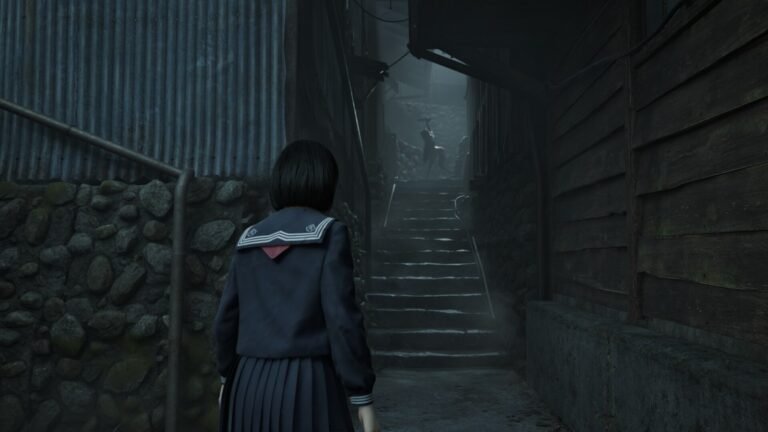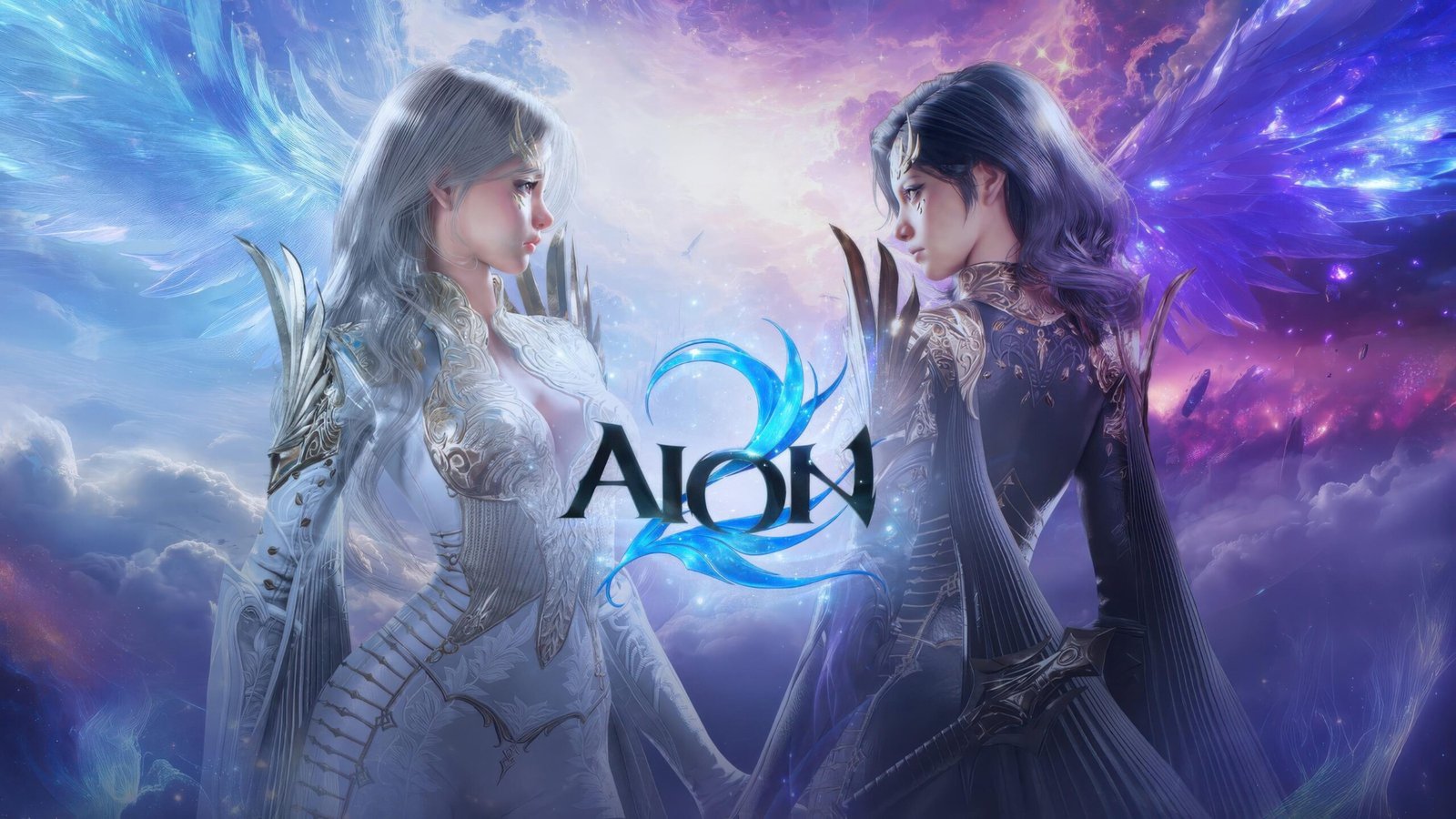
AION 2 has entered the global market carrying a name that has endured for almost two decades, but it is not simply trying to recreate the MMORPG that introduced so many players to Atreia. The sequel takes place about 200 years after the original Aion, retains the Elyos and Asmodians, restores flight as a central element of exploration and combat, and keeps the war between factions as a key part of its identity. Visit the official AION 2 website.
The world is far larger, combat requires players to act directly, movement offers more freedom, customization has expanded, and player-versus-environment content now plays a much more prominent role. AION 2 first launched in South Korea and Taiwan in November 2025. Over the following months it received class changes, dungeons, Abyss revisions, progression systems, and even a ninth class.
On October 5, 2026, AION 2 launched globally for PC through Steam and PURPLE, with regional servers and a dedicated version that should not be confused with the Asian service. To understand what it offers today, we should first return to the skies of Atreia.
In this article
What Is AION 2?
AION 2 is a massively multiplayer online role-playing game (MMORPG) developed and published by NC. Its design combines a persistent world, character progression and shared activities, with flight as one of its defining features. It takes place in Atreia, a world divided by a conflict involving the Elyos, Asmodians and Balaur.
When creating a character, players choose one of the two playable factions and a class, then embark on a journey combining story, open-world exploration, equipment, skills, dungeons, bosses, cooperative activities and faction combat.
What Was the Original Aion?
The first Aion launched in South Korea in 2008. Developed by the company then known as NCSOFT—now NC—the MMORPG introduced a divided world following the destruction of the Tower of Aion. On one side were the Elyos; on the other, the Asmodians. Each faction inhabited a different part of fractured Atreia, with its own appearance, regions and understanding of the conflict.
The game also placed the Balaur at the center of the war. But what truly helped Aion forge its own identity was flight.
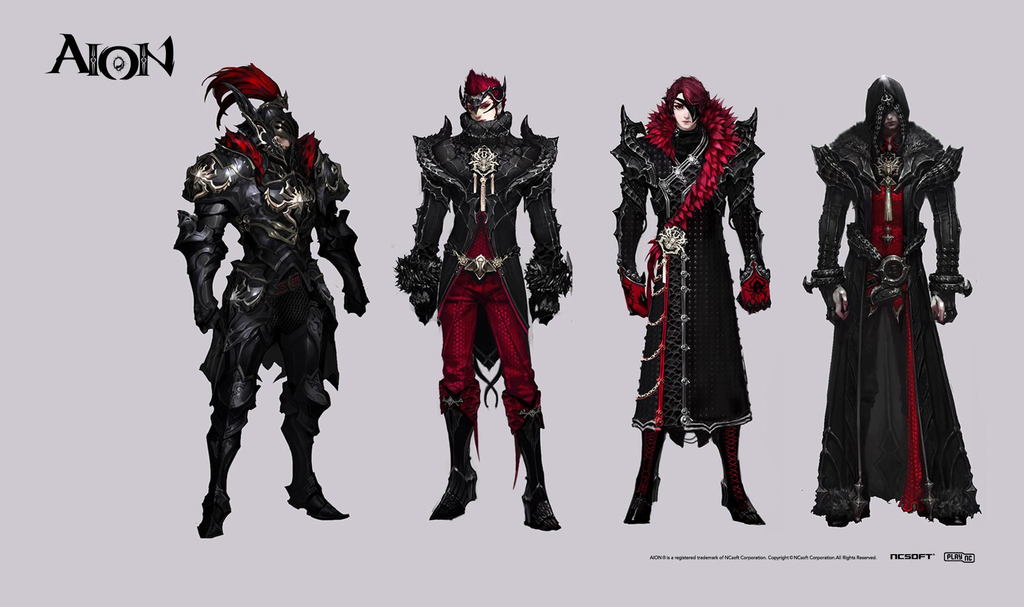
Earning wings changed how players explored, fought and perceived the spaces around them. Flight featured in quests, resource gathering and battles between players. In the Abyss it played one of its most memorable roles: turning the Elyos–Asmodian rivalry into open warfare, including three-dimensional combat.
Aion also combined PvE with a strong faction-based PvP structure. Its sequel retains much of that foundation, without attempting to reproduce the experience exactly as it was in 2008.
How Did AION 2 Come About?
AION 2 spent years in development before becoming the game available today. The plan was not a simple remaster or a move to a newer engine. NC presented the project as a new generation of the same universe, built in Unreal Engine 5 and designed to modernize combat, movement, exploration and scale.
Its first commercial release came in Asia: AION 2 launched in South Korea and Taiwan on November 19, 2025. That service runs on both PC and mobile devices and continued receiving updates over the following months. The version that reached the wider world in October 2026 is not merely the Asian client opened to more countries.
The global version was prepared specifically for PC and has its own infrastructure, business rules and update schedule. Progress from Korean and Taiwanese servers does not transfer to the global service. That separation explains why some information online mentions nine classes or systems not yet available globally.
What Is the Story of AION 2?
AION 2 takes place approximately 200 years after the events of the first game. Atreia has changed. The Elyos–Asmodian war had profound consequences, the Tower of Aion fell, and the absence of the protection that should have emerged from the conflict plunged the world into another period of darkness. The catastrophe became known as the Final War.
The Daevas still exist, but old power structures have been shaken and the Balaur have again become a formidable threat.
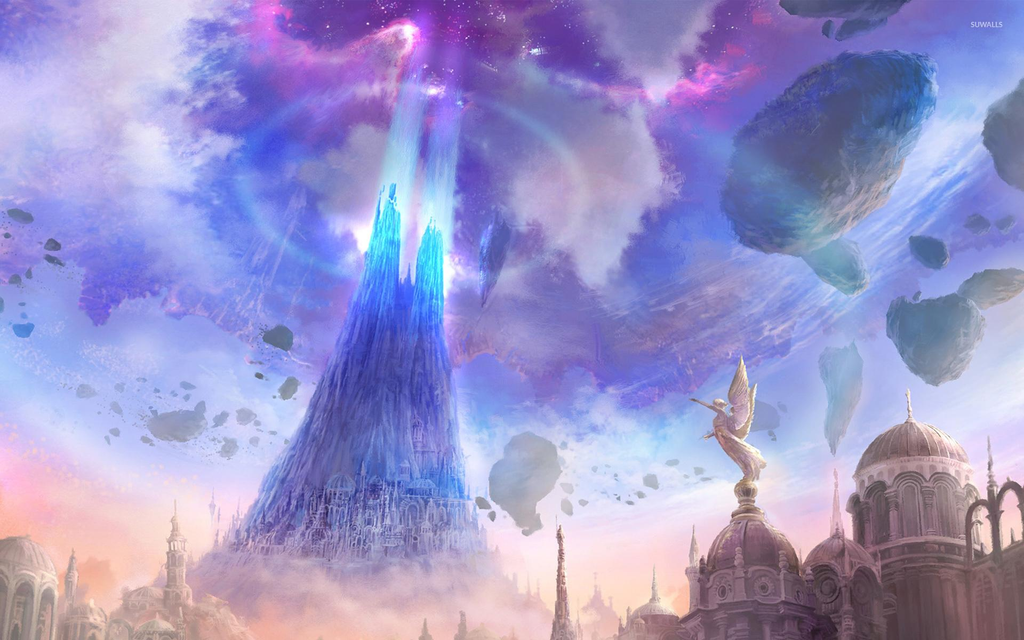
Newcomers do not need to know every detail of the first Aion’s story. AION 2 is designed to introduce Atreia, its factions and conflicts again. Veterans, meanwhile, will recognize names, places, ideas and consequences connected to the original. This is a sequel, not a full reboot, but it does not demand nearly twenty years of lore before you create a character.
Open World, Exploration and Flight
NC emphasizes AION 2’s scale: its official presentation says the world is 36 times larger than the original Aion. This is the developer’s comparison, not an independent ZAUS.GG measurement. More significant than sheer area is verticality: wings, movement on land and underwater exploration enable objectives at different heights and in different environments.
Flight is used for travel and certain aerial fights, but it remains subject to character resources and the rules of individual areas or encounters. The promotional phrase “fly without limits” should not be interpreted as permission to ignore those restrictions or a promise of infinite flight in all content.
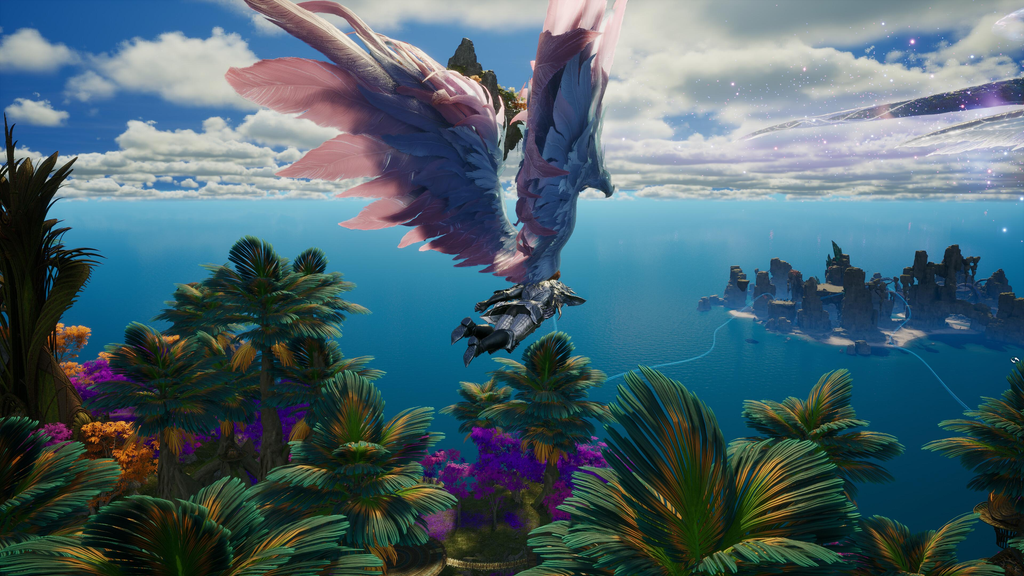
Exploration also extends underwater. Since the Asian version, NC has described the design as allowing players to walk, fly and swim through Atreia. In the first game, flight often depended on specific areas and resources.
What Classes Are Available in AION 2?
The official class page presents the global version’s eight classes. These are their English names:
Gladiator
The Gladiator is a frontline fighter. Wielding a greatsword, it combines powerful close-range attacks with durability. It suits players who want to enter the center of combat rather than attack from a distance.
Templar
The Templar is the more defensive class. Shields are central to its identity, along with survivability, protection and managing enemy attention. In a party, it holds the frontline while other roles do their jobs.
Assassin
The Assassin prioritizes speed, mobility and burst damage in close combat. It revolves around rapid approaches, combinations of attacks and careful positioning.
Ranger
The Ranger is the physical ranged option. Using a bow, it keeps targets at a distance, attacks while managing its position and takes advantage of space during encounters.
Sorcerer
The Sorcerer focuses on ranged magical attacks. Its abilities can affect areas, deal substantial damage and control dangerous situations.
Spiritmaster
The Spiritmaster combines magic with spirits. Summoning, applying effects to enemies and controlling the battlefield in different ways define its role.
Cleric
The Cleric is the primary healing and party-sustain class. That does not mean it has to watch others fight: Clerics have offensive tools and can participate directly in battle.
Chanter
The Chanter is a hybrid class combining close-range combat, support, buffs and recovery. It suits players who want to help their group without giving up an active fighting role.
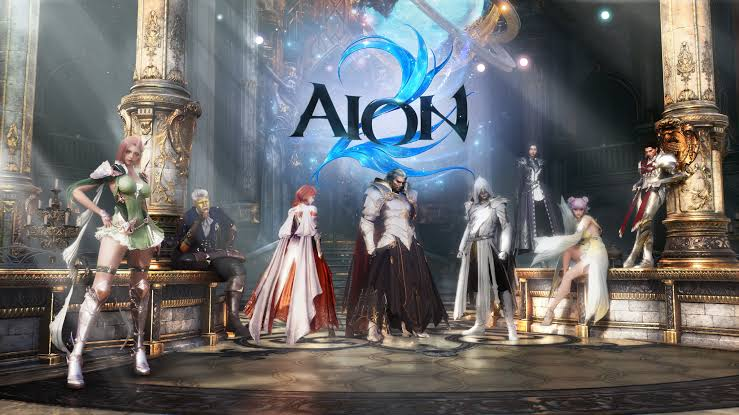
These are only general class identities. Gear, skills and later choices expand what each can do. Regional differences also matter. The Asian version added a ninth class, Brawler, in July 2026. It was not one of the eight classes available at the global launch.
As of October 19, 2026, we found no official announcement of its global debut. Availability in South Korea and Taiwan does not mean it is playable in Brazil or confirm when it might arrive.
How Does Combat Work?
AION 2 uses manual combat: players control movement, targeting, abilities and reactions to enemy attacks. The character does not automatically perform the whole battle. Convenience features such as automatically using certain consumables are not the same as a full auto-combat system. Target selection, hit detection and contextual abilities operate alongside decisions about dodging, range and positioning.
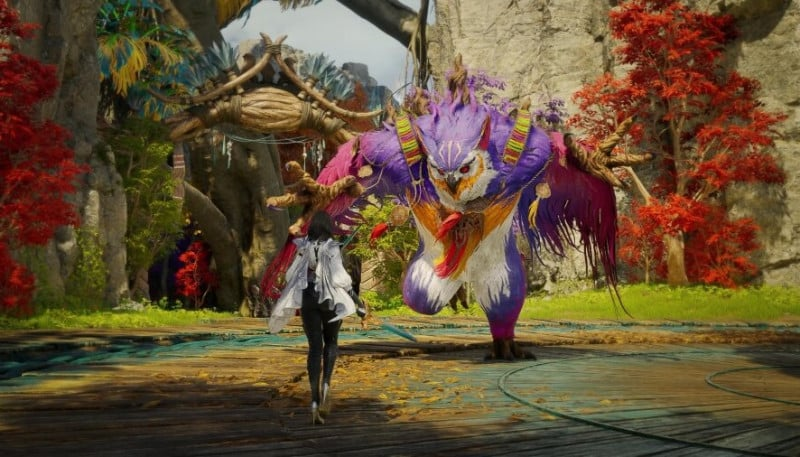
This makes AION 2 more active than the original Aion. Simply standing still and performing a rotation without watching the enemy is not enough. Attacks must be avoided, positioning matters, bosses have their own patterns, and flight adds another dimension to certain battles. Abilities can also form sequences, with one attack unlocking or preparing another.
This evolution is part of a larger discussion about reducing static MMORPG combat. TERA was an important example of action combat within the genre. AION 2 combines manual involvement with its own targeting, ability and party-role rules; the two systems are not identical.
How Does Character Progression Work?
As in other MMORPGs, characters begin with few tools and gradually accumulate layers of progression. Levels unlock content and abilities; gear increases power; enhancement systems develop those items; and skills become more significant as additional choices open up. Increasingly difficult activities demand better preparation.
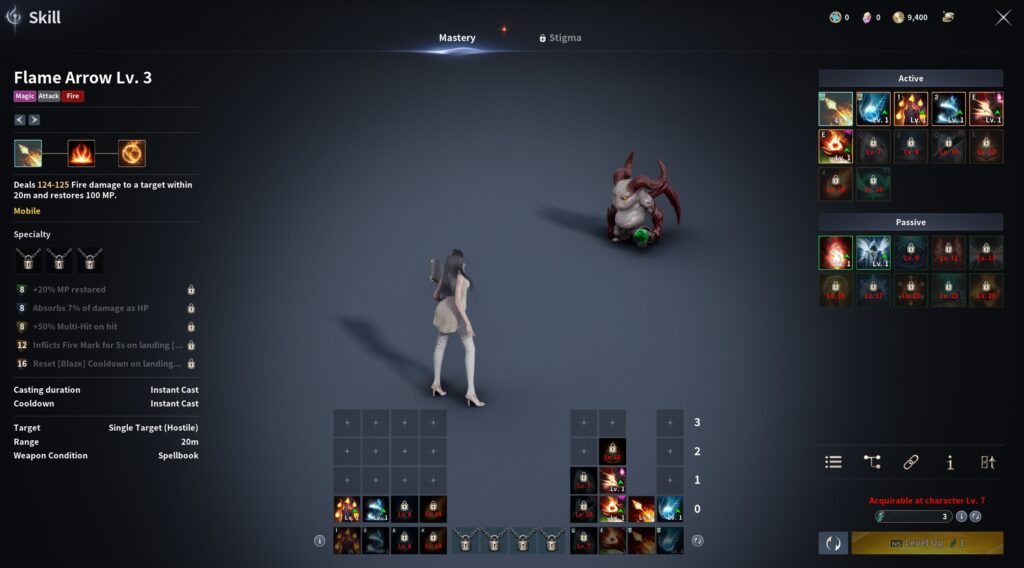
In the skill interface, Mastery develops the class’s basic skills, while Stigma adds abilities that help define the character’s setup. Unlocking an ability, investing in its development and deciding which options to equip are different choices. Gear and other progression systems complement them; copying numbers from a Korean update might produce a setup not yet available globally.
Growth therefore is not just about obtaining a weapon with a bigger number. It depends on how skills, attributes, gear and supplementary systems work together.
Reaching the level required for advanced content does not end progression. Current global communications refer to level 45 for advanced activities and rewards, and character level and item level are separate requirements. The level 50 and Stigma 25 caps announced alongside Chapter 1 apply to the Asian service, not automatically to Global.
That is when gear, enhancements and character-building decisions become increasingly important.
Dungeons, Bosses and Cooperative Content
AION 2 places considerable emphasis on PvE. Its global Steam presentation advertises more than 200 dungeons, encompassing solo challenges, five-player content and ten-player groups. That figure describes the collection of formats advertised by NC; it does not mean 200 different raids are immediately accessible to a newly created character.
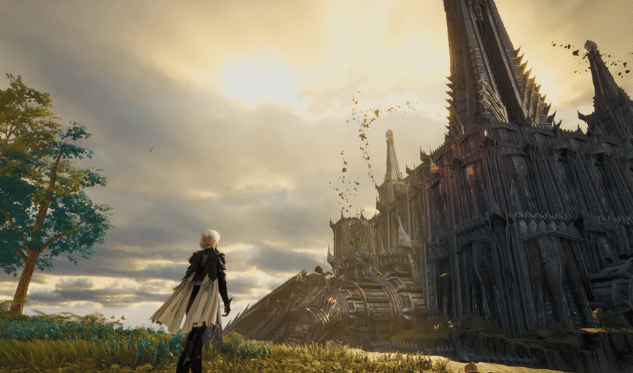
There is content for players who enjoy progressing alone and activities built around coordination between roles. Expeditions pit groups against elite enemies and bosses, with their own rewards and difficulties. Global also includes Transcendence, Nightmare and Ascension Trial. Nightmare and Ascension Trial offer individual challenges; cooperative dungeons call for party composition and coordination.
Each category has its own requirements for level, gear, difficulty and rewards. Meeting one requirement does not automatically unlock every other activity.
The most difficult fights require reading mechanics, positioning and teamwork. Solo content also exists for progression without assembling a party at every step. That balance matters: AION 2 is not solely a war between Elyos and Asmodians. PvE is a major pillar of the sequel.
Sanctuary covers larger encounters, but its inclusion in official presentations does not mean every raid is active. Sanctuary Raid: Ludra was temporarily withdrawn at the October 5 launch for new mechanics. NC promised a new date by October 16; no confirmation of its return was found in the official sources checked through October 19. We therefore do not describe it as an available raid.
PvP, Factions and the Abyss
The Elyos–Asmodian rivalry remains essential to AION 2. PvP appears at different scales, from smaller encounters to faction- and server-level activities. The Abyss remains one of the main expressions of that conflict.
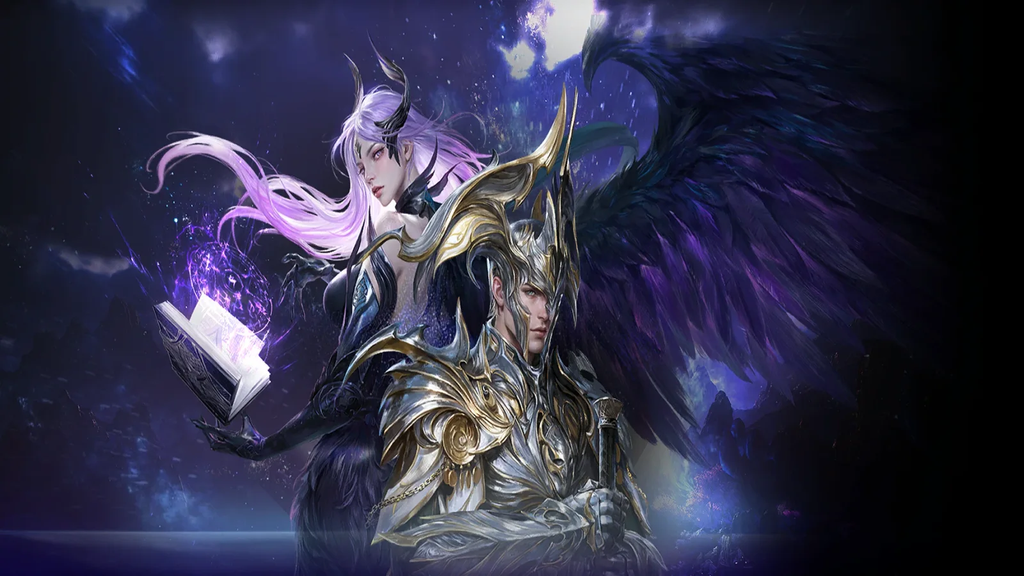
In Global, each server is associated with a faction. Elyos servers are paired with Asmodian servers for activities where the sides face each other. Pairings may change to help keep competition balanced. The Abyss and Spacetime Rifts are among the systems that bring the factions together.
That preserves a historic Aion characteristic: the enemy is not always a game-controlled monster. In some areas another player is the threat. Entering the Abyss or crossing a Spacetime Rift involves its own rules and rewards; it does not make all PvE content mandatory PvP.
Access rules also matter. The global Conquerors of the Abyss event offers stones that recharge one hour of Lower Abyss time, subject to level, purchase and expiration rules.
Meanwhile, NC spent months adjusting PvP on Asian servers, experimenting with access, damage, war systems, pairings and different ways of organizing factions in the Abyss. Not all these changes are necessarily available globally. They show that PvP and the Abyss are evolving systems, not features abandoned after launch.
Equipment, Economy and Trading
Gear comes from dungeons, bosses, world activities and reward systems. Obtaining an item does not always end its development: enhancement and progression systems can continue increasing its power. The economy matters too.
Global supports player trading primarily through the Market, but there is an important difference from what many MMORPG players expect: direct item trades between two players are disabled in Global. NC described this as a measure against bots and illegal currency trading.
The Market remains the official trading hub. The economy uses Kina (also called Kinah in some regional materials) and the premium currency Quna. Players sell eligible items for Kina on the Market. Through the official currency exchange, one player offers Kina and another spends Quna to obtain it. These player-to-player transactions are not the same as selling equipment on the Market.
Bound items and other restrictions prevent everything from being freely traded. The official explanation of the business model ties Market and currency-exchange access to the monthly subscription. Older marketing materials mentioning Personal Trading do not override the later suspension of direct trading; no official reactivation was confirmed through this article’s revision.
In Albion Online, a player-driven economy plays a different role in the sandbox design. The comparison shows why simply saying an MMORPG “has trading” is not enough: currencies, bound items, market access and the risk of losing equipment all affect the role of commerce.
Character Customization
NC also invested heavily in visual customization, advertising more than 200 options. Beyond character creation, there are outfits, appearances, wings, mounts and pets.
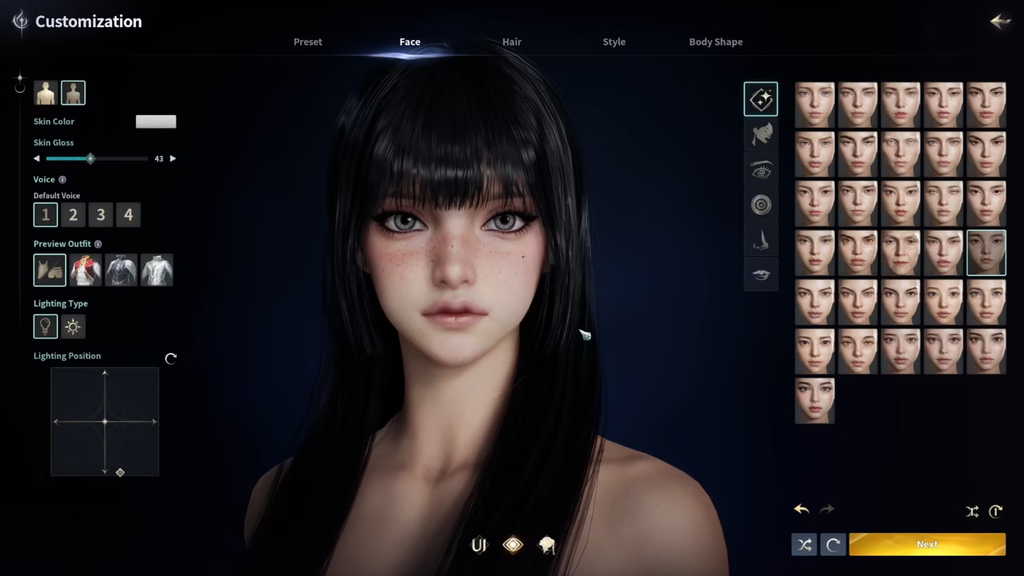
Wings are more than decoration because flight matters so much in AION 2. There are different wing looks. Pets can accompany characters and sometimes provide additional functions, including automatic collection. Some pets can also become mounts. For anyone who sees MMORPGs as social spaces rather than just a hunt for better gear, this is another form of progression.
Not every goal has to increase damage. Sometimes you just want a better look.
How Has AION 2 Changed Since Its Asian Debut?
The nearly one-year gap between the Asian and global launches gave NC time to change the game substantially. The changes below first happened in South Korea and Taiwan; they should not automatically be treated as features already present in Global. The clearest approach is to follow the chronology.
November 2025 — The Beginning
AION 2 launched in South Korea and Taiwan on November 19, 2025. The foundation already included eight classes, flight, Elyos and Asmodians, PvE, Abyss and progression. The opening months revealed which areas needed more work.
December 2025 — PvP and Quality of Life
In December, NC started adjusting several systems. A War Mode gave players more control over PvP participation in certain territories. Spacetime Rifts changed in frequency and capacity, and harder PvE difficulties arrived. Economy, rewards and quality-of-life tools also received attention. It was the start of turning a newly released game into an ongoing service.
January 2026 — Season 2
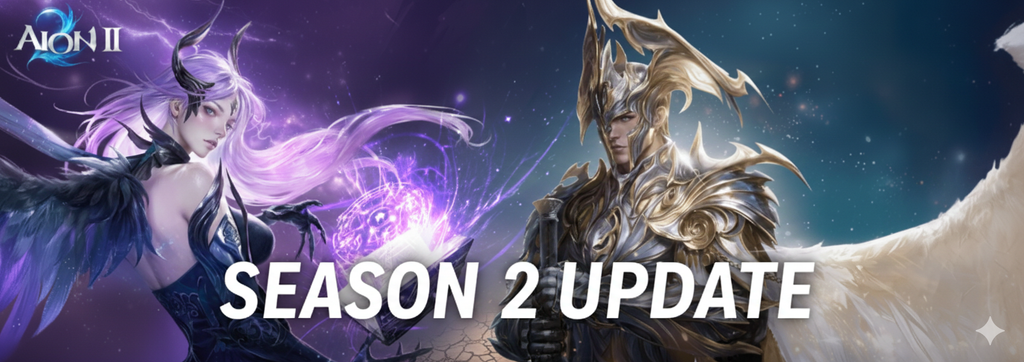
Season 2 began on January 21, 2026, in the Asian service. Its focus expanded across PvE, Abyss and progression. New content appeared, gear systems were revised and wardrobe features became easier to use across characters. Templar and Cleric were among the classes receiving balancing work. The activity structure became more substantial.
February and March — Combat and the Abyss Change
The following months brought more dungeons and structural changes. NC allowed cross-faction PvE groups in certain content, added gear-progression tools, introduced forms of Kina with different usage rules and carried out major class revisions. New Stigmas and defensive mechanics, including perfect blocks and parries, were among the changes.
The Abyss also underwent larger experiments.
One example was Chaotic Abyss, which reorganized the conflict differently from the traditional rivalry between the two races. Even one of the franchise’s oldest systems was not left untouched.
April 2026 — Season 3
Season 3 began on April 8, 2026, on Asian servers. More PvE challenges arrived, progression systems kept changing, and part of the daily routine was revised to reduce unnecessary grind. NC also adjusted rewards, rankings and ways to prepare new or returning characters.
July 2026 — Chapter 1: Lands of Sand and Snow
Chapter 1: Lands of Sand and Snow reached South Korea and Taiwan in July 2026. NC’s July 6 international announcement described the content as already available. The update added Eltnen and Morheim, expanded progression and introduced PvE activities.
Some party activities expanded to five players, and larger ones to ten. AION 2 also gained its first additional class: Brawler.

The Global Launch in October 2026
Global preparations included September’s Launch Scale Test, with progress wiped afterward, followed by a separate commercial stage: September 30 early access. Test characters and level caps should not be confused with progress retained during early access. Players who purchased a Founder’s Pack entered from September 30, 2026.
That stage lasted five days, and characters created then continued after the full release. Founder’s Packs were prelaunch products combining early access with temporary subscription benefits and cosmetics, depending on the package. Then, on October 5, 2026, the servers opened to everyone.

AION 2 launched globally as free-to-play through Steam and NC’s own PURPLE launcher. Initial interest also appeared in NC’s audience communications, but wishlist totals and active-player counts are different measures; they should not be added together or used as an estimate of the current player population.
In its October 5 message, NC celebrated 400,000 active players. That was a launch-era figure reported by the developer, not a live reading of concurrent players or a ZAUS.GG measurement. NC also highlighted high placements on Steam’s sales charts around launch.
Those numbers show the launch’s initial scale. Audience behavior in later months is another question.
Is AION 2 Free to Play?
Yes. AION 2 Global is free-to-play. You do not need to purchase the game to create an account and start playing after October 5. Founder’s Packs mainly offered five-day early access and other benefits. The ongoing monetization model includes:
- Paid cosmetic items;
- Premium currency;
- Battle Pass;
- Optional monthly subscription;
- Systems linked to the in-game economy.
A subscription is not required to log in, level a character, experience the story or participate in basic content. But it is not purely cosmetic either.
The monthly Special Quai membership grants access to economic features and other gameplay benefits. Wind Breeze Merchants offers purchases using Kina under its own rules. Odyle Energy, associated with receiving activity rewards, is an important example: its availability affects progression pace without amounting to direct sales of all endgame gear.
The Battle Pass, also called Daeva Pass, offers a track available to everyone and a premium track bought with Quna. NC lists cosmetics, upgrade materials and other currencies among its rewards. Quna may also be acquired through the official exchange, so “premium” and “bought directly with real money” do not describe every acquisition in the same way. Even so, payments are linked to convenience, the economy and progression.
Is AION 2 Pay-to-Win?
That cannot be answered meaningfully with a simple yes or no without defining pay-to-win. It would be wrong to say Global simply sells all the best equipment directly in a shop. It would also be wrong to describe monetization as “cosmetics only.” The subscription affects important economic systems.
Quna is a premium currency connected to the official exchange. Paid passes and other benefits also exist. Real money therefore has connections to systems beyond character appearance.
Some players use pay-to-win for any conversion of money into an economic advantage; others reserve it for exclusive power. These are different interpretations. The documented facts are the exchange, subscription benefits and progression-related pass rewards—factors anyone planning to compete or participate in the economy should consider.
AION 2 can be played for free, but monetization is not exclusively cosmetic, and there is a real connection between payment, convenience and the in-game economy. Its long-term effect on balance will need to be assessed as Global’s economy develops. Two weeks of global operation are not enough for ZAUS.GG to make its own definitive assessment, and we do not claim to have run competitive or performance tests.
How Can You Play AION 2 in Brazil?
For Brazilian players, Global offers access on Windows PCs through:
Both clients offer the same content and share servers. Accounts can be linked to keep character and progress across clients, but linking is not required just to start. Global offers a South America/Latin America server region. That does not necessarily mean every physical server is located in Brazil.
The game supports Brazilian Portuguese interface and subtitles, but no PT-BR voice acting; English, Japanese and Korean voices are available. Unlike the Asian service, Global has no mobile client and launched exclusively on PC. The official FAQ says controllers can be used, but there is no official support. Windows PC is the supported platform; Linux and Steam Deck should not be described as guaranteed.
Minimum System Requirements
- Windows 10 or 11, 64-bit;
- AMD Ryzen 5 2600 or Intel Core i5-10500;
- 8 GB RAM;
- NVIDIA GTX 1050 Ti with 4 GB;
- DirectX 12;
- 100 GB available storage;
- Broadband internet.
NC recommends an SSD. These minimum requirements target 1080p at Very Low settings.
Recommended System Requirements
- Windows 10 or 11, 64-bit;
- AMD Ryzen 7 3700X or Intel Core i7-11700;
- 16 GB RAM;
- NVIDIA RTX 2070 with 8 GB;
- DirectX 12;
- 100 GB available storage;
- Broadband internet;
- SSD recommended.
An important detail: even NC’s recommended configuration targets 1080p at Low settings. Players seeking higher settings, resolutions or frame rates should plan for stronger hardware.
Is AION 2 Very Different From the Original Aion?
AION 2 inherits the persistent world, Elyos–Asmodian rivalry and the Daevas’ place in the setting, but reorganizes how players interact with those foundations. Manual combat, vertical exploration and the greater emphasis on PvE are experiential changes, not simply a visual update to Unreal Engine 5.
It is still a long-progression MMORPG built around gear, group roles and an economy. Veterans will recognize the universe; newcomers should understand that familiar names and locations do not replace learning Global’s systems and rules.
What Is AION 2 Like Right Now?
Updated: October 19, 2026. Global completed two weeks of open operation. It still offers eight classes, free PC access through Steam and PURPLE, regional servers and Brazilian Portuguese text. The main systems are described above; the important developments during this period concern maintenance and the economy.
The October 13/14 patch notes addressed Spiritmaster summons, Sorcerer abilities during fights involving changes in elevation, and overlapping effects. They also recorded adjustments to Battlefield stats, fewer freezes during large Abyss fights, and graphics/loading fixes. Those are concrete improvements, not a guarantee of stability on every PC.
During server transfers, the weekly per-server limit of 16 on bound Odyle Energy sold by Wind Breeze Merchants was removed and the per-character cap rose from four to 20. This applied to that period and item, not to every reward cap. Transfers have entry and exit limits, and one wave may close before another based on server capacity.
NC also acted against bots, real-money trading (RMT) and economic abuse. In its October 16/17 notice, the company reported 10,326 restricted accounts in that action after review. It distinguished sanctions from preventive security locks and said long normal play sessions are not, by themselves, violations. That number is not concurrent users and should not be presented as a cumulative total without evidence.
NC also reported resolving Steam payments affected between October 6 and 12, including delivery of items and restoration of purchase limits. Ludra’s return remained unconfirmed in the sources checked. These developments make the global picture clearer without treating the conditions of the first three days as current.
And What About the Asian Version?
In South Korea and Taiwan, Chapter 1, Brawler, Eltnen and Morheim are already part of a development path that started in November 2025. Asian seasons, level-cap increases and Abyss variants in the timeline belong to that service.
Regional differences extend beyond content quantity to economic rules, progression and access. An Asian change may suggest what could eventually be adapted, but does not confirm a feature or date for Global. Players in Brazil should use the corresponding global announcement as their reference.
What’s Next?
A producer’s letter published around the global launch points to Ludra’s return, seasonal celebrations and continuing updates. This is an announced direction, not a schedule assigning dates to all Asian content.
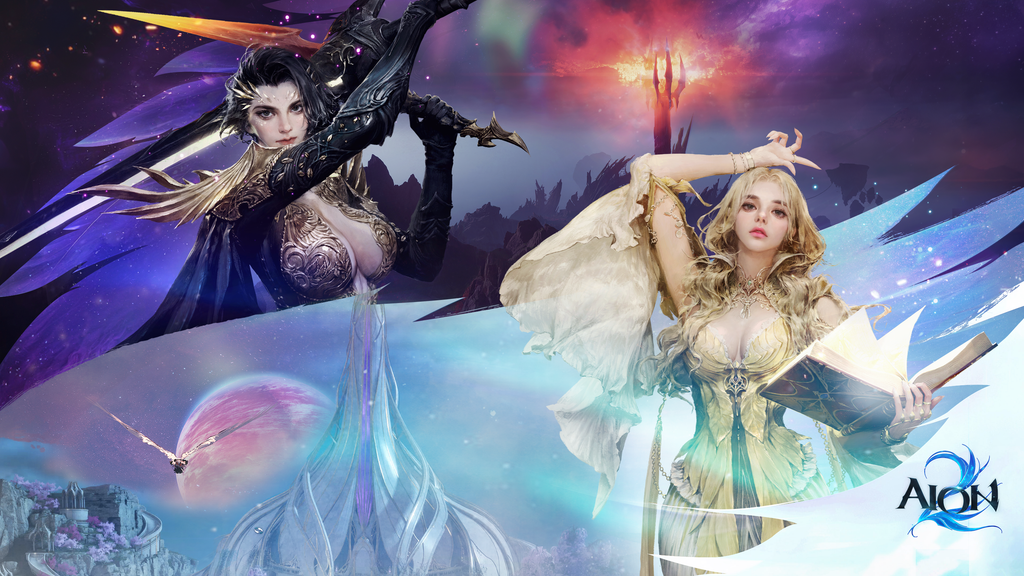
As of October 19, we found no global announcement scheduling Brawler or Chapter 1. The same caution applies to extra platforms: the Asian mobile client does not confirm a worldwide mobile or console release. Future content should be added to this article only when its region and access conditions are confirmed.
Is AION 2 Worth Checking Out?
AION 2 may appeal to players who want persistent MMORPG progression, defined group roles and faction conflict with more hands-on combat. Flight reshapes the world rather than merely shortening trips, while solo and cooperative activities offer different ways to learn the game.
Whether to stay also depends on tolerance for progression routines and the economic model. The subscription, currency exchange and progression benefits deserve as much scrutiny as classes and dungeons. Global is still early in its life, and Asian content is not a promise of immediate access in Brazil. This article documents what is known; it does not replace a hands-on review.
The sequel’s challenge is to sustain that design over time: give players a place to learn and connect in Atreia while keeping its battles and economy engaging. That ongoing service—not just familiarity with 2008’s Aion—is where its identity will be tested.
About the Author