Path of Exile: Crucible (2023). Arte oficial de um titã na forja; ilustração histórica. © <a href="https://www.pathofexile.com/crucible">GGG</a>.
You have a Rare weapon with two excellent prefixes for your build, but its suffixes are poor. Using Chaos directly might erase what makes the item valuable; Annulment could remove one of those good affixes. Under certain conditions, a metamod lets you protect the prefixes while working on the rest.
Advanced crafting means planning which properties each operation preserves, changes, or can destroy. Your control depends on compatibility between the item, the protection, and the method. This guide covers the decisions and two detailed procedures without repeating our currency guide (PT-BR; localized page pending).
Reviewed October 27, 2026 for Path of Exile 1, 3.29 — Curse of the Allflame, including 3.29.1 and maintenance checked through 3.29.3b. See the official patch notes index. All equipment examples, weights, and budgets are hypothetical; they are not crafts performed on a player’s account.
If you still need practice identifying affix slots or doing simple finishing crafts, see crafting for beginners (PT-BR; translation pending). The focus here is deciding which properties survive each step and recognizing when the risk is no longer worthwhile.
Nesta matéria
Planning: bases, affixes, and probability
Start with the build, item category, base, and required Item Level. List mandatory affixes and minimum tiers, then optional ones. Record implicits, influence, Fractured, Corrupted, or Mirrored status, sockets, and Quality whenever they affect the plan. Only then establish a budget and sequence. A higher ilvl can unlock better tiers and more competing outcomes: ilvl 86 is not automatically ideal for every project.
Four concepts explain what a sequence can produce:
- Mod Pool: all modifiers eligible for the chosen base, ilvl, state, and method.
- Mod Weights: relative chances used to select modifiers from that pool.
- Mod Groups: groups that can prevent modifiers from coexisting even if the base supports each one individually.
- Mod Tags: classifications such as Attack, Caster, Life, and Fire used by restrictions and recipes. A modifier’s name does not necessarily reveal every tag.
In a simplified mathematical example, three outcomes have weights of 700, 200, and 100. Total weight is 1,000, so the third accounts for 100 ÷ 1,000 = 10%. This is not a real PoE affix probability: the game may make multiple selections with different modifier counts and incompatible groups.
Mod Blocking reduces possibilities through rules, groups, or existing modifiers. Blocking competitors guarantees an outcome only if exactly one eligible possibility actually remains for that operation. Before purchasing an expensive base, consult its real pool; our equipment, bases, and modifiers guide (PT-BR; localized page pending) explains hybrid modifiers and why tooltip lines are not the same as affix counts.
Metacrafting: protect the right group before finishing
The main metamods are special Crafting Bench recipes. They occupy affix slots and change the behavior of compatible operations; they do not universally protect equipment.
| Metamod | Conventional affix slot | Relevant effect |
|---|---|---|
| Prefixes Cannot Be Changed | Suffix | Protects existing prefixes in compatible operations |
| Suffixes Cannot Be Changed | Prefix | Protects existing suffixes in compatible operations |
| Cannot roll Attack Modifiers | Suffix | Restricts Attack modifiers in operations that respect the restriction |
| Cannot roll Caster Modifiers | Suffix | Restricts Caster modifiers in operations that respect the restriction |
| Can have up to 3 Crafted Modifiers | Suffix | Allows up to three Crafted Modifiers in total, counting Multimod itself |
Multimod ordinarily means the Multimod effect itself plus two more crafts, subject to the standard three-prefix and three-suffix limits, groups, and compatibility. It can finish an item with strong natural affixes, but it does not create three additional slots. Check that the bench recipe is unlocked and verify its cost before planning repeat attempts.
Preserving two prefixes with Scouring
Consider a conventional Rare weapon (not Corrupted or Mirrored) with two desirable prefixes and expendable suffixes. The goal is to remove suffixes, not reroll the entire weapon.
- Open the advanced tooltip and verify that both desirable affixes are prefixes.
- Verify item eligibility and an open suffix for the metamod. Full suffixes prevent this direct setup.
- At the Crafting Bench, select Prefixes Cannot Be Changed.
- Check recipe, cost, and materials, then apply the protection.
- Remove the item and inspect its tooltip to verify the correct metamod before proceeding.
- Accept that unprotected conventional suffixes, even useful ones, will be lost.
- Apply an Orb of Scouring to the compatible item.
- Check the outcome: both prefixes remain; eligible suffixes are removed, including the metamod itself because it occupies a suffix.
- Plan the next step from this new item state. Recheck and reapply protection whenever a later operation requires it.
Here, two prefixes remain and the weapon stays Rare. With different affix counts and combinations, check the resulting rarity as well. Never use Scouring merely because some Crafted Modifier is present: it must be the correct protection.
The reverse process is similar. A ring with Fire Resistance, Cold Resistance, and Dexterity as suffixes needs a free prefix for Suffixes Cannot Be Changed. Compatible Scouring removes eligible prefixes and the metamod but preserves those suffixes. Confusing the group protected with the slot occupied reverses your project.
Protection also does not prohibit adding an affix to the protected group when it has space. Annulment still chooses randomly among eligible modifiers and can remove the metamod. Chaos that respects the lock preserves the protected group, but may consume the lock and fill remaining slots. Inspect the item after every attempt: another Chaos without protection could destroy your progress.
Compatibility: the effect depends on the operation
The following matrix separates group preservation from tag restrictions. “Respects” never means the entire result is guaranteed. Consult Craft of Exile’s metamod documentation alongside later official changes, especially Harvest in 3.27. The tool warns that its matrix may lag behind the live game. When an interaction is unconfirmed for your specific item, do not spend resources assuming protection.
| Operation | Prefix/suffix protection | Tag restrictions | Possible effect and next step |
|---|---|---|---|
| Scouring | Preserves existing affixes in a locked group when valid | Attack/Caster cannot replace a group lock | Removes unprotected group and the lock within it; verify rarity and reapply before repeating |
| Normal Annulment | Excludes protected group from removal | Attack/Caster prevent eligible tagged-affix removal in this operation | Random among eligible affixes; metamod itself can be removed |
| Normal Chaos | Preserves locked group; may generate affixes in available slots | Attack/Caster restriction must remain applicable; protecting the suffix matters | Opposite lock may be consumed and slots filled; inspect before another Chaos |
| Normal Exalted | Lock does not forbid adding to a protected group with space | Applicable Attack/Caster generation restrictions are respected | Random eligible addition; existing affixes and metamods not removed |
| Divine | Group locks restrict which numeric values may be changed | Attack/Caster do not protect numeric values | Does not change tiers or select new affixes |
| Harvest category Reforge | Compatible group locks apply | Since 3.27, guaranteed types respect type restrictions such as Attack | Tier not guaranteed; can fill slots and remove protection outside the locked group |
| Harvest Augment | Compatible group lock acts on removal step | Attack/Caster may restrict addition but do not protect those affixes from removal | Addition and removal have different pools; metamod can be removed |
| Essences | Generation-altering metamods block use instead of protecting the group | Do not treat tag lock as a guarantee | Obtain starting affixes before this protected finishing phase |
| Fossils/Resonators | These metamods block compatible Resonator use | Fossil weights/restrictions are not metamods | Complete before protected finishing and check eligibility |
| Awakener’s Orb | Ignores conventional group locks | Attack/Caster do not protect remaining affixes | Destroys donor; reforges destination with influence and selected eligible modifiers |
| Veiled Chaos | Reforges according to compatible group protection | Do not presume Attack/Caster chooses the Veiled result | Distinct from remove-one/add-one; protection may not survive |
| Veiled Exalted | Group locks restrict compatible removal | Attack/Caster do not protect removal or freely choose Veiled affix | Removes a random eligible affix and adds Veiled; lock may be removed |
| Eldritch Chaos | Ignores conventional locks; Dominance determines group | Tag lock cannot fix wrong Dominance | Exarch: prefixes; Eater: suffixes; may affect metamods in changed group |
| Eldritch Exalted | Dominance determines addition group | Applicable Attack/Caster generation restrictions apply | Adds random eligible affix to designated group if space exists; tier not chosen |
| Eldritch Annulment | Applicable locks restrict removal within Dominance group | Attack/Caster protect during this removal, unlike Harvest Augment | May remove eligible metamod; does not select the bad affix |
| Fracturing Orb / Fossil | Locks do not choose the affix to fracture | Generation blocks do not direct fracture selection | Orb and Fossil have different item restrictions |
| Recombinators | Metamod does not guarantee transfer or input survival | Currency compatibility matrix is not transferable | Both inputs consumed; Predictable can yield no item; result obeys bases, groups, restrictions |
| Allflame | Depends on underlying operation accepted by Vesper | Cannot validate incompatible or ignored protection | Check Ghostly Copies, costs, Intangibility, Ducat; choosing one does not keep the others |
In particular, do not transfer the interaction of Cannot roll Attack with normal Annulment to the removal stage of Harvest Augment. Identify whether each step adds, removes, or reforges modifiers.
Harvest, Essences, and Fossils: choosing the order
Harvest Reforge generates modifiers anew and may guarantee a category. If protecting prefixes to work on suffixes, verify that your desired category can appear in the altered group, that the recipe accepts the item, and that the protected prefixes’ Mod Groups permit the combination. Several Fire or Life modifiers with different tiers may qualify.
Patch 3.27 made Harvest reforges guaranteeing a modifier type respect type restrictions such as Cannot roll Attack Modifiers. That does not make all Harvest recipes equivalent or eliminate the risk of filling slots needed for finishing.
Harvest Augment requires evaluating the added affix and the removed one separately. In recipes that add a particular type and remove another modifier, Attack/Caster restrictions may narrow addition without protecting tagged affixes from removal. Prefix/suffix locks may affect that removal step depending on the recipe. Verify removal pool, space, eligibility, and Lifeforce before confirming; calculating only the probability of adding the desired affix is insufficient.
Essences and Fossils usually come before metamod finishing: choose the base, establish strong starting affixes, recognize a usable outcome, and only then apply compatible protection. For instance, an Essence guarantees a modifier and generates another desirable prefix; repeating it would replace the other affixes, while later finishing could preserve your progress. One method need not serve every step.
Do not include Harvest Synthesis as a current operation: the recipe was removed in 3.29. Older crafting sequences may rely on an option no longer in the game.
Eldritch: Dominance, currencies, and a boots example

Eldritch Embers apply Searing Exarch implicits; Eldritch Ichors apply Eater of Worlds implicits. Conventional Eldritch crafting works on eligible helmets, gloves, boots, and body armour without incompatible traditional Shaper, Elder, or Elderslayer influences. Unique, Corrupted, Mirrored, and other special states require checking each currency’s eligibility. These resources may replace existing implicits while preserving the opposite Eldritch implicit when permitted.
Dominance belongs to the side with the stronger implicit, not necessarily the lower or higher community-listed tier number. Equal intensity means neither side dominates for operations requiring it. Current Eldritch Chaos, Eldritch Exalted, and Eldritch Annulment tooltips confirm the direction:
| Dominant side | Eldritch Chaos | Eldritch Exalted | Eldritch Annulment |
|---|---|---|---|
| Searing Exarch | Reforges prefixes | Adds a prefix | Removes a prefix |
| Eater of Worlds | Reforges suffixes | Adds a suffix | Removes a suffix |
Improving prefixes while keeping boot suffixes
These example boots have Fire Resistance, Cold Resistance, and Dexterity suffixes. Keep these; improve the prefixes.
- Verify the base and state allow Eldritch crafting; do not proceed with incompatible traditional influence.
- Confirm the three good affixes are suffixes in the advanced tooltip.
- Review existing implicits and accept any permitted replacement when preparing new ones.
- Apply suitable Embers and Ichors to make Exarch stronger than Eater: Greater Ember versus Lesser Ichor is one example on an eligible item.
- Recheck Dominance after any implicit change.
- Read Eldritch Chaos: with Exarch dominant, it reforges prefixes.
- Set a limit of attempts and use it if you accept random new prefixes.
- Inspect the new prefixes and verify your suffixes remained.
- Check whether the bench can finish the item; repeat only while the result needs improvement and the budget permits.
With Eater dominant, the same currency reforges the suffixes you intended to preserve. An incorrect metamod does not compensate for inverted Dominance; confirm it first.
Eldritch Exalted and Annulment follow the same directional rules but add or remove a random affix in that group. Restricting removal to prefixes does not let you target the bad prefix among two good ones.ment selecionar o prefixo ruim entre dois bons e um indesejado.


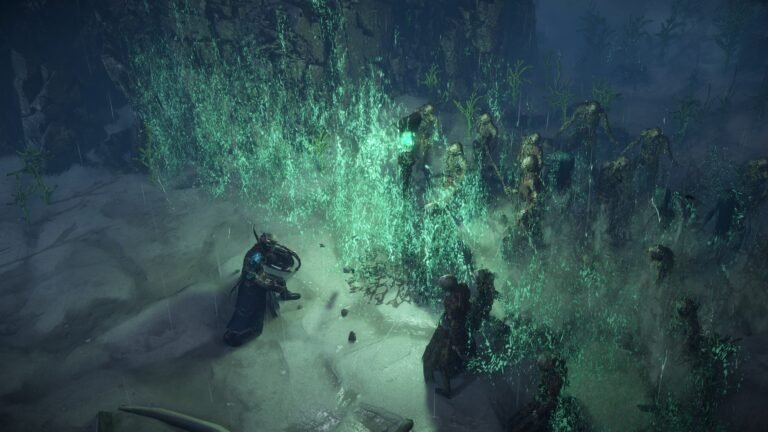
The official Siege of the Atlas screenshots (3.17, 2022) show these two currencies’ actual functions. They are historical: any visible stack limits do not describe 3.29. Exarch/prefix and Eater/suffix behavior was rechecked in current tooltips; these are not crafts carried out for this article. Original GGG promotional material.
Orb of Conflict requires both implicits on an eligible non-Unique item. It strengthens one and weakens the other; chances depend on relative strength, and reducing a Lesser implicit can remove it. It might improve the wrong side and reverse Dominance. Recheck both effects before continuing.
A seasonal exception is Ukatoa’s Ducat, added in 3.29.1. It replaces an eligible non-Unique amulet’s implicit with an Eldritch Implicit if one is not already present. This does not authorize all conventional Eldritch Currencies on every amulet; assess each operation separately.
Fracturing: lock an affix without confusing methods
A Fractured Modifier remains through compatible conventional operations but still occupies its affix slot. It makes a base worthwhile only if that affix, item level, and category suit the project. Other modifiers do not receive the same protection.
Fracturing Orb randomly chooses a modifier on a Rare with at least four modifiers. Its current tooltip disallows Influenced or already Fractured items. Compare the expense and risk of fracturing the wrong affix with buying a ready-made base; a protective metamod does not select the fracture.
Fractured Fossil, used through a Resonator, was changed in 3.29 to fracture a random modifier and no longer accepts Fractured or Influenced items. Do not follow the old mirrored-copy procedure or assume the Fossil and Orb have identical conditions. The update also changed Bestiary recipes to fracture one affix on a Rare Talisman with at least four modifiers or two on one with at least six. Those are Talisman-specific operations.
A useful example sequence is base with Fractured Fire Resistance → compatible Essence guaranteeing Life on boots → inspect other affixes → bench finish if space exists. One affix is fixed and another guaranteed, but Movement Speed and remaining Resistances are variable. Stop when the minimum requirement is met instead of spending Essences indefinitely chasing an optional extra.
Influences and Awakener’s Orb: donor, destination, and loss
Traditional Shaper, Elder, and Elderslayer influences enable special modifiers, but an influenced item does not necessarily have one. Awakener’s Orb combines two distinct influences on compatible items of the same class, destroying the donor and reforging the destination as Rare.
The destination defines the retained base and Item Level. Normally, the operation retains one Influenced modifier from each input and reforges the rest. Multiple Influenced modifiers on one input mean a random selection; incompatible Mod Groups may prevent the desired combination. Conventional metamods do not protect other affixes.
- Choose and inspect the destination base, class, ilvl, influence, and state.
- Choose a compatible same-class donor with another influence, identifying the desired Influenced affix on each.
- Count all Influenced affixes and check Mod Groups; the desired two might not coexist.
- Compare donor cost, selection risk, and the cost of buying the final item.
- Apply the Orb to the donor you agree to destroy first, then to the destination. Recheck the order before clicking.
- Examine final influences and modifiers before finishing.
It does not transfer every good modifier or save a donor you clicked first. Both inputs must meet restrictions such as not being Corrupted. The Awakener’s Orb tooltip describes destruction and application order.
Veiled Crafting: remove, add, and unveil
Veiled Chaos Orb reforges a Rare with new modifiers including one Veiled modifier. Veiled Exalted Orb removes a random modifier and adds a Veiled one. The latter can destroy a valuable affix. Compatible prefix/suffix protection may restrict removal, but Attack/Caster tag restrictions do not universally determine the Veiled result.
Patch 3.26 renamed the old Veiled Orb to Veiled Exalted and reintroduced Veiled Chaos. It also allowed direct Unveil by right-clicking the item (or the controller equivalent), without visiting Jun. Bench recipes previously unlocked through unveiling now come from recipe objects in maps. Unveiling an item’s modifier and unlocking a bench recipe are separate actions.
After receiving a Veiled modifier, inspect whether it is a prefix or suffix, its available options, and Mod Groups. If space and compatibility permit, a Crafted Modifier can block an unwanted group before the Unveil. Review cost, apply the blocker, then reveal and choose among the offered options. Blocking changes the eligible pool; it does not guarantee the desired result appears.
In 3.29, Mana and Reduced Mana Cost options on rings were replaced with Mana and Mana Cost Efficiency, and caster weapons had affix changes. Old recipes may rely on modifiers that no longer exist for that category.
Recombinators: Predictable and Unpredictable in Kingsmarch
The current Kingsmarch Recombinator takes two eligible items, Gold, and Thaumaturgic Dust. It does not follow the old Sentinel rules. Check classes, bases, affixes, groups, influences, and special states: conventionally Corrupted cannot be used, while Fractured has transfer and resulting-base restrictions. Do not assume old Sentinel projects can freely increase fractured affix counts.
| Mode | Control | Outcome and risk |
|---|---|---|
| Predictable | Choose targeted affixes; interface displays the chance | May destroy both inputs without producing an item |
| Unpredictable | Random combination under system rules | Produces a conventional result, but desired modifiers can be lost |
“No destruction” in older comparisons means no failure outcome with no resulting item; it does not return the original inputs. Both are consumed. The official 3.26 rework distinguishes these modes. Ruthless adds restrictions and does not offer the old method.
For a plan combining a prefix from item A with a suffix from item B:
- Verify both inputs’ eligibility, exact modifiers, and Mod Groups.
- Check possible resulting bases/states; Fractured is not preserved on every base.
- Insert both and review required Gold and Dust.
- Compare Predictable, selected modifiers, and chance displayed, against less-controlled Unpredictable outcomes.
- Proceed only if you accept losing both inputs and, for Predictable, potentially getting no item.
- Inspect the result to decide whether it meets the project or needs finishing.
The community Recombinator documentation describes Magic or Rare same-class inputs. In random mode, a Fractured affix does not transfer to a final non-Fractured base, nor should you assume more fractures than were present in the inputs. Essence, Veiled, and Crafted affixes have additional restrictions. The documentation itself flags its Predictable coverage as needing an update; without 3.29-specific confirmation, do not build a plan around an extrapolated rule. Check live eligibility and chance.
There is no universal success percentage for this hypothetical example. Selecting affixes is the objective of a Predictable attempt, not a transfer guarantee.
Allflame Crafting: choosing one copy and managing Intangibility
Vesper provides the Curse of the Allflame seasonal system aboard The Sovereign after progression unlocks through Charts and Voyages. A compatible item and operation, plus Dead Man’s Sulphur, generate alternatives called Ghostly Copies. You keep only one; the others do not become permanent inventory items.
Many operations apply Intangibility. Its percentage is the chance that a future Allflame operation produces only one Ghostly Copy, removing the choice advantage. It does not directly penalize damage or defenses. Copy counts and costs depend on the operation; four copies are not universal and all alternatives can be poor.
- Define the change and check item, operation, and resources in Vesper’s interface.
- Check Intangibility, Sulphur cost, materials, and the number of available alternatives.
- Accept any possible losses inherent to the underlying method and execute.
- Compare Ghostly Copies, select one, and inspect the final item before continuing.
Patch 3.29.1 added Ancient Orb and Orb of Chance support to Allflame and clarified that most Quality and socket-manipulating currencies cannot be used there. An older compatibility list may be out of date.
Ducats perform specific operations rather than universally replacing normal currencies:
- Kishara’s: divides an item into ghostly alternatives retaining one random modifier; you select the final one.
- The Genteel’s: swaps the attribute of a single-Attribute modifier for another equivalent Attribute. It does not transform arbitrary stats or guarantee a freely chosen result.
- Brinehook’s: adds a random Pantheon Aspect Skill; 3.29.1 prevented its use on items unable to grant skills.
- Tzamoto’s: either removes all Intangibility or destroys the item. It is not a safe reset and no numeric success chance is assumed.
- Ukatoa’s: non-Unique amulet exception mentioned above, introduced in 3.29.1.
Read the specific Ducat tooltip and eligibility. Tzamoto’s current tooltip explicitly lists both outcomes. Whether seasonal additions become permanent depends on future GGG decisions.
Advanced corruption and the limits of Hinekora’s Lock
Vaal Orb corrupts eligible items with variable outcomes. Locus of Corruption, the tier-3 Temple of Atzoatl room, offers special corruption outcomes and may destroy the item. Finish conventional steps before making the item ineligible for them; corruption is not mandatory finishing.
Tainted Currencies allow specific operations on Corrupted equipment, not unrestricted use of every currency. Volatile Vaal Orb instead rerolls numerical modifier values on eligible Unique equipment and corrupts or destroys it; it is distinct from ordinary Vaal Orb.
Patch 3.29’s socket overhaul reversed historical white-socket outcomes: the Vaal result that changed a socket to white now changes a white socket to non-white, while Locus’ all-white outcome changes whites to non-whites. Guides promising six white sockets from those corruptions are outdated.
Hinekora’s Lock previews the next eligible currency operation, not every crafting procedure. Apply it to an eligible item, select a currency, and hover over the item to inspect the preview before deciding. Merely viewing does not consume the preview; making a change that invalidates it clears the state and other previews. It cannot be used on gems, Corrupted, Mirrored, or immutable items.
Modifying the item removes the prediction state; it is neither permanent protection nor unrestricted compatibility. Crafting Bench, Horticrafting Station, Recombinators, Beastcrafting, and Locus altar are not universally previewable through the Lock. A direct Vaal Orb preview does not predict the corruption altar. Confirm the exact operation rather than merely comparing their possible Corrupted status.
Craft of Exile: simulate sequences and budget costs
Use Craft of Exile or its updated PoE 1 interface, recommended by the project for full Allflame functionality. Calculator estimates probabilities, Emulator lets you try actions, and Simulator evaluates repeated sequences, depending on the interface’s available tools.
- Select PoE 1 and verify the dataset patch.
- Select a base and ilvl; import the real item when supported.
- Configure affixes, minimum tiers, influence, fracture, and any relevant states.
- Review outcome/blocking Weights, Groups, and Tags.
- Assemble the sequence in the appropriate tool, examining each intermediate state.
- Compare success chance, cost per attempt, failures, variance, and value of intermediate outcomes.
- Update prices for the actual league and compare with a ready-made item before crafting in-game.
The community tool may lag behind a hotfix or fail to model a particular interaction. Average cost is not a hard budget cap: an estimate of 100 units does not guarantee completion for 100.
This hypothetical budget adds 20 (base) + 30 (starting affixes) + 15 (protection) + 10 (finishing) = 75 units. These are not live prices. Add failed consumables, reapplying metamods, lost bases, and any relevant Gold, Dust, and Sulphur. Materials already in your stash have an opportunity cost too.
Compare buying a Fractured or partly finished base against doing every step. Check league and affix equivalence when shopping: a listing is not proof of a completed sale. Our trade, Faustus, and economy guide (PT-BR; translation pending) goes into this comparison. Test the result in our Path of Building guide (PT-BR; confirm localized link before publishing).
Stop when the objective is satisfied, the next affix is optional, cost or risk exceeds your limit, or an existing item is a better buy. A useful item does not need six T1 affixes.
Six projects: which method fits the goal?
This comparison collects the approaches without repeating the detailed tutorials. Choose according to what must survive and what you can afford to lose.
| Objective | Method | Main requirement | Greatest risk |
|---|---|---|---|
| Preserve two prefixes | Prefixes Cannot Be Changed + Scouring | Free suffix and compatible action | Wrong lock or failing to reapply it |
| Preserve three suffixes | Suffixes Cannot Be Changed + compatible action | Free prefix for the lock | Operation ignoring protection |
| Improve boot prefixes | Eldritch Chaos with Exarch dominant | Eligible base and verified Dominance | Reverse Dominance rerolls good suffixes |
| Combine fracture and guaranteed affix | Fractured base + Essence | Useful fracture and compatible Essence | Burning attempts chasing random extras |
| Combine affixes from two items | Recombinator | Eligible inputs, compatible groups, Gold, Dust | Lost affixes or no item in Predictable |
| Choose among crafting alternatives | Vesper’s Allflame | Compatible operation, Sulphur, assessed Intangibility | Paying for no useful alternative or only one copy |
Critical mistakes and execution checklist
The greatest losses come from reversing a rule: the wrong group metamod, inverted Eldritch Dominance, or confusing the Awakener donor with its destination. Other traps include ignoring Mod Groups, assuming protection during an incompatible method, using Predictable while unable to accept losing both inputs, treating Tzamoto or Hinekora as universal safety guarantees, or relying only on average costs.
Before each operation, verify:
- ☐ Correct base and ilvl.
- ☐ Target affixes identified.
- ☐ Mod Groups and Tags verified.
- ☐ Open affix slots confirmed.
- ☐ Correct protection selected.
- ☐ Compatibility verified.
- ☐ At-risk affixes identified.
- ☐ Costs estimated.
- ☐ Possible item destruction considered.
- ☐ Simulation performed when appropriate.
- ☐ Market alternative compared.
- ☐ Stop condition defined.
Afterward, recheck modifiers and item states before the next action: the metamod may be gone, Dominance may have changed, or the next method may no longer accept the item. A sound crafting sequence is one where you can explain what survives, what changes, and how much you can afford to lose at every step.
Image credits: official Grinding Gear Games promotional assets from Crucible (2023), Siege of the Atlas (2022) and 3.29 materials. Historical screenshots do not document our own crafts in 3.29; no open image license is claimed.
About the Author