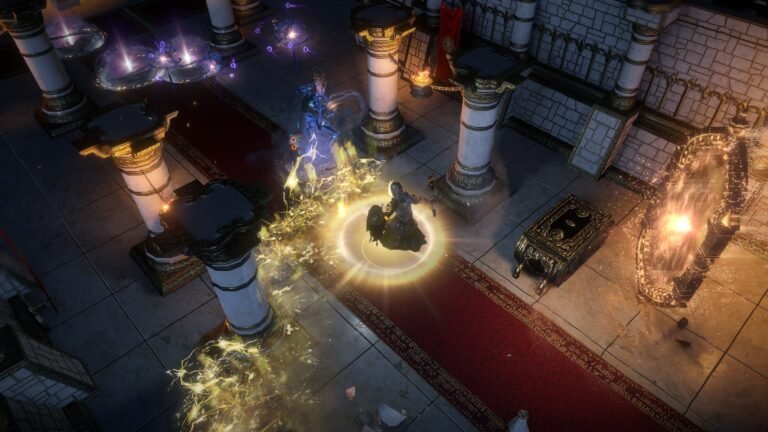
Interface histórica de Teamfight Tactics Mobile divulgada pela Riot Games em fevereiro de 2020. Material de demonstração da versão mobile, anterior a Selvas Encantadas. Imagem: Riot Games.
Imagine having two durable units, three ranged attackers, and enough resources for one purchase. The shop offers a powerful piece, but another unit would complete a team synergy. Saving your resources could also open up an opportunity in later rounds. Which choice best prepares you for the next fight?
Once combat starts, your units advance, attack, and use abilities according to the game’s systems. Watching the result helps you understand what worked and what needs to change. In auto battlers, automatic combat does not mean strategy disappears: building a lineup and adapting your choices are central to the challenge.
Dota Auto Chess, the standalone Auto Chess, Dota Underlords, Teamfight Tactics, and Hearthstone Battlegrounds each developed different interpretations of this idea. This feature traces their history and explains how recruitment, positioning, and economic decisions shape battles you do not command attack by attack.
Updated October 21, 2026.
Nesta matéria
What defines an auto battler?
Auto battler roughly means a game built around automatic battles. The term describes experiences in which players select, combine, or develop units while the fights themselves are carried out mainly through actions controlled by the game.
In many titles, players buy characters offered in a shop and place them on a board. During combat, those units attack, move, and use abilities according to their characteristics and the game’s rules. The formula is not limited to conventional boards, however: some experiences use cards, minions, RPG characters, or other recruitment systems.
Decisions can involve economy, equipment, upgrades, and ability choices.
If combat is automatic, what does the player actually control?
Above all, preparation. Imagine two players with the same characters. One places durable units in front and protects fragile damage dealers behind them. The other ignores each character’s role when positioning the team. Depending on the game rules and the opponents’ abilities, the outcomes could be completely different. Strategy also appears in how resources are spent.
Players do not have to control each individual attack to influence the result.
Does every auto battler have eight players and three-star units?
No. Games such as Auto Chess and Teamfight Tactics made that structure familiar, but it is not a universal requirement.
Player counts, board layouts, and upgrade systems vary. Some games feature persistent progression or RPG elements; others use card-based systems or cooperative modes. The genre is defined by the relationship between preparing a lineup and seeing how it performs in automated combat.
The origins of auto battlers: before Dota Auto Chess
Automatically resolved battles existed in video games long before 2019. Various strategy games and RPGs let players arrange characters or units that performed certain actions without requiring constant individual commands. Card games also developed combinations, recruitment systems, and automatic effects. In RTS custom maps, communities experimented with experiences focused on unit formations and combat outcomes.
Those predecessors helped create conditions for new formats to emerge. They did not necessarily use all the features of modern auto battlers.
Pokémon Defense and Warcraft III community maps
One historical experience often mentioned as a predecessor to Auto Chess is Pokémon Defense, a Warcraft III community custom map. Assembling units and watching automatic confrontations resembles features that later became popular in the genre.
Another predecessor is Legion TD, created by Lisk in 2009 for Warcraft III. The team’s own retrospective describes the concept of defensive structures that come alive in battle. Its connection to tower defense and wave defense should not be erased by retroactively treating it as identical to the competitive auto battlers of 2019.
Records from these communities are fragmented, however. Dates, versions, and lines of influence are not documented as clearly as later commercial releases. Pokémon Defense therefore deserves recognition as a debated historical reference, not a claim that it single-handedly created auto battlers or directly supplied every Dota Auto Chess mechanic.
The commercialization of a more recognizable formula took off in 2019.
Dota Auto Chess: the mod that popularized the modern formula
On January 4, 2019, Drodo Studio released Dota Auto Chess as a custom Dota 2 map. The project’s Steam Workshop entry preserves the original publication, which may appear as the evening of January 3 depending on the displayed time zone, and its 8 × 8 board-based automatic battles.
The experience used characters associated with the Dota universe but placed them in a structure different from a traditional MOBA.
Instead of directly controlling one hero, contesting lanes, and destroying the enemy base, players assembled teams that fought automatically. Each round offered chances to buy characters, arrange the board, and improve the lineup.
Economy, unit combinations, and the ability to adapt to opponents were essential.
How did matches work?
In the formula popularized by the mod, several participants competed over successive rounds. They bought and positioned units on a battlefield, then watched the characters fight automatically. Losing could reduce the player’s health. As the match progressed, participants were eliminated until a winner remained. The structure brought together strategy, resource management, and competition.
The challenge was not simply acquiring a powerful unit. Players had to find characters that worked well together and decide when to invest in new options.
Why was Dota Auto Chess so influential?
The mod rapidly popularized a way to compete without directly commanding an army during combat. Players needed to think about compositions, positioning, economy, and probabilities. Matches could also unfold differently because unit availability and opponents’ choices changed the opportunities. Its success drew developers’ attention and encouraged new projects.
Within months, several companies were developing their own interpretations. Dota Auto Chess did not invent automated fighting, but it was decisive in establishing and popularizing the modern auto battler genre.
Auto Chess and Dota Underlords: two paths after the mod
The growth of Dota Auto Chess led to an important split. Drodo Studio developed a standalone game, while Valve created another title from the same strategic tradition.
These were not identical versions of the original mod.
Auto Chess: an independent identity
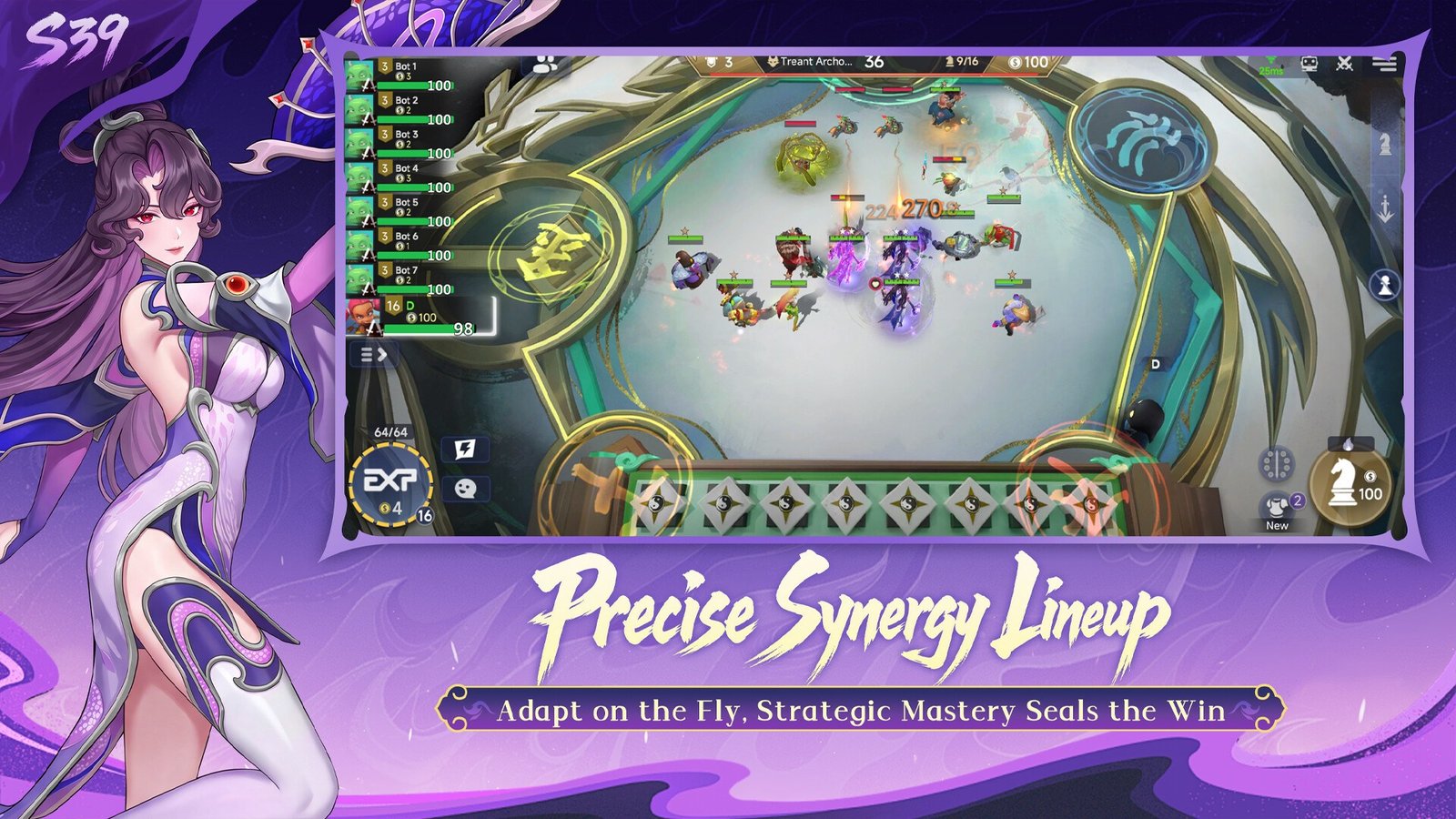
In 2019, Drodo Studio began releasing standalone versions of Auto Chess, initially focusing on mobile devices and later expanding to other platforms. The new game retained central ideas of recruitment and automatic combat, but developed its own characters, presentation, and systems rather than simply reproducing all of Dota 2. Players gather units with different classes and attributes.
Combining certain characters can unlock team-wide bonuses. The game also features upgrading, economy, and positioning systems.
Distribution of the standalone Auto Chess is associated with Dragonest. Its Steam edition, listed under Chengdu Longyuan Network Technology, records December 7, 2022. That is the release date of this edition, after the 2019 mobile debut—not the birth of the standalone game.
Dota Underlords: Valve’s interpretation

In June 2019, Valve made Dota Underlords available in early access, with an open beta beginning June 20. It used characters and elements associated with the Dota universe but was developed as a standalone production.
Its formula involved buying units, arranging teams, and playing rounds of automatic combat. Dota Underlords also had alliances that granted bonuses for certain character combinations. A team could be built around particular alliances, but players also had to consider each unit’s individual value and board position.
Underlords and different modes
As development progressed, Valve introduced characters called Underlords, each with unique abilities and characteristics. The game also offered modes such as Knockout, changing match length and some rules. On February 25, 2020, Dota Underlords left early access and received its full launch and first season. The update added content, systemic changes, and the City Crawl campaign.
On October 21, 2026, the official Dota Underlords Steam page still offered the game free of charge. Store availability does not prove there are new seasons, active support, or working servers for every mode. Nor does it establish an official shutdown. Its historical significance lies in Valve’s distinct interpretation, with alliances, Underlords, and modes different from the mod.
Teamfight Tactics and the expansion of auto battlers
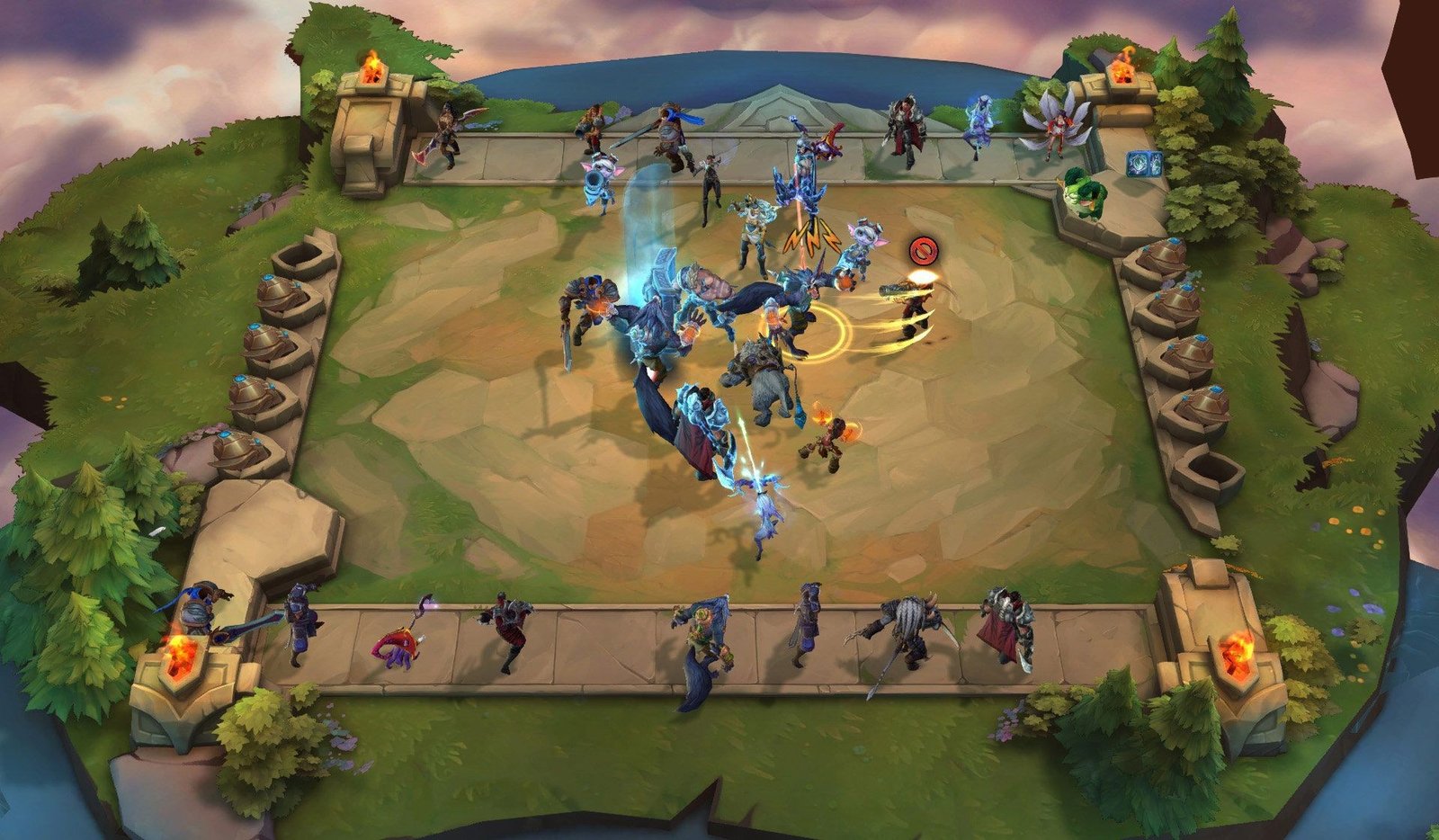
In June 2019, Riot Games launched Teamfight Tactics, commonly called TFT. It uses characters and elements from the League of Legends universe but has an entirely different competitive structure from the MOBA. In League of Legends, players directly control a champion in fights and objective contests. In TFT, they recruit characters, arrange a team, and prepare their strategy for automatic battles.
Riot itself acknowledged in its June 18, 2019 development diary that Dota Auto Chess inspired TFT.
Compositions, traits, and items
TFT champions can have traits that grant bonuses when specific conditions are met. Combining characters who share traits may activate team-wide effects. But simply fielding units with the same trait does not automatically produce the strongest composition. You must consider their roles, abilities, and opponents. Items are also part of the strategy.
One item may make a champion more durable. Another may strengthen attacks or abilities. Choosing which champion receives each item can substantially change the team’s performance.
Why sets matter
One of TFT’s most important features is its development through sets. A set may change the roster, traits, special mechanics, and strategic possibilities. Learning a composition in one period does not guarantee that it will exist in the same form later. Sets are designed to renew the available decisions and encourage players to learn new interactions.
Updates within a set also change balance and how systems work. The auto battler principle remains the same: build a team capable of facing opposing compositions.
Teamfight Tactics in October 2026
On August 26, 2026, Riot released Set 18, Enchanted Wilds (Selvas Encantadas in Portuguese). The set introduced magical forests, new character groups, and Will-o’-Wisps: resources purchased from the shop during planning that can grant combat power, gold, experience, or other effects. Under the basic rules, one can be bought each round in alternating shops, with costs changing as the match progresses; specific traits can modify those limits.
Choosing a Wisp that grants gold or experience instead of immediate power adds another preparation decision.
The launch also marked a move from Hextech to Unreal Engine, confirmed in patch 18.1 notes. This was a technology change within the same game, not the release of a “TFT 2.” On October 6, 2026, Riot published patch 18.4, adjusting traits, champions, and augments.
The engine transition also brought problems. In its October 13 Follow the Fix update, Riot acknowledged performance issues, crashes, delayed interactions, and missing cosmetics, and outlined its repair priorities. Thus, set renewal coexisted with technical recovery still in progress at the article’s editorial date.
After 18.4, patch 18.5 notes, published October 20, 2026, brought more targeted balance changes. Publication of notes does not establish simultaneous deployment in every region or resolution of all migration issues.
The announcement also described Choncc or Treat, a temporary Halloween version of Choncc’s Treasure, available according to Riot until November 17. It was an event, not a permanent Enchanted Wilds rule.
Hearthstone Battlegrounds and the move into card games

In November 2019, Blizzard introduced Hearthstone Battlegrounds as a mode inside Hearthstone. The official announcement distinguishes November 5 early access from the November 12 open beta. It uses the characters, minions, and visual language of a card game but structures fights as an auto battler.
Rather than building a traditional deck and directly playing cards in response to opponents’ actions, players recruit minions and develop a lineup during the match.
The Tavern and recruitment
In Battlegrounds, players visit a Tavern to recruit minions. Available options depend on the rules and the Tavern Tier. They can also sell units, look for new choices, and develop their team. Some minions have effects that work better alongside specific characters, so identifying combinations is an important part of strategy. Positioning matters too, but it works differently from TFT’s board.
In Battlegrounds, minion order can affect attacks and the triggering of certain effects. It does not use the same front-line/back-line arrangement as a traditional hexagonal battlefield.
Triples and heroes
One familiar Battlegrounds mechanic allows players to combine three copies of certain minions into a golden version, according to the rules. Heroes have powers of their own that change the options available during the match. Hero choice can influence which strategies are attractive, but it does not determine the outcome by itself.
Players must still manage resources and adapt their lineups.
How had Battlegrounds evolved by 2026?
Battlegrounds adopted seasons with different mechanics and content.
On August 4, 2026, Season 14, Dark Gifts of Dalaran, began. Dark Gifts let players spend gold to discover a minion associated with a special benefit, with limited choices per match and offers that improve over successive turns. The season also refreshed minions, heroes, and Trinkets.
On September 22, 2026, during the 36.6.1 update cycle, Blizzard introduced Aberrations, a minion type involving discard and sacrifice interactions. Deaths of allied Aberrations advance the summoning of a God, C’Thun or Y’Shaarj, during combat. These are Battlegrounds rules, not automatic copies of traditional Hearthstone’s card and turn structure.
The October 1 patch 36.6.3 notes adjusted the initial pace of Aberrations: summoning required four deaths instead of three, and the Gods moved to a different tier to reduce damage to heroes. The period of guaranteed Aberration appearances also ended early, returning to normal appearance chances.
These changes affected when a God could be summoned and the risk of hero damage; launch-announcement conditions no longer fully described the October mechanic.
This renewal concerned Battlegrounds. Traditional Hearthstone is a card game built around decks and direct turn-by-turn commands; patch 37.0 notes, which also concerned an expansion and Arena, do not themselves establish a new Battlegrounds season.
How does an auto battler match work?
A traditional match, as seen in TFT and Auto Chess, can be summarized as: Receive resources → Buy units → Build a lineup → Position units → Watch automatic combat → Assess the result → Adapt. This helps explain the genre, but it is not a universal rule. Some games have different steps, extra decisions, or special modes. It is also important to distinguish choices made in a single round from those that influence the entire match.
Buying units and developing your team
Early on, players usually have few resources and a limited number of characters. The shop presents options that can be bought under the game’s rules. A unit may be appealing because of its individual strength, while another may complement an existing team trait. These decisions begin in the opening rounds. Buying every available character is generally not viable: resources are limited and lineups require planning.
Players have to decide which units to keep and when to search for alternatives.
Positioning: front line and back line
In board-based auto battlers, positioning can affect which units take the first hits and how characters reach their targets. A durable unit may stand in front to absorb damage while more fragile attackers strike from protected positions.
That arrangement is not always sufficient, though. Imagine an opponent with an ability that hits several nearby characters. Grouping your entire team together may make it vulnerable. In another situation, spreading your units too widely may make protecting a key character harder.
The best choices depend on movement, range, and targeting rules. TFT, Auto Chess, and other games do not implement these systems identically.
Synergies and traits
A synergy occurs when certain units provide bonuses by working together. In TFT, these systems are commonly organized as traits. Dota Underlords used alliances, and Auto Chess features class, species, or comparable group combinations. Battlegrounds has minion types and numerous interactions between effects. Imagine two units granting a bonus when fielded alongside particular allies.
Adding a third character might strengthen the entire team, even if that new recruit is not the strongest unit individually. That creates an important choice.
Is a powerful standalone unit more valuable than one that improves the whole lineup? There is no universal answer; it depends on the bonuses, opponents, and match conditions.
Upgrading units
Many auto battlers allow characters to be strengthened by combining copies or using other upgrades. In TFT and the Auto Chess tradition, different upgraded versions of units can be obtained under specific rules. Upgrades may improve stats or abilities, encouraging players to seek more copies. But doing so requires investment and depends on availability.
In Battlegrounds, golden versions have their own combination rules.
None of these systems should be described as a universal three-star formula for the entire genre.
Equipment and modifiers
Some games offer items that alter characters’ attributes. A durable unit may be given equipment that improves its protective role, while an attacker might receive an item that strengthens attacks or abilities. Certain games also offer augments and special choices during matches. These decisions change a unit’s value to the lineup. In TFT, items and augments play major strategic roles.
Other auto battlers may use different systems or give equipment less emphasis. The genre does not require a full RPG inventory.
Economy, shops, and probabilities: choices that shape the future
Resource management is one of the most important features of many auto battlers. Players have to decide between strengthening their lineup immediately and saving for later rounds.
What is a reroll?
Rerolling refreshes the shop’s available recruitment offers, usually at a cost. In some games, it lets players search for particular units.
But searching is not the same as guaranteeing a result. The unit you want may not appear right away.
Repeatedly refreshing the shop uses resources and can make it harder to develop the team. The choice depends on that unit’s importance and the match’s economy.
Imagine needing one more copy to upgrade your main attacker. Spending gold on rerolls might find it, but could also use up your savings without success. Leveling up or buying an available defender might improve the lineup in a different way. The decision depends on probabilities, remaining health, and immediate team needs—not merely on your preferred piece.
Levels and probabilities
Some auto battlers also let players spend resources to raise their level or increase the number of units they can field. Level can affect the availability or odds of recruiting characters at different costs.
These systems vary between games and updates, however. There is no universal probability table for all auto battlers.
The key point is that economic decisions can change future recruitment opportunities.
Save or spend now?
This is one of the genre’s recurring dilemmas.
Imagine your team is losing fights. Saving resources might support a stronger future strategy but risks losing more health before you can improve it. Spending immediately could help in the next round, yet weaken your ability to buy more important upgrades later. The challenge is evaluating the current state of the match rather than following an inflexible savings rule.
Shared pools and contested units
In some formats, including Auto Chess and TFT, recruitment draws on a shared pool of units. Other players’ decisions can therefore affect the availability of particular characters. Imagine several participants trying to complete the same composition. Gathering the necessary copies may become harder.
Switching strategies could then be an advantage. You might seek a different combination that makes use of available units. This introduces competition even before fights begin: opponents influence not only battles but also your options for building a team.
Losses, health, and adaptation during a match
In many competitive auto battlers, losing a round does not immediately eliminate a participant. Players have health or an equivalent system affected by results. As combat continues, some participants are knocked out until the game’s victory condition is reached.
That makes it possible to accept certain early losses while building toward a stronger lineup later. Continuously losing, however, can leave too little time for the plan to come together.
Why scouting opponents matters
Scouting means examining other participants to make more informed decisions. Where a game provides the necessary tools, players may inspect opposing units, synergies, items, or positioning. Imagine your most dangerous opponent has a unit that can quickly reach your back line. You might reposition your main damage dealer or add a defender.
If several opponents are pursuing the same composition, recognizing that could also help you decide whether to change course. Available information varies by game. You do not need to inspect every opponent constantly to appreciate why scouting matters.
Are luck and skill opposites?
No. Auto battlers often combine strategic choices with randomness. The shop might not offer the unit you need. An item might arrive at a particular time. Combat conditions can produce different outcomes. None of that makes the decisions meaningless.
A player can prepare alternatives, save resources, and adapt to the opportunities at hand. That does not guarantee victory in every match. Skill also involves making good decisions with incomplete information and uncertain outcomes. This mixture of planning and adaptation is a central appeal of the genre.
Auto battler, MOBA, tower defense, and RTS: what are the differences?
Auto battlers share some elements with other strategy genres, but their focus is distinct.
| Genre | Central feature | Examples |
|---|---|---|
| Auto battler | Preparing compositions for automatic battles | TFT, Auto Chess |
| MOBA | Controlling characters and contesting objectives as teams | Dota 2, League of Legends |
| Tower defense | Protecting objectives from enemies using defenses | Bloons TD, Kingdom Rush |
| RTS | Managing and commanding forces in real-time strategy | StarCraft, Warcraft III |
| Card games | Organizing cards and using their own rules for confrontations | Traditional Hearthstone |
| Idle / incremental | Developing resources and systems through progression, often with automation | Cookie Clicker and other incremental games |
Auto battler vs. MOBA
Dota Auto Chess originated inside Dota 2, while TFT uses League of Legends characters. That explains their historical proximity to MOBAs, but not an identical structure: directly controlling a hero while fighting over objectives is different from preparing a lineup that fights automatically.
Sharing characters or a fictional universe does not make two games the same genre. ZAUS.GG explores arena games further in MOBA: what it is, how it works, and how the genre evolved.
Auto battler vs. tower defense
Both styles may feature units that attack automatically, as well as positioning, resources, and combinations. Their objectives are usually different. Tower defense generally asks players to stop enemies from crossing paths or reaching a protected target.
An auto battler typically asks players to develop a team composition to face other lineups over several rounds. Automatic attacks do not make the genres interchangeable. Hybrids exist, but defending a route and competing with automated lineups are different structures. See Tower Defense: what it is, how it works, and how defense games evolved.
Auto battler vs. RTS and turn-based strategy
In a traditional RTS, such as StarCraft, players may need to command units directly during combat. Auto battlers shift much of the decision-making into preparation. This does not mean every auto battler is a traditional turn-based strategy game. Many have distinct planning rounds followed by automatic combat taking place in continuous time. Step-by-step preparation does not turn a game into Civilization or XCOM.
Auto battler vs. card games
The Battlegrounds Tavern illustrates how cards can represent auto battler units. Traditional Hearthstone, by contrast, revolves around building a deck and playing cards directly during turns. Visual presentation alone does not determine the genre.
Auto battler vs. idle games
Another common confusion comes from the word automatic. In idle and incremental games, progress may occur through automated processes, with varying degrees of interaction and persistence. Cookie Clicker, for example, centers on growing production, which differs from preparing a lineup for automated battles.
In many competitive auto battlers, players still make significant decisions between fights. Combat might run without direct commands, but the lineup does not efficiently develop itself.
Automatic combat is not the same thing as passive progression.
Modes, mobile devices, and competitive play
The genre’s evolution has gone beyond traditional multiplayer free-for-all matches.
Some auto battlers developed duo modes, solo challenges, and alternative competitive rules. TFT’s Double Up lets two participants cooperate within its own match structure. Hearthstone Battlegrounds also offers duos, with cooperation systems different from TFT’s. Other titles let players face computer-controlled opponents. It is therefore incorrect to assume that every auto battler requires an eight-player individual match.
Expansion onto phones
The cycle of preparation and automatic fighting also lends itself to touchscreens. Selecting characters, buying units, and rearranging compositions can work through touch inputs. Auto Chess received mobile versions in 2019. Teamfight Tactics Mobile came to Android and iOS in March 2020, expanding accessibility and cross-platform play between compatible platforms.
Hearthstone Battlegrounds can also be accessed on platforms compatible with Hearthstone. That does not mean every game provides exactly the same features or integration across devices. These capabilities have to be checked for each title.
Auto battlers and esports
Competition also became an important part of certain games’ identities. TFT developed an international circuit, including regional tournaments and the Tactician’s Crown. As of October 21, 2026, the Enchanted Wilds regional finals were still upcoming. Riot’s October 20 guide scheduled AMER, EMEA, and APAC events for October 23–25 and October 30–November 1, while China had its own qualification process.
The Tactician’s Crown was scheduled for November 13–15, 2026. This calendar described the competitive path without declaring final qualifiers or a champion before those events took place.
These tournaments reward consistent performance over many matches, rather than just one victory. Participants may have to adjust lineups, manage risks, and repeatedly place well. Not every auto battler has an established professional circuit, however: competitive scenes depend on communities, developer support, and individual game design.
Games that shaped the evolution of auto battlers
The following selection includes precursors and projects that contributed to the genre’s development. It is not a ranking of the best games.
| Game or project | Year | Significance or defining feature |
|---|---|---|
| Pokémon Defense, Warcraft III map | Community precursor; specific chronology not firmly established | Unit organization and combat in custom maps |
| Legion TD, Warcraft III map | 2009 | Prepared units come to life in a wave-defense structure |
| Dota Auto Chess | January 4, 2019 | Popularized the modern auto battler formula |
| Standalone Auto Chess | 2019 mobile versions; Steam December 7, 2022 | Turned the mod formula into a separate game with original characters |
| Dota Underlords | June 2019 early access / open beta | Valve’s interpretation using the Dota universe |
| Teamfight Tactics | June 2019 | Riot Games expanded the genre commercially |
| Chess Rush | Launched 2019; services ended 2022 | Another mobile interpretation of the competitive formula |
| Hearthstone Battlegrounds | November 2019: early access on the 5th; open beta on the 12th | Tavern-based recruitment and automatic minion combat |
| Might & Magic: Chess Royale | Launched January 2020; services ended March 2023 | Large-scale elimination using auto battles |
| Dota Underlords, full launch | February 25, 2020 | First season, Underlords, and distinct modes |
| Teamfight Tactics Mobile | March 2020 | Brought TFT to mobile devices |
| TFT — Set 18: Enchanted Wilds | August 26, 2026 | Continued roster, trait, and mechanical renewal |
Community precursors should not be confused with full commercial releases. Likewise, standalone Auto Chess is not exactly the original Dota 2 mod.
Some projects shut down their services. For Chess Rush, Tencent’s announcement reproduced by Gizmologi in January 2022 stated that service would end on April 7, 2022. Might & Magic: Chess Royale launched in 2020, but ended service in March 2023, as recorded in a document Ubisoft submitted to the Québec court record. Launch and shutdown are separate milestones.
TFT, Battlegrounds, and Dota Underlords also took different paths. A game remaining available does not guarantee that it still receives the same level of development as its competitors.
Who are auto battlers for?
The genre may particularly appeal to players who enjoy planning, economic management, and experimenting with combinations.
Different recruitment and presentation systems create experiences with varying pace and demands. Learning numerous units, recognizing interactions, and understanding when to spend resources can take practice. It can be frustrating to search for a particular unit and never find it. Frequent updates also demand adaptability from players following games in active development.
On the other hand, those changing conditions and uncertainties can make each match rewarding for people who enjoy analyzing possibilities and finding new solutions. Players who prefer controlling characters directly during combat may connect more with other strategy or action genres.
In auto battlers, the satisfaction often comes from building a team that works, understanding why a choice succeeded, and discovering new ways to improve the lineup.
In auto battlers, victory is shaped by decisions made before combat
An automatic fight makes the consequences of preparation visible. A protected attacker can fulfill their role; an incomplete synergy may reveal the value of another unit. Interpreting those results and adapting the next choice keeps the player at the center of the strategy.
The reward comes not only from assembling a successful team, but also from recognizing when to abandon a plan and seize a different opportunity. Combat is automated; the reasoning that builds the composition still belongs to the player.
About the Author