Garen em arte oficial de League of Legends. Imagem: Riot Games.
MOBA stands for Multiplayer Online Battle Arena. It is a strategy and combat genre in which players control characters with distinct abilities and work together to achieve objectives on a shared map. Imagine a match in which your team has just won a fight against its opponents.
It seems like the perfect moment to celebrate. But the enemy base is still standing, towers still protect the lanes, and opposing players may return in seconds. Winning the fight mattered. Making the most of that advantage may matter even more.
In games such as League of Legends and Dota 2, eliminating players is only one way to make progress. Controlling areas, acquiring resources, destroying structures, and deciding when to engage the enemy team are all part of the strategy. This combination distinguishes MOBAs from games focused exclusively on combat.
The genre grew out of experiments and modifications created by communities around strategy games, especially StarCraft and Warcraft III. Over time, it moved beyond custom maps and became its own category, with major competitions and different interpretations of its formula.
Today, there are traditional three-lane experiences, games with varied objectives, third-person MOBAs, and versions adapted for phones. In this feature, we trace that journey, explain how a match works, and explore why strategy, progression, and cooperation matter so much to the genre. Updated October 20, 2026.
Nesta matéria
What defines a MOBA?
In its most familiar format, a MOBA places two teams on opposite sides of a map. Each player primarily controls one character, usually called a hero or champion, while game-controlled units advance along predetermined paths. Teams seek resources, destroy structures, and work toward a primary objective. In a traditional League of Legends match on Summoner’s Rift, for example, victory means destroying the enemy Nexus.
In Dota 2, the main objective is to destroy the opposing Ancient. Although these structures have different names, both are part of a tradition in which teams must advance across the map to reach the other base.
Are MOBAs always 5v5?
No. Five players per team became especially well known through League of Legends, Dota 2, and other titles, but the number of participants depends on the game and mode. There are also MOBAs with different objectives, varied maps, and their own progression systems.
Camera perspective is not mandatory either. Many MOBAs use a top-down or isometric view, but titles such as SMITE feature third-person combat. The genre is not defined simply by controlling a character with abilities. It is the combination of contested objectives, team strategy, and progression within each match.
Three lanes, an item shop, a jungle, four abilities per character, and mouse-and-keyboard controls are not universal requirements. They describe particular formulas, not a mandatory checklist. Pokémon UNITE and Heroes of the Storm demonstrate how scoring, map objectives, and shared progression can organize different experiences.
Where did MOBAs come from?
MOBA history is tied to real-time strategy games, or RTS. In a traditional RTS, players often control multiple units, manage resources, and organize military forces across a map. Base building and economic systems vary from game to game.
As scenario-creation tools became more popular, communities began experimenting with designs in which each participant controlled a special unit within a larger battle. That shift would prove fundamental to the birth of MOBAs.
Aeon of Strife and the StarCraft custom maps
Released by Blizzard Entertainment in 1998, StarCraft included tools for making custom maps and modes. Among the projects associated with MOBA origins was Aeon of Strife, created within the StarCraft and Brood War community. It focused action on controlling special units while other troops advanced across the battlefield.
Records of its versions and creator credits are scattered. There is no reason to equate its release date with StarCraft‘s 1998 debut or to name one person as the sole inventor of the entire formula.
The project introduced features that would later be developed in more complex games. Instead of commanding an entire army, players participated directly in a contest organized around individual characters and objectives.
Aeon of Strife is recognized as an important precursor, although its historical versions and development took place in a community environment that makes it difficult to attribute the entire formula to any single individual.
Warcraft III and the birth of Defense of the Ancients
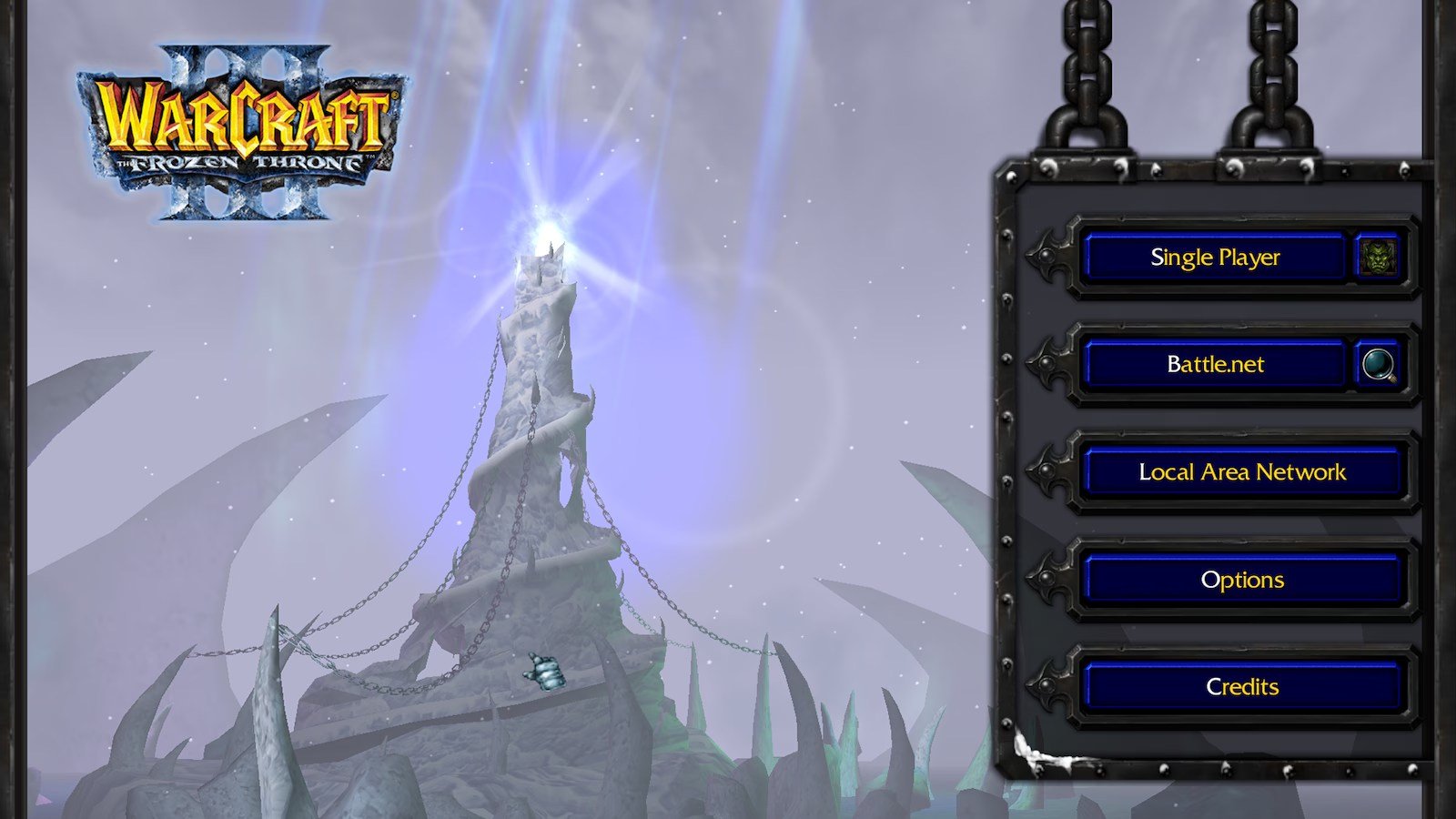
In 2002, Blizzard released Warcraft III: Reign of Chaos, an RTS that placed considerable importance on heroes, their abilities, and their progression.
Its map editor allowed creators to make experiences very different from the campaigns and traditional matches.
This was the environment in which Defense of the Ancients (DotA) emerged, a modification inspired by concepts previously explored by the community. The earliest DotA versions are associated with Kyle Sommer, known as Eul, around the transition from 2002 to 2003. A court record containing testimony from the developers places the initial creation in the World Editor in late 2002; 2003 frequently appears in accounts of its wider circulation.
The date of initial development and that of the best-known versions do not have to be the same.
Further development involved additional people and versions, particularly after the 2003 expansion The Frozen Throne.
Eul, Guinsoo, and IceFrog: different contributions
DotA’s evolution cannot be credited to just one developer. After the earliest releases, different creators built interpretations of the format. The project called DotA Allstars brought together ideas and characters from different versions and became especially influential. Records mention Meian and Madcow in the formation of that version in 2003, before Guinsoo’s later work. Its history includes more contributors than a simple handoff among three names.
Steve Feak, known as Guinsoo, was involved in an important stage of development. IceFrog later took a central role in maintaining and evolving competitive DotA Allstars. This path helps explain the genre’s deep community roots. The modern MOBA did not originate as a fully planned commercial product. It was built through experimentation, modifications, and successive contributions.
How did DotA establish the modern formula?
Defense of the Ancients brought together features that became fundamental to many later MOBAs. Two teams controlled heroes with their own abilities while automated units advanced down lanes. Towers guarded those paths, resources allowed heroes to improve, and victory depended on destroying the opponent’s main structure. Each match had its own progression.
A hero who was relatively weak at the beginning could become much stronger by gaining levels and buying equipment. Yet this progression happened within a team contest. DotA helped establish the relationship between individual combat and team strategy: developing a hero needed to contribute to collective defense and advancement. The formula was eventually developed into standalone games that no longer needed to operate as custom Warcraft III maps.
League of Legends and Dota 2: the genre expands
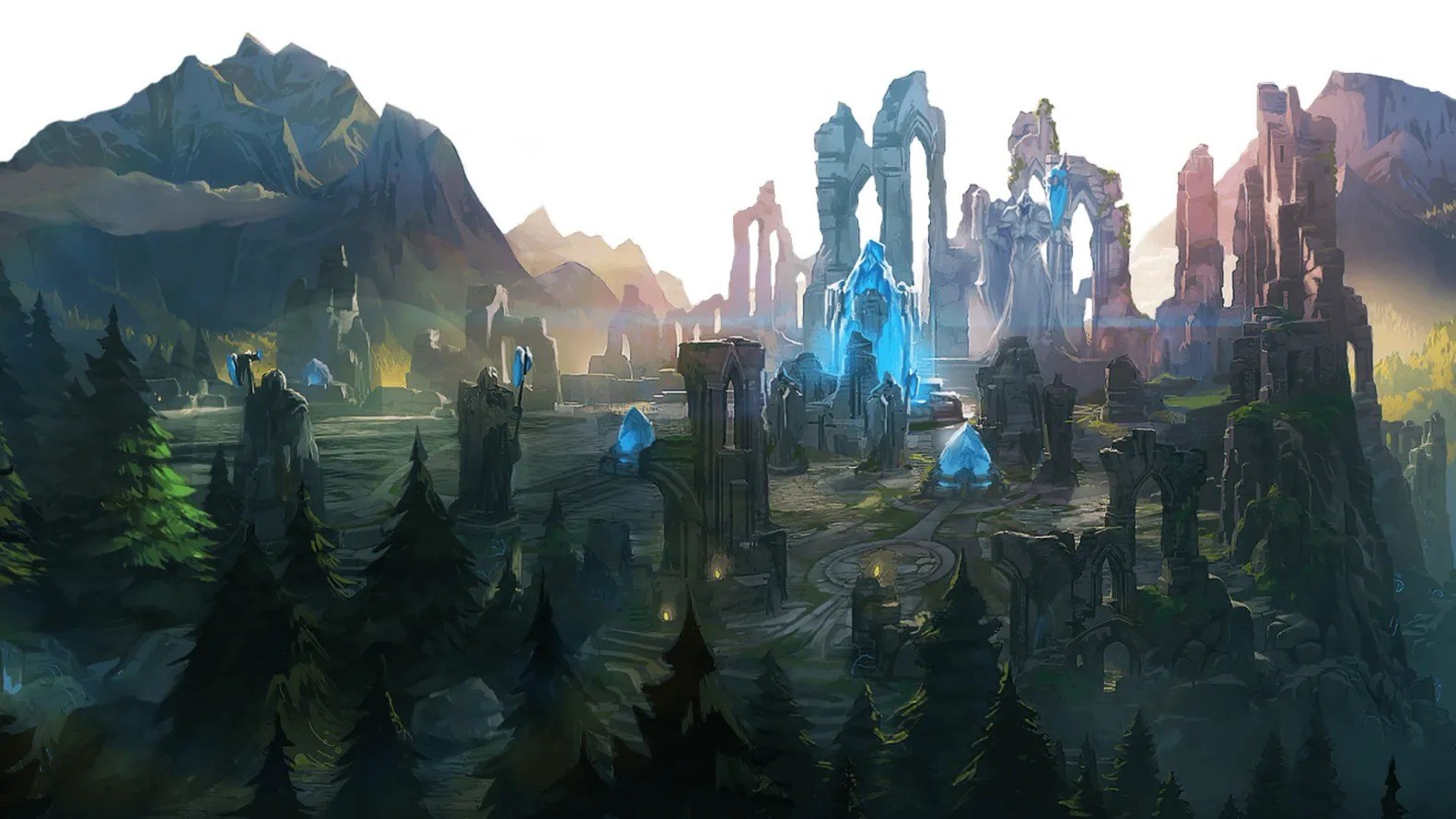
In 2009, Riot Games released League of Legends. It helped bring MOBAs to a wider audience through a free-to-play model and its own framework for updates, characters, and competition. Its main traditional map, Summoner’s Rift, has two bases connected by three lanes, with jungle areas and objectives spread across the map. Players choose champions with different attacks, abilities, and characteristics.
Throughout the match, they acquire gold, experience, and equipment that affect their power. The success of League of Legends helped turn MOBAs into a category recognized around the world.
Riot also revisits earlier stages of the game through League Classic, a mode distinct from current League, not a separate sequel. In its October 14, 2026 announcement, the company confirmed that this phase would continue through the end of 2026 Season 3, with an expected conclusion in January 2027. An intention to bring it back, possibly as an adjusted event, does not mean permanent availability or establish a confirmed return date.
Dota 2 and the continuation of the original tradition

In 2013, Valve officially launched Dota 2 after an earlier testing period. The public-launch announcement from Valve distinguishes that stage from the beta. The game maintained a direct connection to the tradition of Defense of the Ancients, developing the formula on a standalone platform.
Dota 2 includes heroes, abilities, equipment, lanes, and objectives, but has distinctive systems of its own. These include complex interactions between abilities and items, unit-control elements, different ways of navigating the map, and specific economic mechanics.
Players may need to consider not only the damage they deal, but also how particular items interact with enemy powers. In some situations, a defensive ability or an item used at just the right moment can completely change a fight.
Are League of Legends and Dota 2 the same?
No. Both share a structure based on heroes, teams, resources, and destroying the enemy base. However, they differ significantly in abilities, economy, movement, maps, equipment, and combat rules. League of Legends developed its own identity around champions, roles, and objectives on Summoner’s Rift.
Dota 2 preserved and expanded many features of the original DotA tradition, including particularly intricate system interactions. There is no need to declare one superior to appreciate these differences. Both games helped establish the MOBA as an independent genre.
Heroes of Newerth and other competitors

Heroes of Newerth, developed by S2 Games and released in 2010, was another significant representative of standalone MOBAs. It became known for an approach closely linked to DotA’s competitive tradition. Its original official services shut down in 2022. Heroes of Newerth: Reborn, by Kongor Studios, is a separate revival with a different operational structure.
As of October 20, 2026, its official website lists an open beta and active development; it is not a service that continued uninterrupted from 2010.
Following patch 0.13.0 on October 4, which introduced Parasite and jungle changes, 0.13.1 on October 11 brought Halloween content and client adjustments. The official list also records 0.13.2, dated October 19, 2026, with Gravekeeper and loading fixes. These releases show the beta’s continued development without making each update a new game launch. The artwork used in this article remains identified as material from patch 0.13.0.
Other titles have also explored their own interpretations, including Heroes of the Storm, SMITE, and mobile MOBAs.
How does a MOBA match work?
To understand the traditional structure, consider a match similar to those in League of Legends or Dota 2. Its flow can be summarized as:
Choose a character → Contest lanes → Gain resources → Grow stronger → Secure objectives → Push into the enemy base. This sequence is illustrative. Not all MOBAs use the exact same stages or victory conditions.
1. Choosing a character
Before a match, each player selects a champion or hero. Abilities, attributes, and interactions with teammates affect what they contribute to the team.
2. Starting the match and contesting lanes
The match begins with characters in their bases.
Game-controlled units move along lanes, fighting opposing units and attacking structures according to the game’s rules.
Players try to gain resources and prevent the enemy team from advancing. In many traditional MOBAs, these early contests are essential to character development.
3. Progression and equipment
Experience increases levels and improves abilities, while gold or other resources can buy upgrades, depending on the game. This progression usually starts over in the next match, unlike permanent account unlocks and customizations.
4. Objectives and team battles
Teams must also contest structures, special creatures, and strategically important regions.
Winning a fight may create an opening to take a tower.
Defeating a particular creature might provide a crucial advantage. But the reverse is also true: a team may avoid an unnecessary fight to secure something more valuable elsewhere on the map.
5. Victory
In the traditional format, a match ends when one team destroys the central structure in the enemy base. In League of Legends, that is the Nexus.
In Dota 2, it is the Ancient. Kills create opportunities; the victory condition determines how to use them.
Lanes, jungle, and objectives: understanding the map
Traditional MOBA maps divide combat into regions with different functions. Summoner’s Rift, for example, has three main lanes and a jungle area between them.
Top, Mid, and Bot: the three lanes
Top lane is the upper route. Mid lane is the middle route.
Bot lane is the lower route. In League of Legends, these positions are generally associated with a distribution of player roles.
But organization is not identical in every MOBA. In Dota 2, for example, the relationship between lanes and roles reflects that game’s particular map, teams, and strategies. The key is that lanes are routes along which units advance and structures need to be defended or destroyed.
The jungle and the jungler
The jungle is the area between lanes, which may contain neutral creatures and routes for moving around the map. In League of Legends, the jungler is generally responsible for gathering resources there and supporting different areas.
Their actions may include fighting creatures, contesting objectives, and surprising opponents who are focused on a lane. Such an approach is called a gank: an ambush or planned attack that catches a specific opponent off guard. However, there is no universal distribution of junglers and roles that applies to every MOBA.
Towers and defensive structures
Towers protect important routes. Advancing without accounting for them can put a character at risk. In many MOBAs, destroying towers allows teams to approach the enemy base and move more freely. Towers also organize territorial progression. A pushed lane can create opportunities, but can leave players exposed when they move too far away from teammates.
Neutral objectives
Some maps feature creatures or structures that initially belong to neither team. In League of Legends, dragons and Baron Nashor are well-known examples, although their rules and rewards may change with updates. In Dota 2, Roshan is one of the most recognizable examples. Such objectives may grant advantages that affect future fights. Controlling the area around them can therefore matter as much as winning a player-versus-player battle.
Heroes, roles, and team composition
Characters are central to each MOBA’s identity. League of Legends calls them champions; Dota 2 calls them heroes. Each has characteristics that influence how they face opponents and cooperate with teammates.
Abilities and playstyles
One character may deal damage from a long distance. Another may dive into the middle of enemy players and withstand attacks.
Some specialize in healing, protection, mobility, or crowd control. The term crowd control refers to abilities that limit enemy actions, including stuns, slows, and other restrictions. These differences make combinations possible. A durable character may initiate a fight while an ally uses abilities that hit several enemies at once.
Characters can also perform hybrid roles. Not everyone fits rigidly into a single class.
Carry, Support, Mid, and other roles
Several terms appear frequently in MOBA communities:
- Carry: a character or role expected to become especially important for damage and victory as the match progresses.
- Support: someone who generally helps allies through protection, control, vision, or other resources.
- Mid laner: a player or character who primarily operates in the middle lane.
- Jungler: a role associated with the jungle and movement between areas.
- Offlaner: a role particularly associated with Dota, linked to the difficult lane and responsibilities such as pressuring opponents, starting fights, or creating space, depending on the hero and strategy.
These names do not describe precisely the same organization in every game.
A character, class, role, and map position are also different concepts. The name of a lane alone does not determine what a character will do for the team.
In League of Legends, top laner, jungler, mid laner, marksman/ADC, and support describe a common distribution. In Dota 2, carry, mid, offlane, soft support, and hard support reflect different resource priorities and responsibilities. There is no automatic one-to-one match between the positions in the two games, or any mandatory proportion of tanks, healers, and damage dealers for every MOBA.
A durable character might initiate fights, while another with similar traits takes a more defensive role.
Why does team composition matter?
Imagine a team made entirely of characters that deal high damage, but have little durability and almost no defensive tools. They may score kills quickly but struggle to keep members safe in longer fights. Another composition may have defense and control but lack the damage needed to finish opponents. Combining roles changes strategic possibilities.
There is no universally correct composition, however. Maps, opponents, rules, and updates influence what works best.
Gold, experience, and items: why do characters grow during a match?
In traditional MOBAs, character progression depends on the resources earned during the match. This creates a connection between performance, planning, and power.
Experience and levels
Experience lets characters level up. As they develop, they can upgrade abilities and attributes according to the game’s rules.
A character early in a match typically has fewer resources than after developing some of their abilities. This progression changes the pace of fights.
Gold and farming
In games such as League of Legends and Dota 2, gold allows players to purchase equipment. An important source of resources is killing game-controlled units. The term farming describes repeatedly gathering resources, especially gold and experience, through such activities. Another common expression is last hit.
In systems that reward the player who delivers the finishing blow to a unit, performing that action correctly affects their economy. Even seemingly simple encounters with small troops can therefore influence character development.
Items and builds
A build is the combination of choices used to develop a character. It may include equipment, abilities, and other specializations. Some items increase damage or resistance. Others have effects that can be activated directly or trigger under particular conditions. The choice depends on the game, opponents, and match situation. Two players can use the same character and select different equipment to meet different challenges.
However, an item-shop economy is not required in every MOBA.
Heroes of the Storm: an alternative to the traditional economy
Heroes of the Storm, released by Blizzard in 2015, is an important example of a different structure. Instead of copying the classic economy of purchasing equipment, it uses team-shared experience progression and talent choices. Its system emphasizes collective development: gaining experience helps the whole team progress while each player chooses talents for their hero.
This shows that the genre can retain heroes, lanes, structures, and team strategy without requiring the exact economic model used by League of Legends or Dota 2.
Strategy: why don’t more kills guarantee victory?
In a MOBA match, players must balance immediate decisions with larger objectives. This relationship is often explained through two concepts: micro and macro. They influence each other: good individual execution can create strategic opportunities, and team decisions can make individual fights easier.
Micro: executing a character’s actions well
Micro involves decisions related to individual control, including movement, positioning, ability use, and reactions to enemy attacks.
A player may demonstrate good execution by dodging a dangerous ability or using a defensive resource at the right moment. Such choices directly influence combat.
Macro: understanding the match as a whole
Macro involves where players are positioned on the map and how they choose objectives. Imagine your team has just eliminated two enemies. It could keep pursuing the remaining opponents. But it may be more valuable to use that time to destroy a tower or secure an important creature.
That is a macro decision. The objective is not merely to win the fight, but to turn the advantage into team progress.
Vision and information
In many MOBAs, parts of the map are not visible at all times. Fog of war limits the available information. Vision systems, wards, and other tools may reveal areas according to each game’s rules. Not knowing where enemies are changes decisions.
Moving forward alone may look safe while creating an opportunity for the enemy team to ambush you. Similarly, controlling vision around an objective can make it easier to secure.
Teamfights and collective decisions
Teamfights depend on player coordination. Positioning and ability combinations can determine the result. One character may initiate the battle; another may protect allies, while teammates responsible for damage seek important targets.
But gathering everyone for a fight is not always necessary. Some strategies apply pressure to different areas of the map, forcing opponents to split their attention. The important point is that combat serves a broader strategic contest.
Early game, mid game, and late game
A match is also commonly divided into three phases. Early game: the opening, often associated with lane contests and gathering the first resources.
Mid game: the stage when team movements and objectives may become more important. Late game: an advanced stage when developed characters and decisive fights can end the match. These phases have no universally fixed duration. One team may build enough of an advantage to win early, while another match may last much longer.
Team compositions can also favor different phases.
Beyond LoL and Dota: different interpretations of the MOBA
The traditional three-lane, top-down formula became familiar, but it does not represent every possibility within the genre.
Other games have developed different perspectives, progression models, and objectives.
Heroes of the Storm: maps with their own objectives

Heroes of the Storm brings together characters from different Blizzard universes. Another important feature is its battlegrounds. Different maps may have special objectives that change how teams contest territory. Understanding each battleground is therefore an important part of strategy.
Heroes of the Storm continues to receive official updates: the September 28, 2026 patch notes document Xal’atath’s arrival along with map and balance changes. This means it should not be described as completely shut down, but it does not establish that new heroes or major content have arrived at the same pace in every phase of the game’s operation.
SMITE: a third-person MOBA
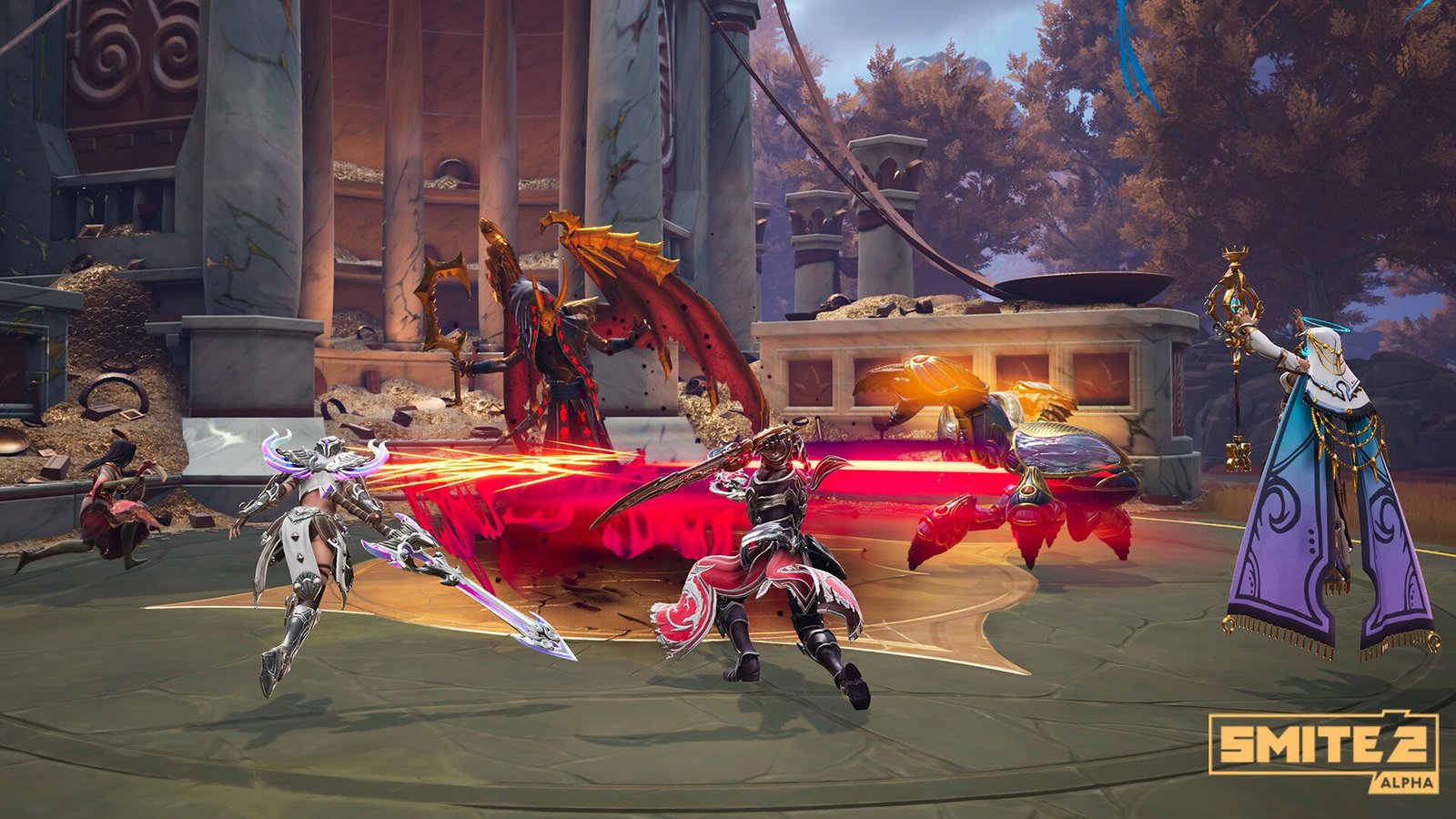
Released in 2014 by Hi-Rez Studios, SMITE featured gods and mythological figures in an action MOBA viewed from behind the character. Its development team later became known as Titan Forge Games. Instead of observing most of the battle from above, players experience the action from a camera closer to the hero.
That choice affects aiming abilities, awareness of the environment, and character control. The sequel, SMITE 2, is developed by Titan Forge Games and published by Hi-Rez Studios using Unreal Engine 5, with changes to systems including attribute and equipment combinations. As of October 20, 2026, its official FAQ still identified the game as being in open beta; free access does not mean a 1.0 release.
The project is available on PC, PlayStation 5, and Xbox Series X|S.
The OB46 — King Kappa Update notes, published October 19, 2026, cover Kuzenbo, ability changes, and adjustments to modes and equipment. Aspect of Spirits was scheduled for October 23, still in the future at the time of this editorial revision. Publishing notes, activating specific content, and releasing a finished game are distinct milestones. The alpha artwork used here depicts an earlier phase and does not automatically represent the appearance of OB46.
Games such as SMITE demonstrate that an isometric perspective is not a requirement for a MOBA.
Pokémon UNITE: objectives and scoring

Developed through a collaboration between The Pokémon Company and TiMi Studio Group, Pokémon UNITE debuted on Nintendo Switch on July 21, 2021, and reached Android and iOS on September 22, 2021. Teams control Pokémon with their own abilities and progression throughout each battle.
Its structure emphasizes gathering Aeos energy, contesting objectives, and scoring in enemy goal zones. Under the traditional rules of these battles, the team with the most points when time runs out wins.
That differs from traditional MOBAs whose victory condition revolves around destroying the main structure in the opposing base. The game shows how the formula can be reinterpreted around other objectives. The live service was also evolving at the time of the editorial revision: the official Asian news channel recorded October 2026 additions and adjustments, including an October 13 update.
For competitive play, the Pokémon UNITE Aeos Crown 2027 Tokyo had been announced as a tournament separate from the 2027 Pokémon World Championships. It was a future event, not a competition that had already taken place.
Wild Rift, Mobile Legends, and the move to phones

League of Legends: Wild Rift, from Riot Games, began rolling out publicly by region in 2020. Developed for Android and iOS, it uses touchscreen controls, its own interface, and adjustments to map design and pacing. At the editorial date, Android and iOS were the confirmed platforms.
Mobile Legends: Bang Bang, from MOONTON, launched in 2016 for Android and iOS. It became an important example of mobile MOBAs, especially within communities and competitions across different regions.
Touch controls require dedicated interfaces for movement, using abilities, and communication. They can also affect match pacing and structure. However, not all mobile MOBAs work the same way or necessarily have less strategic depth. These games show how the genre moved beyond its original computer-focused environment.
Deadlock: a hybrid still in development
Valve’s Deadlock is an example of the overlap between MOBA structures and third-person shooting. Characters, troops, lanes, progression, and objectives coexist with direct control of aiming and movement. It is not automatically an FPS or simply a reproduction of Overwatch or Valorant.
As of October 20, 2026, the official page described it as early in development, with temporary art and experimental gameplay, limited access through invitations from testers, and no announced final release date. These systems should not be treated as definitive rules or as a 1.0 version already open to everyone.
MOBA, RTS, RPG, and Hero Shooter: what is the difference?
These categories share some characteristics, but they are not interchangeable.
| Genre | Main characteristic | Examples |
|---|---|---|
| MOBA | Individually controlled characters, teams, and strategic objectives | League of Legends, Dota 2 |
| RTS | Control of multiple units and real-time strategy systems | StarCraft, Warcraft III |
| RPG | Character development, attributes, abilities, and other forms of progression | Baldur’s Gate 3, Dragon Quest |
| Hero Shooter | Shooting combat with distinct characters and abilities | Overwatch |
| Auto Battler | Team formation and largely automated battles | Teamfight Tactics |
MOBA vs. RTS
MOBAs inherited several features from RTS games, especially maps, units, structures, and real-time strategic decisions.
But they generally focus the player’s primary control on a single hero.
In traditional RTS games, managing armies and resources usually represents a broader part of the experience.
MOBA vs. RPG
MOBAs use levels, attributes, abilities, and equipment, which are also common in RPGs.
In many MOBAs, however, that progression largely takes place within independent matches.
A narrative campaign or permanent development of the same character between matches is not necessary.
MOBA vs. Hero Shooter
Overwatch is an example of a hero shooter, with specialized characters in a primarily shooting-focused structure.
Valorant requires a distinction: it is a competitive tactical FPS with agents and abilities, combining elements also associated with hero shooters. Rounds, attack and defense, a weapon economy, precise shooting, and fighting over the Spike organize its experience; it is not simply the same kind of game as Overwatch. Our article on FPS games explores the history of shooters in greater depth.
Having specialized heroes alone does not turn every competitive game into a MOBA.
MOBA vs. Auto Battler
Teamfight Tactics uses characters connected to the League of Legends universe and a variety of strategic systems.
Its gameplay, however, centers on forming teams and watching largely automated battles.
That places it closer to auto battlers than to the traditional structure in which players directly control a hero throughout the match.
MOBAs, esports, and constant updates
MOBAs have also strongly influenced the growth of professional video-game competitions.
League of Legends developed organized circuits and its World Championship, commonly known as Worlds.
Dota 2 established a competitive tradition in which The International became one of the genre’s most recognizable events. Mobile MOBA competitions, including Mobile Legends, have also developed their own international circuits and communities.
These organizations include professional teams, coaches, preparation, analysis of opponents, and decisions made during character selection. In 2026, the two main circuits were at different stages. The International had already concluded in Shanghai: Valve confirmed Team Spirit as champions after a five-game final. The August result should not be presented as a future competition in October.
Worlds 2026 was underway: the official schedule placed the Play-In on October 15–18, the Swiss Stage on October 23–31, and the final on November 14. As of October 20, 2026, the champion had not yet been determined. Riot identified patch 26.20, with notes dated October 6, as the competitive version for Worlds.
The 26.21 notes published on October 20 do not automatically supersede that reference; announcements and the activation of each piece of content must be distinguished.
Why do updates change competitive play?
Many MOBAs frequently change abilities, equipment, maps, and objectives.
These adjustments can affect which strategies and characters perform best.
The community often uses the term meta to describe the choices and strategies considered especially effective at a given moment. But the meta is not permanent. An update can reduce the effectiveness of an ability or change the importance of an objective. Players may also discover new approaches that influence competitive picks even without changes to the rules.
This helps make learning in MOBAs an ongoing process.
The challenge of getting started
Complexity can also create a barrier. Players need to learn abilities, roles, equipment, and map features. They also depend on the choices of other participants. A team can struggle with coordination even when its members have strong individual skills. Long matches, frustrating defeats, and inappropriate behavior from others can also harm the experience.
However, these challenges do not have the same intensity in every MOBA or mode.
Tutorials, matches against artificial intelligence, and alternative formats can provide different ways to learn.
Games that shaped MOBA history
The following selection highlights milestones that help explain the genre’s evolution. It is not a ranking of the best games.
| Game or project | Historical milestone | Main contribution |
|---|---|---|
| Aeon of Strife | Precursor to DotA in the StarCraft/Brood War community; no single agreed date | Experiments with controlling special units in custom maps |
| Defense of the Ancients | 2002–2003: initial creation and spread of versions | Development of the heroes, lanes, and bases formula |
| DotA Allstars | 2003 and subsequent community development | Community consolidation of versions and competitive systems |
| League of Legends | 2009 | Commercial popularization of standalone MOBAs |
| Heroes of Newerth | 2010 | Continuation of DotA’s competitive tradition in a standalone game |
| Dota 2 | 2013: official launch following beta | Independent evolution of the Defense of the Ancients tradition |
| SMITE | 2014 | Third-person combat in a MOBA |
| Vainglory | 2014: initial regional release on iOS | A MOBA developed with a strong mobile focus |
| Heroes of the Storm | 2015 | Shared progression and varied objectives |
| Mobile Legends: Bang Bang | 2016 | Competitive expansion of mobile MOBAs |
| Arena of Valor | 2016: first Asian markets; international expansion in 2017 | Regional releases under names such as Realm of Valor; distinct from the Chinese debut of Honor of Kings |
| League of Legends: Wild Rift | 2020: first regional public releases | Adaptation of LoL’s formula for mobile controls |
| Pokémon UNITE | 2021: July on Switch, September on mobile | Matches with scoring and distinctive objectives |
| Heroes of Newerth: Reborn | 2026: open beta in development | Revival distinct from the original services shut down in 2022 |
| SMITE 2 | 2026: free open beta | New third-person interpretation; not the same as a 1.0 launch |
| Deadlock | In development; no announced final release | MOBA and third-person shooter hybrid with invitation-based access |
These dates identify historical milestones, not necessarily debuts in every region.
For community projects, especially Aeon of Strife and DotA, versions and dates need careful interpretation because development involved different creators.
It is also important to distinguish full releases, testing phases, and early access.
Why are MOBAs still such distinctive experiences?
The appeal lies at the intersection of execution, planning, and adaptation. Learning a character creates new possibilities, but understanding allies, the map, and opponents’ intentions remains necessary.
Players who enjoy competition, cooperation, and continuous learning may find considerable depth in the genre. Choosing among its games can start with what interests you most: economic systems and hero interactions, varied objectives, a camera close to the action, or mobile controls. There is no need to name a single game as superior to all the others to recognize those differences.
MOBA is about turning individual advantages into team achievements
From the custom-map community to standalone and hybrid projects, MOBA history remains open to different interpretations. Changes in camera perspective, economy, maps, and platforms have expanded the possibilities, while each ruleset defines how a team can build on and capitalize on its advantages.
Learning your character is a beginning; reading the match and working with allies turns that knowledge into strategy. It is through this relationship, constantly renewed by games and their communities, that the genre continues to evolve.
About the Author