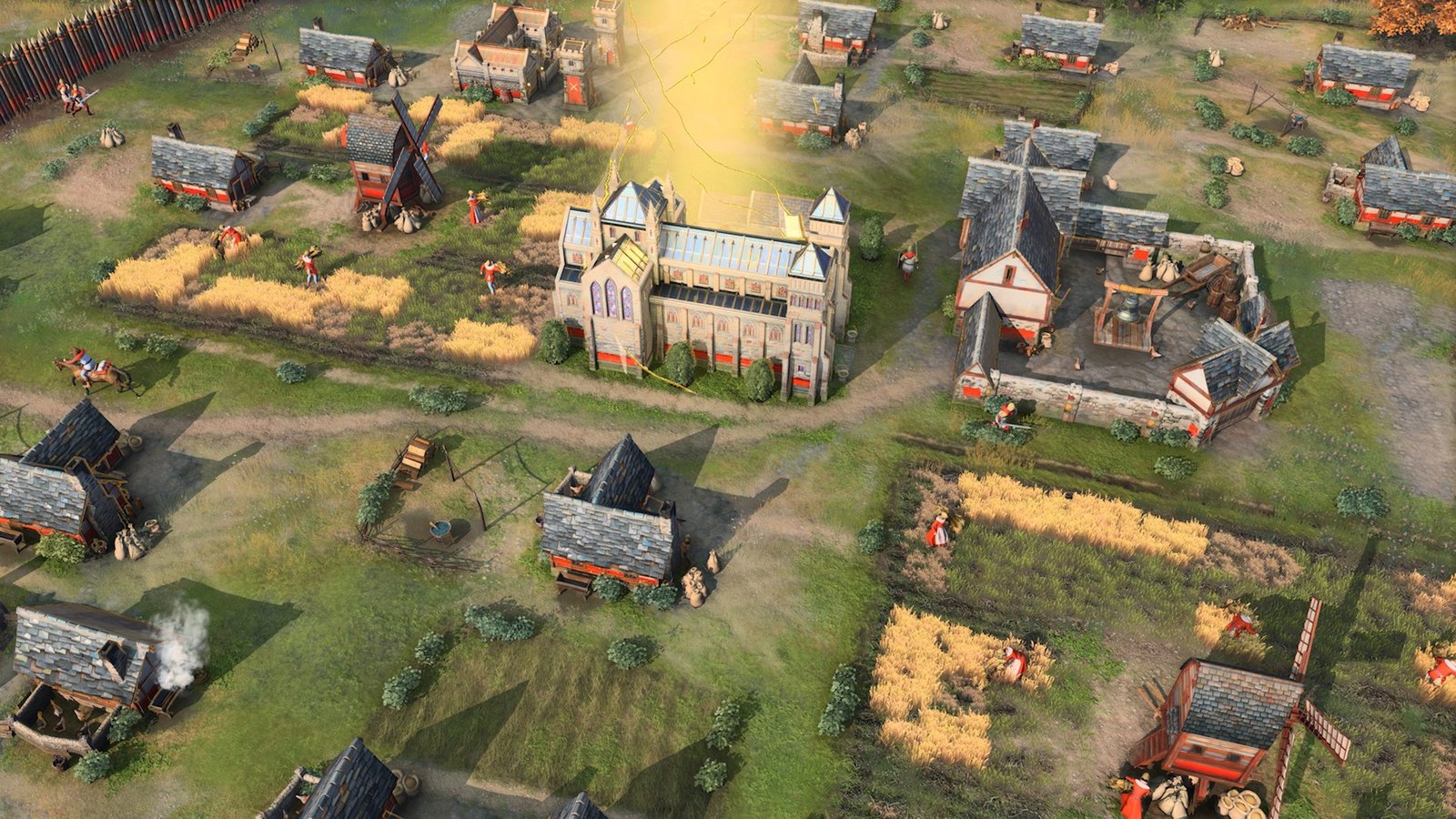
Age of Empires IV: economia e construções dividem espaço no território da civilização. Captura oficial: Relic Entertainment / World’s Edge / Xbox Game Studios.
Real-time strategy (RTS) is a genre in which players make decisions and control their forces while events continue unfolding, without mandatory alternating turns. Imagine you are building a base.
Workers are gathering resources, soldiers guard the surroundings, and new units are being produced. Meanwhile, an opponent is preparing an attack in an area you have not explored. You could invest in new technologies, reinforce your defenses, or send troops to find out what is happening.
The problem is that the world will not wait for your decision. While you organize the economy, enemy units keep moving. During a battle, more units may finish production. And devoting too much attention to one fight can make you forget to expand your base.
This combination of simultaneous planning and execution defines much of the RTS experience. In Age of Empires, players develop civilizations, manage resources, and command armies in historical conflicts.
StarCraft features science-fiction factions with very different approaches to production and combat. Warcraft combines construction and military strategy with, particularly from its third game onward, heroes who have abilities and progression. Command & Conquer represents another tradition of base building and warfare between factions. These titles helped make real-time strategy one of PC gaming’s most recognizable genres.
Its history started before those games, however, and not every RTS needs the familiar formula of building a base and producing an army. In this feature, we explore its origins, how matches work, and why managing time can be as important as choosing the right strategy.
Updated October 20, 2026.
Nesta matéria
What defines an RTS?
In real-time strategy games, actions take place continuously. Players may order units to move, construct buildings, or launch attacks while other events are still happening.
Different activities can therefore demand attention at the same time. Under the traditional formula, players commonly manage resources, build bases, produce military units, explore maps, and confront opponents. Not every RTS includes all those systems, though. Some concentrate on commanding troops in battle, with little or no base construction.
Others feature heroes, special units, or specific objectives. The defining characteristic of RTS is developing and carrying out a strategy while the game keeps progressing in real time.
Does an RTS have to be multiplayer or competitive?
No. Many RTS games include single-player campaigns, missions against computer-controlled opponents, and cooperative modes.
Some campaigns ask players to defend a town, escape an area, or complete objectives with a limited group of units. Competitive multiplayer is an important part of the genre’s history, but it does not define every RTS experience.
Is every RTS a war game?
Not necessarily. Its best-known tradition involves armies and military conflicts, but real-time strategy can use a range of settings and systems. The genre is not confined to medieval fantasy, science fiction, or historical wars. Equally, a real-time management game does not automatically become an RTS simply because time keeps moving. Classification depends on its strategic purpose and on the systems shaping decisions.
Where did real-time strategy games come from?
Strategy already existed in video games before RTS became popular. Board games and digital turn-based experiences let players move forces, manage resources, and plan actions. A distinction began emerging when developers experimented with systems in which players and units could act without waiting for a fixed sequence of individual turns.
The earliest experiments
Utopia, created by Don Daglow and published by Mattel Electronics for the Intellivision, is often cited as an early precursor to real-time strategy. Although 1981 appears in copyright records and many retrospective accounts, the Blue Sky Rangers archive, maintained by former developers for the system, records its release as June 3, 1982. That is the date used in this article’s timeline.
Players managed islands, developed economic activities, and competed to achieve prosperity. Actions took place simultaneously within timed rounds followed by assessments of results: a hybrid structure unlike modern RTS games.
In 1982, Cytron Masters, created by Danielle Bunten Berry—credited at the time as Dan Bunten—and published by Strategic Simulations (SSI), explored simultaneous battles involving the production and command of robotic units. Its initial Apple II release was followed by an adaptation for Atari 8-bit computers; it did not yet contain the entire base-building and resource-gathering formula popularized later.
Stonkers, released by Imagine Software in 1983 for ZX Spectrum, put infantry, tanks, artillery, and supplies under player command. The project by D. H. Lawson and John Gibson, programmed by Gibson, had one important qualification: its manual describes the game pausing while players selected a division or issued orders. It was not simply uninterrupted real-time action.
The Ancient Art of War, developed by Evryware and published by Brøderbund in 1984, initially appeared on IBM PC-compatible computers. It combined troop movement, terrain, and real-time tactical clashes. Its creators, Dave and Barry Murry, were experimenting with yet another organization of military decisions.
These games did not all share the same combination of economy, construction, and combat. Their significance lies in showing that the genre emerged through multiple experiments, rather than from a fully formed formula invented by one studio.
Herzog Zwei and unit control
In 1989, Technosoft released Herzog Zwei for the Mega Drive in Japan. Its international release, branded Genesis in North America, followed in 1990; these dates do not indicate a simultaneous worldwide debut.
The game combined direct control of a transforming unit with the production and dispatch of other forces across the map. Players had to capture positions and manage resources while confronting an opponent. Its design differed from the mouse-based command structure that would become familiar on PCs, but it already brought together combat, production, and real-time strategic decisions. Herzog Zwei is one of the key predecessors of the modern formula.
Dune II and the establishment of classic RTS
In 1992, Westwood Studios developed Dune II for MS-DOS, published by Virgin Games. The original was titled Dune II: The Building of a Dynasty in North America and Dune II: Battle for Arrakis in Europe. A later Mega Drive/Genesis adaptation had a separate release history and was titled Dune: The Battle for Arrakis in North America, without the “II.” That console title should not be confused with the original 1992 PC release.
Inspired by the Dune universe, the game pitted House Atreides, House Harkonnen, and House Ordos against one another for control of Arrakis and its spice, the resource sustaining the campaign economy. Dune II was not the first real-time strategy game.
Its importance lies in how it combined systems that would become fundamental to countless subsequent RTS titles.
Building, gathering, and producing
Players needed to establish a base, harvest spice, and use available resources to produce structures and military units. Additional buildings opened up new development possibilities.
Armies could defend positions, explore the map, or attack enemy bases. Those actions were all connected to the same economy. Spending heavily on troops could weaken base development, while focusing entirely on production could leave territory vulnerable. Players needed to balance these priorities.
Why the interface mattered
Dune II also helped popularize a mouse-based approach to commanding units and buildings. Its interface let players select elements on screen and issue orders, putting them in the role of a commander. In the original PC release, players selected and commanded one unit at a time. The modern selection of multiple soldiers with a drag box, along with the group management that later became standard, was absent.
This limitation is part of the interface’s historical significance and should not be overlooked when comparing it with later games. The combination of bases, economy, production, and combat would be expanded by Warcraft, Command & Conquer, and many other franchises.
Warcraft, Command & Conquer, and Age of Empires: the genre expands
During the 1990s, RTS games reached larger audiences and developed distinct identities. Base construction remained important, but each franchise changed the relationship between economy, armies, technology, and storytelling.
Warcraft: fantasy, armies, and heroes

Blizzard released Warcraft: Orcs & Humans in 1994. The game used base building, resource gathering, and clashes between orcs and humans.
The following year, Warcraft II: Tides of Darkness expanded the formula with new resources, units, and combat options. Campaigns and a recognizable fantasy identity helped distinguish the series from other RTS games.
In 2002, Warcraft III: Reign of Chaos brought another major change. Beyond its armies, it placed much greater emphasis on heroes. They could gain experience, develop abilities, and equip items, bringing some mechanics closer to RPGs. Players still built bases, managed resources, and commanded troops.
Warcraft III demonstrated that RPG elements could enrich an RTS without replacing its strategic structure. Its expansion, The Frozen Throne, arrived in 2003 and developed these possibilities further.
How did Warcraft help create MOBAs?
Another important contribution was its map editor. Community members could build custom scenarios and game modes, changing the usual rules. Among the most influential projects was Defense of the Ancients (DotA), in which participants primarily controlled heroes within a strategic battle. This tradition helped establish modern MOBAs, later represented by stand-alone games such as League of Legends and Dota 2.
Our feature on the origins and evolution of MOBA games, from DotA to League of Legends explores that community-led transformation in more detail. Warcraft III should also not be confused with World of Warcraft: the latter belongs to the MMORPG tradition, not classic RTS.
Command & Conquer: warfare and base building

In 1995, Westwood Studios released Command & Conquer, published by Virgin Interactive. The struggle between the Global Defense Initiative (GDI) and the Brotherhood of Nod revolves around Tiberium, a resource central to both the economy and the game’s fiction.
The game expanded a military strategy formula featuring base building, resource harvesting, and the production of vehicles and infantry.
Its visual and storytelling identity also stood out, including live-action performances at different points in the series. Players had to balance economic expansion with facility defense and unit production. Compared with other RTS titles, the franchise developed its own ways of organizing buildings, resources, and combat. Command & Conquer: Red Alert, released in 1996, introduced a different setting and alternate-history conflicts.
Tiberian Sun, released in 1999, continued the Tiberium-based science-fiction storyline. These branches show how one franchise can retain RTS characteristics without using exactly the same systems in every installment.
Age of Empires: civilizations and historical development

In 1997, Ensemble Studios, with Microsoft as publisher, released Age of Empires for Windows. The game applied the RTS formula to the development of civilizations inspired by different historical periods. Rather than focusing solely on military bases, its economy involved workers, buildings, resources, and technological progress. This approach earned even greater recognition with Age of Empires II: The Age of Kings, released in 1999.
Players managed food, wood, gold, and stone to recruit units, construct buildings, and advance their civilizations. Moving through different ages unlocked new technologies and military possibilities.
Why did Age of Empires II become so important?
Age of Empires II combined economy, construction, technological development, and clashes between civilizations with distinct traits. Some had exclusive units or advantages in specific forms of combat and production. This produced strategic variety without requiring a completely different economy for every civilization. Its campaigns, skirmishes, and multiplayer contributed to the game’s longevity.
Later versions, including 2019’s Age of Empires II: Definitive Edition, modernized its presentation while keeping the franchise accessible to new players.
Age of Empires III, released by Ensemble in 2005, and Age of Empires IV, released in 2021, developed their own takes on historical periods and strategy systems. The fourth game’s original developer was Relic Entertainment, working with World’s Edge, and it was published by Xbox Game Studios. World’s Edge oversees and maintains the franchise; it did not develop the 1997 and 1999 originals.
These titles adapt history for gameplay rather than providing perfectly faithful simulations of historical events.
StarCraft and the evolution of competitive RTS
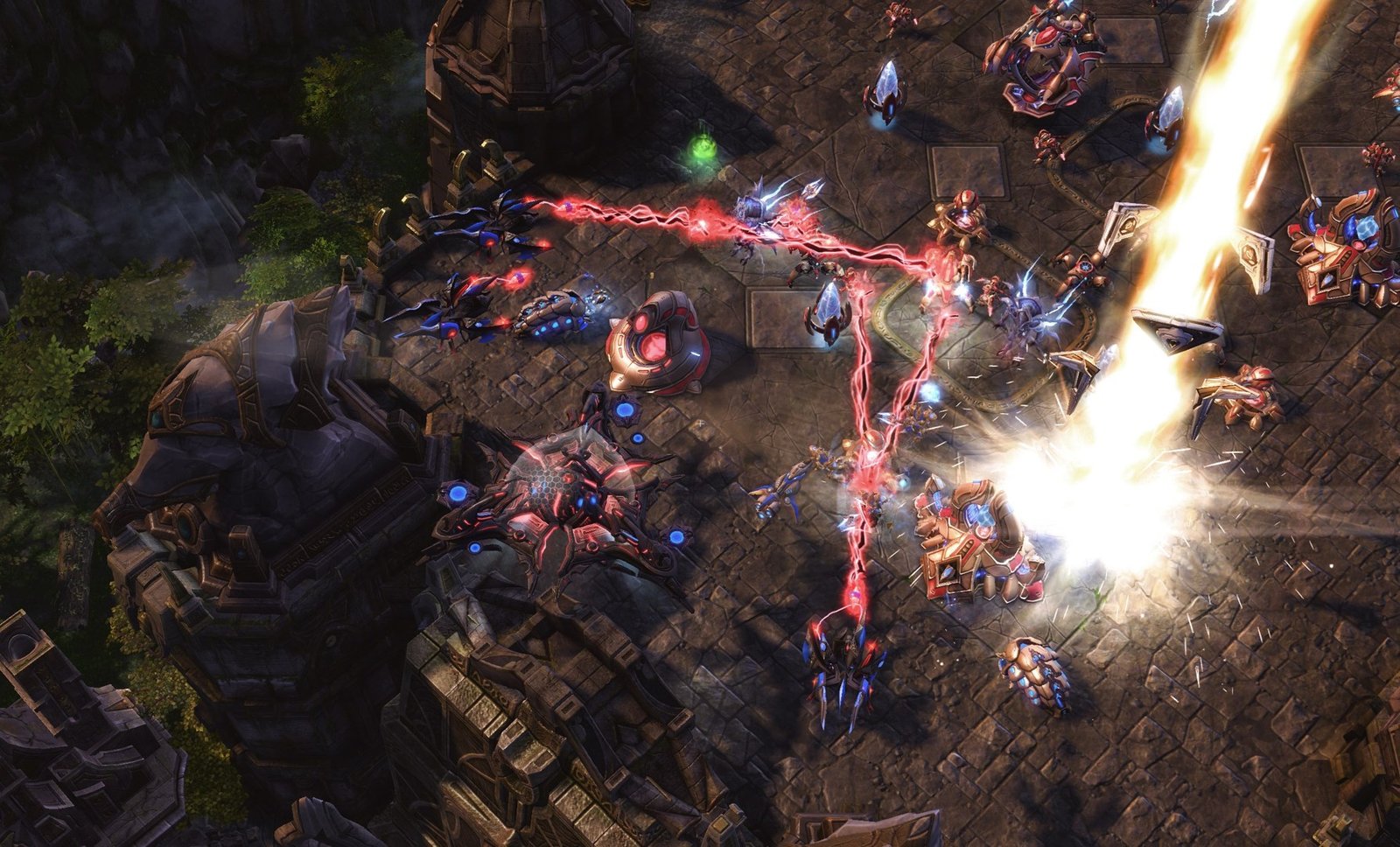
Blizzard released StarCraft in 1998, a science-fiction RTS centered on three competing factions: Terrans, Zerg, and Protoss.
One of the main differences from many earlier titles was the extent of each faction’s mechanical identity. These were not merely armies with different appearances: they had distinct units, structures, and ways to produce and organize their forces.
Terrans, Zerg, and Protoss
The Terrans rely on military technology, infantry, vehicles, and buildings with specific characteristics. The Zerg have a biological organization, with production and units tied to their identity as a swarm.
The Protoss use advanced technology and forces with different relationships between cost, power, and production. These differences require players to understand each faction’s strengths and limitations. A strategy that works against one army might not work the same way against another. StarCraft showed the importance of asymmetry, in which factions have different systems while still needing balanced competitive conditions.
Brood War and esports
The StarCraft: Brood War expansion, also released in 1998, expanded the campaigns and competitive possibilities. The game became particularly influential in South Korea’s professional scene, with tournaments, broadcasts, and well-known players.
StarCraft did not invent esports. Its contribution was helping consolidate professional RTS competition, particularly in South Korea.
StarCraft II and a modernized formula
In 2010, Blizzard released StarCraft II: Wings of Liberty. The game introduced 3D graphics, interface improvements, a new competitive structure, and a continuation of the StarCraft story. Its expansions Heart of the Swarm (2013) and Legacy of the Void (2015) developed the Zerg and Protoss campaigns, respectively, while expanding gameplay. These are stages of StarCraft II, distinct from Brood War, an expansion of the first game, and StarCraft: Remastered (2017).
StarCraft II preserved the importance of economy, production, and unit control while adding modern tools for managing matches. The series also helped popularize discussions about execution speed, decision-making, and managing different parts of the map simultaneously.
How does an RTS match work?
The classic formula can be expressed as a cycle: Gather resources → Build structures → Produce units → Scout → Expand → Fight and adapt. Those steps do not necessarily occur one after another. Many activities can take place simultaneously in an RTS.
Economy and resources
In games like Age of Empires, workers gather materials needed to sustain a civilization. Food can be used to recruit units or advance technologically, while wood, gold, and stone serve other purposes. In StarCraft, minerals and vespene gas support production and technology. Command & Conquer, meanwhile, has its own economic systems that vary between installments.
The economy affects every other decision. Producing many soldiers can leave fewer resources for technological research. Constructing more economic buildings may improve future production while delaying urgently needed defenses.
Construction and technology
In many RTS games, buildings do more than decorate a base. Barracks produce certain soldiers. Other structures unlock vehicles, research, equipment, or upgrades. A tech tree describes dependencies between buildings, units, and technologies. Players may have to construct one building before being allowed to produce specific equipment. In Age of Empires, advancing through the ages also changes the available options.
These decisions help determine the pace of a match.
Unit production and army composition

Players usually command units with different roles. Depending on the setting, these might include archers, cavalry, infantry, vehicles, aircraft, and siege engines.
Each unit has its own characteristics involving range, mobility, durability, cost, or damage. Some have an advantage against other units. This relationship is commonly called a counter, when a unit or strategy is especially effective against a particular threat. But this is not a universal rule.
Terrain, troop numbers, technologies, and positioning can change the outcome.
Exploration and map control
Many RTS games feature fog of war, a system limiting information about areas that are not currently being observed. Players send units out to scout the environment. This is called scouting. Fog of war, unit vision, terrain exploration, and detection of hidden enemies work according to each game’s rules; knowing a map does not mean permanently seeing everything happening across it.
Discovering the location of an enemy base, the available resources, and the units being produced can influence a strategy. However, seeing a location does not necessarily mean controlling it. Territorial control also requires protecting positions, moving troops, and preventing enemy actions.
Micromanagement and macro strategy: two scales of decision-making
One of the defining challenges of RTS games is dividing attention between different activities. Players commonly refer to these as micro and macro.
Micro: direct unit control
Micromanagement (micro) involves decisions directly related to troops: movement, positioning, target selection, use of abilities, and retreating threatened units.
Imagine your army is fighting enemy forces. You might need to pull back a wounded unit, reposition ranged troops, and activate an ability at the right moment. These actions directly influence the battle.
Macro: economy, production, and planning
Macro strategy (macro) concerns the overall development of a match. It includes the economy, building, unit production, expansion, and technological planning.
Monitoring production queues and spending available resources prevents an intense battle from bringing base development to a standstill. Conversely, a highly efficient base cannot guarantee victory if its army is poorly commanded. Micro and macro are different, but they need to work together.
What does APM mean?
APM stands for Actions Per Minute, a measure of commands executed during a particular period.
In competitive RTS, these actions might include unit selection, movement, production, and other orders. Skilled players may execute many commands rapidly, but high APM does not automatically mean better strategic ability. Repeating unnecessary commands can increase the count without improving the result.
What matters is the relationship between speed, precision, and the quality of decisions.
Rush, economic boom, and defense
Several common terms describe strategic choices. A rush attempts to pressure or attack an opponent quickly.
An economic boom prioritizes strengthening the economy and future production. Turtling describes a heavily defensive stance centered on protection and fortified positions, but it does not eliminate the need to gather resources or respond to map objectives.
A build order is a planned sequence of construction, production, and other actions. These terms vary between games and do not represent guaranteed formulas for victory. Players must adapt their plans to what unfolds during a match.
RTS is not only about building bases
Despite the influence of Dune II, Warcraft, and StarCraft, other games explore different approaches to real-time strategy. Some emphasize tactical combat; others feature enormous armies, space battles, or hero mechanics.
Company of Heroes and tactical combat
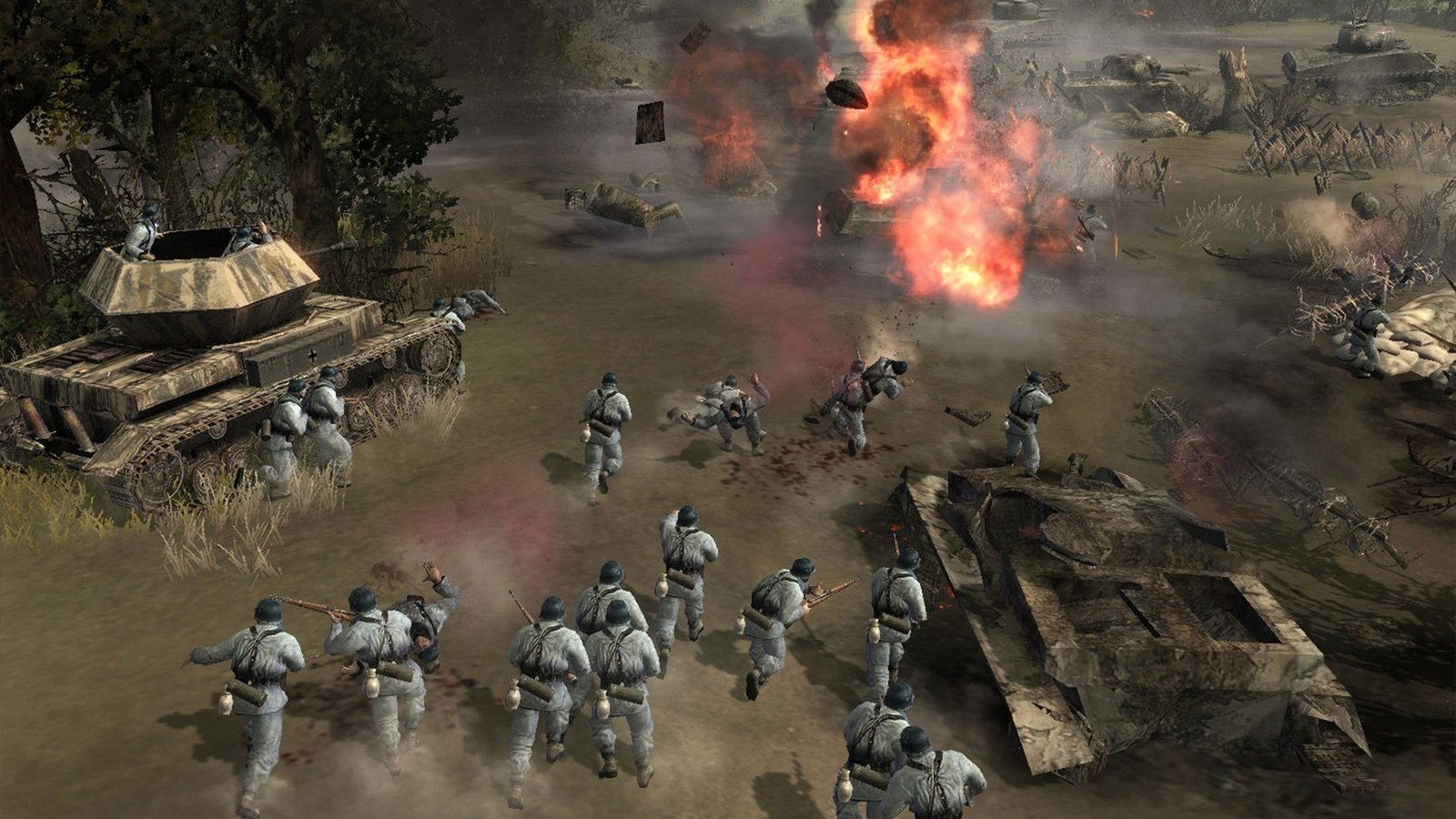
Company of Heroes, developed by Relic Entertainment and originally published by THQ for Windows in 2006, combines World War II real-time strategy with a strong emphasis on cover, positioning, and territorial control. SEGA’s later involvement in distribution does not change the credit for the original publisher.
Squads can use cover, become suppressed, and require vehicle support. Competing for points on the map supports supply and the economy, making advances, secured connections, and withdrawals important decisions. These are Company of Heroes systems, not compulsory RTS mechanics.
Building and economic systems still exist but differ from the traditional formula of workers gathering resources around extensive bases. The game represents a more tactically focused branch of RTS design.
Some experiences move even further in this direction. World in Conflict, developed by Massive Entertainment in 2007, allows players to request reinforcements and direct combat without constructing a traditional base. It is often associated with real-time tactics (RTT), emphasizing the deployment of forces with less broad economic management. The distinction helps explain the design without creating an absolute boundary or labeling every real-time battle as RTT.
Total Annihilation and Supreme Commander: massive armies
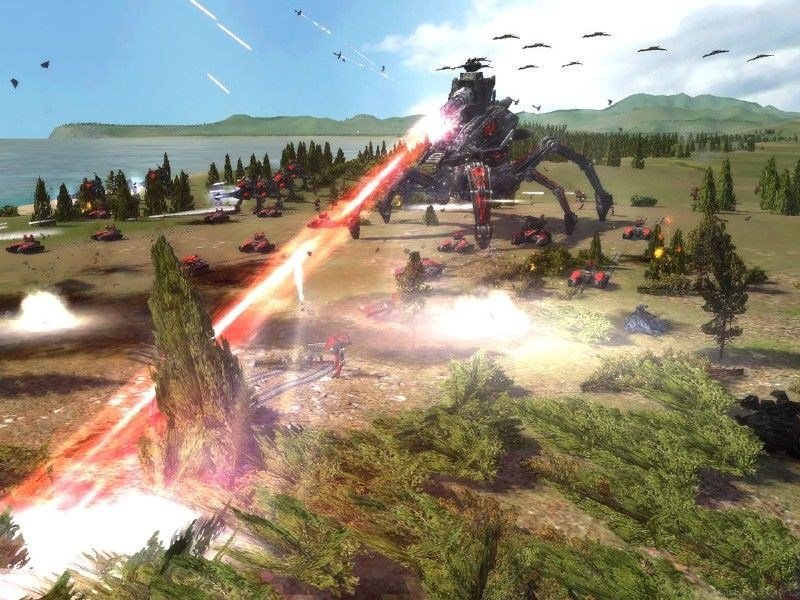
Total Annihilation, developed by Cavedog Entertainment and published by GT Interactive in 1997, featured battles with large numbers of units, extensive production, and multiple fronts. Later, Supreme Commander, developed by Gas Powered Games and originally published by THQ in 2007, made strategic scale even more significant by allowing players to command numerous forces across huge maps.
Designer Chris Taylor connects both projects, but different studios created them; Supreme Commander is a spiritual successor, not a direct sequel to Total Annihilation. These games demonstrate how production, resource flow, and management of several regions can take center stage. Supreme Commander‘s strategic zoom allows players to shift between close-up combat and a broad view of the battlefronts.
Homeworld and space battles

In 1999, Homeworld, developed by Relic Entertainment and published by Sierra, brought real-time strategy into three-dimensional space combat. Players commanded fleets while considering positioning and movement within an environment with more spatial freedom. Three-dimensional movement changes approaches, formations, and attack directions. The command remains strategic and fleet-wide: this is not a space simulator in which players directly pilot a single ship.
This approach presented different challenges from traditional ground-based maps.
Halo Wars and console controls
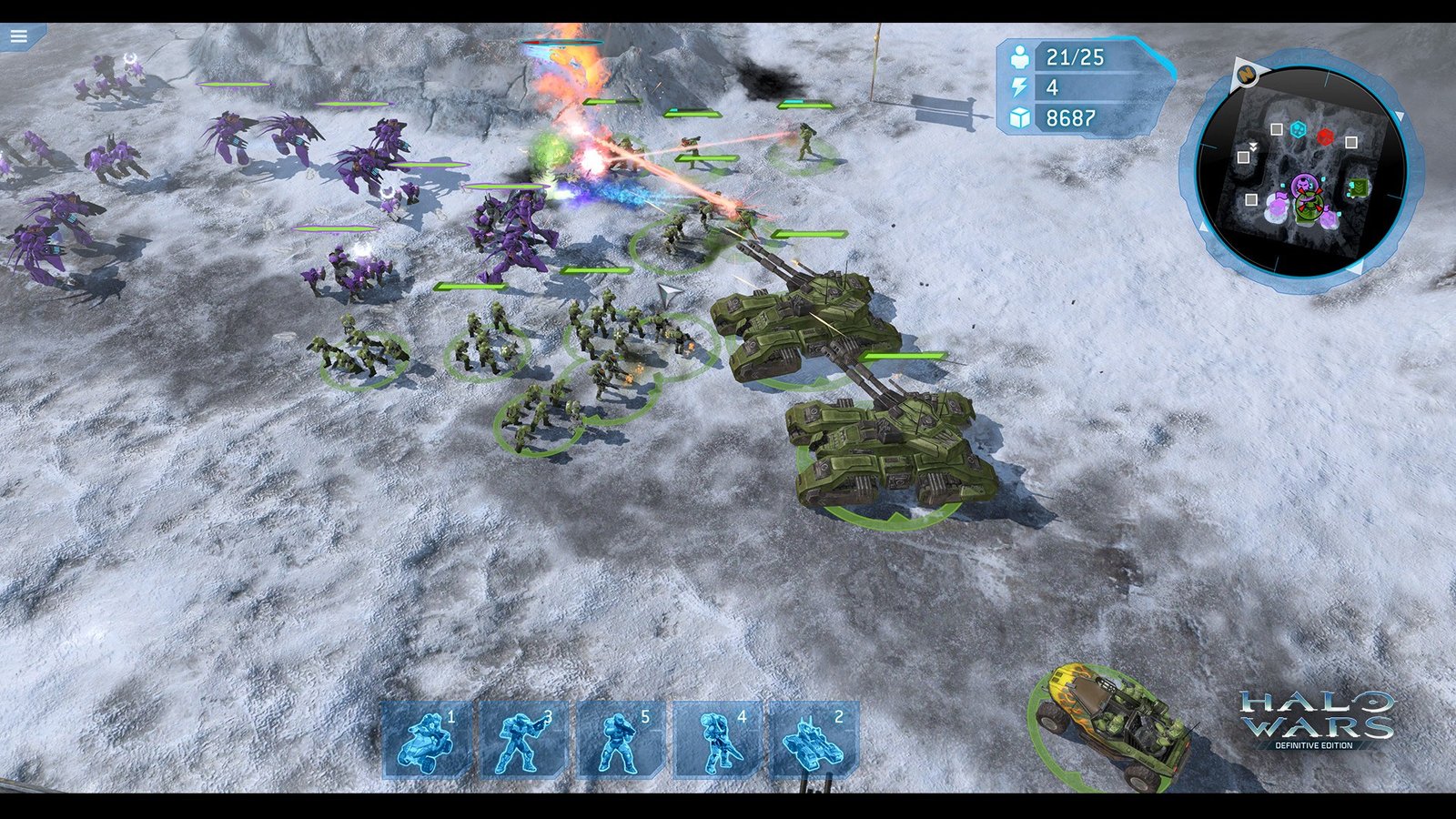
Halo Wars, developed by Ensemble Studios and published by Microsoft Game Studios in 2009 for Xbox 360, was designed with special attention to the RTS experience on consoles. It was not the first console RTS; its contribution was adapting a broad command-based formula to that format.
Its interface and controls allowed players to select units and issue orders using a traditional controller.
Later, Age of Empires II: Definitive Edition reached Xbox One and Xbox Series X|S on January 31, 2023. Age of Empires IV followed on those consoles on August 22, 2023, with its own interface and control adaptations. These console editions came after the PC releases; features should not automatically be assumed identical across platforms.
These examples show that mouse and keyboard are important to RTS history but are not absolute requirements.
RTS, turn-based strategy, MOBA, and 4X: what are the differences?
These classifications share strategic elements but describe different structures.
| Category | Key characteristic | Examples |
|---|---|---|
| RTS | Strategy carried out in real time, often with multiple units | Age of Empires, StarCraft |
| Turn-based strategy | Actions organized into turns or decision-making phases | Civilization |
| MOBA | Teams of individually controlled heroes competing for objectives | League of Legends, Dota 2 |
| 4X strategy | Broad exploration, expansion, resource exploitation, and conquest | Civilization, Stellaris |
| Grand Strategy | Large-scale political, diplomatic, economic, and military management | Europa Universalis, Hearts of Iron |
| RTT | Emphasis on tactical command, with reduced or absent broad economic management | World in Conflict |
| Tower Defense | Preparing and deploying defenses against waves of threats | Plants vs. Zombies |
| City Builder | Urban construction, infrastructure, and management | Cities: Skylines |
These categories can overlap, but they are not synonyms.
RTS and turn-based strategy
In an RTS, events keep unfolding while the player makes decisions. In a turn-based strategy game, actions are organized into a sequence of turns or phases.
This changes the pace, but does not mean one format is necessarily deeper than the other. Games with an option to pause while issuing commands and hybrid systems also exist.
RTS and MOBA
Modern MOBAs have roots in custom RTS maps, particularly those of Warcraft III. But they typically focus each participant’s control on one main character within a team competing for objectives.
In traditional RTS games, commanding multiple units and managing production generally occupy a larger role.
RTS, 4X, and Grand Strategy
4X stands for Explore, Expand, Exploit, and Exterminate: exploring territory, expanding, exploiting resources, and conquering or eliminating opponents. Exploring a map and exploiting resources are different meanings of the term. The tradition often features empire building and long-term planning. A 4X game need not use turns: Stellaris, for instance, combines empire management with real time and pausing.
The scope of exploration, expansion, resource use, and conquest is more useful in this comparison than simply contrasting “real time” against “turns.”
Grand Strategy typically places greater emphasis on the management of states or empires through political, diplomatic, economic, and military decisions. Europa Universalis and Hearts of Iron use continuous time with pausing; stopping to plan does not, by itself, make a system turn-based.
Classic RTS usually focuses its action on individual maps and battles with more direct control over units. These boundaries are not completely rigid, however. The emphasis also distinguishes Tower Defense: in Plants vs. Zombies, positioning defenses against waves of enemies shapes the experience without replicating StarCraft‘s economy and army command. Meanwhile, City Builders emphasize constructing and managing cities.
Such games may include threats and battles, but running a population and infrastructure in real time is not enough to classify them as RTS.
Campaigns, multiplayer, and communities
RTS games are important for more than their economic and combat systems. Campaigns helped establish memorable worlds, characters, and conflicts. Warcraft III used heroes and story events across missions with different objectives. StarCraft developed a science-fiction story around its three factions.
Command & Conquer also became known for its campaigns and live-action sequences. Age of Empires uses scenarios inspired by historical events, adapted for gameplay. Some missions provide fully developed bases; others restrict resources or place players in charge of a small group of units. RTS campaigns can therefore modify the traditional format to create distinct challenges.
Multiplayer and competition
Beyond StarCraft‘s already discussed competitive history, Age of Empires II built a lasting competitive community. In multiplayer, players must interpret opponents’ decisions, adapt strategies, and manage resources under pressure. RTS does not depend exclusively on esports, though: single-player campaigns, cooperative games, and matches against AI remain distinct experiences.
Map editors and mods
Another important element is the ability to create custom content. Warcraft III became known for an editor that allowed changes to rules, objectives, and game systems and supported user-created scenarios. The connection with DotA demonstrates the influence of these community tools. StarCraft also developed a tradition of community maps and modes. Age of Empires offers its own tools for custom scenarios and campaigns.
These features helped extend the lifespan of different titles and showed how RTS games could become platforms for experiences outside their original rules.
How do RTS games continue to evolve?
Real-time strategy did not disappear after the classic era. It began coexisting with other strategy styles and different release models. Remasters, updates, new titles, and competitive communities still contribute to its development. Age of Empires II: Definitive Edition modernized the 1999 classic and continued receiving content.
StarCraft: Remastered (2017) preserved the underlying original game with an updated presentation. The Command & Conquer Remastered Collection (2020), developed by Petroglyph and Lemon Sky Studios and published by Electronic Arts, bundles Command & Conquer and Red Alert along with The Covert Operations, Counterstrike, and The Aftermath expansions, adding audiovisual and interface improvements. It does not remaster the entire franchise.
Age of Empires IV (2021) offered a new take on historical strategy and continued receiving content in 2026. On May 7, it received Yue Fei’s Legacy, an expansion with an eight-mission campaign about the Song dynasty general Yue Fei and his conflict with the Jin. The Jin dynasty also became a playable civilization, with its own economic and military systems. This is content for the base game, not a stand-alone title.
As of October 20, 2026, Raiders of the North was still scheduled for October 29. Its announcement presented Vikings and Scots as two full civilizations, each with its own economic and military playstyle, alongside two biomes. The expansion also adds four missions to the Crucible, deeper progression, and two-player co-op.
According to the official details released October 16, changes to the Crucible’s core structure would be free to owners of Dynasties of the East; the four additional missions would require Raiders of the North. This does not make all the content free or mean the future civilizations and missions were already available at the editorial cutoff.
New RTS games and different approaches
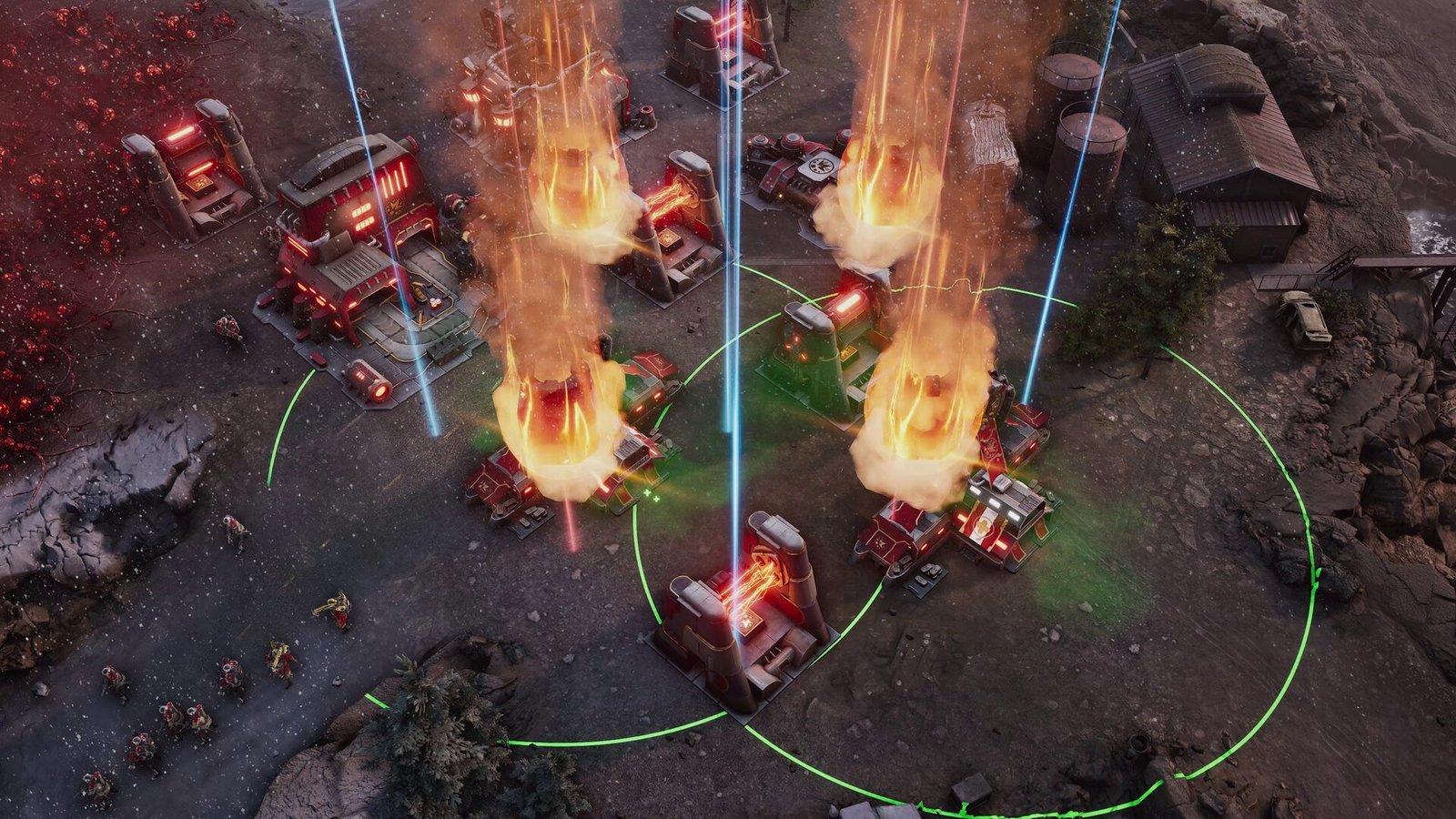
Tempest Rising, developed by Slipgate Ironworks and published by 3D Realms and Knights Peak for Windows PC, revisited features of the classic Command & Conquer tradition: bases, factions, and competition over resources, in its own universe. The store lists April 24, 2025, but an announcement of an earlier launch confirms that all editions became playable on April 17, rather than only the Deluxe edition’s planned early access.
The game was still receiving content in October 2026. The official September 29 announcement confirmed The Veti’s Wrath, paid DLC featuring an 11-mission campaign. Separately, the Veti faction became available for free to base-game owners in AI skirmishes and multiplayer, joining the Global Defense Forces (GDF) and the Tempest Dynasty. The additional campaign was neither free nor a new stand-alone game.
Continuing support also includes fixes and quality-of-life improvements; the existence of updates alone does not prove any particular commercial outcome.
Stormgate, from Frost Giant Studios, entered Early Access for Windows PC in 2024. On August 5, 2025, it released Campaign One — Ashes of Earth. The official explanation of this milestone is precise: the campaign left Early Access with update 0.6, but this did not constitute Stormgate version 1.0. Its free-to-play model and separately purchased campaign content should not be confused with full free access to everything.
On April 30, 2026, an official offline-transition announcement described a concrete change: the update disabled online Versus and co-op and added offline support for the campaign, matches against AI, and custom games, with local progression. The change prepared the game for the end of the Hathora infrastructure, whose service was being shut down following its acquisition by an AI company.
At the October 20, 2026 editorial check, the offline transition remained the latest update shown in the official news channel. Direct Steam peer-to-peer connections were still described as a work in progress, with no later confirmation that Versus and cooperative online modes had returned. The documented situation was a loss of online features and preservation of offline play, not the closure of the entire game.
These examples show how newer RTS titles can take inspiration from classics while also facing challenges involving development costs, support, and ongoing maintenance.
The challenge of learning to play
One difficulty in RTS is the number of decisions that can demand attention simultaneously. Players need to track the economy, units, exploration, and threats. Competitive matches may require familiarity with shortcuts and quick commands, although not every RTS has the same demands.
Campaigns, adjustable difficulty, and modern interfaces can offer more accessible introductions to the genre. Its complexity can also be appealing to players who enjoy planning and seeing the results of their decisions.
Games that shaped RTS history
The selection below brings together historical milestones and representative approaches. It is not a ranking of the best games.
| Game | Year | Contribution or characteristic |
|---|---|---|
| Utopia | 1982 | Strategy and management experiment with real-time elements |
| Cytron Masters | 1982 | Simultaneous strategic clashes |
| Herzog Zwei | 1989 in Japan; 1990 internationally | Real-time unit production and command |
| Dune II | 1992 | Established the base, resource, and army formula |
| Warcraft: Orcs & Humans | 1994 | Commercial expansion of fantasy RTS |
| Command & Conquer | 1995 | Military strategy and base building |
| Warcraft II | 1995 | Expanded production and combat |
| Age of Empires | 1997 | Historical civilizations, economy, and technological progression |
| Total Annihilation | 1997 | Military scale and production of large armies |
| StarCraft | 1998 | Asymmetric factions and competitive influence |
| Age of Empires II | 1999 | Historical strategy and competitive longevity |
| Homeworld | 1999 | Fleet strategy in three-dimensional space |
| Warcraft III | 2002 | Heroes, RPG elements, and custom maps |
| Company of Heroes | 2006 | Tactical combat, cover, and territorial control |
| Supreme Commander | 2007 | Large-scale battles and multiple fronts |
| Halo Wars | 2009 | RTS designed around console controls |
| StarCraft II | 2010 | Evolution of interface, campaign, and competition |
| Age of Empires IV | 2021 | Modern continuation of historical strategy |
| Tempest Rising | 2025: playable April 17; store date April 24 | New take on classic base-building RTS |
These dates refer to the indicated original launches. Versions, expansions, and rereleases can have their own timelines.
The selection also shows that distinct approaches continue to coexist. Some RTS titles emphasize economy and construction. Others prioritize vast armies, tactical control, or story-led campaigns. None of these approaches has to replace the others.
RTS means thinking strategically while everything keeps moving
From early experiments and Herzog Zwei to the formula consolidated by Dune II, real-time strategy has developed many ways to connect planning with execution. Warcraft, Command & Conquer, Age of Empires, and StarCraft each gave that relationship a distinct identity, while later games explored other scales and systems.
What connects these games is not a requirement to command medieval armies, construct bases, or compete online.
It is the need to turn plans into decisions while events keep unfolding. Sometimes producing more soldiers is the right move. At other times, investing in technology or discovering what the opponent is preparing matters more. A seemingly small decision, made while many other things are happening, can change the result of an entire match.
This relationship between time, information, and strategy remains the core identity of RTS.
About the Author