Path of Exile 2 is no longer the same project Grinding Gear Games presented to the public in 2019.
Back then, the plan was to add a new campaign to the original Path of Exile. Both storylines would exist within the same game, lead to the same endgame, and share much of their underlying structure.
Years of development completely changed that plan.
Path of Exile 2 became a standalone game, entered Early Access in December 2024, and has since received new classes, Ascendancies, acts, leagues, crafting systems, and a major endgame overhaul.
That phase now has an end date, too.
Path of Exile 2 is scheduled to launch in full on December 11, 2026 (PST), reaching version 1.0 and dropping its paid Early Access requirement to become free-to-play.
Until then, there is already a substantial game to play — and one that looks very different from the PoE 2 originally announced.
This is how it got here.
In this article
Path of Exile 2’s Announcement in 2019
Path of Exile 2 was announced at the first ExileCon in November 2019.
According to the official recap of the original announcement, the project was a new seven-act campaign set approximately 20 years after Kitava’s death in the first Path of Exile.
But there was one crucial detail: at that point, Path of Exile 2 was not going to be a separate game.
The idea was for the campaigns of Path of Exile 1 and Path of Exile 2 to coexist in the same client. Players would choose a storyline while leveling, but both paths would eventually lead to the same Atlas of Worlds.
The new content was also intended to modernize the game’s graphics, animations, character models, and Skill Gem system.
In essence, it was a massive transformation of Path of Exile built on the same foundation.
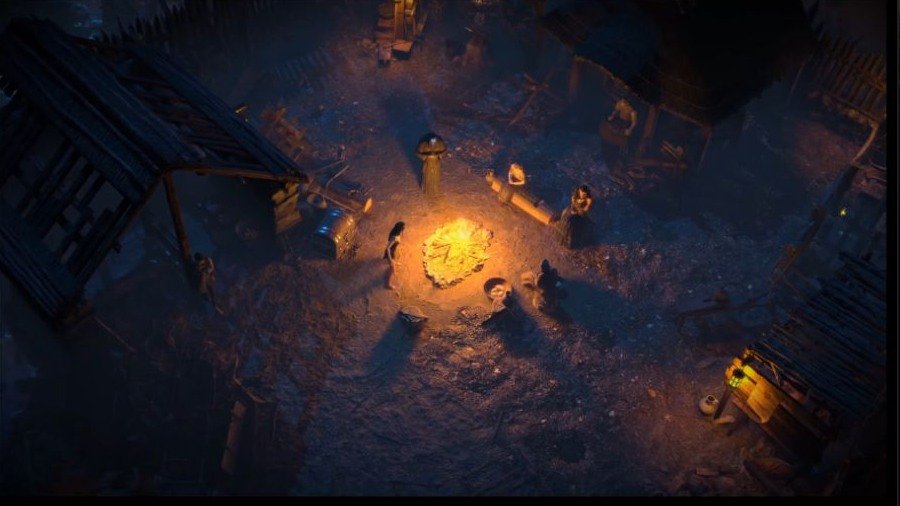
That explains why some older information about Path of Exile 2 looks so different from the game available now.
It really was describing a different plan.
When Path of Exile 2 Became a Separate Game
As development continued, the project grew in scope and its planned structure changed.
At ExileCon 2023, Grinding Gear Games announced a decision that would permanently redefine the franchise:
Path of Exile and Path of Exile 2 would be separate games.
Each would have its own content cycles, balance, leagues, and development.
PoE 2’s campaign would no longer have to connect to the first game’s endgame. Its systems could evolve independently rather than being forced to work inside a shared structure.
That is how the franchise arrived at its current position.
Path of Exile continues to evolve as its own ARPG, with more than a decade’s worth of systems.
Path of Exile 2 is building a different experience within the same universe. Understanding the first game helps explain where many ideas came from, but the sequel should no longer be considered a mere expansion.
What Is Path of Exile 2 Today?
Path of Exile 2 is an online action RPG set in Wraeclast roughly two decades after the events of the original game. Its combination of real-time combat, loot, and character building belongs to the broader tradition of ARPGs, while introducing its own movement, skill, and endgame systems.
Corruption is once again threatening the continent, and players travel across different regions in an attempt to stop its spread.
The foundation feels familiar to franchise veterans.
There are hordes of monsters, gear with modifiers, vast build possibilities, Skill Gems, Support Gems, an enormous passive tree, bosses, crafting, trading, leagues, and an endgame designed to last far beyond the campaign.
Yet many of these elements have been rebuilt.
Path of Exile 2 isn’t simply trying to reproduce Path of Exile with better graphics.
One of the clearest differences is the combat itself.
How Does Combat Work in Path of Exile 2?
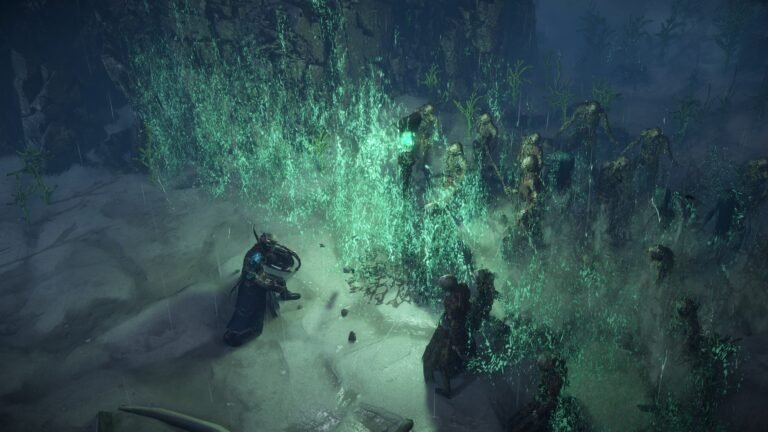
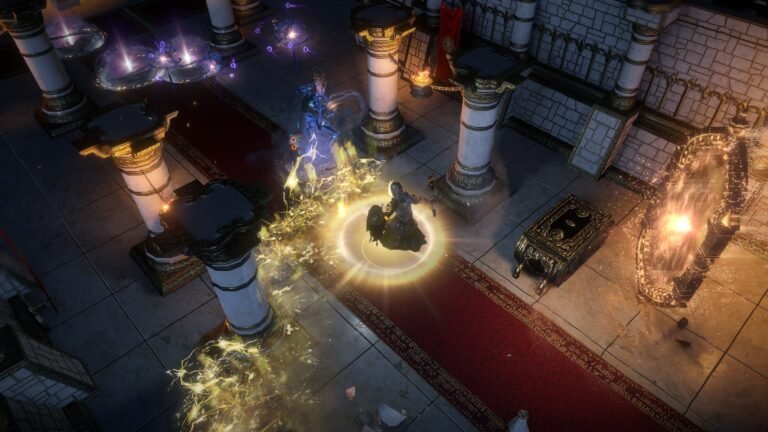
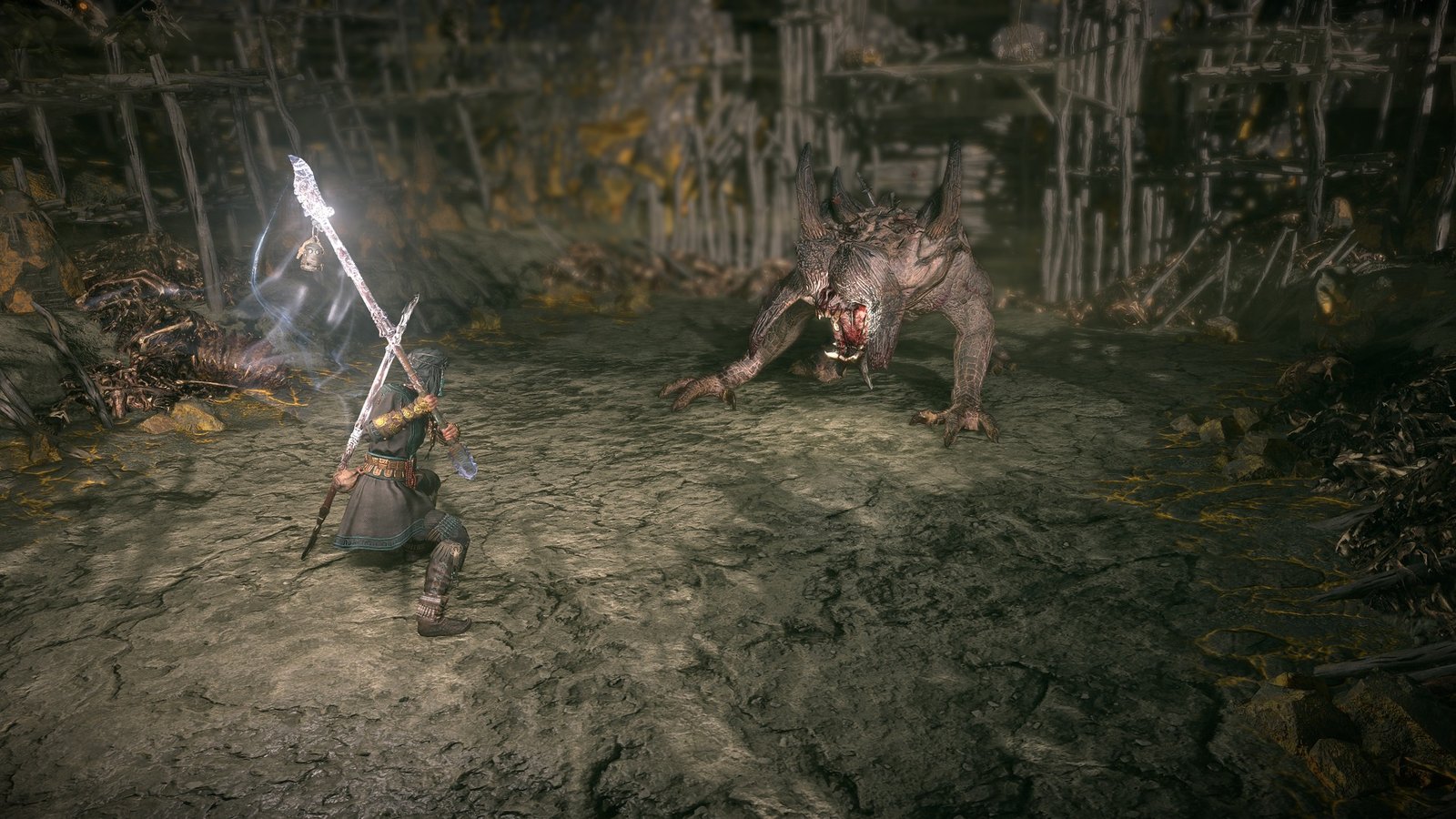
Path of Exile 2 places greater emphasis on movement, positioning, and reacting to enemy attacks.
It features a dodge roll, WASD movement on PC, and encounters designed to make players pay more attention to their surroundings.
Bosses have clearly defined attack areas, distinct sequences, and mechanics that players need to recognize during combat.
Many skills are also designed to interact with one another.
One skill might set up a condition that another can take advantage of.
Certain weapons offer sets of abilities associated with their fighting styles.
Players can assemble combinations that switch between skills, elements, resources, and weapon sets.
That doesn’t mean every build must remain slow or require dozens of buttons.
As characters acquire gear, passives, and synergies, their pace can increase considerably.
The distinction is mainly in the underlying design: Path of Exile 2 was built with more tools for active combat, especially while leveling and during boss encounters.
Which Classes Are Currently Available in Path of Exile 2?
Path of Exile 2 currently has eight playable classes in Early Access.
Class selection influences the starting point on the shared passive tree and comes with affinities for particular attributes, weapons, and playstyles. Those affinities guide early decisions and available specializations, but they don’t mean every class occupies an entirely exclusive area of the tree.
A class is not completely locked into its suggested equipment, either. As in the first Path of Exile, unconventional combinations are possible.
The official Early Access presentation consulted on October 19, 2026, lists the following classes and Ascendancies:
- Warrior — Titan, Warbringer, and Smith of Kitava;
- Ranger — Deadeye and Pathfinder;
- Witch — Infernalist, Blood Mage, and Lich;
- Sorceress — Stormweaver, Chronomancer, and Disciple of Varashta;
- Mercenary — Witchhunter, Gemling Legionnaire, and Tactician;
- Monk — Invoker, Acolyte of Chayula, and Martial Artist;
- Huntress — Amazon, Ritualist, and Spirit Walker;
- Druid — Oracle and Shaman.

Not all of them were playable at the beginning of Early Access.
The Huntress arrived with Dawn of the Hunt, while the Druid was added in The Last of the Druids. Other Ascendancies were introduced through major updates.
The final plan is larger.
Grinding Gear Games still describes Path of Exile 2 as a game with 12 base classes and 36 Ascendancies.
That does not mean all 12 classes are available now.
The next specifically confirmed class is the Duelist, which will arrive with version 1.0 in December and bring swords into the game.
What Are Ascendancies?
Ascendancies are specializations of the base classes.
They have their own trees and can radically change the direction of a build.
A Monk, for example, can become an Invoker, Acolyte of Chayula, or Martial Artist, creating very different characters from the same starting class.
The same principle applies elsewhere.
During Early Access, new Ascendancies have been an important way to expand build options without adding an entirely new base class.
The system has not yet reached the final structure announced by GGG.
The complete vision calls for three Ascendancies for each of the 12 classes.
How Do Skills and Support Gems Work?
Path of Exile 2 keeps one of the franchise’s central ideas: abilities can be deeply customized through gems.
However, their organization has changed.
Skill Gems grant active abilities.
Support Gems modify those abilities.
In PoE 2, Supports are socketed directly into skills rather than depending on linked socket groups in equipment as they do in PoE 1. Equipment sockets used for other resources, such as runes, are not sockets for Skill Gems.
That makes it much clearer which ability is being modified.
A skill can have several compatible Supports that alter damage, behavior, projectiles, duration, area, elemental effects, or other characteristics.

Another important element is Uncut Gems.
An Uncut Skill Gem lets players choose a Skill Gem compatible with its level. An Uncut Support Gem instead offers a selection of Supports; it doesn’t serve the same purpose as an active Skill Gem. The choice remains subject to compatibility and requirements.
The Third Edict overhaul introduced Support Gem tiers and removed the former one-copy-per-character restriction. Multiple copies of a Support can therefore be assigned to different skills. Supports still modify compatible skills; they don’t replace the passive tree or the Ascendancy.
Grinding Gear Games describes the full version of Path of Exile 2 as offering hundreds of Skill Gems and Support Gems, making this a central pillar of character building.
The Passive Tree Is Still Enormous
The passive tree is back.
Classes use one large shared structure, with starting points associated with their attribute affinities. Classes with similar affinities can share the same starting region.
Path of Exile 2 also adds passive specialization tied to weapon sets.
Some points can have different configurations depending on the active set.
For instance, certain points might specialize in one weapon or damage type while another set uses different bonuses.
The goal is to make switching between weapons and skills more useful without requiring two completely separate passive trees.
Even so, it’s still Path of Exile.
Opening the tree for the first time can still give you that classic feeling of staring at hundreds of nodes and wondering, “What have I gotten myself into?”
What Is the Campaign Like Right Now?
Updated: October 19, 2026.
The playable campaign currently includes four complete acts.
Early Access started in December 2024 with just three.
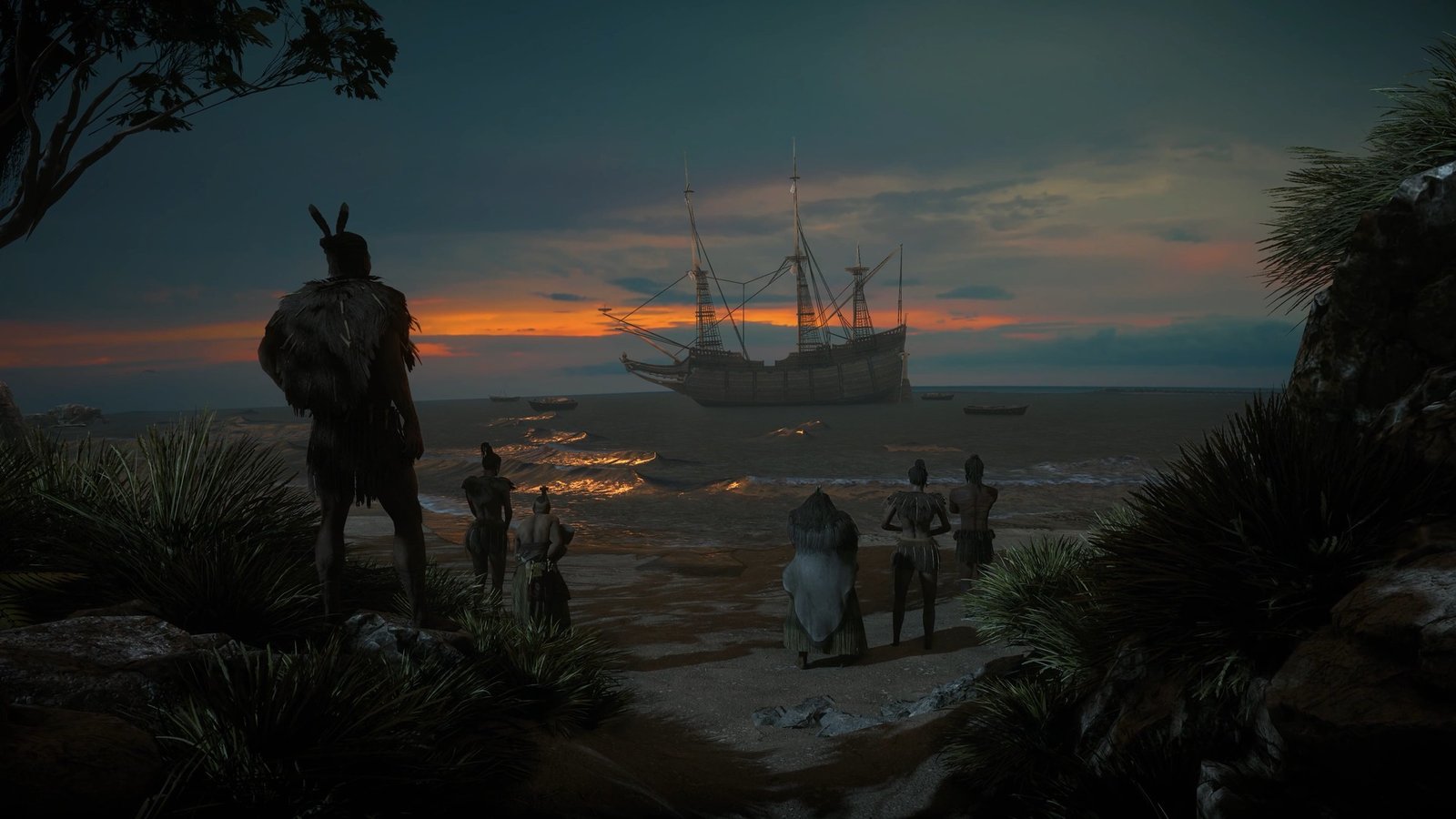
Act 4 arrived in August 2025 with The Third Edict, taking the story to the Ngamakanui archipelago.
It also introduced a structural change: its eight islands can be explored in a nonlinear order.
After Act 4, the game currently uses three temporary Interludes.
These stories connect the available campaign to the endgame and take the character to approximately level 65.
They replaced the old requirement to repeat acts on Cruel difficulty.
The word temporary matters.
This isn’t Path of Exile 2’s final campaign.
At version 1.0, the planned structure expands to six acts, completing the main storyline without relying on those Interludes as a temporary solution.
Bosses Are Central to the Game
Bosses have become a much more important part of Path of Exile 2’s design.
They appear throughout the campaign and aren’t just oversized health bars waiting at the end of a map.
Encounters include distinctive patterns, phase changes, positional attacks, and arenas built around their mechanics.
In the original Early Access FAQ, GGG announced 50 bosses and roughly 400 monster types. Those figures refer to the start of Early Access in December 2024, not an updated count for October 2026.
The game has grown since then.
For the full game, the official Steam description outlines six acts, around 100 environments, 600 monsters, and more than 100 bosses. Those figures describe the planned scope of the full release, not the Early Access content already playable.
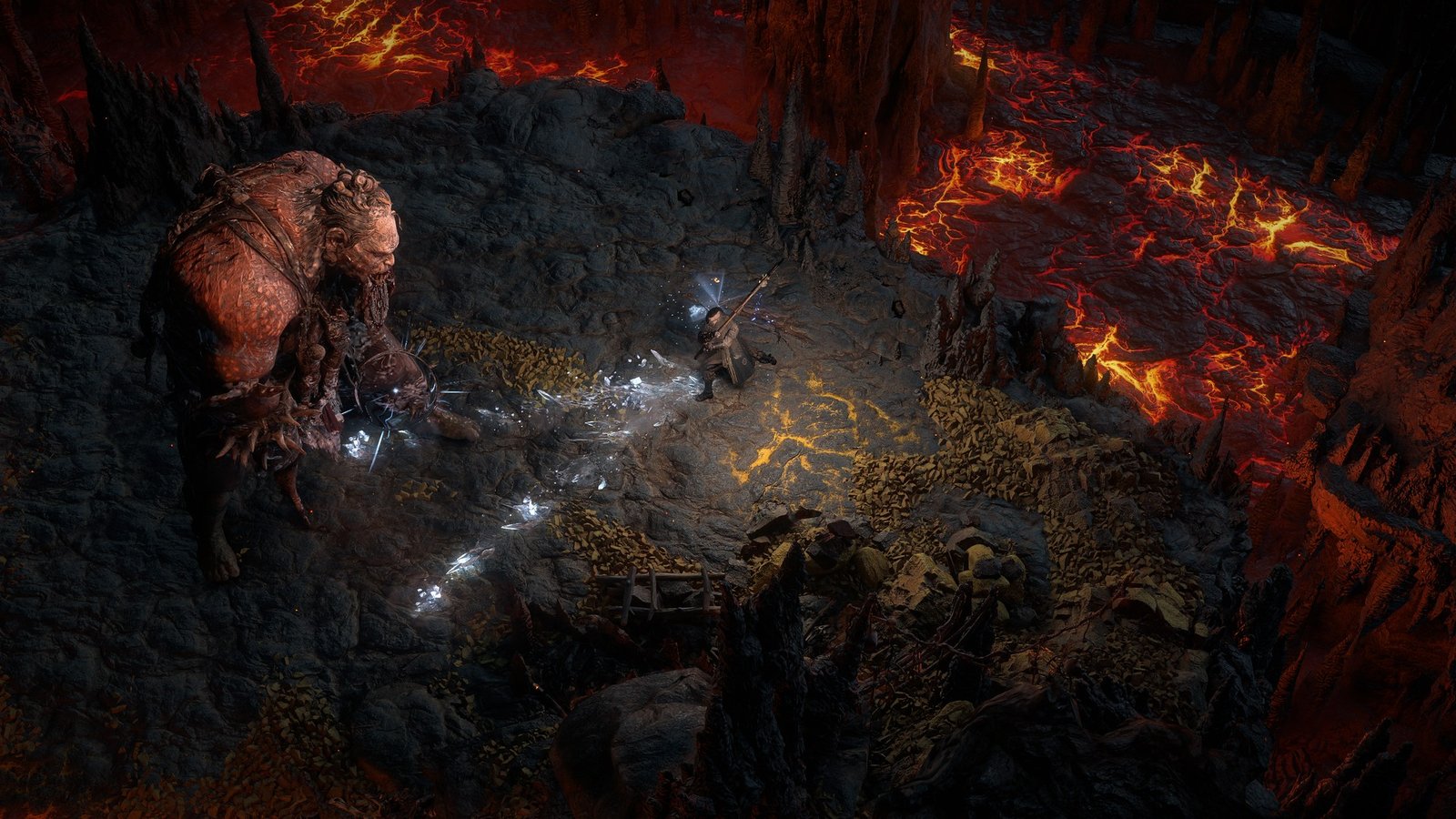
These figures help convey the intended scale, but they don’t mean every one of those encounters is already in today’s Early Access build.
What Happens After the Campaign?
As you would expect from Path of Exile, finishing the story is nowhere near the end.
The Atlas forms the foundation of progression after the campaign.
That part of the game has changed dramatically during Early Access.
Update 0.5.0, Return of the Ancients, rebuilt much of the experience and gave players more direction after reaching the Atlas.
Today, there are different content paths, dedicated bosses, crafting systems, and endgame progression mechanics.
These include Delirium, Breach, Ritual, Expedition, Abyss, and Temple of Atziri content.
There are also the Masters of the Atlas: Jado, Hilda, and Doryani offer different missions, rewards, and specializations. They help guide which types of encounters players seek out in the Atlas.
The Atlas passive tree has hundreds of nodes and allows players to favor different kinds of content. It modifies the endgame experience, while the character’s passive tree develops the build. Despite familiar names, Breach, Ritual, and other activities have their own progression and rewards in PoE 2; they should not be treated as copies of PoE 1’s rules.
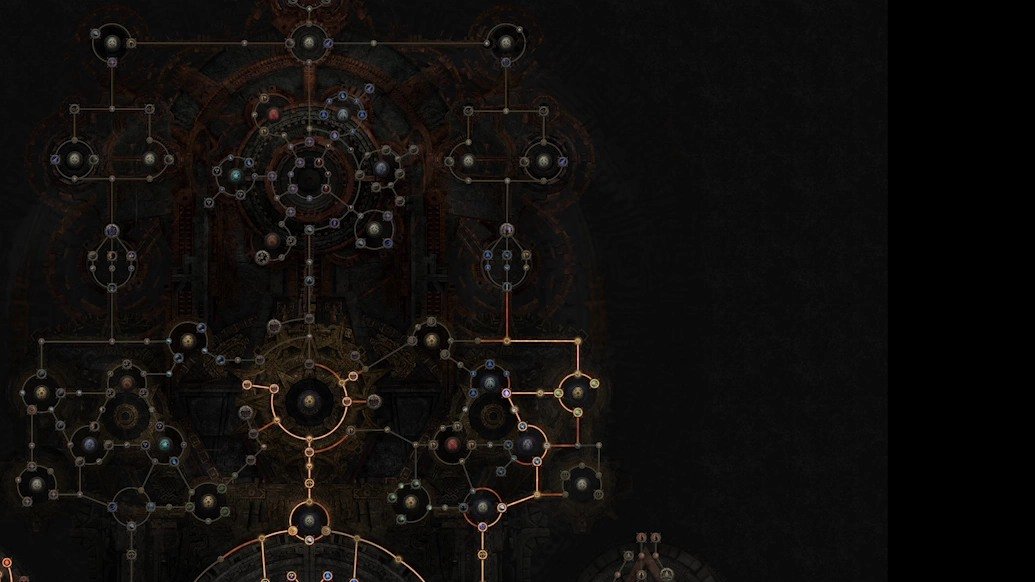
In practice, two players might reach the endgame and prioritize entirely different activities.
That’s important for PoE 2’s future: the goal isn’t for players to run maps endlessly without direction.
Early Access updates have gradually added routes, bosses, and objectives to this stage.
How Do Leagues Work?
Path of Exile 2 has its own league cycles.
A new league creates a fresh economy.
Characters start from scratch in that environment. Old items don’t enter the new economy, and everyone progresses again.
That structure allows Grinding Gear Games to experiment with mechanics before deciding whether they should become permanent.
Standard provides a progression environment outside a newly created league economy. In Solo Self-Found (SSF), there is no trading or grouping with other players. Hardcore adds consequences for death: in Forbidden Rites variants, for example, a character can continue in the corresponding non-Hardcore version.
A temporary mechanic can eventually be added to the core game, but that doesn’t merge economies. The integration of Runes of Aldur content and the continuation of that particular league are separate matters.
What Is the Current Path of Exile 2 League?
As of October 19, 2026, the game remains in the 0.5.5 update series. The latest listed official hotfix is 0.5.5e, which addresses textures on low-VRAM machines, Ritual issues, access to an area, and loading problems. It does not add a new class or replace the campaign structure.
Forbidden Rites is a fresh-economy event league that began on September 4. Ritual encounters appear in the campaign, and some sequences bring defeated bosses back for increasingly dangerous fights. Update 0.5.5 also reworked Trial of Chaos so players can leave and resume an attempt, with a reward chest in every room.

The official Forbidden Rites FAQ confirms that Runes of Aldur remains available separately, including the option to finish its progression and challenges. Both are scheduled to end with version 1.0. Forbidden Rites did not universally erase or replace earlier characters and environments.
The broader Trial of Chaos improvements also apply outside the event. Expedition and parts of Runes of Aldur were added to the core game, with adjustments to access and rewards. That doesn’t mean every league-exclusive item and rule was transferred unchanged.
Items, Equipment, and Crafting
Path of Exile 2 remains heavily dependent on gear.
Items have different rarities, modifiers, and bases.
A suitable Rare can matter more to a build than simply finding a Unique.
Uniques, meanwhile, can fundamentally change how particular builds play.
Currencies remain tied to crafting. Rather than having one currency used only for purchases, different currency items modify equipment in particular ways.
More crafting methods have been introduced throughout Early Access.
Runes of Aldur, for example, added another crafting layer involving runes and Kalguuran content.
An upgrade only matters in relation to your character: damage, resistances, resources, and special effects have to work together. Rarity doesn’t replace that assessment, and spending currency without considering an item’s base and modifiers can waste resources without helping the build.
The point is that PoE 2 equipment isn’t just about raising a general power number.
An item’s properties must work with the build. In trade leagues, equipment and materials also circulate through the economy. PoE 2 has its own official trading tools, and The Third Edict introduced asynchronous trading so purchases no longer always require the seller to be present. Trading and crafting rules must be checked for PoE 2 specifically, as they differ from the first game’s systems.
Multiplayer, Cross-Play, and Local Co-op
Path of Exile 2 can be played solo or in multiplayer.
Online parties support up to six players.
The game supports cross-play, allowing people on different platforms to play together.
It also supports cross-progression, letting characters and progress follow a correctly linked account between compatible platforms.
Path of Exile 2 also introduced couch co-op.
In couch co-op, two people play locally on the same screen. The official FAQ describes creating the second character on the same account; that’s different from promising local play using two independent accounts. Online parties and local co-op are distinct ways to play together.
Cross-progression requires properly linked accounts and doesn’t automatically provide Early Access on every platform. According to GGG’s official support explanation, PC access covers compatible PC clients, while consoles require access for the corresponding platform.
The game is available on PC through the standalone client, Steam, and the Epic Games Store, as well as on PlayStation 5 and Xbox Series X|S. In September 2026, GGG announced Steam Deck verification. That is a certification for the Steam version on the device, not an additional launch platform or confirmation of native support for every operating system.
How Much Does Path of Exile 2 Cost Right Now?
Until full launch, joining Early Access requires eligible access, usually through a Supporter Pack or a valid key. Version 1.0 will be free-to-play, so buying a pack now is not required to play after launch.
For US readers, the Epic Games Store’s PC listing shows the base Early Access Supporter Pack at US$29.99. This is a US PC storefront price, verified for localization on October 23, 2026; other platforms, countries, and later dates may differ. The Brazilian storefront referenced in the original October 19 article listed R$79.80, reflecting a different regional market.
What Does the Base Pack Include?
The listed base pack includes 300 Points, an extended digital soundtrack download, and Early Access or an access key depending on the account’s status. Benefits of other packs need to be checked individually; they are not all identical.
Points are premium currency for microtransactions, including cosmetics and Stash Tabs. They aren’t a cash refund for the purchase price. A standalone key doesn’t automatically include the Points from the pack it originated from.
An account-granting Early Access key also differs from a key that merely adds the Steam or Epic client to a library. The Early Access FAQ explains this distinction: unlocking the client download doesn’t automatically grant access to the game account.
Points and Purchases After Launch
Becoming free-to-play does not convert Points into cash or require players to buy the game again. Points and purchases remain tied to the account, subject to platform and usage rules. Items stored in an old league also remain separate from purchased storage tabs: owning a Stash Tab doesn’t transfer old items into a fresh league economy.
PoE 1 Microtransactions and Platform Restrictions
Compatible purchases can be shared between PoE 1 and PoE 2. That does not guarantee every cosmetic or mechanic-specific tab already exists in both games; content not yet adapted might be unavailable.
The PlayStation ecosystem has an important restriction. According to GGG’s clarification on cross-progression and purchases, microtransactions bought on PlayStation cannot be used on other platforms, and purchases from other platforms cannot be used on PlayStation. Shared characters do not erase this separation.
How Has Path of Exile 2 Changed During Early Access?
Comparing December 2024 with October 2026 shows how much has changed.
Early Access began with three acts, six playable classes, roughly 50 bosses, and about 400 monster types.
Major updates followed.
Dawn of the Hunt — 0.2.0
In April 2025, Dawn of the Hunt added the Huntress.
It brought the Amazon and Ritualist, new Ascendancies for existing classes, new skills, over a hundred Supports, spears, bucklers, Uniques, and new endgame maps.
It was the first major expansion of the playable roster after Early Access began.
The Third Edict — 0.3.0
In August 2025, The Third Edict added Act 4.
It also removed Cruel Difficulty and introduced the three temporary Interludes on the way to the endgame.
Support Gems received a major overhaul, while Rise of the Abyssal marked a new stage for the game’s leagues.
The Last of the Druids — 0.4.0
In December 2025, The Last of the Druids added the Druid.
Oracle and Shaman arrived as its Ascendancies, alongside new transformation-focused skills and the Primal skill family.
Fate of the Vaal introduced a temple-building system in which players arrange rooms, seek crafting rewards, and encounter content associated with Atziri. Room layouts and connections determine which activities and benefits become available.
Return of the Ancients — 0.5.0
In May 2026, Return of the Ancients focused its biggest changes on the endgame.
The Atlas was extensively reworked, new progression paths were introduced, and the Masters of the Atlas arrived.
Monk received Martial Artist, and Huntress received Spirit Walker.
Runes of Aldur brought a new league and a separate crafting system.
Forbidden Rites — 0.5.5
In September 2026, Forbidden Rites opened an event economy alongside Runes of Aldur, continuing the 0.5.5 update series ahead of the full release.
The league brought a fresh economy, Ritual to the campaign, new boss sequences, and a major Trial of Chaos rework.
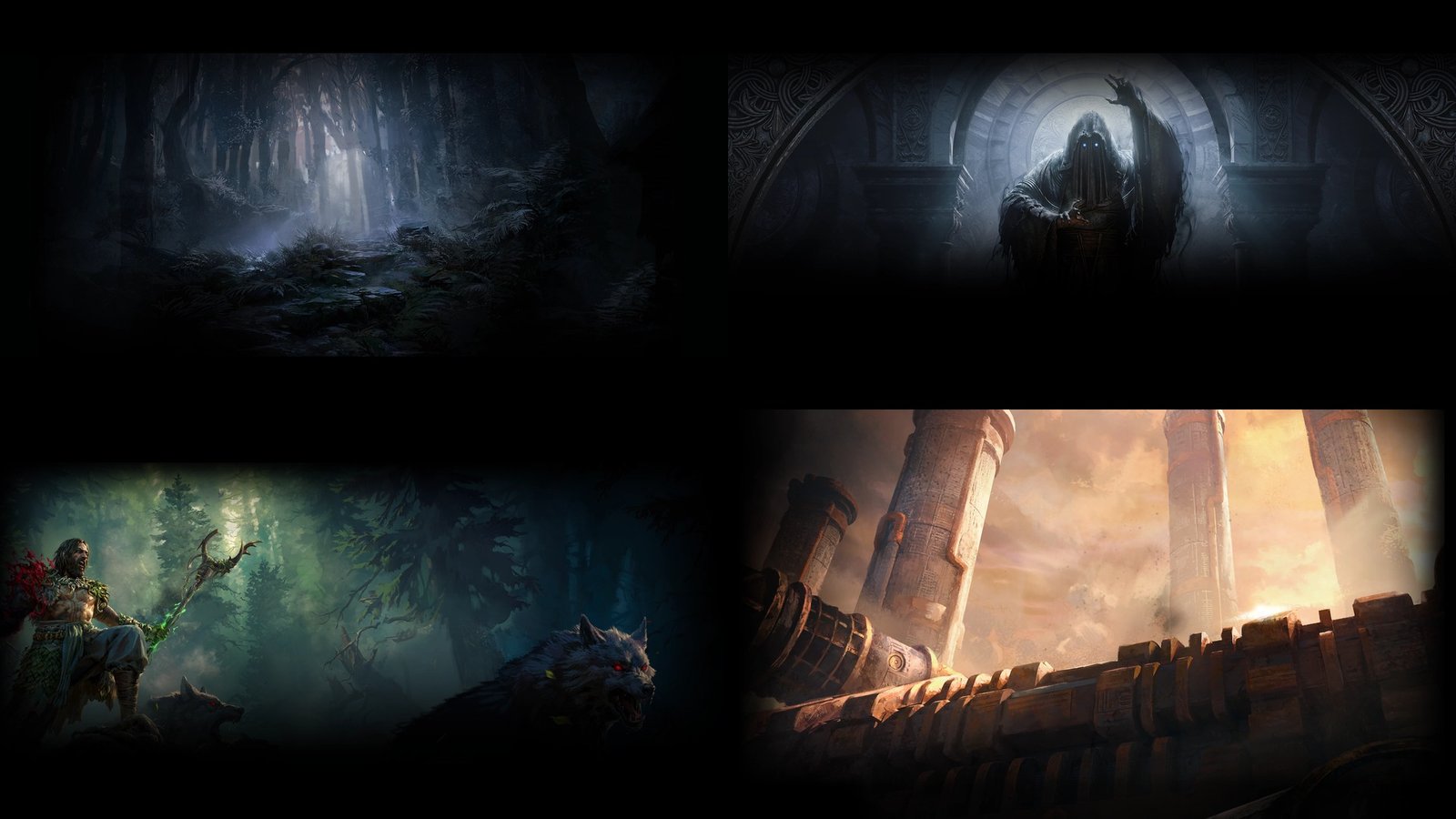
Seen together, Early Access has been more than a period of bug fixing.
Entire parts of the game have been added or rebuilt while players were already playing it.
When Will Path of Exile 2 Officially Launch?
GGG confirmed the full release for December 11, 2026 (PST). That date marks version 1.0, the end of Early Access, and the move to free-to-play. At this article’s October 19, 2026 editorial cutoff, the launch was still in the future.
The official 1.0 details confirm Duelist, its sword-based playstyle, and the final two acts of the campaign. That is different from the overall vision of 12 classes and 36 Ascendancies: the complete planned roster should not be treated as currently available or as individually confirmed for day one.
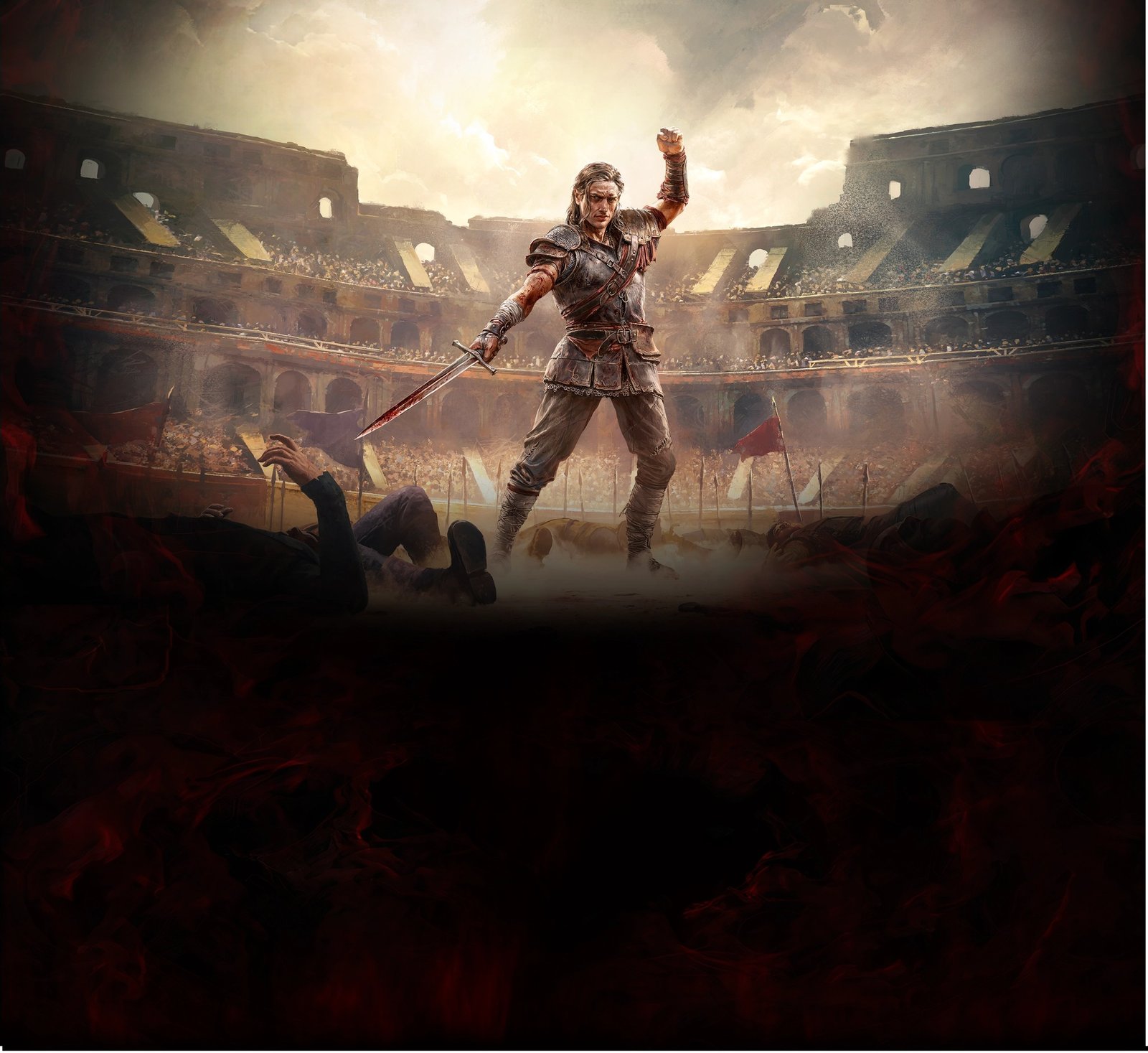
In an October 19 announcement, GGG stressed that rewards from the full-release registration campaign require signing up and confirming the email received. Buying Early Access doesn’t automatically register a player for this promotion, which is separate from current game access.
What Happens to Early Access Characters?
The official FAQ describes a policy of preserving Early Access characters in their own environment, separate from the future Standard league. They won’t simply be deleted at launch, but that doesn’t mean the economy accumulated during testing will become the new Standard economy.
Preserving a character is different from moving that character into a fresh league. Joining a new economy means starting progression within that environment. Items stored in previous leagues don’t automatically enter the new market.
Balance changes may require adjustments to passives, equipment, and skills. Preservation is not a promise that every build will continue to work exactly as it did. Stash Tabs, Points, and microtransactions are account-bound purchases, distinct from a league’s inventory and economy.
Is It Worth Starting Path of Exile 2 Before Launch?
It depends on what you want.
There is plenty of content available now.
Players who want to follow the final stage of development, test builds, learn systems before launch, or were already planning to use the Points in a Supporter Pack may find a lot to do before December.
Learning the campaign, gems, crafting, bosses, and endgame before a new wave of players arrives is another obvious advantage.
With the free release set for December 11, 2026, waiting is also an option for anyone who doesn’t want to pay for Early Access.
Players who prefer a complete campaign, a fresh launch economy, and fewer major balance changes can simply wait for 1.0 without losing the opportunity to play later.
Expectations matter, too.
Buying a Supporter Pack now means accepting a game that is still changing.
Waiting until December means joining when Grinding Gear Games considers Path of Exile 2 ready to leave Early Access.
Neither choice is universally right.
From Expansion to a Game of Its Own
Path of Exile 2’s development shows a change in both scale and identity: what began as an additional campaign became a separate game with its own combat, progression, and endgame. Early Access made those changes visible as classes, areas, and systems were added or rebuilt.
In October 2026, the choice is between experiencing that still-evolving version and waiting for the already scheduled free launch. In either case, distinguishing what is available from what is only planned helps players understand the sequel without confusing its rules with those of the original Path of Exile.
About the Author