Super Metroid, um dos marcos da exploração baseada em habilidades. Imagem: Nintendo.
Metroidvania is a style of game in which exploring the map and acquiring new abilities are fundamental parts of progression. Instead of simply advancing through a sequence of levels, players travel through connected regions, encounter paths they cannot initially access, and return to familiar locations once they gain new capabilities.
The character develops, and the meaning of the map changes as their abilities grow: a previously unreachable passage may reveal an entire region.
The formula became especially well known through two franchises: Nintendo’s Metroid and Konami’s Castlevania. The first Metroid arrived in 1986, while 1994’s Super Metroid established an exploration structure that would influence many later games. In 1997, Castlevania: Symphony of the Night offered its own interpretation, combining interconnected maps with RPG systems.
Over the years, independent studios and major developers expanded these ideas. Hollow Knight, Ori and the Blind Forest, Blasphemous, and Prince of Persia: The Lost Crown show how the same principle can produce very different experiences. The genre does not necessarily require 2D graphics, difficult combat, or a completely open structure. What matters is understanding how exploration, paths, and new capabilities work together.
Updated October 20, 2026.
Nesta matéria
What Makes a Game a Metroidvania?
The term metroidvania describes games that combine exploration of connected environments with progression that changes which places the character can reach.
Maps are often divided into regions, with hidden passages and obstacles that cannot be overcome immediately.
These obstacles may require an ability, transformation, tool, or other resource earned during the adventure. Players keep exploring and, once they acquire the necessary capability, can return to open new paths. This cycle makes the map more than a backdrop: it directly participates in progression.
The Most Common Features
Elements frequently associated with the genre include:
- Interconnected map: regions linked by routes and passages.
- Partially nonlinear exploration: freedom to investigate different routes, even when some have requirements.
- Ability-based progression: new capabilities grant access to previously unreachable places.
- Returning to earlier regions: familiar areas reveal new possibilities.
- Shortcuts and secrets: observing the environment can uncover routes and rewards.
- Distinct regional identities: each area has features that help players navigate.
- Gradual freedom: exploration options expand as the adventure unfolds.
None of these features, taken alone, is enough to classify every game.
A huge map does not automatically make an adventure a metroidvania. Likewise, a character having a double jump does not mean the game uses exploration-based progression.
What matters is the relationship between these systems.
Is Metroidvania a Genre With Fixed Rules?
There is no universal definition that all developers and players apply in exactly the same way.
Some games closely follow the structure of Super Metroid and Castlevania: Symphony of the Night.
Others use more directed maps, different combat systems, or exploration mechanics that reshape the formula. This flexibility allows new interpretations but also explains why certain classifications spark debate.
Where Did the Name Metroidvania Come From?
The term combines the names Metroid and Castlevania. It began circulating among players and specialist outlets particularly to describe Castlevania games that adopted an exploration structure similar to Metroid’s.
That distinction mattered because Castlevania itself offered different experiences. Its early games were primarily known for action and progressing through individual stages.
Symphony of the Night and later entries, by contrast, used explorable castles, new abilities, and revisiting previous regions. The expression helped distinguish this branch of the series.
When Did People Start Using the Term?
Records show “metroidvania” appearing in online discussions as early as 2001 in connection with Castlevania: Circle of the Moon. Research by Kate Willaert (Critical Kate) identified a message from Richard Hutnik dated June 14, 2001, about Circle of the Moon in the rec.games.video.nintendo newsgroup. It is an early known record, not proof that the word was definitively coined there.
Other examples appeared in subsequent years. Specialist media helped popularize the expression, particularly when discussing the evolution of exploration-focused Castlevania games.
Journalist Jeremy Parish is among those associated with spreading the term, but does not claim to have invented it. Its exact origin has not been conclusively established.
Why Did the Term Expand to Other Franchises?
Because the structure stopped being exclusive to Metroid and Castlevania. Other developers began creating connected worlds where new abilities opened previously blocked routes.
As a result, metroidvania evolved from a way to distinguish certain Castlevania games into a label for a broader game-design approach. Its name remained the same, but its use expanded.
Metroid: The Origins of Ability-Based Exploration

On August 6, 1986, Nintendo released the first Metroid in Japan for the Family Computer Disk System, according to the series’ official retrospective. The game subsequently reached the NES in other markets. Its adventure followed Samus Aran on a mission to planet Zebes. Players explored underground environments, fought alien creatures, and found equipment that expanded their movement and combat options.
But Metroid did not work like a conventional sequence of stages.
Exploration Was Part of the Challenge
Players had to understand how areas were arranged, locate passages, and recognize places they could not yet traverse. The game did not offer the level of guidance found in many modern titles. New paths were discovered through exploration, observation, and sometimes trial and error.
Equipment Changed Access to the Map
The Morph Ball, for example, let Samus transform into a sphere and move through narrow passages. Bombs, missiles, and other upgrades expanded her options.
These tools mattered for more than defeating enemies faster. They also changed how players moved through the environment. A seemingly impossible passage could become accessible after finding the right equipment.
Was Metroid the First Game With Nonlinear Exploration?
It would be inaccurate to credit Metroid alone with inventing all these ideas. Earlier games had already experimented with explorable maps, objects that opened paths, and nonlinear structures.
Metroid’s achievement was combining action, platforming, exploration, and new capabilities into an identity that directly influenced the genre’s development.
Metroid II and the Series’ Continuation
In 1991, Metroid II: Return of Samus arrived on Game Boy. It introduced another adventure on planet SR388 and important elements of Samus’s story. Its exploration structure was also adapted to the handheld’s characteristics. Although different from the original, traversing environments and developing the protagonist’s abilities remained central. This Game Boy release is the original 1991 Metroid II.
Metroid: Samus Returns, released for Nintendo 3DS in 2017, is a later reimagining of that adventure, with its own systems and presentation.
Super Metroid: When the Formula Came Together
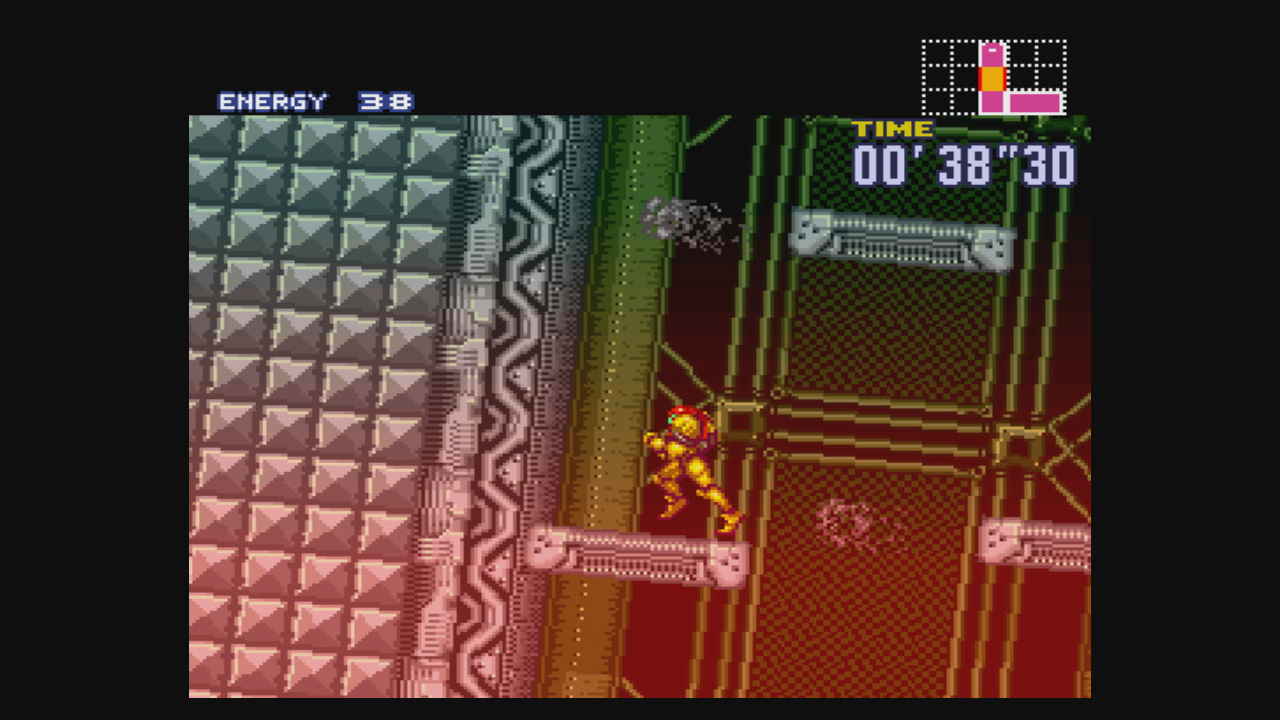
In 1994, Super Metroid arrived on Super Nintendo. Samus returned to planet Zebes, with the adventure developing many ideas from the original game. It became especially well known for how it organized its regions.
A World That Feels Coherent
Super Metroid presents connected environments, visually distinct places, and passages leading to other regions. Exploration requires players to understand how these areas relate. Finding a door, corridor, or hidden passage can change how they navigate the map. The adventure also alternates between clearer guidance and moments where discovery depends on the player’s curiosity.
The Map Helps, but Does Not Solve Everything
Its map system made it easier to track visited regions. However, knowing where a room is located is not the same as knowing how to reach it. Players must still notice barriers, interpret their surroundings, and search for the abilities they need. This distinction matters: the map provides information, but progression depends on understanding what is possible.
Abilities Create New Paths
Movement and weapon upgrades reshape exploration. As Samus develops her equipment, she can traverse regions that previously seemed inaccessible. The result is an adventure where returning to a familiar area may uncover an entirely new part of the game.
Why Was Super Metroid So Influential?
Because the organization of its regions, distribution of abilities, and relationship between exploration and discovery form an especially recognizable whole. Many later games developed structures inspired by this approach.
Super Metroid did not single-handedly create every mechanic associated with the genre, but it is a foundational example of how they can work together.
Castlevania: How Symphony of the Night Transformed the Formula
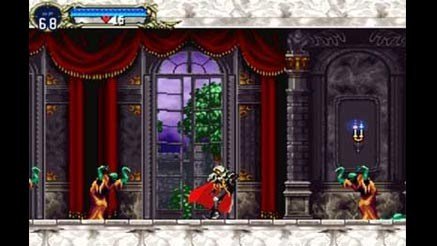
Castlevania began in 1986, the same year as the first Metroid. Its earliest entries, however, had a different structure. The original Castlevania was primarily an action-platform game built around stages and encounters with enemies and bosses. Castlevania II: Simon’s Quest, from 1987, had already experimented with less linear exploration and RPG elements.
But 1997’s Castlevania: Symphony of the Night would establish one of the most influential interpretations of exploration-based design.
A Castle to Explore
In Symphony of the Night, players control Alucard. Rather than simply completing a traditional series of stages, they explore a castle with several interconnected regions. The route forward is not always available immediately. They must find passages, overcome challenges, and acquire resources that let them reach new areas.
Transformations and Abilities
Alucard can gain abilities that change his movement. Transformations and other powers allow him to explore previously inaccessible regions. In principle, this creates a structure resembling the development of Samus’s equipment. Yet Symphony of the Night also has characteristics of its own.
The Influence of RPGs
The game includes character levels, experience, attributes, weapons, armor, and accessories. Equipment can change the protagonist’s performance. Enemies provide rewards, and finding special items also contributes to exploration. Symphony of the Night thus brought together two kinds of progression: developing a character through RPG systems and extending access to the castle through new abilities.
Did Symphony of the Night Invent the Formula?
No. Metroid and Super Metroid already used ability-based exploration. Furthermore, Koji Igarashi, a major figure associated with Symphony of the Night and later exploration-focused Castlevania titles, explained in an interview that adventure games such as The Legend of Zelda also influenced his approach. Symphony of the Night’s achievement was offering its own combination of strong RPG identity, gothic setting, and exploration.
Its association with Metroid helped popularize the term metroidvania.
The Evolution After Super Metroid and Symphony of the Night
The genre kept evolving even during periods when major Metroid and Castlevania releases were less frequent.
Metroid Fusion and Zero Mission
Metroid Fusion, released for Game Boy Advance in 2002, used a more guided structure in several parts of the adventure.
Players still needed to explore and use abilities to progress, but objectives were more clearly directed.
In 2004, Metroid: Zero Mission revisited the first Metroid, rebuilding and expanding the original experience. The two games demonstrated how the series could offer different degrees of guidance.
Castlevania on Handhelds
Castlevania continued developing exploration combined with RPG systems. Aria of Sorrow (2003) introduced the Tactical Soul system, allowing Soma Cruz to acquire abilities associated with the souls of defeated enemies.
On Game Boy Advance, Circle of the Moon (2001) and Harmony of Dissonance (2002) further developed the exploratory branch. On Nintendo DS, it continued through Dawn of Sorrow (2005), Portrait of Ruin (2006), and Order of Ecclesia (2008), exploring different protagonists, abilities, and combat systems.
These experiences kept the franchise’s exploratory tradition alive throughout the 2000s. Bloodstained: Ritual of the Night (2019), directed by Koji Igarashi outside the Castlevania brand, returned to side-scrolling exploration combined with equipment and RPG development. Its contribution lies in that creative continuity, without making every metroidvania a reproduction of Symphony of the Night.
Shadow Complex and Renewed Interest
In 2009, Shadow Complex presented an action-exploration adventure with three-dimensional visuals and side-scrolling movement. Its connected world and equipment emphasized the importance of uncovering passages.
It became a notable example of the period when developers began investing more frequently in this structure again.
Guacamelee!, Axiom Verge, and Ori
Guacamelee! (2013) combined exploration with combat inspired by Mexican wrestling and movement abilities that also played a role in fights. Axiom Verge (2015) sought to build an experience closely tied to the Metroid tradition, especially through its science-fiction setting and exploration.
That same year, Moon Studios’ Ori and the Blind Forest emphasized movement, platforming, visual presentation, and storytelling. These games showed that the formula could work without reproducing the settings or combat systems of its best-known predecessors.
Hollow Knight and the Exploration of Hallownest
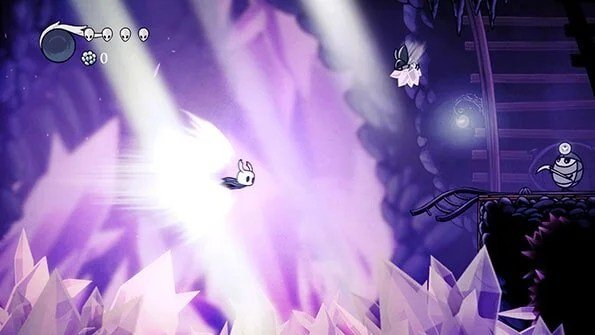
Released on February 24, 2017, Hollow Knight presented an underground kingdom consisting of interconnected regions. Its identity combines exploration, combat, secrets, and storytelling built through the environment and encountered characters. The map plays a central role: players discover routes, obtain new abilities, and expand their exploration options.
Hollow Knight does not, however, depend exclusively on the structure of Metroid or Castlevania. Its combat, consequences of death, and setting also have characteristics of their own.
The game became a major reference point for modern metroidvanias, particularly in how it connects exploration and discovery. On February 5, 2026, Team Cherry announced upgraded versions of Hollow Knight for Nintendo Switch 2, PS5, and Xbox Series X|S, with improved resolution, performance, and effects. Existing versions also received updates; for PC, the announcement mentions support for 21:9 and 16:10 aspect ratios.
This is the updated 2017 game, not Silksong.
The team offered free upgrades to eligible owners of earlier console versions. Its announcement also noted an issue affecting the PS4 edition obtained through the PlayStation Plus catalog, so that condition should not be mistaken for an unrestricted subscription entitlement.
Blasphemous, Metroid Dread, and Prince of Persia
Blasphemous (2019) combined a dark setting, combat, and exploration with elements that also connect it to other classifications.
Metroid Dread, released in October 2021, modernized Nintendo’s formula with agile movement, new tools, and encounters with the E.M.M.I. robots.
Prince of Persia: The Lost Crown, released in January 2024, used exploration, acrobatic movement, and time-related powers to create its own experience. These three games demonstrate how a shared idea of progression can support adventures with very different pacing and challenges.
Castlevania: Belmont’s Curse — The New Chapter of 2026
Castlevania: Belmont’s Curse launched on October 15, 2026. Konami presents the project as a collaboration with Evil Empire and Motion Twin. It is a new 2D action-exploration game, not a remaster or expansion of an earlier title.
The adventure follows Rose Belmont, Trevor’s daughter, in Paris in 1499, 23 years after the events of Castlevania III. The Vampire Killer whip is used for both combat and movement: grabbing environmental points and swinging connects fighting and traversal rather than limiting each tool to one function.
The official website also describes the Arcana system, which traps defeated bosses in cards and lets players use their powers. Weapons and relics broaden the available combinations. These mechanics justify its place in the evolution of the series’ exploratory action, without assuming its structure fully repeats Symphony of the Night.
The release covers PS5, Nintendo Switch, Xbox Series X|S, and PC. As of this article’s October 20, 2026 revision, it is already available; earlier announcements that described it as an upcoming project must be understood in that context.
How Does Exploration Work in a Metroidvania?
This is the genre’s central feature. In a metroidvania, players do not advance only because they have completed a particular stage. They also progress by understanding the map better and gaining new ways to interact with it.
Interconnected Areas
Rather than presenting only a sequence of independent levels, the game usually organizes regions that relate to one another. A forest might lead to a cave.
The cave may grant access to ruins. Later, a passage through those ruins might return to the forest by another route. These connections make the regions feel like parts of the same world.
Required and Optional Paths
Not every passage needs to form part of the main progression. Some lead to equipment, upgrades, or secrets. Others reach areas essential to continuing the adventure. This mix makes it possible to explore out of curiosity without necessarily abandoning the main objective.
Shortcuts
An elevator, gate, or secret passage may connect areas that previously required a long journey. Opening such a route changes how players move around the world. The shortcut acts as a reward for exploration.
Maps and Navigation
Many metroidvanias include maps showing visited regions and unexplored paths. Some allow markers to be placed. Others use visual clues and records of explored locations. Some games also leave part of navigation up to the player. A good map can help without automatically revealing every solution.
Rest Points and Fast Travel
Depending on the game, players may find points for saving, restoring resources, or transporting the character between regions. These systems reduce repetitive travel and can make it easier to revisit important places. Not every metroidvania uses checkpoints or fast travel in the same way.
What Is Backtracking, and Why Does It Matter?
Backtracking means revisiting familiar regions, often to find paths and rewards that were not accessible earlier.
Imagine finding a cracked wall without having the tool needed to destroy it. Later, you acquire an ability that can break certain obstacles. When you return to that wall, you can open a passage. That is meaningful backtracking: a familiar area now offers something new.
Backtracking Is Not Simply Walking Backward
Revisiting an area becomes meaningful when it brings a discovery or relevant change. If a game forces players to cross the same corridors repeatedly without offering anything new, the journey may feel tedious. But when an ability changes the available options, revisiting a region becomes a natural part of exploration.
The Map Becomes Part of the Player’s Memory
Over time, players start recognizing obstacles. A narrow passage recalls the ability needed to pass through it.
A vertical corridor suggests that climbing may be possible later. This connection between scenery and capabilities matters because progression does not happen only when an item appears in the inventory. It also depends on remembering where that item can be used.
Ability-Based Progression: Why Do Some Doors Stay Closed?
One expression used to explain this structure is ability gating. It describes situations in which a particular route depends on a specific capability.
It does not have to be a literally locked door. It could be a chasm, wall, flooded region, or passage requiring a transformation.
Other Examples
Air dash: crossing very wide gaps or overcoming certain obstacles. Climbing: reaching surfaces that were previously out of reach. Transformations: crossing passages requiring a specific form. New weapons or tools: destroying tough materials or activating mechanisms. Special movement: using walls, grappling hooks, or other surfaces. Environmental protection: crossing dangerous regions that previously blocked progress. These tools may also serve in combat.
A movement ability can help players dodge attacks, while a particular weapon might open paths.
This helps the game’s systems complement one another.
Not Every Upgrade Unlocks Exploration
There is a difference between obtaining a new capability and simply increasing a character’s power. Finding armor with higher defense may make a fight easier.
But that does not necessarily mean new passages have opened. An ability that allows players to cross a specific barrier, by contrast, directly changes their relationship with the environment. Both are types of progression, but they serve different purposes.
Progression Can Also Depend on Knowledge
Some routes may be available from the beginning but require understanding a mechanic or discovering a hidden passage. In that case, the character has not gained an ability; the player has learned something. This may coexist with progression through equipment and new capabilities.
Example: How One Ability Changes the Meaning of a Map
The following hypothetical example was created to explain the genre’s structure.
| Step | Situation | Consequence |
|---|---|---|
| 1. Obstacle discovered | A very high platform blocks the route | The path remains inaccessible |
| 2. Exploration | The player searches other regions | A double-jump ability is found |
| 3. Return | The player revisits the first room | The platform can now be reached |
| 4. Discovery | A passage leads to a new area | The map expands |
| 5. New progression | The region presents another challenge | A new stage of exploration begins |
What matters is not the mere existence of a double jump.
It is the relationship between recognizing an obstacle, acquiring a capability, and remembering where to apply it.
This cycle can repeat with different abilities throughout the campaign, but each repetition needs to provide new possibilities to remain engaging.
Level Design: How Does the Map Guide Players?

Level design means planning areas, routes, challenges, and opportunities for interaction.
In metroidvanias, this organization matters especially because players must understand how regions connect.
Distinct Regional Identities
Colors, architecture, sounds, and enemy types help distinguish locations. A flooded region may look and feel different from a volcanic area. These distinctions make it easier to recognize where the character is and remember important routes.
Visual Cues
The environment can suggest a passage. A wall with a different appearance might indicate a secret.
A visible but distant platform may hint at an ability that will become available later. These elements guide players without necessarily providing explicit instructions.
Freedom Does Not Mean a Lack of Direction
Super Metroid is remembered for its exploration, but the arrangement of its regions also guides progression. Hollow Knight lets players investigate different routes, although some areas have their own requirements. Ori includes exploration alongside more directed sequences, including movement challenges. All three emphasize the map in different ways.
A metroidvania can be relatively guided without losing its identity. What matters is that exploration and new abilities remain relevant to the journey.
What About Paths That Seem Out of Sequence?
Some games let players reach regions earlier than the most obvious route, using advanced techniques or deep knowledge of mechanics. That possibility can particularly appeal to players who enjoy alternative routes and finishing adventures quickly.
However, mastering these techniques is not required to understand or enjoy the genre. In Prince of Persia: The Lost Crown, the Eye of the Wanderer tool attaches screenshots to map locations. The images help players remember the obstacle at each location, reducing the need to memorize every room without solving the route for them. An optional Guided Mode also highlights objectives and available or blocked paths.
These are ways to adjust guidance while preserving exploration.
Combat, Bosses, and Platforming: What Changes Between Games?

Combat appears in many metroidvanias, but it does not need to be the most important element in all of them. Some games emphasize battles. Others focus their challenges on precise movement, exploration, or environmental obstacles.
Castlevania: Stats and Equipment
Symphony of the Night uses weapons, armor, levels, and equipment. Character development affects combat.
This combination brings the game closer to systems typical of action RPGs.
Hollow Knight: Reading Attacks and Mobility
Hollow Knight features real-time combat, enemies with distinct movement patterns, and bosses that demand attention. Exploration nevertheless remains essential. The game also uses abilities and equipment that change movement and combat possibilities.
Ori: Movement First
Ori and the Blind Forest emphasizes platforming, speed, and mastery of movement abilities. Traversal challenges can be as important as fights.
Its sequel, Ori and the Will of the Wisps (2020), developed new systems and expanded combat.
Prince of Persia: The Lost Crown
The game combines acrobatic movement, combat, and special powers.
Some abilities help overcome obstacles.
Others have defensive or offensive uses. Exploration requires applying these tools in different ways.
Do Metroidvanias Need Difficult Bosses?
No. Bosses can serve as major tests of acquired abilities.
But high difficulty is not a requirement of the genre. Some metroidvanias focus more heavily on puzzles and platforming.
Does a Metroidvania Have to Be 2D?
No. Metroidvania mainly describes a structure of exploration and progression, not a camera angle. Side-scrolling views are common because they make platforms, corridors, and movement obstacles easy to present. The same ideas can nevertheless work in three-dimensional environments.
Metroid Prime and 3D Exploration

Originally released in 2002, Metroid Prime introduced first-person exploration. Despite the shift in perspective, it retained several characteristics associated with the series.
Players need to investigate environments, acquire equipment, and return to previously inaccessible locations. Scanning systems and Samus’s tools also help them understand the world. It shows how the formula can work outside the traditional side-scrolling view.
Metroid Prime 4: Beyond
Released on December 4, 2025, for Nintendo Switch and in a separate Nintendo Switch 2 edition, Metroid Prime 4: Beyond takes Samus to planet Viewros after a confrontation involving Sylux and an artifact. The Scan Visor helps investigate the environment; psychic powers allow players to control shots and manipulate mechanisms with the Psychic Glove. Sol Valley acts as a broad connecting desert region that can also be crossed on the Vi-O-La motorcycle.
This three-dimensional organization differs from Super Metroid’s side-scrolling maps. The Switch 2 edition adds technical improvements and optional mouse controls with Joy-Con 2, without being a separate story chapter. First-person perspective alone does not determine a game’s classification; what matters is how equipment, investigation, and access to regions shape progression.
Why Is the Classification of 3D Metroidvanias Debated?
Because some players use the term chiefly for side-scrolling action-exploration games.
Others consider map structure and ability-based progression more important.
Classification may therefore vary according to the criteria used. Visual perspective alone does not explain how a game works.
Metroidvania, Platformer, Soulslike, Roguelite, and ARPG: What’s the Difference?
These labels describe different characteristics and may overlap.
Metroidvania vs. Platformer
A platform game may have independent stages with clearly defined beginnings and endings.
The character advances by completing jumping and movement challenges.
Metroidvanias, by contrast, usually use connected regions and abilities that let players revisit earlier areas and open new routes. Platforming is therefore common, but not enough to define the genre.
Metroidvania vs. Soulslike
Soulslikes often emphasize attentiveness to enemy movements, rest points, and consequences for death. Some also feature interconnected worlds and shortcuts, creating similarities with metroidvanias.
The difference lies in the priority given to these systems. In metroidvanias, exploration and new abilities play an especially important role in progression.
In soulslikes, combat, risk, and learning often organize much of the experience. Hollow Knight and Blasphemous are examples of games frequently discussed under both labels. For a closer comparison, see our article Soulslike: origins, evolution, and the legacy of Dark Souls.
Metroidvania vs. Roguelite
Roguelites often involve successive runs in which defeat ends an attempt and leads to a fresh start. Many also rearrange maps, enemies, and rewards between runs.
Metroidvanias, by contrast, generally use a persistent campaign world that gradually opens up. Dead Cells is a well-known example of a combination of the two styles, particularly in its exploration and route unlocks. Its run-based structure, however, also means it is frequently classified primarily as an action roguelite. The distinction cannot be reduced to the presence of maps or abilities alone.
ZAUS.GG examines these structures in Roguelike and Roguelite: differences, origins, and evolution.
Metroidvania vs. Action RPG
Action RPG (ARPG) is a broad label for games combining real-time combat with RPG progression systems.
Symphony of the Night has features that connect it to both categories.
However, not every metroidvania requires levels, classes, or complex equipment systems. Some chiefly depend on new exploration abilities. For the broader category, see ARPG: what it is, how it works, and the genre’s history. These classifications do not necessarily compete; they explain different aspects of an experience.
Interconnected maps must also be distinguished from open worlds. A campaign can have crossing paths and some freedom while maintaining a sequence of required abilities. Neither a large environment nor the absence of numbered stages guarantees free access to every region.
Games That Shaped the Evolution of Metroidvanias
The selection below brings together games that contributed to the formula in different ways. It is not a ranking of the best titles.
| Game | Year | Main contribution |
|---|---|---|
| Metroid | 1986 | Exploration and equipment that opens routes |
| Super Metroid | 1994 | Map design, shortcuts, and abilities |
| Castlevania: Symphony of the Night | 1997 | Exploration combined with equipment and RPG elements |
| Metroid Prime | 2002 | Adaptation of exploration to 3D environments |
| Castlevania: Aria of Sorrow | 2003 | Tactical Soul system and the development of exploratory Castlevania |
| Shadow Complex | 2009 | A modern presentation of the formula |
| Guacamelee! | 2013 | Interconnected movement and combat abilities |
| Axiom Verge | 2015 | Science fiction and direct Metroid influence |
| Ori and the Blind Forest | 2015 | Platforming, movement, and audiovisual presentation |
| Hollow Knight | 2017 | Exploration and discovery across interconnected Hallownest |
| Bloodstained: Ritual of the Night | 2019 | Continuation of side-scrolling exploration with RPG systems |
| Blasphemous | 2019 | Dark atmosphere, combat, and exploration |
| Ori and the Will of the Wisps | 2020 | Evolution of the franchise’s combat and movement |
| Metroid Dread | 2021 | Modernization of the series’ exploration systems |
| Prince of Persia: The Lost Crown | 2024 | Movement, combat, and exploration abilities in a long-running franchise |
| Hollow Knight: Silksong | 2025 | Continued exploration with Hornet and new moves |
| Metroid Prime 4: Beyond | 2025 | 3D exploration on Viewros with psychic powers |
| MIO: Memories in Orbit | 2026 | Space exploration, precise movement, and a distinct audiovisual identity |
| Castlevania: Belmont’s Curse | 2026 — Oct 15 | New 2D entry featuring Rose Belmont, the whip, and Arcana |
Dates refer to each game’s original release or main debut, not necessarily its arrival on every platform.
Hollow Knight: Silksong — 2025

Released September 4, 2025, according to Team Cherry’s announcement, Silksong places Hornet at the center of a new adventure.
In the kingdom of Pharloom, Hornet has acrobatic movement and her own set of tools. The official Silksong presentation highlights a handcrafted, interconnected world. The protagonist, environment, and mechanics give the sequel its own identity rather than simply moving Hallownest’s Knight to another map.
The free Sea of Sorrow expansion was announced by Team Cherry for 2026, with a nautical theme, new areas, bosses, and tools. As of October 20, 2026, it remains an upcoming announcement in the official sources consulted, without a confirmed exact date. It should not be presented as already released or confused with the main campaign available since 2025.
MIO: Memories in Orbit — 2026
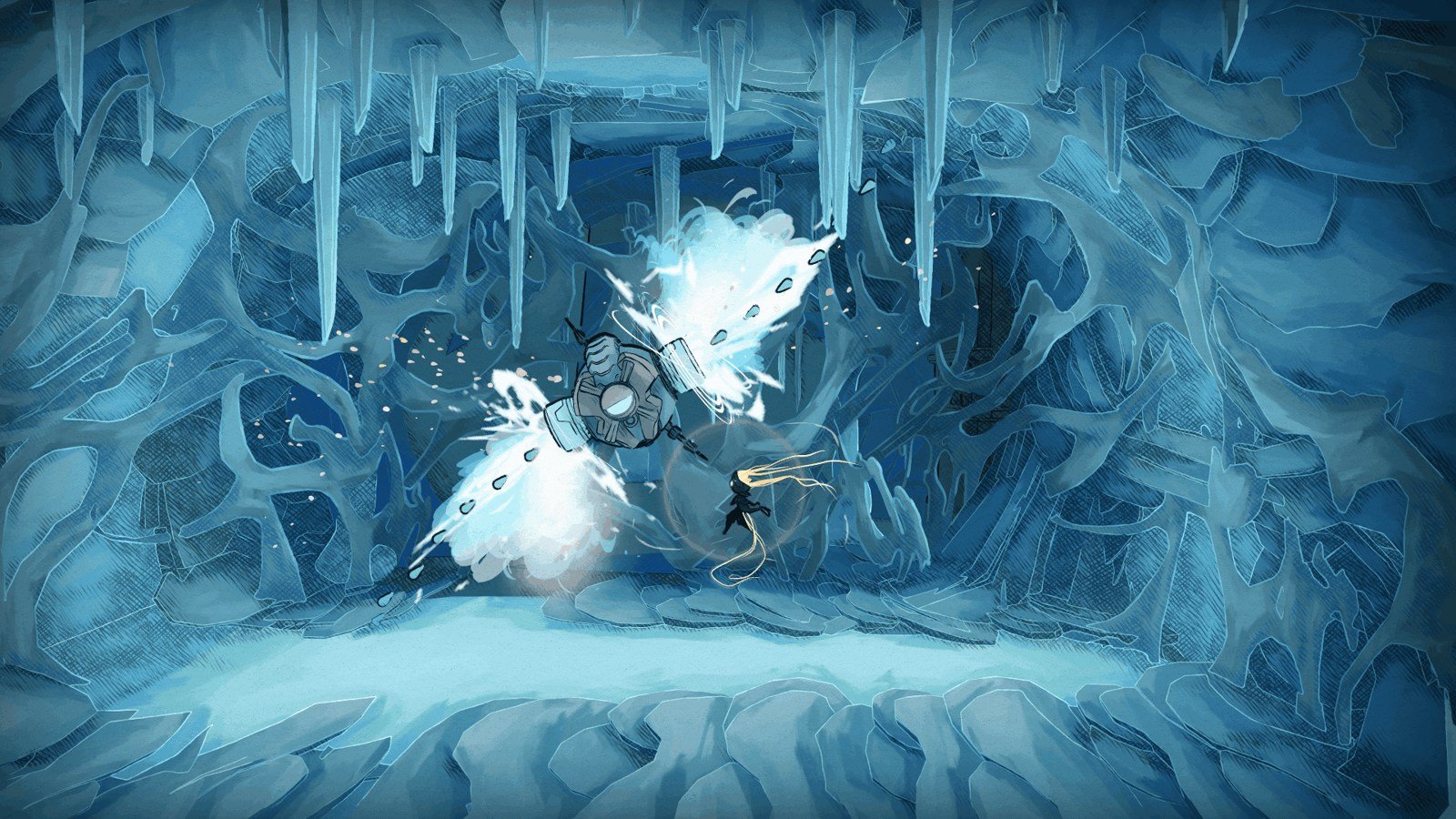
Released on January 20, 2026, MIO: Memories in Orbit was developed by Douze Dixièmes and published by Focus Entertainment. The adventure follows the android MIO aboard the Vessel, a spaceship overtaken by vegetation and malfunctioning machinery. It launched for PC, PS5, Xbox Series X|S, Nintendo Switch, and Switch 2.
Exploration requires mastering movement and gaining abilities to access regions of the ship. Precise platforming, combat, and ability modifiers support that traversal, while the Vessel’s condition provides context for investigation. These are concrete characteristics of the project, without crediting it with revolutionizing the genre as a whole.
The game also uses environments designed to convey a distinct visual identity, combining science fiction, animation, and exploration. Such titles show that the genre keeps offering new interpretations without abandoning the fundamental relationship between abilities and accessible paths.
Why Is Exploration Still So Engaging?
One attraction of metroidvanias is understanding a world through observation. Finding a hidden passage rewards a hypothesis the player tested, while optional routes may reveal equipment, upgrades, and details about a place. Over time, an environment that initially seemed like a maze becomes familiar. Learning its connections makes it possible to plan routes and recognize what new abilities change.
The diversity of the games discussed shows different emphases on combat, movement, and exploration; it does not, by itself, prove continuous market growth.
Who Are Metroidvanias For?
Metroidvanias tend to appeal to players who enjoy discovering routes and realizing that new abilities can transform familiar regions. They may also appeal to those who enjoy platforming, combat, secrets, and exploration.
There are, however, some characteristics worth considering.
What Might Be Frustrating?
Some games provide little guidance, creating moments when players do not know where to go. Revisiting earlier regions can also become tiring when it involves long journeys with nothing new to discover. Other games include demanding combat or platforming challenges. These elements vary. Someone who dislikes difficult bosses may still find metroidvanias that focus more on movement and exploration.
Likewise, those looking for combat may prefer experiences with more elaborate encounters.
Do You Have to Enjoy All These Systems?
No. The genre offers considerable variety.
The best approach is to identify what attracts you most: discovering secrets, mastering movement, exploring environments, or overcoming challenges.
Metroidvania: When the Map Grows Alongside the Character
Exploration is part of progression when a new ability changes how players move through a familiar place. The appeal lies in recognizing routes, interpreting obstacles, and discovering how regions relate.
The traditions of Metroid and Castlevania continue to receive different interpretations, from precise platforming to broader combat and RPG systems. Choosing a metroidvania means recognizing which of these dimensions interests you most. The map offers possibilities; the character and the player’s knowledge transform what can be done with them.
About the Author