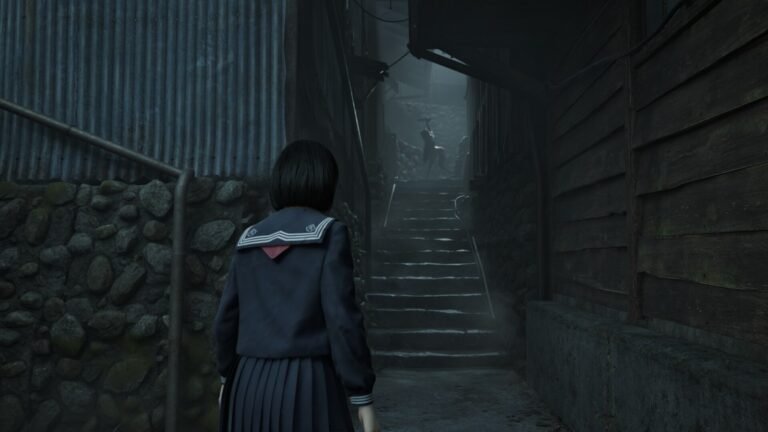
Metal Gear Solid Delta: Snake Eater (2025), infiltração de Naked Snake em ambiente de selva. Imagem: Konami.
Nesta matéria
A facility has two guards. When the first moves away from a doorway, the corridor looks clear, but a second guard is still watching from an elevated position. Crossing safely means understanding both patrols. Crouching or carrying a suppressed weapon is not enough by itself: the better choice may be to wait, find another route, or distract one of them.
Turning information into opportunity is the foundation of stealth games. Light, sound, identity, special abilities, and tactical decisions have produced remarkably different experiences. This feature explains how those systems work and how stealth evolved from early experiments to espionage, horror, and modern infiltration. Updated October 22, 2026.
What defines a stealth game?
Stealth gameplay is about avoiding detection, controlling exposure, and understanding how opponents perceive their surroundings. The objective might be to infiltrate a site, escape, steal something, or eliminate a target. Being discovered does not always end the mission: some objectives require total discretion, while other games let players fight, flee, and adapt.
Stealth is not necessarily pacifism. Depending on the title, there are routes without takedowns, nonlethal equipment, and assassination missions. A particular camera perspective, darkness, military setting, disguises, human enemies, or multiplayer is not mandatory. Even crouching matters only when it interacts with visibility, sound, and detection rules.
Stealth as a primary genre and as a mechanic
In Thief, Splinter Cell, Metal Gear, and Mark of the Ninja, managing enemy awareness organizes much of the experience. In Skyrim, Cyberpunk 2077, Deus Ex, and other hybrids, infiltration is one option inside broader RPG and action systems. The distinction is not absolute: the importance of stealth can shift between entries of one franchise, as happened with Assassin’s Creed.
The origins of stealth games
Evasion and pursuit appeared before stealth emerged as a recognized genre, but simply fleeing an enemy is not the same as a developed infiltration system. Manbiki Shounen (1979), attributed to Hiroshi Suzuki for the Commodore PET, involved taking objects from a shop without being noticed. Jim Gerrie’s research on preserving BASIC programs documents its appearance as a type-in program and the limits of its historical record. It is an early precedent, not a definitive claim to the world’s first stealth game.
SEGA’s 005 (1981) explored arcade espionage and regions watched by enemies. Making those zones visible helped players read danger, although this did not yet match the complexity of later games. No single developer can reasonably be credited with inventing every element of stealth.
Castle Wolfenstein: infiltration before Metal Gear
Silas Warner’s Castle Wolfenstein (1981), created at Muse Software for Apple II, combined exploration, guards, document retrieval, and escape. The original Muse manual.pdf) describes that mission. Equipment, confrontation, and infiltration could all shape a route through the facility.
A uniform could make movement less suspicious, but did not remove every danger: being seen and being recognized as an intruder were different conditions. Beyond Castle Wolfenstein (1984) extended the approach with its own interactions. Neither game should be confused with id Software’s Wolfenstein 3D (1992), which primarily focuses on first-person shooting.
Metal Gear: making infiltration central to the action

Designed by Hideo Kojima at Konami for MSX2, Metal Gear (1987) sent Solid Snake into a guarded installation where getting past soldiers mattered more than defeating every one. Watching patrols, choosing routes, and using equipment guided progress. Konami explains the origins of Metal Gear in the context of hardware limitations that encouraged a shift away from direct combat.
Entering a monitored area might trigger an alarm and increase the danger. Players had to find an opening or manage the response. Earlier games had already explored evasion and awareness; Metal Gear consolidated a recognizable military-infiltration formula rather than inventing stealth in its entirety.
Metal Gear 2: Solid Snake and more sophisticated patrols
Metal Gear 2: Solid Snake (1990) for MSX2 deepened awareness, movement, and equipment. Konami’s overview highlights radar, fields of view, footsteps, crawling, and knocking on walls. Sound and sight gave guards different ways of perceiving Snake. Snake’s Revenge, released for NES in 1990, is a separate production, not the same sequel.
In 1998, Metal Gear Solid, Tenchu: Stealth Assassins, and Thief: The Dark Project popularized different directions: cinematic espionage, ninja verticality, and light-and-sound systems. The transition to 3D did not produce one universal design.
Metal Gear Solid: infiltration enters another dimension

Konami’s Metal Gear Solid (1998) for PlayStation followed Solid Snake on Shadow Moses. Polygonal characters and environments, voice acting, and cinematic sequences transformed the presentation of espionage. Radar displayed enemy positions and watched areas, giving players information to anticipate exposure.
Knowledge was not enough: crossing at the correct moment and reacting to changes still required execution. Equipment could reveal or create opportunities, and even the cardboard box depended on the situation. MGS combined and popularized existing ideas with storytelling; it did not invent every mechanic that later appeared in the genre.
How Metal Gear Solid evolved: new ways to infiltrate

MGS2: Sons of Liberty (2001) expanded interactions and enemy reactions. MGS3: Snake Eater (2004) moved Naked Snake—not Solid Snake—to the jungle and made camouflage, foliage, and survival important. Green clothing may help among plants but perform differently against bare rock. Posture and movement still matter: camouflage does not make someone invisible. MGS4 (2008) continued exploring combat, movement, and infiltration.
Metal Gear Solid Delta: Snake Eater launched on August 28, 2025, for PS5, Xbox Series X|S, and PC. It is a remake of MGS3, not a new chronological sequel. Updated camera and control options, quicker camouflage selection, and modernized interfaces reshape the classic experience, as described in Konami’s announcement via PlayStation Blog. Its FOX HUNT multiplayer mode has rules separate from the campaign.
Metal Gear Solid V: stealth across open areas

Metal Gear Solid V: The Phantom Pain (2015) built missions around open areas with several approaches. A military base might have a main gate, a side passage, and guards watching from different heights. Distances, patrol timing, equipment, and the chosen entry point all affect the risk rather than merely the distance traveled.
Companions can help observe or fight, and tools expand available options, but none solves every mission. A discreet plan may turn into a diversion, a chase, or open combat after an unexpected response. Improvisation and replaying missions are part of this design, though not every objective grants identical freedom.
Tenchu: ninja-inspired stealth
Acquire’s Tenchu: Stealth Assassins (1998) for PlayStation placed Rikimaru and Ayame on infiltration missions in feudal Japan. The official Tenchu page preserves this history. Rooftops, grappling hooks, and stealth attacks made vertical movement practically meaningful.
When a guard protects a doorway, reaching a rooftop may reveal another approach from above. Height changes what can be observed but does not guarantee a safe landing. What distinguishes the design is the use of these routes for surprise and infiltration; simply featuring a ninja does not make a game stealth rather than action, fighting, or platforming.
Thief: The Dark Project and the importance of light and sound

Looking Glass Studios’ Thief: The Dark Project (1998) introduced Garrett to guarded environments explored in first person. Light and sound directly influence where and how to move. A visibility indicator helps players interpret how well they are hidden.
A dark section with quiet flooring may provide cover. A torchlit passage over a noisy surface presents different risks: being outside a guard’s immediate view does not prevent footsteps from attracting attention. Choosing a route therefore means weighing both visual and auditory exposure.
The pictured Thief Gold (1999) is an expanded edition of the 1998 original. Thief II: The Metal Age (2000), Deadly Shadows (2004), and Thief (2014) explored distinct versions of the tradition; their mechanics are not interchangeable.
Splinter Cell: espionage, technology, and discreet movement
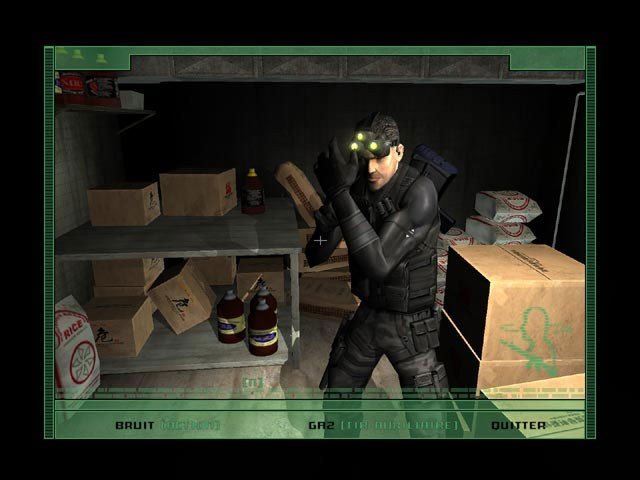
Ubisoft Montreal’s Tom Clancy’s Splinter Cell (2002) introduced Sam Fisher on espionage operations. Lighting, movement, and equipment shaped how players infiltrated. Night-vision goggles helped in darkness, while other tools provided information or created opportunities. Technology could support a plan, but reading the environment determined when to use it.
Splinter Cell: Chaos Theory and deeper infiltration
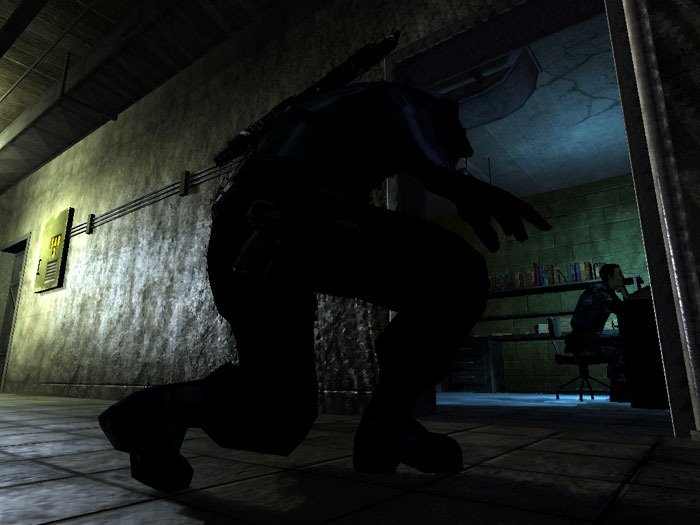
Chaos Theory (2005) expanded interactions involving light, sound, and the environment, communicating some of them through indicators. If a guard moves away for a few seconds, running crosses quickly but may be loud; moving slowly reduces that risk but consumes the opening. Such displays make rules readable without perfectly simulating human senses.
Its co-op campaign and multiplayer modes were historically important, although their original servers should not be assumed to remain active. Double Agent, Conviction, and Blacklist changed the balance between action and stealth: Conviction emphasized faster execution and combat, while Blacklist allowed several approaches.
The Splinter Cell remake, announced December 15, 2021, is led by Ubisoft Toronto using Snowdrop, according to the studio’s project page. As of the October 22, 2026 editorial reference, it remained announced with no confirmed official release date; it should not be described as already released.
Hitman: when disguise becomes part of stealth

IO Interactive’s Hitman: Codename 47 (2000) began Agent 47’s series. Disguises, access permissions, witnesses, and routines enable infiltration even in brightly lit, populated spaces. Being visible without immediately being identified as a threat is central to social stealth.
In a hotel, a staff uniform might grant access to one restricted area, while another requires different credentials. Some people may spot inconsistencies, and forbidden behavior can expose the disguise. Clothing is not invisibility: knowing who can go where and when witnesses leave creates opportunities.
From Hitman: Blood Money to World of Assassination
Silent Assassin (2002) and Contracts (2004) expanded missions and ratings; Blood Money (2006) developed environments and possible solutions. Absolution (2012) had a different structure. Hitman (2016), Hitman 2 (2018), and Hitman 3 (2021) introduced larger systemic locations with multiple approaches.
On January 26, 2023, Hitman 3 was renamed World of Assassination. IO Interactive’s reorganization bundled major content from Hitman 1 GOTY, Hitman 2 Standard, and Hitman 3, but expansions and DLC may depend on the purchased edition. Returning to the same hotel may reveal previously overlooked uniforms, timings, and tools.
Hitman World of Assassination in October 2026
In 2026, The Wizard featured Wiz Khalifa as Taylor Graves. The Herbalist featured Snoop Dogg as Dr. Cyrus Cane; its original Elusive Target window ran August 27–September 27, 2026 and had already ended by the editorial reference date.
Temporary Elusive Target conditions must be distinguished from Elusive Target Arcade’s retry rules and from Special Assignments, which offer campaign-style saving/loading and permanent offline access according to the package. A free demo during an event is not ownership of every piece of content. The official Herbalist season roadmap explains the differences.
What is social stealth?
Disguises, behavior, and crowds may reduce suspicion in context. Assassin’s Creed allows blending into populations; Hitman links identities to permissions and witnesses. These systems are not identical: standing in a crowd or wearing a uniform does not guarantee concealment from every NPC.
Assassin’s Creed: stealth, parkour, and action

Ubisoft’s Assassin’s Creed (2007) placed Altaïr in Third Crusade cities, combining social stealth, parkour, and assassinations. A guarded street might be bypassed by climbing a building and approaching across rooftops. The route changes who can see the character and what becomes possible afterward.
Combat is also fundamental. Assassin’s Creed II and Brotherhood expanded tools and city life; Origins, Odyssey, and Valhalla emphasized progression and RPG elements. Infiltration remained available, but its weight varied, so the entire franchise cannot be classified as pure stealth.
Assassin’s Creed Mirage and Shadows: modern interpretations
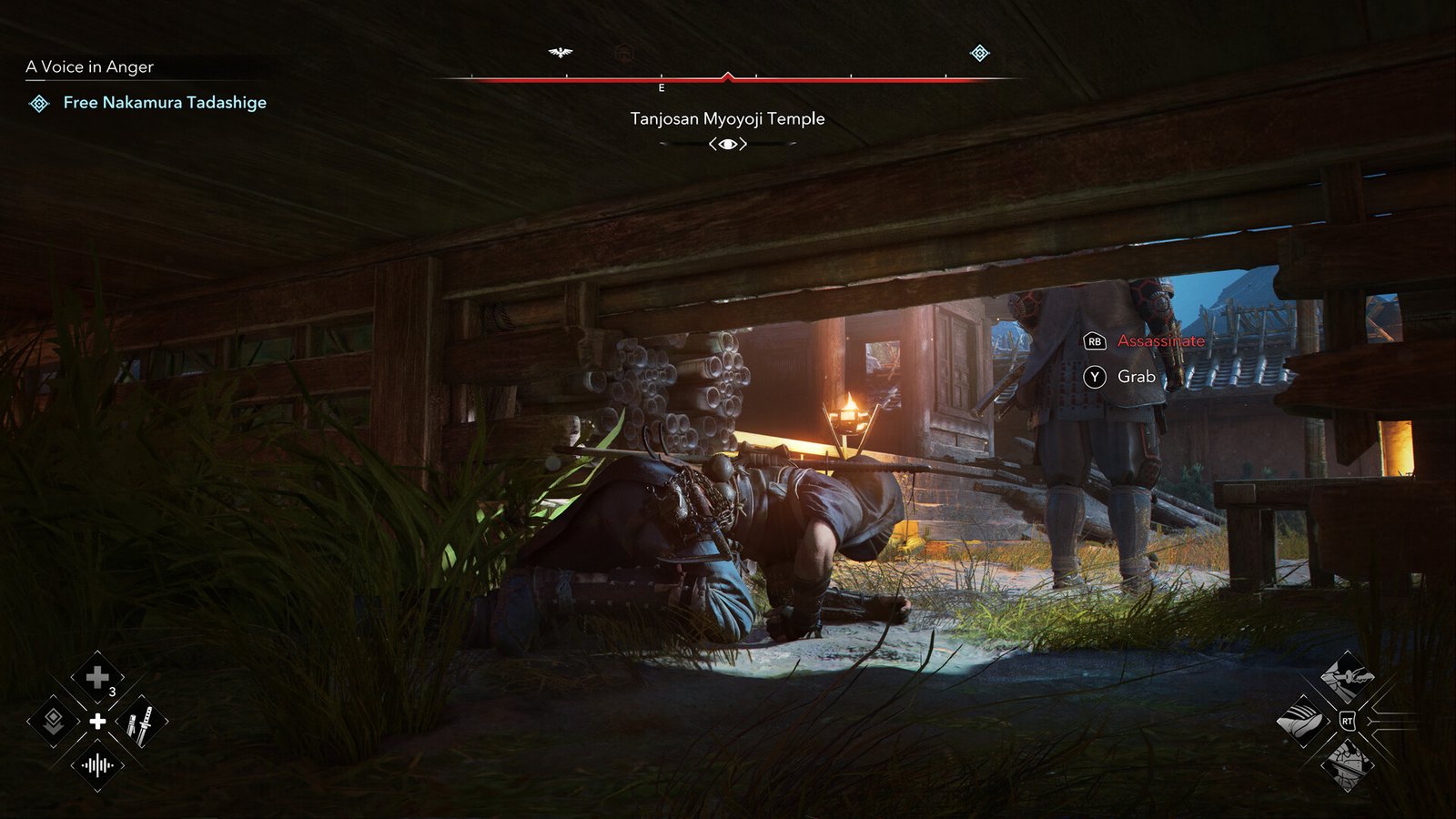
Mirage (2023) brought Basim back to a more focused urban-infiltration experience without eliminating action. Shadows (March 20, 2025) features Naoe and Yasuke with different tools. Naoe emphasizes agility, concealment, and shinobi abilities; Yasuke is more combat-oriented but can also surprise enemies. Observation and going prone are not exclusive to Naoe.
Light, foliage, obstacles, and posture affect detection, as described in Ubisoft’s stealth overview. Movement changed through 2026 updates, and the final major content update arrived in June. The end of major content updates does not mean servers closed or the game was withdrawn from sale.
Dishonored: stealth with supernatural powers

Arkane Studios’ Dishonored (2012) allows Corvo Attano to combine tools, powers, and alternative routes. If a corridor is guarded, Blink may reach an accessible upper position and reveal a different entrance. Teleportation does not make the destination automatically safe: enemy sight, resources, and consequences still need consideration.
Lethal and nonlethal actions affect parts of the experience, and not every power is useful for staying hidden. Dishonored 2 (2016) expanded Corvo’s and Emily Kaldwin’s options; Death of the Outsider (2017) has its own abilities. Stealth is one approach within the systems discussed in our Immersive Sim feature, not a synonym for the entire design tradition.
Mark of the Ninja: stealth works in two dimensions too
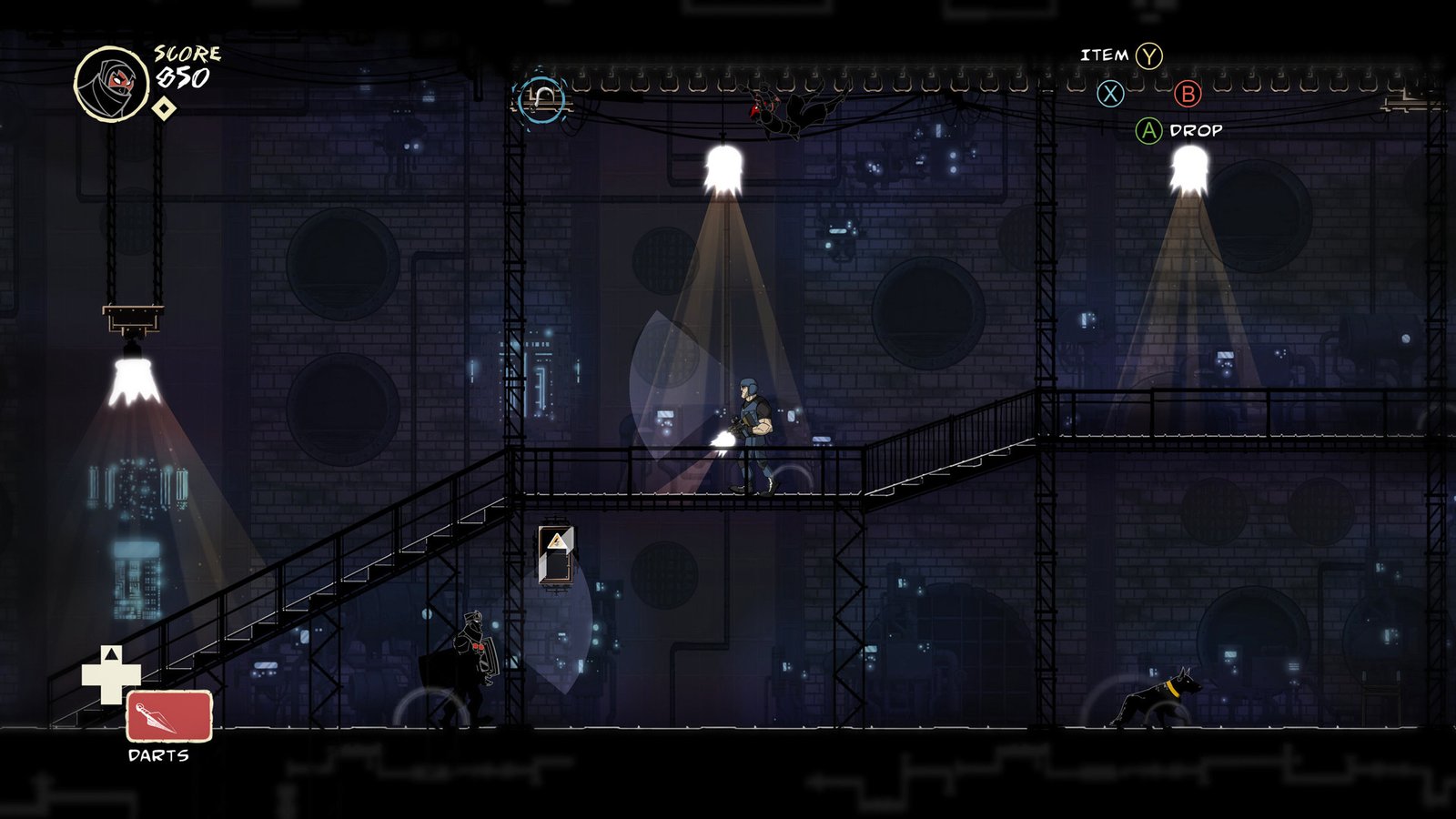
Klei Entertainment’s Mark of the Ninja (2012) presents lighting, sound, and awareness in side view. A guard facing right, an exposed patch of floor, and a higher passage form information the player can use before moving. Visual indicators communicate danger alongside sound and enemy reactions.
Jumping and climbing support infiltration without automatically turning the game into a conventional platformer. Our platform games feature explains that different focus. The pictured Remastered edition (2018) is distinct from the original release.
Stealth in platformers and side-scrolling action
Gunpoint (2013) combines side-on movement with electronic-system manipulation; Ronin (2015) blends infiltration, planning, and combat under its own rules. Side view can clarify patrols and routes, but still needs to communicate awareness and cover. A 2D camera does not by itself make a game a traditional platformer.
Invisible, Inc.: stealth through turn-based decisions

Klei’s Invisible, Inc. (2015) organizes agents, cameras, and security systems through turns. You may have enough actions to get one agent into a guarded room, yet leave their partner exposed when the enemy moves. Scouting costs time or resources, and waiting can increase the security level.
Risk accumulates, so the absence of real-time reflex demands does not eliminate pressure. Planning must consider the next state of the map, not just the square reached now. Although tactical, this is not automatically equivalent to every tactical-RPG progression system: infiltration, information, and limited actions drive the decisions.
Shadow Tactics and team-based tactical stealth
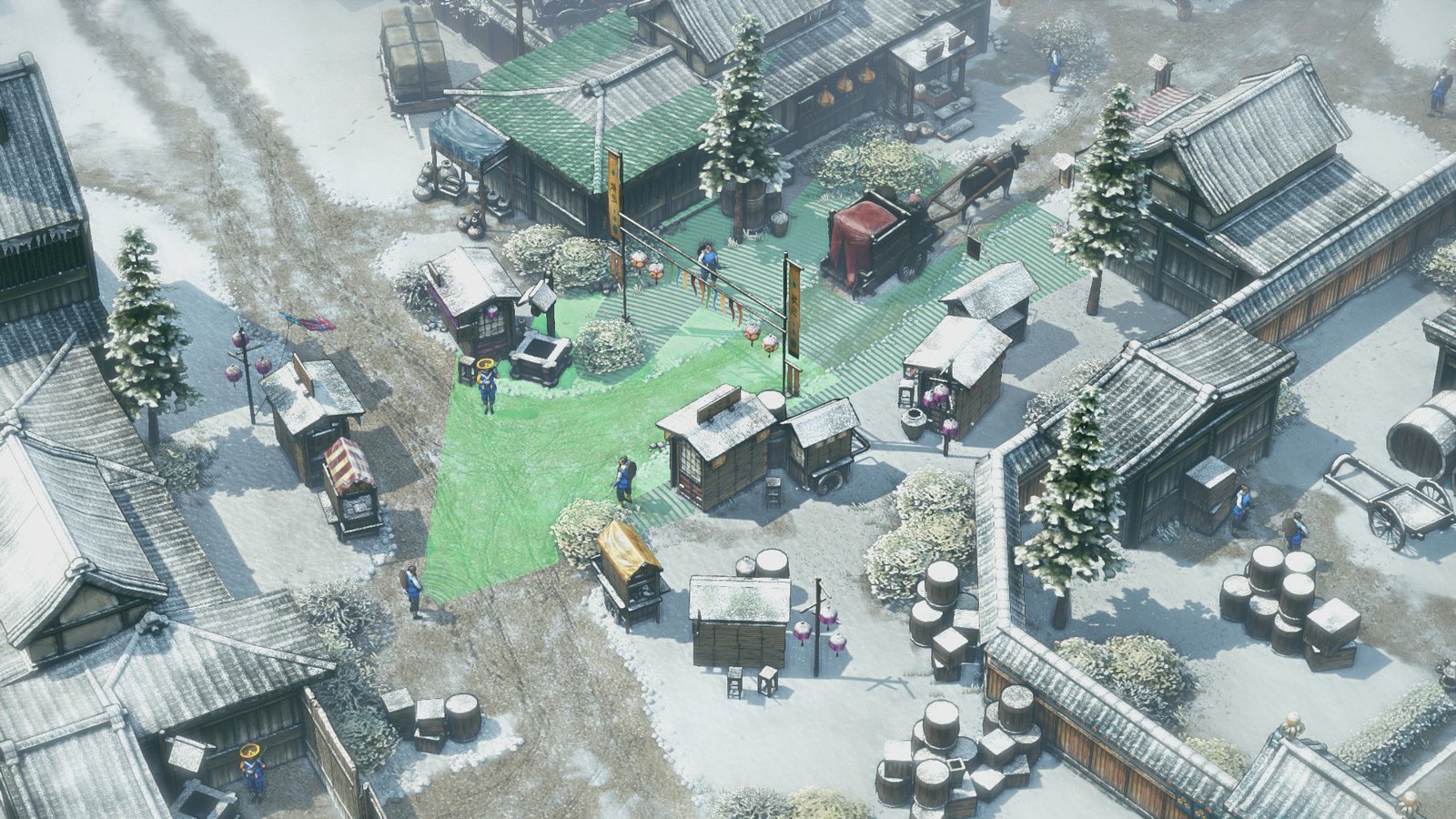
Mimimi Games’ Shadow Tactics: Blades of the Shogun (2016) uses specialists in a real-time Edo-period Japan setting. If two guards cover a passage, one character may distract while another crosses. The order and timing of actions determine whether the entire team remains hidden; executing moves separately may expose a partner.
Coordinated commands and complementary abilities distinguish this from individual infiltration. It shares a tradition with Commandos, while using its own rules. Desperados III (2020) developed the team approach in the American West. Unlike Invisible, Inc., these maneuvers are executed in real time.
Shadow Gambit: the continuation of tactical stealth

Mimimi’s Shadow Gambit: The Cursed Crew (August 17, 2023) blends supernatural piracy with specialized characters. A power may bypass or alter an obstacle that another crew member cannot handle, encouraging plans built around the team’s abilities.
Mimimi announced its gradual closure on August 29, 2023 and finished the Yuki’s Wish and Zagan’s Ritual DLCs that December. Hooded Horse took over publishing in December 2024. The studio’s closure did not automatically shut down the game or imply new major productions from Mimimi.
How does a stealth mission work?
A useful illustrative loop is Observe → Identify risks → Plan → Infiltrate → Adapt → Complete the objective → Leave. This is not a mandatory sequence. Linear levels, open maps, turn-based operations, theft, and evasion offer different structures. Observation reveals guards and devices; planning connects that information to tools; execution tests the strategy against the system.
Escaping after the objective can be part of the challenge. Finishing a task does not always end exposure, and an unexpected enemy response may force a new route. The following systems explain why the same choice can have different consequences depending on sight, noise, position, and enemy state.
Field of view: how do enemies detect the player?
A field of view is an area monitored by a character or device according to the game’s rules. Walking past a camera might trigger suspicion or an alarm; crossing beyond its monitored region might avoid detection. Direction, distance, posture, and lighting may matter. Some games show cones, others gradual detection indicators or environmental reactions.
A wall can block vision without preventing every other way of sensing the player. Not every stealth game uses a rigid or visible cone; the key is understanding the information communicated by that specific system.
Sound and noise: enemies do not always need to see you
Running across a noisy surface may attract attention even when the character is behind cover. Moving slowly or taking a quieter path may help if the game models those differences. Crouching does not universally eliminate sound, and concealment from sight does not prevent a sound-based investigation.
The audio heard by the player is not always the same as the events processed by enemies. Music and ambience need not be part of detection. A deliberate noise can distract a guard, but may also increase suspicion depending on the context.
Lighting, shadows, and camouflage
In some games darkness makes a character harder to spot; others designate particular hiding spaces. Shadows do not guarantee invisibility. In MGS3, camouflage changes exposure in relation to appearance and terrain; cover physically obstructs vision; disguises change the perceived identity and permissions. These are different rules even though each may help an infiltrator advance.
Cover, routes, and positioning
The closest entrance may be watched from several directions, whereas a longer side path may offer lower exposure. Elevation, doors, crates, and vegetation create alternatives and blind spots. A position safe from one guard may still be visible to another.
More routes are not automatically better: alternatives matter when they change risk, expenditure, or opportunity. A compact level can be deliberately designed, while an open zone may encourage preparation and improvisation.
Patrols, routines, and artificial intelligence
Predictable patrols give players opportunities to learn safe crossing windows. A guard who hears a noise, discovers something suspicious, or receives information can break from that routine. Reinforcements and communication exist in some games but are not universal.
Enemy AI operates through programmed systems; it need not reproduce full human reasoning. Predictability is not necessarily a flaw. Readable, consistent reactions make observation and learning meaningful.
Suspicion, investigation, and alert: the states of stealth
Normal behavior, suspicion, investigation, alert, combat, and searching are possible states, not a mandatory progression. An incomplete glimpse may create suspicion; investigation can send a guard toward a noise; confirming a threat might trigger an attack or communication. Some enemies search a last known position after losing sight of the target.
Not every game features every state. Returning to a normal patrol may take time, have special conditions, or be impossible. An alarm may hurt a mission rating without stopping progress, while another objective fails immediately. Knowing the transition helps determine when to wait, escape, or abandon a plan.
Distractions and infiltration tools
Tools can gather information, redirect attention, or provide access. Goggles and devices improve observation; objects or sounds can draw guards away; electronic equipment, disguises, and supernatural skills open other routes. Each works under contextual rules.
Before creating a distraction, consider who will react and what changes. Diverting one guard may alert another. Limited supplies make spending now versus saving for the escape a meaningful choice. Cameras cannot always be disabled, and suppressed weapons are not universally silent.
Combat, evasion, and nonlethal approaches
Avoiding contact, incapacitating an opponent, and fighting are distinct actions. Nonlethal means the move does not kill under its rules; it does not mean silence or freedom from consequences. A body may be discovered, and incapacitation is not mechanically identical in every game.
After detection, breaking line of sight and moving away may allow recovery if the mission permits it. Some objectives impose strict failure conditions. The option to fight does not automatically remove stealth from a game: what matters is how awareness, exposure, and the costs of different approaches shape play.
Ghost Runs, No Kills, and Silent Assassin challenges
A Ghost Run usually aims for minimal exposure or interference under game- or community-defined rules. No Detection avoids being spotted; No Kills prevents deaths but may allow other contact. Pacifist runs have their own definitions. Silent Assassin is a specific Hitman rating, not simply a synonym for those challenges or for using a suppressed weapon.
A mission may finish without casualties despite alarms, whereas another requires killing a target but still grants a stealth rating. Official ratings and voluntary challenge rules coexist; no such condition applies to all stealth games.
Stealth Action combines infiltration and confrontation. A discreet start may help even when combat is possible later. Strict detection failure and recovery after an alert are different design choices, with no automatic quality ranking: the resulting decisions and consequences matter.
Stealth and survival horror: when hiding means staying alive
Amnesia, Outlast, and Alien: Isolation emphasize evasion against threats that cannot easily be defeated in combat. Stealth describes the management of detection, while survival horror describes how fear, danger, and vulnerability drive the experience. They can overlap, as discussed in our survival horror feature.
Alien: Isolation and stealth against a persistent threat
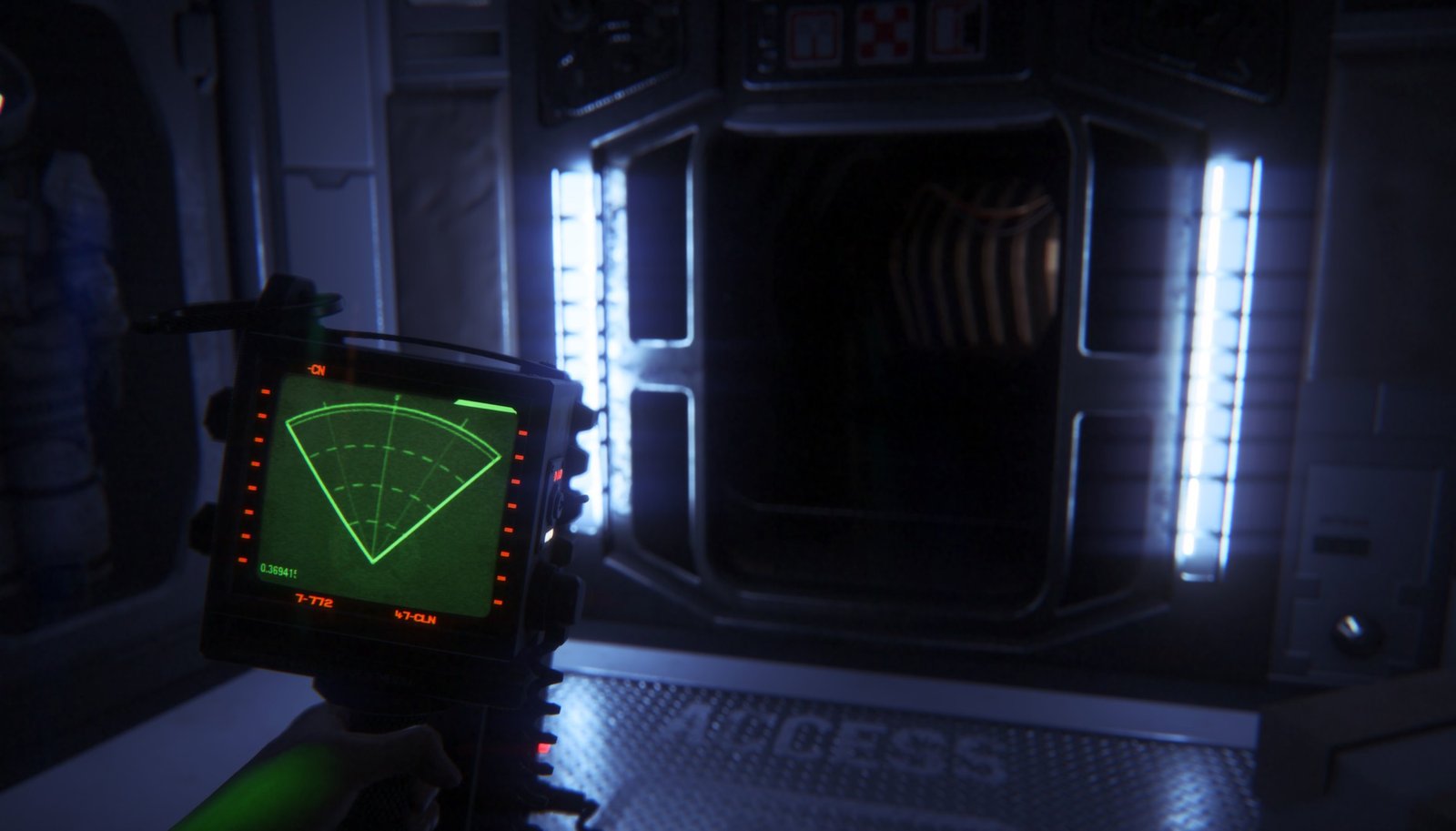
Creative Assembly’s Alien: Isolation (2014) follows Amanda Ripley aboard Sevastopol. Its xenomorph makes exploration less predictable than following a single repeating patrol. Sound, hiding spots, and resources determine whether to wait, change course, or deploy a tool; fighting the threat head-on may not solve the problem.
The motion tracker gives information, not safety: the player must interpret its readings and assess the environment. The creature follows programmed perception and guidance systems rather than independent human reasoning or pure randomness. That design sustains horror and evasion rather than conventional military infiltration.
A Plague Tale: stealth, storytelling, and vulnerability

Asobo Studio’s A Plague Tale: Innocence (2019) and Requiem (2022) follow Amicia and Hugo through narrative adventures combining stealth and action. Against guards, watching their routes, finding cover, and managing resources may be more viable than attacking everyone. Vulnerability creates tension, but the series is not exclusively stealth: story, exploration, and confrontation also structure the journey.
Deus Ex: stealth as one possible solution

Ion Storm’s Deus Ex (2000) combines RPG systems, action, shooting, and interactive environments. A locked electronic doorway may be opened using tools or skills, bypassed by another route, or approached through combat. Character resources determine which solutions remain available.
Human Revolution (2011) and Mankind Divided (2016) expanded these tools and options. Stealth is important within an immersive-sim design, but it is not the only path to progression nor equivalent to that entire design category.
Stealth in RPGs and open worlds
In Skyrim, a character build can combine skills and equipment to encourage quiet approaches and sneak attacks. Cyberpunk 2077 connects movement, hacking, and equipment to broader RPG choices, while Fallout and Watch Dogs offer other infiltration systems. That does not make stealth central to every aspect of those games.
Bows, daggers, or an understated appearance alone do not define stealth; their interaction with awareness and objectives does. Open world describes spatial organization, while sandbox emphasizes the freedom to experiment with systems and goals. Neither guarantees the same stealth depth.
Aragami: shadows and supernatural stealth
Lince Works’ Aragami (2016) lets players use shadows and supernatural powers to move and create openings. Reaching a different location with an ability changes a route, but enemy observation still matters. Aragami 2 (2021) changed missions, combat, and cooperation, so the two should not be assigned identical rules.
Cooperative and multiplayer stealth
Working together requires coordinating information, positions, and responsibilities. A distraction can clear the way for a teammate, but acting too early or too late may expose both. Chaos Theory offered historic co-op; Monaco: What’s Yours Is Mine (2013) organizes heists using specialists; Aragami 2 supports complementary abilities.
Metal Gear Solid Delta‘s FOX HUNT is its own multiplayer mode, distinct from the campaign and those co-op examples. Konami’s FAQ documents its conditions. Asymmetric competition, cooperation, and solo missions do not necessarily share detection rules, and historical modes cannot be assumed to have active original servers in 2026.
Level design: how environments create infiltration challenges
A guarded doorway, an exposed illuminated section, and a side passage provide information for a decision. Level design relates objectives, routes, cover, and tools; players turn the clues into a plan. A high vantage point can offer information yet create danger on arrival.
Readability does not require highlighting every path. The environment should help players connect outcomes to their actions. Multiple routes add depth only when they change what must be seen, spent, or risked. Linear spaces and broad open areas can both support thoughtful stealth gameplay.
Visual and audio feedback: how games communicate danger
Meters, icons, voice lines, animations, posture changes, and alarms signal attention and danger. An enemy comment may reveal an investigation before they identify the player; music might communicate alert. Both explicit interfaces and subtle clues have distinct purposes.
Information shown to the player, what their character is supposed to know, and simulated enemy perception are different layers. Alert music may inform the player without being a sound heard by guards. Audiovisual presentation is not automatically a detection mechanic.
Difficulty, mistakes, and recovering stealth
Planning a crossing around patrol timing does not guarantee perfect execution. Being spotted may lead to escape, improvisation, or combat depending on the game. Strict objectives fail immediately; others change risk and ratings. Harsh punishment alone does not prove depth, and a recovery option does not automatically make the experience easy.
Replaying missions and discovering new strategies
Hitman and MGSV encourage trying different entrances and tools. Knowing an objective lets players test previously ignored routes or timings and learn the environment more deeply. Not every mission offers equal freedom, nor is every story campaign designed for endless repetition.
The modern evolution of stealth games
Dedicated infiltration experiences coexist with action, horror, and RPG hybrids. Evolution has meant more variety in perception, tools, and movement—not simply increasingly complicated systems.
Baby Robot Games’ Ereban: Shadow Legacy launched on PC on April 10, 2024, featuring movement through shadows. Sniper Elite: Resistance (2025) combines infiltration and tactical shooting. They express different relationships between concealment and action.
Cyanide Studio and Nacon released Styx: Blades of Greed on February 19, 2026. Its official Steam description emphasizes verticality, tools, and quartz powers. Players may bypass guarded areas by changing elevation or using other movement options, depending on the level and abilities. It continues a dedicated stealth tradition after Master of Shadows (2014) and Shards of Darkness (2017), without making every combat option or route universal.
Games that shaped the history of stealth
| Game | Year | Contribution or distinctive feature |
|---|---|---|
| Manbiki Shounen | 1979, historical record | Early example of evading perception |
| 005 | 1981 | Arcade espionage and visible watched areas |
| Castle Wolfenstein | 1981 | Infiltration, disguises, and evasion |
| Beyond Castle Wolfenstein | 1984 | Further infiltration interactions |
| Metal Gear | 1987 | Evasion consolidated as a central action principle |
| Metal Gear 2: Solid Snake | 1990 | More detailed perception and enemy behavior |
| Tenchu: Stealth Assassins | 1998 | Ninja stealth and movement in 3D |
| Metal Gear Solid | 1998 | Cinematic stealth espionage popularized |
| Thief: The Dark Project | 1998 | First-person light, sound, and awareness |
| Thief II: The Metal Age | 2000 | Evolution of systemic stealth |
| Hitman: Codename 47 | 2000 | Start of Agent 47’s disguise-based tradition |
| Deus Ex | 2000 | Infiltration combined with RPG and interactive systems |
| Tom Clancy’s Splinter Cell | 2002 | Technical espionage and lighting |
| Metal Gear Solid 3: Snake Eater | 2004 | Camouflage and environmental interaction |
| Splinter Cell: Chaos Theory | 2005 | Deeper light, sound, and movement systems |
| Hitman: Blood Money | 2006 | Disguises and flexible mission spaces |
| Assassin’s Creed | 2007 | Social stealth, parkour, and urban traversal |
| Dishonored | 2012 | Powers, infiltration, and systemic interactions |
| Mark of the Ninja | 2012 | Side-view stealth and clear awareness cues |
| Alien: Isolation | 2014 | Evasion and horror against a persistent threat |
| Invisible, Inc. | 2015 | Turn-based tactical stealth |
| Metal Gear Solid V: The Phantom Pain | 2015 | Infiltration across open areas and multiple approaches |
| Shadow Tactics: Blades of the Shogun | 2016 | Real-time coordination of stealth specialists |
| Hitman | 2016 | Beginning of the modern World of Assassination trilogy |
| Dishonored 2 | 2016 | Expanded powers and systemic possibilities |
| Aragami | 2016 | Shadow-based supernatural stealth |
| Hitman 3 | 2021 | Conclusion of the modern trilogy |
| Aragami 2 | 2021 | New approaches to infiltration and cooperation |
| Assassin’s Creed Mirage | 2023 | Return to classic stealth concepts |
| Shadow Gambit: The Cursed Crew | 2023 | Tactical stealth with supernatural abilities |
| Ereban: Shadow Legacy | 2024 | Independent stealth with shadow movement |
| Assassin’s Creed Shadows | 2025 | Distinct approaches to stealth and combat |
| Metal Gear Solid Delta: Snake Eater | 2025 | Modern remake of the 2004 camouflage systems |
| Styx: Blades of Greed | 2026 | Vertical infiltration and quartz powers |
This selection highlights historical milestones, not a ranking. Original games, remakes, editions, and ongoing services should be distinguished; different stealth traditions continue to coexist.
Different forms of stealth games
| Format | Main characteristic | Examples |
|---|---|---|
| Classic infiltration | Avoid guards and reach objectives | Metal Gear |
| Awareness-based stealth | Light, sound, and hiding | Thief |
| Tactical espionage | Equipment and discreet movement | Splinter Cell |
| Social stealth | Disguises, behavior, and suspicion | Hitman |
| Stealth Action | Infiltration combined with fighting | Metal Gear Solid V, Assassin’s Creed |
| Tactical stealth | Agent planning and coordination | Invisible, Inc., Shadow Tactics |
| Horror stealth | Evade dangerous threats | Alien: Isolation |
| Immersive Sim-oriented stealth | Tools and alternative solutions | Dishonored, Deus Ex |
These formats identify priorities that can overlap. A title might combine shadows and disguises, offer combat, or use turn-based agents without copying another franchise’s exact rules.
Stealth, FPS, tactical shooters, and other genres: what’s different?
| Category | Main priority | Examples |
|---|---|---|
| Stealth | Control exposure and avoid detection | Thief, Splinter Cell |
| FPS | First-person gun combat | Doom, Counter-Strike |
| Tactical Shooter | Teamwork, positioning, and tactical firefights | Rainbow Six Siege, Ghost Recon |
| Survival Horror | Horror, danger, and vulnerability | Resident Evil, Alien: Isolation |
| Immersive Sim | Interactive systems and alternative solutions | Deus Ex, Dishonored |
| RPG | Progression, stats, and character development | Skyrim, Cyberpunk 2077 |
| RTS | Real-time strategy and unit control | StarCraft, Age of Empires |
| Tactical RPG | Tactical combat with RPG systems | XCOM, Final Fantasy Tactics |
| Platformer | Movement and crossing obstacles | Super Mario Bros., Celeste |
The categories describe design priorities, not mutually exclusive boxes. Thief uses a first-person view but is not organized around Doom-style combat; our FPS feature explains the difference. Ghost Recon can include infiltration within tactical shooting, and RPG characters can use stealth builds inside broader adventures.
Controlling a team in real time is not necessarily the same as producing and managing units in RTS games. Likewise, turns and positioning in Invisible, Inc. do not automatically equal tactical RPG progression. Camera view, crouching, and the presence of combat are not enough on their own; what organizes the challenges matters.
The main challenges and limitations of stealth games
Waiting, information, and recovery shape the pace. Some players enjoy studying patrols; others prefer action hybrids. Arbitrary-seeming enemy reactions undermine trust in the rules, while coherent feedback helps players learn and improvise. Open levels and strict mission ratings are choices, not automatic signs of quality.
Accessibility differs between titles. Distinguishing colors, hearing warnings, or executing precise inputs may create barriers; alternative indicators, remapping, and difficulty options can help where available. There is no universal accessibility feature set across all stealth games.
Players who enjoy observation and planning can choose between espionage, disguises, light and sound, horror, powers, and team coordination. Some games demand quick execution; others allow deliberation by turns. Whether someone wants minimal exposure or a mix of stealth and fighting may guide their choice, without assuming that enjoying one franchise means enjoying them all.
Stealth means turning information into opportunity
A patrol that once looked threatening becomes a possible route once its behavior is understood. That is the pleasure of stealth: recognizing risk, choosing an opening, and adapting when the plan changes. Defeating every opponent is only one possibility; learning how to advance despite them creates many more.
About the Author